
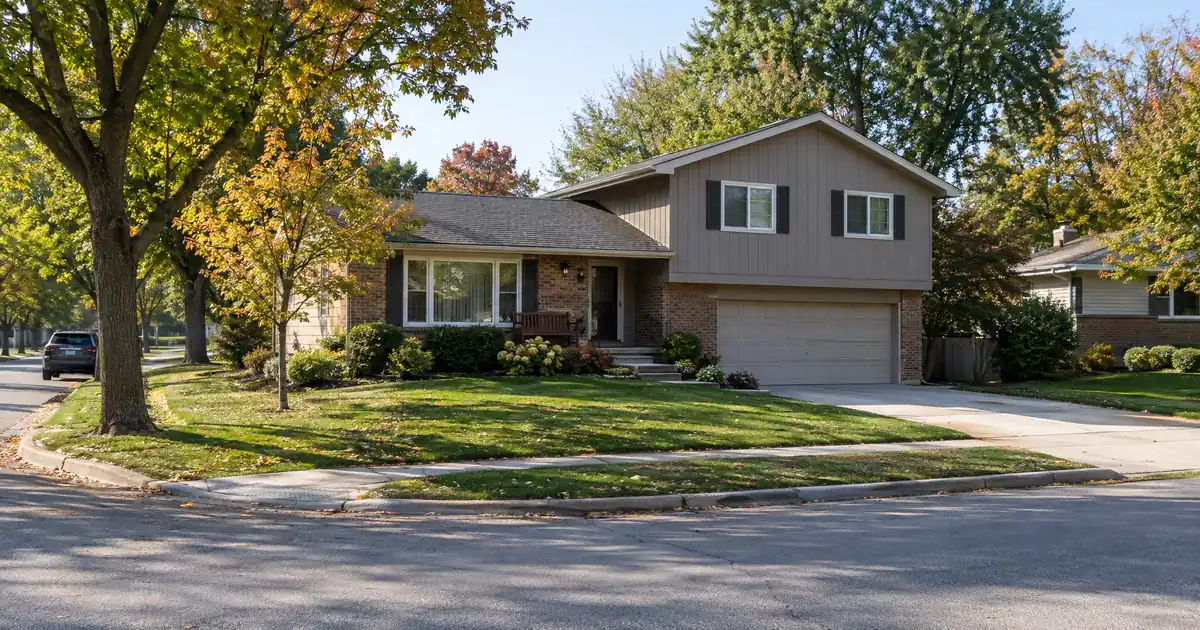
The Quick Read: These two loans solve different problems, so the choice comes down to what you are buying and which income proof you can use. FHA is for a home you will live in and leans on traditional personal-income documentation. A bank statement loan is for self-employed borrowers whose deposits show more income than their returns do.
- FHA is an owner-occupant program: you move in and stay.
- A bank statement loan is reviewed on documented income under the applicable program, subject to lender guidelines.
- FHA is built around a small down payment. Bank statement leverage varies by lender and occupancy.
- Write-offs shrink FHA income. On bank statement files, an expense factor shrinks the deposits.
- A pure rental purchase fits neither one well. That usually points to a DSCR loan.
The honest answer on who each one is for: FHA suits a buyer who will live in the property and has clean tax-return income and modest cash. A bank statement loan suits a self-employed buyer with strong deposits, thin tax income, and enough cash and reserves to meet a program’s expectations. Plenty of borrowers have one problem, some have both, and a few are really looking for investment financing.
What your deposits qualify you for.
Alt-doc programs read 12 months of business or personal bank deposits instead of tax returns. Enter your average monthly deposits and see the income a lender would credit you.
The expense factor is set by the lender from your business type and profit-and-loss statement; it is not a number you choose. This widget quotes no rate and no payment.
Program parameters shown update from Lendmire’s centralized guideline source.
Estimate
Illustrative estimate only — not a quote, Loan Estimate, approval, or commitment to lend. Deposit average, expense factor, and housing ratio are editable assumptions; the expense factor a lender applies is set from your business type and documentation. No interest rate or monthly payment is quoted here. Purchase capacity is a simplified illustration and does not account for taxes, insurance, HOA dues, or other debts. Alt-doc income documentation is available on consumer mortgages in the states where Lendmire is licensed for consumer lending; actual terms vary by lender, borrower, and property.
Side-by-Side
The FHA column reflects published industry norms. The bank statement column reflects what select lenders in Lendmire’s wholesale network typically offer, subject to lender guidelines.
| Factor | Bank Statement Loan | FHA Loan |
|---|---|---|
| Review basis | Averaged deposits, 12 months | Net tax-return income plus personal DTI |
| Documentation | Business or personal statements | Two years of returns, typically |
| Property types | Set by the program | 1-4 unit primary residence |
| Occupancy | Primary, second home, or investment, by program | Owner-occupied only |
| Entity vesting | Varies by program; rare on owner-occupied | Individual borrowers who occupy |
| Reserves | Commonly around 6 months | Lighter; varies by file |
| Credit flexibility | Program-specific overlays | Generally more flexible |
| Loan sizes | Roughly $125,000 to $3,500,000 | Capped by FHA limits |
| Timeline | Depends on file complexity | Depends on file complexity |
What Each Loan Actually Reads
FHA qualifies the person. The lender builds income from traditional personal-income documentation, nets out deductions, and runs personal debt-to-income and credit. HUD’s owner-occupant answer page says at least one borrower must move in as their principal residence within 60 days of signing and intend to stay at least one year. A self-employed borrower typically shows two years of individual and business returns. A short history may work only with prior experience in the same or a related field.
A bank statement loan is reviewed for the cash flow. The borrower supplies 12 months of business or personal statements. The underwriter screens out transfers between accounts, one-time asset sales, borrowed funds, and untraceable cash. Business-account deposits are reduced by a lender expense factor. Personal-account deposits are generally counted closer to face value. No lender should promise a specific factor before reviewing the file.
These are not no-doc loans. Federal ability-to-repay rules require a lender to verify the income it relies on with reliable third-party records, and the CFPB compliance guide says a lender relying on account inflows must confirm they are the borrower’s personal income. That is why statements get combed line by line.
When a Bank Statement Loan Is the Better Fit
A bank statement loan wins when traditional personal-income documentation understates real cash flow. Picture a contractor with steady deposits whose returns show heavy write-offs. FHA reads the net figure and the file shrinks. The deposit-based file reads the actual inflow, then applies an expense factor.
It also fits when the property falls outside FHA’s box. That includes a second home, a larger loan amount, or a non-owner-occupied rental. A bank statement loan on a rental is business-purpose, while an owner-occupied file is a consumer mortgage with its own disclosure regime. Occupancy decides which one applies.
Leverage is the trade-off. On a primary residence, select lenders in the network go up to 90% LTV on a purchase or rate-term refinance, and stronger files earn the top of that range. That is not an FHA-style minimum down payment. The more you put down, the better the file tends to look. On owner-occupied cash-out, the ceiling is 80% LTV on a primary residence (75% with an accountant-prepared expense ratio) and 75% on a second home. Investment cash-out tops out around 75%. Investment purchase leverage varies by lender.
Reserves matter here. Most programs look for around 6 months of the housing payment. Cash is needed for more than the down payment.
Two preparation habits help. Keep personal and business funds separate, because commingled accounts complicate the file. And document large deposits before applying. Some programs offer an accountant-prepared profit-and-loss alternative, and asset depletion (qualifying from liquid assets) runs up to about 80% LTV on a primary residence. Terms depend on the lender’s guidelines, the property type, the leverage, and a full review of the credit profile.
Lendmire’s piece Bank Statement vs Conventional Documentation and Down Payment Differences goes deeper on the paperwork side.
When an FHA Loan Is the Better Fit
FHA wins when cash is the binding constraint and you will live in the home. Market surveys report 3.5% down for borrowers with a credit score of 580 or higher, and 10% down for scores of 500 to 579, per a secondary summary of HUD guidance. Verify against HUD before relying on it. A bank statement file on a primary residence is a different animal. The network figure is up to 90% LTV on a purchase, and reserves are expected. The exact numbers vary by lender and program and follow a full review of property, leverage, and credit.
FHA also tends to be more credit-flexible than most non-QM programs. A buyer with a bruised score and clean W-2 or tax-return income often does better here.
It works best for a borrower with solid, documented net income. A buyer whose returns already show strong earnings gains nothing from deposit averaging, and may pay for the extra scrutiny.
One caution: income that fell more than 20% can force a manual downgrade, per a reproduction of HUD 4000.1 hosted by HousingWire. It is an older edition, so check the current handbook.
FHA for Rentals Means House Hacking
FHA allows 2-4 units only when you live in one. After the one-year occupancy period, you may be able to move out and rent the whole property, per AirDNA’s investor education page. That same page notes stays under 30 days are not allowed.
Buying a single-family home on FHA and renting it out right away can be treated as mortgage fraud, because the borrower certifies owner occupancy. The principal residence rule is firm. A person can have only one principal residence at a time.
So FHA is a one-at-a-time entry point. Investors who outgrow it usually move later purchases to financing built for non-owner-occupied property.
Where a Bank Statement Loan Stops Short for Investors
A bank statement loan is not automatically an investor loan. Some programs cover primary residences and others cover investment property. If you are buying a rental and its rent can carry the loan, DSCR is usually the cleaner path. A DSCR loan is reviewed primarily on property-level rental income covering the payment, subject to lender guidelines, and DSCR loans are business-purpose investor loans. Select lenders in the network also review sub-1.00 coverage, with adjusted LTV and terms. Lendmire’s complete DSCR loans guide covers how that works.
Term structure differs too. Interest-only and 40-year structures are DSCR-side offerings. Bank statement terms follow each lender’s program sheet, so treat term length as something to confirm file by file.
Which One Matches Your Situation
| Your situation | Likely fit |
|---|---|
| Self-employed, high deposits, low taxable income, living in the home | Bank statement loan |
| W-2 or strong tax income, small cash, living in the home | FHA |
| New business, under two years, no related history | Bank statement or a wait |
| Buying a rental, rent covers the loan | DSCR |
| 2-4 unit, you will live in one unit | FHA |
| Large loan amount, second home | Bank statement loan |
If cash is thin and your returns are weak, neither loan may work today. Options: build a larger down payment, trim write-offs for a year or two, or document the account history cleanly. Sequencing matters. Some borrowers use one path now and refinance later, and whether that pays off depends on the file.
Key Terms Defined
Non-QM loan: A mortgage designed by individual lenders outside government-backed or agency standards, with each lender setting its own guidelines.
Expense factor: The percentage a lender subtracts from business-account deposits to estimate real income.
Principal residence: The home where the borrower lives most of the year. A person can have only one at a time.
Reserves: Liquid funds left after closing, commonly counted in months of the housing payment.
Commingling: Mixing personal and business money in one account, which complicates deposit analysis.
Frequently Asked Questions
Is there such a thing as an FHA bank statement loan?
No. FHA underwrites on traditional income documentation, and statements only verify assets and the source of funds. A bank statement loan is a separate non-QM product that uses deposits as income.
Can a self-employed borrower get FHA?
Yes, usually with two years of individual and business returns. A history of one to two years may work with prior experience in the same or a related field. Heavy write-offs lower qualifying income.
Which one needs less cash?
FHA is built for small down payments, while bank statement leverage on a primary residence runs up to 90% LTV on a purchase, so more cash tends to help the file. Reserves of about 6 months are common on bank statement files. Final terms depend on the lender’s guidelines, the property type, and the borrower’s complete credit picture.
Can I use either loan to buy a rental?
FHA only if you live in a 2-4 unit property and occupy one unit. Investment purchase leverage on a bank statement loan varies by lender. For a pure rental, DSCR is usually the better match.
Do all deposits count on a bank statement file?
No. Transfers, loans, and one-time deposits can be excluded, and business deposits are reduced by an expense factor. Qualification is subject to lender guidelines.
The Verdict
Pick FHA when you will live in the home, your conventional personal-income paperwork supports the income you need, and cash is tight. Pick a bank statement loan when deposits tell the truer story and you can meet leverage and reserve expectations. Pick DSCR when the property is a rental that pays for itself.
If you are self-employed and want to see how the numbers work, Lendmire can help you compare bank statement loan options based on your deposits, the property, credit profile, leverage, and your goals. Reach the team at 828-256-2183 or request a quote. Qualification is subject to lender guidelines and is not a commitment to lend.
About Lendmire
Lendmire (NMLS# 2371349) is a mortgage brokerage serving self-employed and high-net-worth borrowers in 16 states. Bank statement, P&L-only, 1099-only and asset-based mortgages are arranged through wholesale lending channels; Lendmire brokers the financing and the lender underwrites each application. Scotsman Guide named Lendmire a Top Mortgage Workplace in both 2025 and 2026.
Get Started
Ready to find the right loan for you?
In about 30 seconds you can review financing options available for your home or investment property. No commitment required.
Informational only. Not a Loan Estimate, approval, or commitment to lend. Program availability and eligibility are subject to lender guidelines, credit approval, property review, and underwriting.
References
1. HUD FHA Answers: owner occupant
2. CFPB ATR/QM Small Entity Compliance Guide
3. legalclarity.org: HUD Handbook FHA Loan Requirements Explained
4. HousingWire-hosted FHA 4000.1 guidelines
5. AirDNA: FHA loan for investment property
This article is part of Lendmire’s bank statement loan program — full qualification details, guidelines, and scenarios live on the program page.
Related reading: Is a 12-Month Bank Statement Loan Better Than a 1099-Only Loan? · Can a Freelancer Qualify for a Bank Statement Loan? · Can You Get a Bank Statement Loan With One Month of Statements?
Brandon Miller
Founder & CEO, Mortgage Loan Originator, Lendmire LLC
- Mortgage Loan Originator · NMLS# 1129696 · Verify on NMLS Consumer Access
- North Carolina Real Estate Broker · License# 343312 · Verify on NCREC
- North Carolina Insurance Producer · License# 19053198 · Property, Casualty, Life, Health · Verify on NAIC SBS
- Lendmire LLC · Firm NMLS# 2371349 · Verify firm licensure
Compliance and disclosures. Lendmire (NMLS# 2371349) is a licensed mortgage broker and is not a direct lender, depository institution, financial advisor, or tax professional. Content in this article is general market analysis and educational information — not financial, legal, or tax advice for any specific situation. Lendmire does not guarantee loan approval; every transaction is subject to underwriting by the funding lender. Mortgage pricing and loan program guidelines are subject to change at any time without notice and vary by borrower characteristics, property type, and state regulations. Lendmire complies with Equal Housing Opportunity. Licensure verification: NMLS Consumer Access.