
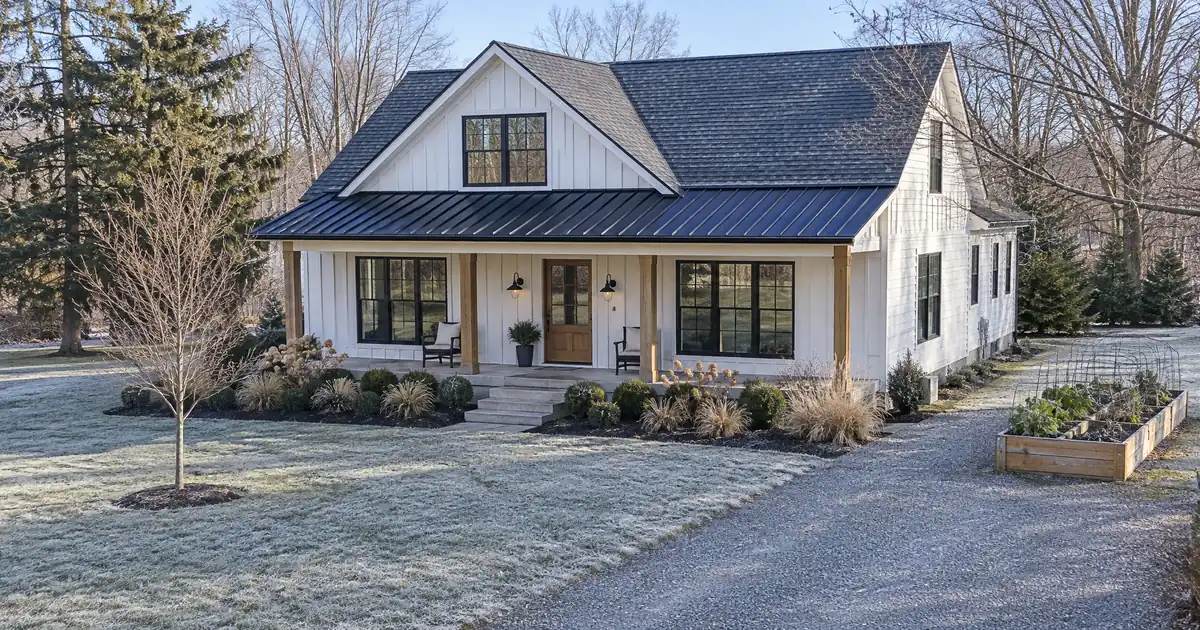
The Quick Read: A finished new build is not a separate HELOC category, so which lenders will open a statement-documented line on it depends on each lender’s rules for the property’s use, how it is valued, and how it is titled rather than on its age. Large retail banks rarely write these lines on rentals. Most of the real options sit with wholesale lenders reached through a broker.
- The “bank statement” part only changes how your income is documented. It does not change what collateral a lender will accept.
- A new build must be complete and habitable before any lender sizes a line against it.
- On an investment property, the network Lendmire works with tops out at 70% combined loan-to-value (CLTV), with a 700 minimum credit score.
- Title matters. LLC-owned homes generally cannot take this kind of line.
- If the home is vacant or held in an LLC, a DSCR cash-out refinance is often the better fit.
Do Banks Actually Offer This?
Some do, but the list is short and the answer changes with the occupancy of the home. Big banks and other depository institutions mostly write home equity lines on the home you live in.
How large a line the equity supports.
An equity line is sized by combined loan-to-value, occupancy, and credit — not by rental coverage. Switch the occupancy or the credit band and the ceiling moves with it.
Investment-property lines require a 700 minimum credit score; second-home lines start at a 640 minimum and primary-residence lines at 600, and the combined-LTV ceiling steps down as the credit band drops on primary-residence and second-home lines and holds on investment-property lines; the line cap steps down on primary-residence lines and holds at every tier on investment-property and second-home lines.
A debt-to-income ratio above 45% requires 680+ credit. Profiles under 640 are limited to single-family homes. At least 75% of the approved line is drawn at closing. Ceilings, floors, and caps update from Lendmire’s centralized guideline source.
Line estimate
Illustrative estimate only — not a quote, Loan Estimate, approval, or commitment to lend. The rate is an editable assumption; equity-line pricing is variable through both the draw and repayment periods and never converts to fixed. Occupancy and credit drive the ceiling together: an investment property tops out at 70% combined LTV (minimum credit 700, line cap $500,000); a second home tops out at 90% combined LTV (minimum credit 640, line cap $500,000), with the ceiling stepping down as the credit band drops (the cap holds at every tier); a primary residence tops out at 90% combined LTV (minimum credit 600), and its $750,000 maximum line is available only at 75% combined LTV or below with a 700-or-better credit profile (720 on the longer-runway program) and a full appraisal. Lines above $500,000 require a full appraisal. Credit, debt-to-income, property type, and full underwriting review all affect the final line.
A BiggerPockets discussion on investment-property lines shows the pattern. Investors are told to ask for a line of credit secured by investment property, because some banks refuse the HELOC label on homes they don’t consider owner-occupied.
This is why Lendmire does not rank or name lenders for this topic. Lendmire is a mortgage broker, not a lender. It places home equity files with select wholesale lenders, and each lender has its own appetite for collateral, income documentation, and leverage. The best program for your situation depends on whether the home is your residence, a second home, or a rental. It also depends on your credit profile and how you hold title.
Home equity lines through this network are available in 16 states, a narrower footprint than Lendmire’s DSCR investor lending, which covers 41 markets including Washington, D.C. Statement-based income documentation is a lender-level choice, so a broker’s first job is matching your file to a lender whose rules fit it.
Key Terms Defined
Bank statement HELOC: a home equity line where the lender reviews your bank deposits instead of tax returns to document income, under the applicable program and subject to lender guidelines.
CLTV (combined loan-to-value): your first mortgage plus the new line, divided by the home’s value.
Certificate of occupancy: the local government’s sign-off that a building may be lived in.
Completion inspection: the appraiser’s final visit confirming the house was finished as planned, commonly reported on Form 1004D.
Expense factor: a percentage some lenders subtract from business deposits to estimate usable income. It is a lender input, not a fixed rule.
Vesting: the legal name on the deed, such as you personally, a trust, or an LLC.
Is a Brand-New Home Eligible?
A new build is eligible when it is finished, legally habitable, and meets the lender’s collateral rules. Age by itself is rarely the barrier. An unfinished house is a construction-loan problem, not a HELOC problem, so completion comes first.
Completion has two parts that people often merge. One is the physical finish, which the appraiser confirms. GoBuildYourHouse describes the final step on a new build as a completion inspection, commonly Form 1004D, that confirms the home was built to the plans. The other is the legal sign-off, which confirms the home is habitable and cleared for occupancy, so the lender can treat it as a finished, lendable property.
If the build was financed with a construction loan, that loan has to be paid off or converted at the time the equity line closes. The network’s lines are standalone and can sit in first or second lien position. A line can therefore be the source of that payoff when the numbers allow it. At least 75% of the line is drawn at closing, which fits that use but also means you start with a balance.
Two other points matter for new homes. Whether a home just completed needs any ownership time before it qualifies varies by lender, so ask that question before paying for anything. Also, in several states, a property listed for sale in the past 60 days is ineligible. That catches builders and flippers who listed the house and then decided to keep it as a rental.
How Does a Thin-Comp New Build Get Valued?
The line is sized on the home’s current value, not its projected value or its future rent. New builds have little sales history, so the valuation step is where files get tight.
Lines at or below $500,000 ordinarily run an automated valuation with no traditional appraisal, though a higher CLTV may require a secondary valuation. Every line above $500,000 requires a full appraisal, and you can request a full appraisal on any line. On a thin-comp new build, asking for one can be worth it, because an automated model has fewer nearby sales to lean on.
When an appraiser does the work, the most proximate and recent comparable sales carry the most weight. Builder documents, upgrade records, and a plans-and-specs match all help support the number.
How Underwriting Works, Step by Step
Underwriting a statement-documented line runs in a fixed order. Each step can end the file, so it helps to know them before you apply.
1. Collateral and occupancy are set. The lender decides whether the home is a primary residence, second home, or investment property, because the ceilings differ for each.
2. Title is checked. The deed must be in your name or a revocable living trust.
3. Income is documented. Under a statement-based program, deposits over the review window are averaged. Business deposits may be reduced by an expense factor. Your income qualifies under the applicable program, subject to lender guidelines. It is still a review, not an absence of one.
4. Credit is pulled. The network uses a single-bureau score keyed to the primary wage earner, and the report can be no more than 90 days old at closing.
5. Debt-to-income is tested. The maximum is 50%. It drops to 45% for credit profiles from 600 to 679, and anything above 45% needs at least a 680 score. The test uses the interest-only payment on the maximum draw.
6. Value and CLTV are tested. The lender applies a ceiling by credit tier and occupancy to the home’s value, then subtracts existing debt.
7. The structure is set. This covers the draw period, the repayment period, and the required initial draw.
Two structures exist: a 3-year interest-only draw with 17 years of fully amortizing repayment, or a 5-year draw with 25 years of repayment. Investment lines use the 5-year structure only.
The CFPB describes a HELOC as an open-end line you can borrow against repeatedly using the equity in your home, meaning the home’s value minus what you owe. It also notes a lender may stop additional credit if the home’s value drops significantly. That risk is higher when the original value rests on thin comparable sales.
The FTC adds that these lines typically carry variable pricing, that you pay only on what you borrow, and that your home secures the debt. In this network the cost floats through both the draw and repayment periods and never converts to fixed.
What Are the Ceilings by Occupancy?
The ceiling depends on what the home is. Quote the number for your occupancy, not the highest one you have seen.
| Occupancy | Top CLTV | Minimum credit | Max line |
|---|---|---|---|
| Primary residence | 90% (at 720+) | 600 | $500,000 at 90% CLTV; $750,000 at 75% CLTV, 700+ (720 on the longer-runway program) |
| Second home | 90% (at 720+) | 640 | $500,000 |
| Investment property | 70% | 700 | $500,000 |
Lower credit tiers step the ceiling down. A primary residence at 640 tops out at 80% CLTV, for example, and a line above $500,000 is for primary residences only. That larger line needs a 700 score or better (720 on the 5-year draw structure), caps at 75% CLTV, and requires a full appraisal. All figures are typical ranges from select wholesale lenders, subject to lender guidelines and full file review.
Market surveys and investor discussions sometimes report higher leverage on rental lines at local lenders. Those describe the broader market. On an investment property in this network, 70% CLTV is the ceiling.
Where Does the General Rule Break?
Most surprises come from title, occupancy, or property type, not from the bank statements. These are the edge cases that decide files.
LLC titling. LLCs, corporations, partnerships, and irrevocable, blind, or land trusts cannot hold title on these lines. A home already deeded to an LLC needs a vesting change or a different product. This is the sharpest structural difference from a DSCR loan, which can be made to an LLC, subject to lender program eligibility.
A vacant new build. A bank-statement line tests your personal income, so it does not need a lease. A home with no tenant yet may still push you toward a cash-out structure, depending on how you plan to carry it. Opening a line as owner-occupied and then renting the house can breach the line’s terms, so state the intended use honestly.
Multifamily. Two-to-four-unit properties are eligible, with a 640 minimum score on one of the two draw structures. That 640 applies to primary residences and second homes; an investment-property multifamily line still needs the 700 minimum that applies to all investment lines. Investors on a BiggerPockets thread describe multifamily investment lines as hard to find and sometimes get pointed to a cash-out refinance instead.
Property types that are not offered. Manufactured homes, log homes, co-ops, condotels, commercial, mixed-use, and agricultural-zoned properties are not offered. Barndominiums are not offered either. Modular factory-built homes are eligible on one program only. Condominiums are eligible, including non-warrantable ones.
Exposure limits. A borrower is limited to three lines. An owner with more than 15 financed properties is not eligible.
Credit history. A bankruptcy needs 4 years of seasoning from discharge or dismissal. Foreclosure history is treated differently by each program, and one program declines it regardless of age.
HELOC or DSCR Cash-Out: Which Fits a New Rental?
If you plan to rent the house, a DSCR cash-out refinance often fits better than a personal-income line. A DSCR loan is a business-purpose investor loan for non-owner-occupied properties, so it is reviewed differently from a standard owner-occupied mortgage. DSCR means debt service coverage ratio: monthly rent divided by the full monthly obligation (principal, interest, taxes, insurance, and any HOA dues).
Here is how the paths compare for a finished new build.
| Factor | Bank statement HELOC | DSCR cash-out |
|---|---|---|
| Reviewed on | Documented personal income | Property rent vs. payment |
| Title | Individual or revocable trust | LLC possible |
| Investment leverage | 70% CLTV ceiling | Around 75% LTV |
| Structure | Variable line, draw then repay | Closed-end, 30-year fixed spine |
Across most of the network, DSCR cash-out tops out around 75% LTV on a standard rental, or 70% on a short-term rental. About 6 months of seasoning is the common expectation, which a fresh new build may not meet. A DSCR of 1.00 is where many select programs start, while a separate select-lender path takes coverage below 1.00 with leverage and terms adjusted. Most programs want a credit score around 660, and 700 or better unlocks the strongest leverage tiers. Coverage only compares rent to the monthly payment. Clearing 1.00 does not mean positive cash flow, because repairs, vacancy, and management sit outside the ratio.
The complete DSCR loans guide walks through that side in detail, and how a bank statement HELOC works covers the line itself.
What to Prepare Before the Home Is Finished
Preparing early helps because the final documents tend to arrive late. Start with these.
- Confirm how the deed will be vested, and fix it before you apply if an LLC is in the picture.
- Gather your statements for the review window, in the account that actually receives your business income.
- Collect the builder’s closeout items: the certificate of occupancy, the final inspection, and records of upgrades.
- Get the construction-loan payoff figure so the new line is sized around it.
- Decide the intended use, residence or rental, and keep your paperwork consistent with it.
- Check your credit report for surprises, since the network uses a single-bureau score and does not rescore.
Frequently Asked Questions
Do big banks give statement-based lines on rental homes?
Usually not. Large retail lenders focus on owner-occupied lines, and many decline investment collateral. The lenders that write these lines depend on your occupancy, credit, and leverage. A broker that shops multiple wholesale lenders can match the file to the program that fits.
Does my new build need ownership time before a line is possible?
That varies by lender and program, so there is no single rule to quote. The firm requirements are completion and habitability, plus the not-listed-recently rule in several states. Ask about it before you pay for valuations.
Can I hold the line in my LLC?
No. These lines require title in your name or in a revocable living trust. If the house sits in an LLC, you would need a vesting change or a DSCR cash-out refinance, which can close in an LLC subject to program terms.
How large can a line on an investment property be?
Up to $500,000, at 70% CLTV, with a minimum credit score of 700. Lines above $500,000 are for primary residences only, need a full appraisal, and cap at 75% CLTV. These specifics are subject to lender guidelines and a full review of property, leverage, and credit.
Does bank statement documentation mean no paperwork?
No. The income is reviewed on documented deposits under the applicable program, subject to lender guidelines. Credit, equity, valuation, title, and property type still get reviewed in full.
If you are considering a home equity line and want to see how the numbers work, Lendmire can help you compare HELOC options based on the property, the equity available, credit profile, combined leverage, and your goals. You can also reach the team at 828-256-2183.
About Lendmire
Lendmire (NMLS# 2371349) is a mortgage brokerage serving homeowners and real estate investors in its 16 full-service states. Home equity lines of credit are arranged through wholesale lending channels; Lendmire brokers the line and the lender underwrites each application under its occupancy-based guidelines. Scotsman Guide named Lendmire a Top Mortgage Workplace in both 2025 and 2026.
Get Started
Ready to find the right loan for you?
See your offer in seconds. No credit pull, no obligation.
Informational only. Not a Loan Estimate, approval, or commitment to lend. Program availability and eligibility are subject to lender guidelines, credit approval, property review, and underwriting.
References
1. BiggerPockets – HELOC for investment property
2. GoBuildYourHouse – New-construction appraisals
4. FTC – Home equity loans and HELOCs
5. BiggerPockets – Investment property HELOC
This article is part of Lendmire’s bank statement HELOC program — full qualification details, guidelines, and scenarios live on the program page.
Related reading: Banks That Offer a Bank Statement HELOC to Build a New Deck · Top Bank Statement HELOC Providers to Build a New Deck · Top Bank Statement HELOC Providers on a New Build After Completion · Best Bank Statement HELOC Program to Build an Emergency Fund · Best Bank Statement HELOC Program to Build a New Deck
Brandon Miller
Founder & CEO, Mortgage Loan Originator, Lendmire LLC
- Mortgage Loan Originator · NMLS# 1129696 · Verify on NMLS Consumer Access
- North Carolina Real Estate Broker · License# 343312 · Verify on NCREC
- North Carolina Insurance Producer · License# 19053198 · Property, Casualty, Life, Health · Verify on NAIC SBS
- Lendmire LLC · Firm NMLS# 2371349 · Verify firm licensure
Required disclosures. Lendmire (NMLS# 2371349) operates as a licensed mortgage broker, not a direct lender or depository. The discussion in this article is general in nature and should not be relied upon as financial, legal, or tax advice — every investment scenario is unique and should be reviewed by a qualified professional. Any loan inquiry is subject to lender underwriting, and this article is not a commitment to lend or a guarantee of approval. Mortgage rates, loan terms, and program guidelines vary by borrower, property, and state, and may change without notice. Equal Housing Opportunity. Verify licensure at NMLS Consumer Access.