
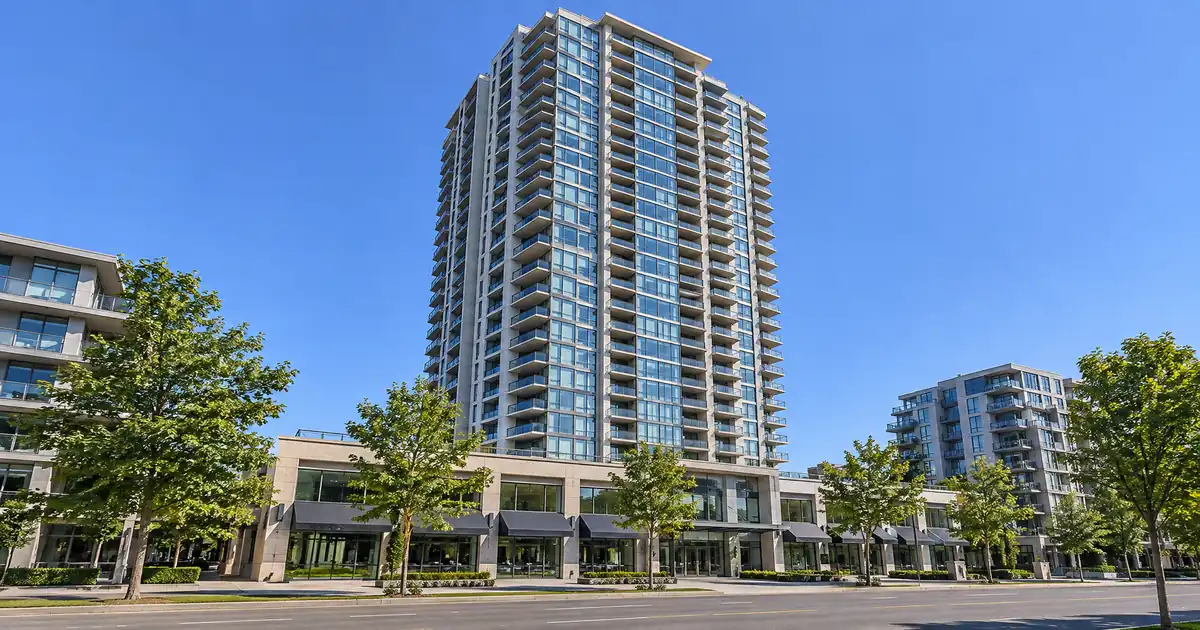
The Quick Read: No published list of banks answers this, because lenders decide it in two separate reviews: one of the borrower and one of the building, and a commercial floor is a building question that comes before any equity math. A residential unit in a tower with a retail or office floor can be eligible, while a commercial, live-work or mixed-use unit is not.
- A line on an investment condo is a narrow product. On this wholesale network the ceiling is 70% CLTV, with a 700 minimum credit score and a $500,000 maximum line.
- On a primary residence or second home, the ceiling reaches 90% CLTV, and only at a 720-or-better credit profile.
- The unit must be residential. Mixed-use or commercial collateral, condotels and co-ops are not offered.
- Non-warrantable condos are eligible, so a commercial floor does not end the file by itself.
- Equity and income do not fix a building that fails project review.
The sections below cover how underwriting treats this property, where the general rule breaks, and what to do if the line is declined. Lendmire is a mortgage broker, not a lender, and every figure here is subject to lender guidelines and a full file review.
How large a line the equity supports.
An equity line is sized by combined loan-to-value, occupancy, and credit — not by rental coverage. Switch the occupancy or the credit band and the ceiling moves with it.
Investment-property lines require a 700 minimum credit score; second-home lines start at a 640 minimum and primary-residence lines at 600, and the combined-LTV ceiling steps down as the credit band drops on primary-residence and second-home lines and holds on investment-property lines; the line cap steps down on primary-residence lines and holds at every tier on investment-property and second-home lines.
A debt-to-income ratio above 45% requires 680+ credit. Profiles under 640 are limited to single-family homes. At least 75% of the approved line is drawn at closing. Ceilings, floors, and caps update from Lendmire’s centralized guideline source.
Line estimate
Illustrative estimate only — not a quote, Loan Estimate, approval, or commitment to lend. The rate is an editable assumption; equity-line pricing is variable through both the draw and repayment periods and never converts to fixed. Occupancy and credit drive the ceiling together: an investment property tops out at 70% combined LTV (minimum credit 700, line cap $500,000); a second home tops out at 90% combined LTV (minimum credit 640, line cap $500,000), with the ceiling stepping down as the credit band drops (the cap holds at every tier); a primary residence tops out at 90% combined LTV (minimum credit 600), and its $750,000 maximum line is available only at 75% combined LTV or below with a 700-or-better credit profile (720 on the longer-runway program) and a full appraisal. Lines above $500,000 require a full appraisal. Credit, debt-to-income, property type, and full underwriting review all affect the final line.
Unit Review and Building Review Are Different Tests
Every condo line runs through two gates. The first gate looks at the borrower. The second gate looks at the building. A commercial floor only touches the second gate.
The borrower gate covers credit score, debt load, title and occupancy. Across the wholesale network, the maximum debt-to-income ratio is 50%, and it drops to 45% for credit profiles from 600 to 679. The line is qualified on the interest-only payment calculated on the maximum draw.
The building gate is where the commercial floor matters. The lender asks the HOA to complete a condo questionnaire. It usually covers the budget and reserve balance, the delinquency rate, insurance declarations, litigation status and the commercial percentage.
A strong credit score does not rescue a building that fails that review. Strong rent or income does not rescue it either. That is why “which banks” is the wrong first question. The better first question is whether your building passes project review at all.
Key Terms Defined
Non-warrantable condo: A condo project that fails standard agency project rules, often because of heavy investor concentration, pending litigation, or too much commercial space. Enact’s overview of non-warrantable triggers lists mixed-use or commercial space generally above 35% as one of them.
Commercial share: The portion of a building, or of the condo project, used for retail, office, hotel or other non-residential purposes.
Project review: The lender’s look at the whole building, using the HOA questionnaire, budget, insurance and legal status, before it looks at your unit.
CLTV: Combined loan-to-value. It adds the new line to every lien already on the unit, then divides by the property value.
Mixed-use: A category, not a measurement. A tower with one modest storefront and a tower with stacked retail, office and hotel floors are both called mixed-use.
How Underwriting Treats the File, Step by Step
Here is the order a lender works through on a residential unit in a tower with a commercial floor.
1. Classify the collateral. The unit itself must be a residential condo. A unit zoned or designated commercial, mixed-use or live-work is a different collateral type. A residential unit in a building that has a commercial floor is a project question, not a unit-type question.
2. Check the borrower. The lender checks credit, debt load, occupancy and how title is held. Title must sit with the individual borrower or a revocable living trust. LLCs, corporations, partnerships and irrevocable, blind or land trusts cannot hold title on this product.
3. Run the equity math. The line limit is the property value times the CLTV cap, minus every lien already on the unit. A commercial floor does not change that formula. It only changes whether a lender will lend at all.
4. Send the project questionnaire. The HOA or management company completes it. An incomplete questionnaire stalls the file, and so does a stale budget or an out-of-date insurance declaration.
5. Measure the commercial share. The lender compares commercial square footage to the building, and sometimes to the condo project alone. It also judges the character of the space.
6. Order valuation. Lines at or below $500,000 ordinarily run an automated valuation with no traditional appraisal. A higher CLTV may require a secondary valuation, and a full appraisal is required on every line above $500,000. A borrower may request a full appraisal in any case.
7. Decide on the building. The commercial share and type of use come first. Investor concentration, litigation, reserves and insurance come next.
Unit vs. Building: Who Gets What Answer
| Collateral | Likely HELOC outcome | Fallback |
|---|---|---|
| Residential unit, tower with commercial floor | Reviewed at project level | DSCR cash-out |
| Live-work or mixed-use unit | Not offered | Commercial or DSCR route |
| Commercial condo unit | Not offered | Commercial financing |
| Whole mixed-use building | Not a condo HELOC | DSCR or commercial loan |
| Condotel or rental-pool unit | Not offered | Case-by-case outside this product |
The second row deserves a close look. A unit that is itself designated mixed-use or commercial is ineligible on this network’s equity lines. The building around a residential unit is a separate matter.
How the Commercial Share Gets Measured
Most mixed-use residential buildings carry a commercial share in the single digits or low teens, according to National Condo Inspections. A tower described as “mixed-use” may therefore sit nowhere near any cap.
Agency conventional purchase programs offer a useful yardstick, though they do not govern an equity line. Fannie Mae’s selling guide says no more than 35% of the project, or of the building containing it, can be commercial or mixed-use space, counting space above and below grade. Its calculation excludes an HOA-owned amenity for residents’ exclusive use and commercial parking. Rental apartments and hotels count toward the commercial share.
Freddie Mac’s condominium FAQ adds two points. The calculation runs against the building in which the project is located. Sellers can also request a waiver for a project that misses the commercial-space rule.
Two cautions follow from that. First, a HELOC lender sets its own project standards. Some use the agency tests as a reference point and none is bound by them. Second, the agency limit is not a safe harbor. A building at 30% may still fail on investor concentration or litigation.
Character matters as much as percentage. One storefront reads differently from retail, office and hotel floors stacked together. Hotel use is the sharpest example. A building with a rental pool and nightly stays can be classed as a condotel, and condotels are not offered on this network regardless of percentage.
What a Broker-Accessed Line Looks Like
The program figures differ by occupancy, so a single headline number would mislead. Here are the ranges across the wholesale network, subject to lender guidelines.
| Occupancy | Max CLTV | Min credit | Max line |
|---|---|---|---|
| Investment property | 70% | 700 | $500,000 |
| Second home | 90% (720+ only) | 640 | $500,000 |
| Primary residence | 90% (720+ only) | 600 | $500,000 at 90% CLTV; $750,000 at 75% CLTV, 700+ (720 on the longer-runway program) |
On a primary residence, the 90% tier at a 720-or-better profile applies up to a $500,000 line. Lower credit tiers step the ceiling down. A 700 profile reaches 85% on a line up to $500,000. A 640 profile reaches 80% on a primary residence, while a second home at 640 reaches 75%.
Draw structure is the other piece. Primary residences and second homes can use a 3-year interest-only draw with a 17-year repayment period, or a 5-year draw with a 25-year repayment period. Investment lines use the 5-year draw and 25-year repayment structure only. At least 75% of the line is drawn at closing, and the pricing floats and never converts to fixed.
NerdWallet notes that not every lender offers a line on an investment property and that qualification is strict. It reports market-wide investment ceilings as high as 80%. On this network, an investment line stops at 70% CLTV.
Bankrate adds that lenders weigh both the borrower’s creditworthiness and the property’s financials. It also says pricing and fees are typically higher on investment collateral because the property is riskier.
Availability is also narrower than for DSCR loans. Equity lines run through Lendmire in 16 full-service states, while the DSCR footprint covers 41 markets, including Washington, D.C.
Where the General Rule Breaks
The unit is residential but the lobby is leased out. A commercial lobby tenant, parking operator or ground-floor restaurant all feed into the commercial share. How each is counted depends on the lender’s project review.
The commercial floor sits in a separate association. If the commercial space is owned by a separate HOA or a separate building, the measurement can change. Under the agency rule above, it matters whether the space is co-located in the residential building.
Small projects. Freddie Mac’s FAQ gives different commercial-space limits for 2-to-4-unit and 5-to-10-unit projects. A tower is rarely in that group, but a small mixed-use condo project can be.
Government-insured programs. FHA sets its own range, which National Condo Inspections puts between 25% and 55%. That is a contrast point, not a rule for equity lines.
The whole building is the collateral. That is not a condo line at all. The route is DSCR or commercial financing.
Pending litigation or heavy investor concentration. These can fail a project even when the commercial share is small. Non-warrantable condos are eligible on this network’s lines, but each lender still reviews the building on its own terms.
Exposure limits. A borrower is limited to three lines, and an owner with more than 15 financed properties is not eligible.
Which Lender Types Tend to Say Yes
| Lender type | General tendency |
|---|---|
| Large retail banks | Standardized project screens, little flexibility |
| Community banks, credit unions | Vary by institution and branch policy |
| Portfolio lenders | Set their own project standards |
| Broker-accessed wholesale lenders | Programs differ, so scenarios get matched |
These are tendencies, not promises. Each lender’s project review sets the answer.
Here is the practical advantage of a broker. Wholesale lenders do not all draw the same lines on condo projects. A broker that shops several of them can match the building, the occupancy and the credit profile to the program that fits. The best program for your situation depends on the property type, credit profile, leverage need and documentation, not on a ranking.
A Worked Scenario
Picture a 40-story tower with ground-floor retail and a borrower who owns an upper-floor unit as a rental. The unit is residential, so the collateral type is acceptable. The retail floor is a small share of the building, and the HOA budget and reserves look sound.
On this network, that is an investment-property line. It carries the 70% CLTV ceiling, a 700 minimum score and the 5-year draw structure. If the first lien already uses most of the 70%, the line may be small or zero. A commercial floor did not cause that. The equity formula did.
Now change one fact. The HOA discloses pending litigation, and the reserve balance is thin. The borrower’s credit and equity are unchanged, but the building may fail project review. Strong personal numbers do not offset that.
If the Line Is Declined
A decline on a HELOC does not end the equity conversation. The usual fallback for a rental is a DSCR cash-out refinance, which qualifies primarily on property-level rental income covering the payment, subject to lender guidelines. Our complete DSCR loans guide covers the mechanics.
Across the wholesale network, DSCR cash-out refinances top out around 75% LTV, with about 6 months of seasoning commonly expected. The debt service coverage ratio, which is rent divided by the full payment, starts at 1.00 on select programs. A separate select-lender path takes coverage below 1.00, with leverage and terms adjusted. Credit floors commonly sit around 660, with 700-plus unlocking stronger leverage tiers.
Two caveats apply. First, DSCR compares rent to the full payment only, so clearing 1.00 does not mean positive cash flow once repairs, vacancy and management are counted. Second, a DSCR cash-out still faces its own condo review, so a building that fails one review may face questions in the other. An LLC-titled property is often a good fit for the DSCR route, subject to lender program eligibility, since an LLC cannot hold title on the equity line.
Lendmire’s piece How to Qualify for a DSCR HELOC on a High-Rise Condo With a Commercial Floor covers those paths in more detail.
Before You Apply
Gather these first. They are the items a lender asks for before it looks at your unit.
- The HOA’s most recent budget and reserve balance
- The condo questionnaire, completed and current
- Insurance declarations for the building
- Any litigation disclosures
- The building’s commercial square footage, if the management company has it
- Your title documents, showing individual or revocable trust ownership
On the first call with any lender, ask five things. Is a residential unit in a mixed-use tower eligible? How is the commercial share measured, against the building or the project? Are non-warrantable projects considered? What is the CLTV ceiling for my occupancy? Does valuation run automated or by full appraisal at my line size?
Frequently Asked Questions
Can any bank give me a HELOC if my building has a retail floor?
Some lenders can, but none can be named in advance. Eligibility is set by each lender’s project review, and there is no agency rule that governs equity lines. A residential unit in a building with a modest commercial share is reviewed on the building’s overall health, not on the commercial floor alone.
Does the 35% commercial limit apply to a HELOC?
No. That figure belongs to agency conventional purchase programs. A HELOC lender sets its own project standards. Some use the agency tests as a reference point, but none is bound by them.
What if my unit is zoned live-work or mixed-use?
It is not offered on this network’s equity lines. Mixed-use and commercial collateral are ineligible, along with condotels, co-ops and manufactured homes. A DSCR or commercial financing route is the more typical fit for those units.
Is my investment condo treated like my primary home for a line?
No. On this network an investment line is capped at 70% CLTV with a 700 minimum credit score and a $500,000 maximum line. A primary residence can reach 90% CLTV, but only at a 720-or-better credit profile.
What happens if the building is non-warrantable?
It does not rule out the line by itself, since non-warrantable condos are eligible here. It does mean the lender judges the project on its own terms. A condo that fails agency standards narrows the pool of lenders before the equity math starts.
If you are considering a home equity line and want to see how the numbers work, Lendmire can help you compare HELOC options based on the property, the equity available, credit profile, combined leverage, and your goals. Program availability depends on the lender, the file and the building. Call 828-256-2183 or request a quote.
About Lendmire
Lendmire (NMLS# 2371349) is a mortgage brokerage serving homeowners and real estate investors in its 16 full-service states. Home equity lines of credit are arranged through wholesale lending channels; Lendmire brokers the line and the lender underwrites each application under its occupancy-based guidelines. Scotsman Guide named Lendmire a Top Mortgage Workplace in both 2025 and 2026.
Get Started
Ready to find the right loan for you?
See your offer in seconds. No credit pull, no obligation.
Informational only. Not a Loan Estimate, approval, or commitment to lend. Program availability and eligibility are subject to lender guidelines, credit approval, property review, and underwriting.
References
1. Enact: What Makes a Condominium Non-Warrantable
2. National Condo Inspections: Commercial Space Ratio
3. Fannie Mae Selling Guide B4-2.1-03
4. Freddie Mac Condominium Unit Mortgage FAQ
5. NerdWallet: Can You Get a HELOC on an Investment Property
6. Bankrate: HELOC on an Investment Property
This article is part of Lendmire’s HELOC & home equity loan program — full qualification details, guidelines, and scenarios live on the program page.
Related reading: Banks That Offer a DSCR HELOC for Investors Buying More Rentals · Banks That Offer a DSCR HELOC for Equity-Rich Rental Holders · Banks That Offer a DSCR HELOC When Personal Debt-to-Income Is Too High
Brandon Miller
Founder & CEO, Mortgage Loan Originator, Lendmire LLC
- Mortgage Loan Originator · NMLS# 1129696 · Verify on NMLS Consumer Access
- North Carolina Real Estate Broker · License# 343312 · Verify on NCREC
- North Carolina Insurance Producer · License# 19053198 · Property, Casualty, Life, Health · Verify on NAIC SBS
- Lendmire LLC · Firm NMLS# 2371349 · Verify firm licensure
Disclosures. The information presented in this article is general market commentary, not financial, legal, or tax advice. Lendmire is a mortgage brokerage (NMLS# 2371349) — not a direct lender or depository institution — and loan placement is subject to lender underwriting. Nothing in this content represents a commitment to lend. Loan terms, pricing, and program availability vary based on borrower qualifications, property characteristics, and state of subject property, and are subject to change at any time. Lendmire complies with Equal Housing Opportunity requirements. Consumer access: nmlsconsumeraccess.org.