
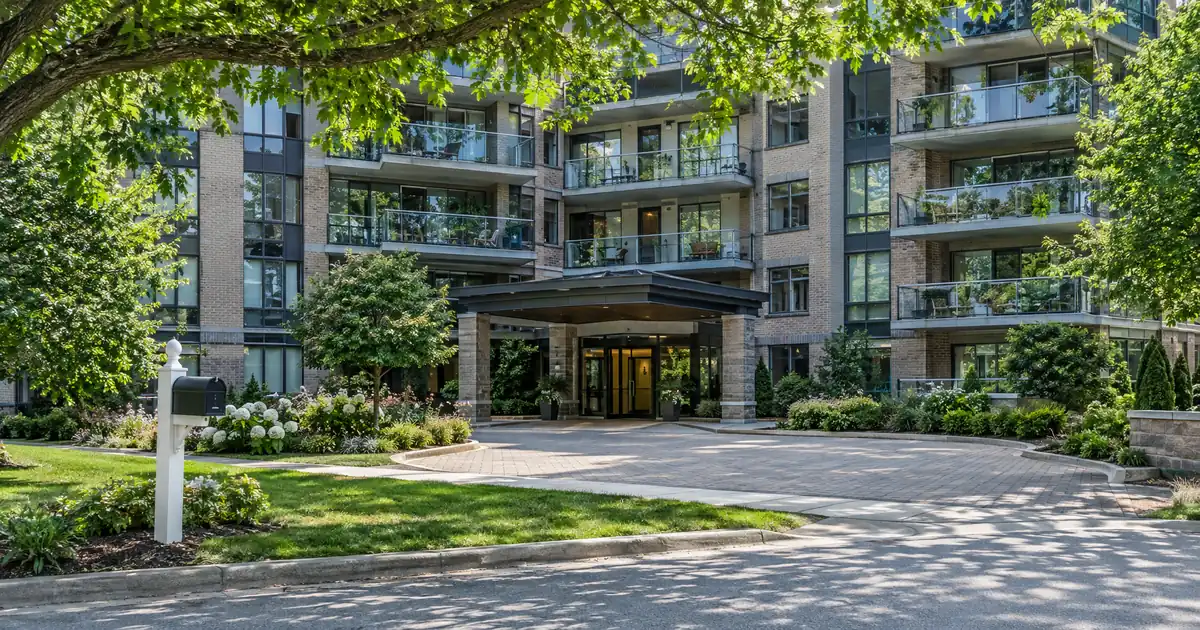
The Quick Read: The best program for your situation fits three things at once: a building that lenders will accept as collateral, an income method that matches how your money flows, and a cash-out amount that stays under the collateral cap. The building is a gate of its own, separate from income. Select lenders in Lendmire’s wholesale network can write this kind of file, subject to lender guidelines and individual underwriting.
- A condotel is a hotel-style condo, so agency-backed loans are off the table and the deal works to non-QM (non-qualified mortgage) lending.
- A bank statement loan is reviewed on documented income under the applicable program, subject to lender guidelines. It is not a no-documentation loan.
- Cash-out is capped by collateral first, and the cap depends on occupancy: up to 80% LTV on a primary residence with a fixed expense ratio, up to 75% on a second home, and up to 75% on an investment property.
- Whether you occupy the unit decides which paperwork regime applies to the loan.
What Makes a Condotel Different From a Regular Condo?
A condotel is a condo building that runs like a hotel. Units are individually owned, but a hotel operator often manages the front desk, housekeeping and bookings. That structure is what lenders react to, whatever your income looks like.
DSCR Cash-Out Calculator
Run the cash-out numbers in your market
Rate source: Freddie Mac 30-yr average via FRED® — Federal Reserve Bank of St. Louis · effective Nov 5, 2026
Prefilled with starting assumptions — enter your property’s value, balance, taxes, and insurance for a more accurate picture.
Program parameters update from Lendmire’s centralized guideline source. Taxes and insurance are editable estimates.
As of Nov 5, 2026 · General Freddie Mac market benchmark, not a Lendmire loan offer. Property value, balance, taxes, and insurance are editable estimates. Maximum loan-to-value varies by lender, program, property type, and seasoning. Not a Loan Estimate, approval, or commitment to lend. Program availability and eligibility are subject to lender guidelines, credit approval, property review, and underwriting.
The standard agency mortgage programs often treat hotel-operated projects as ineligible. Common triggers include a hotel or resort license, mandatory rental pooling, blackout dates that limit your own stays, and marketing the units as an investment. Strong income does not fix this, because the problem sits with the project, not the borrower.
So a condotel cash-out happens in the non-QM or portfolio channel. Non-QM simply means a loan that follows its own lender guidelines instead of the standard agency box. A mortgage broker like Lendmire shops that channel, then matches your scenario to the lenders that write this property type.
Not every condo that allows Airbnb is a condotel. A normal residential building that lets owners list on a booking platform can stay financeable if it does not run like a hotel. The gap between those two property types is large for pricing, leverage and eligibility, so confirm which one you own before anything else.
What Does “Best Program” Actually Mean Here?
There is no single best program. The right fit depends on two separate underwriting questions, and each one has its own gate.
Gate one is the borrower’s income. This is where the bank statement method applies. The lender decides whether your deposits support the new loan.
Gate two is the collateral. This is the condotel itself. The lender reviews the building, the rental structure, the appraisal and the cash-out cap.
When you compare programs, run each one through the same criteria:
- Building eligibility: Does the lender accept hotel-style projects, rental pools and hotel brands at all?
- Income method: Does the lender use business or personal statements, and how does it treat rental deposits?
- Expense factor: Is it a fixed percentage, or can an accountant-prepared ratio replace it?
- Cash-out ceiling: What LTV applies to your occupancy and this collateral?
- Reserves and loan size: Do they fit your balance sheet and your loan amount?
Across the wholesale network, lenders differ most on building eligibility. One program will take a condotel with a voluntary rental program and refuse a mandatory pool. Another may do the opposite. A broker’s real value is knowing which guideline set fits your building before you pay for an appraisal.
How Does Bank Statement Underwriting Work, Step by Step?
1. Choose the documentation path. Bank statements are one of several alternative ways to show repayment ability. NerdWallet’s non-QM explainer lists bank statements, asset-based qualifying and 1099s as common options.
2. Collect 12 months of statements. Programs in the network typically ask for 12 months of business or personal statements. Some lenders also offer longer lookbacks.
3. Strip out what is not income. The underwriter removes transfers between your own accounts, loan proceeds, refunds and other one-time deposits.
4. Average what remains. Eligible deposits are averaged across the statement window. Ownership share is applied if you own part of the business.
5. Apply the expense factor on business accounts. The lender counts only a portion of business deposits as income. The percentage is lender-specific, and an accountant-prepared expense ratio can sometimes replace the default. Personal-account statements often skip this step.
6. Review the property. The lender orders an appraisal and a condo questionnaire, then checks the building’s rental structure.
7. Size the cash-out. The final amount lands under the collateral cap, after payoff and reserves.
Never promise yourself a specific expense factor. It varies by lender and by program, and it can move the qualifying income number materially.
Do Vacation-Rental Deposits Count as Income?
This is the pivotal question for a condotel owner, and the honest answer is that it depends on where the nightly revenue lands. Underwriters must decide whether those deposits are business income of the borrower or income of the property.
Picture three owners. The first books through a platform that pays into the owner’s own account. The deposits show up directly in the statements, and the underwriter judges whether they belong in the income average. The second owner sits in a hotel rental program that pays a monthly net distribution. That payout may be documented with operator statements instead of platform exports. The third owner earns mainly from an unrelated business and treats the condotel as a side asset. That owner’s deposits may tell the whole income story, and the rental becomes one line inside it.
Pooled revenue creates a mismatch. If the operator collects nightly income and sends a smaller net amount, your deposits understate the property’s true gross. Underwriters may then ask for operator statements to reconcile the two. A broker should collect both sets of documents before submission, so the file does not stall on a request for them later.
Seasonality also matters. A beach or ski unit can swing sharply between peak and off-peak months. A 12-month window captures one full cycle. Some programs look at a longer lookback to smooth the swings, and the choice can change the income number noticeably.
Bank Statement or DSCR: Which Lane Fits?
The two lanes answer different questions. A bank statement loan asks whether your deposits support the payment. A DSCR (debt service coverage ratio) loan asks whether the property’s own income covers it. The ratio is monthly rent divided by the full monthly obligation, including principal, interest, taxes, insurance and HOA dues.
| Factor | Bank Statement Lane | DSCR Lane |
|---|---|---|
| What is reviewed | Your deposit history | The property’s income |
| Best-fit owner | Strong deposits, weak property cash flow | Strong, documented rental income |
| Rental role | One input among your deposits | The main qualifying input |
| Cash-out cap | Set by occupancy and collateral | Set by collateral and income |
| Key documents | 12 months of statements | Rental history or market report |
A business owner with heavy write-offs often looks stronger on deposits than on tax returns. If the condotel’s own income is modest or volatile, bank statements shift the burden to your cash flow. If the unit produces strong, documented income, the DSCR lane may fit better, and it does not lean on your personal deposits. Lendmire covers that side in its piece Best DSCR Cash-Out Refinance Program on a Condotel Used as a Vacation Rental. For the wider picture, the complete DSCR loans guide explains how that program family works.
One misconception is worth correcting. A bank statement loan does not always produce a bigger cash-out than DSCR. The collateral cap binds first. Income only sets the ceiling on what you can afford.
How Is the Cash-Out Sized on a Condotel?
The cash-out is the new loan amount minus your payoff and costs, and the new loan can never exceed the lender’s LTV cap. LTV (loan-to-value) is the loan balance divided by the appraised value.
The cap depends on how the property is classified. Here are the cash-out ceilings through select lenders in the network, subject to lender guidelines:
| Occupancy | Cash-Out Ceiling |
|---|---|
| Primary residence, fixed expense ratio | Up to 80% LTV |
| Primary residence, accountant-prepared ratio | Up to 75% LTV |
| Second home | Up to 75% LTV |
| Investment property | Up to about 75% LTV |
The 90% figure you may see for primary residences applies to purchase and rate-and-term refinances, not to cash-out. Condotel collateral often pulls leverage below these ceilings, because hotel-style projects carry extra lender caution. Treat these numbers as the upper limits, not the expected result.
Here is how the stacking works in practice. Say a lender caps your cash-out at 75% LTV. The new loan cannot exceed three-quarters of appraised value. Your existing mortgage balance is paid first. Whatever remains is your cash, and it can shrink further if the appraisal comes in low or the lender sets a tighter cap for this building. Terms depend on the lender’s guidelines, the property type, the leverage, and a full review of the credit profile.
Loan sizes in the program run from $125,000 to $3,500,000, and reserves are commonly around six months of the housing payment. Reserves are liquid funds the lender wants you to keep after closing. Ask whether cash-out proceeds may count toward them, because lenders differ on that.
Use the site’s calculator for an illustrative estimate of how a given LTV translates into dollars. It is an editable illustration, not a quote.
What Should You Check Before You Apply?
Check the building before you spend money on an appraisal. Building issues can sink a condotel file even when the borrower is strong. Gather this list first:
- The condo questionnaire from the association, covering budget, reserve study, insurance, delinquencies and litigation.
- Whether the rental program is voluntary or mandatory.
- The management or rental-pool agreement and the revenue split.
- Any hotel flag, hotel license or registration.
- Blackout dates and personal-use limits.
- Whether the project’s insurance looks adequate.
Condo units are typically appraised on Form 1073. Form 1007, the single-family rent schedule, is built around long-term market rent. HousingWire reports that agency policy leaders say it was not designed for short-term rental income, and that narrative income addenda are the alternative. McKissock’s appraisal education blog makes the same point: the form cannot document nightly rates.
Condotel valuation carries its own risk. Furniture, fixtures and operator value can leak into an appraisal if the appraiser is not careful. Hiring an appraiser experienced with hotel-style units protects the cash-out number.
Short-term rental rules can vary by city, county, HOA, and property type, so investors should confirm local rules before relying on projected rental income.
Where Does the General Rule Break?
Several edge cases change the answer, and a few reverse it.
Owner-use limits. Mandatory pooling and blackout dates are hotel traits for agency purposes. Non-QM lenders vary. A few will accept a hotel brand with a rental pool, while others will not.
Agency rule changes do not rescue condotels. Loosened limits for some ordinary condo buildings do not make a hotel-operated project eligible for conventional financing.
Occupancy changes the product. If you stay in the unit enough that it functions as your second home, the leverage ceiling and paperwork both change. Second-home cash-out tops out at 75% LTV, below the 80% available on a primary residence with a fixed expense ratio.
Foreign nationals. They are often handled in a separate non-QM track with its own documentation.
Mislabeled buildings. Sometimes a project is flagged as a condotel when it is really a residential condo with a short-term rental policy. A corrected questionnaire can change the program fit, so ask for the exact classification before you assume the worst.
Thin lender appetite. Condotels can fund, but not every lender wants them. Income uncertainty, operator quality and association issues are common reasons. A broker who shops several lenders widens the field.
Which Paperwork Rules Apply to Your Loan?
Occupancy decides the regime. A bank statement loan on a non-owner-occupied rental is a business-purpose loan. Credit used to acquire, improve or maintain non-owner-occupied rental property is treated as business purpose under CFPB’s Regulation Z § 1026.3 commentary, and business-purpose credit is exempt under the eCFR text of 12 CFR 1026.3.
In plain terms, a rental-use condotel file is a business-purpose loan, so it falls outside the consumer disclosure regime and TRID does not apply to it. A condotel you occupy as a primary residence or second home is a consumer mortgage, and TRID applies. Consumer mortgage licensing for those files covers 16 states. The two paths are not interchangeable, so tell your broker plainly how you will use the unit. This is classification context, not legal advice.
What Are the Risks, and How Do You Plan the Exit?
Condotel cash-out comes with trade-offs that regular rentals do not have.
- Thinner buyer pool. Fewer buyers want hotel-style units, and fewer lenders will finance them. That can limit a later sale or refinance.
- Fee drag. HOA and hotel fees, the operator’s revenue split and personal-use caps all reduce true net cash flow.
- Execution risk. Condo questionnaire gaps, weak insurance or pending litigation can stall a file regardless of borrower strength.
- Appraisal risk. A low value shrinks the cash-out under the LTV cap.
- Income volatility. Seasonal swings and market shifts affect both your deposits and your ability to carry the loan.
Plan your exit before you borrow. Ask what you would do if the next lender declined the building. Keep the new loan sized so the property can carry itself even in a slow stretch.
If you plan to put proceeds toward another rental, Lendmire’s piece Best Bank Statement Cash-Out Refinance Program on a Vacation Home You Also Rent Out covers the neighboring case.
Key Terms Defined
Condotel: A condo unit in a building that operates like a hotel, often with a front desk, a rental program and an operator.
Non-warrantable: A condo project that falls outside standard agency rules, usually because of hotel-style operation, heavy rentals, litigation or insurance problems.
Bank statement loan: A non-QM loan that is reviewed around documented income from your deposit history, using lender-specific expense factors.
DSCR: Debt service coverage ratio, which compares a property’s rent to its full monthly obligation.
LTV: Loan-to-value, the loan balance divided by the property’s appraised value.
Reserves: Liquid funds a lender wants you to hold after the loan is made.
Seasoning: The period a lender wants between buying a property and refinancing it.
Frequently Asked Questions
Can I use a conventional loan to cash out on a condotel?
Generally no. Agency-backed loans exclude hotel-operated projects, and that exclusion attaches to the building, not to you. The workable path is a non-QM or portfolio program, where lenders set their own condotel guidelines.
Are bank statement loans really documentation-light?
No. They require verified deposits, an income calculation and a capacity review. They change what documents prove income, not whether income gets verified. On consumer-purpose loans, bank statements are among the documents a lender may use to verify income.
Can I use both a bank statement and a DSCR approach?
You can compare both lanes on the same property, and a broker often does exactly that. The better fit depends on whether your deposits or the unit’s rental income tells the stronger story.
Does a mandatory rental pool hurt my chances?
It can narrow the field, since some lenders accept pooled units and others do not. Your broker should check the pool structure against each program before you order an appraisal.
What if my building was labeled a condotel by mistake?
Ask the association for the exact classification and the completed condo questionnaire. If the project is a residential building with a rental policy, more programs may open up. Eligibility is decided by the lender after reviewing the project.
Next Step
If you are self-employed and want to see how the numbers work, Lendmire can help you compare bank statement loan options based on your deposits, the property, credit profile, leverage, and your goals. Qualification is subject to lender guidelines. This is not a commitment to lend.
A deeper walk-through of investment-property equity extraction lives in Lendmire’s guide to cash-out refinance on an investment property.
About Lendmire
Lendmire (NMLS# 2371349) is a mortgage broker licensed for consumer lending in 16 states. Bank statement, P&L-only, 1099-only and asset-based mortgages for self-employed and high-net-worth borrowers are arranged through wholesale lenders on primary residences, second homes and investment properties; every file is underwritten by the lender under its program guidelines. Scotsman Guide named Lendmire a Top Mortgage Workplace in both 2025 and 2026.
Get Started
Ready to find the right loan for you?
See your offer in seconds. No credit pull, no obligation.
Informational only. Not a Loan Estimate, approval, or commitment to lend. Program availability and eligibility are subject to lender guidelines, credit approval, property review, and underwriting.
References
2. HousingWire, Short-Term Rentals and the Appraisal Playbook
3. McKissock’s appraisal education blog
4. CFPB, Regulation Z § 1026.3
This article is part of Lendmire’s bank statement loan program — full qualification details, guidelines, and scenarios live on the program page.
Related reading: How to Qualify and Apply for a Bank Statement Cash-Out Refinance Twice in Twelve Months · Best Bank Statement Cash-Out Refinance Program When LTV Limits Shrink Cash-Out on a Rental · How to Qualify and Apply for a Bank Statement Cash-Out Refinance With a CPA Letter
Brandon Miller
Founder & CEO, Mortgage Loan Originator, Lendmire LLC
- Mortgage Loan Originator · NMLS# 1129696 · Verify on NMLS Consumer Access
- North Carolina Real Estate Broker · License# 343312 · Verify on NCREC
- North Carolina Insurance Producer · License# 19053198 · Property, Casualty, Life, Health · Verify on NAIC SBS
- Lendmire LLC · Firm NMLS# 2371349 · Verify firm licensure
Required disclosures. Lendmire (NMLS# 2371349) operates as a licensed mortgage broker, not a direct lender or depository. The discussion in this article is general in nature and should not be relied upon as financial, legal, or tax advice — every investment scenario is unique and should be reviewed by a qualified professional. Any loan inquiry is subject to lender underwriting, and this article is not a commitment to lend or a guarantee of approval. Mortgage rates, loan terms, and program guidelines vary by borrower, property, and state, and may change without notice. Equal Housing Opportunity. Verify licensure at NMLS Consumer Access.