
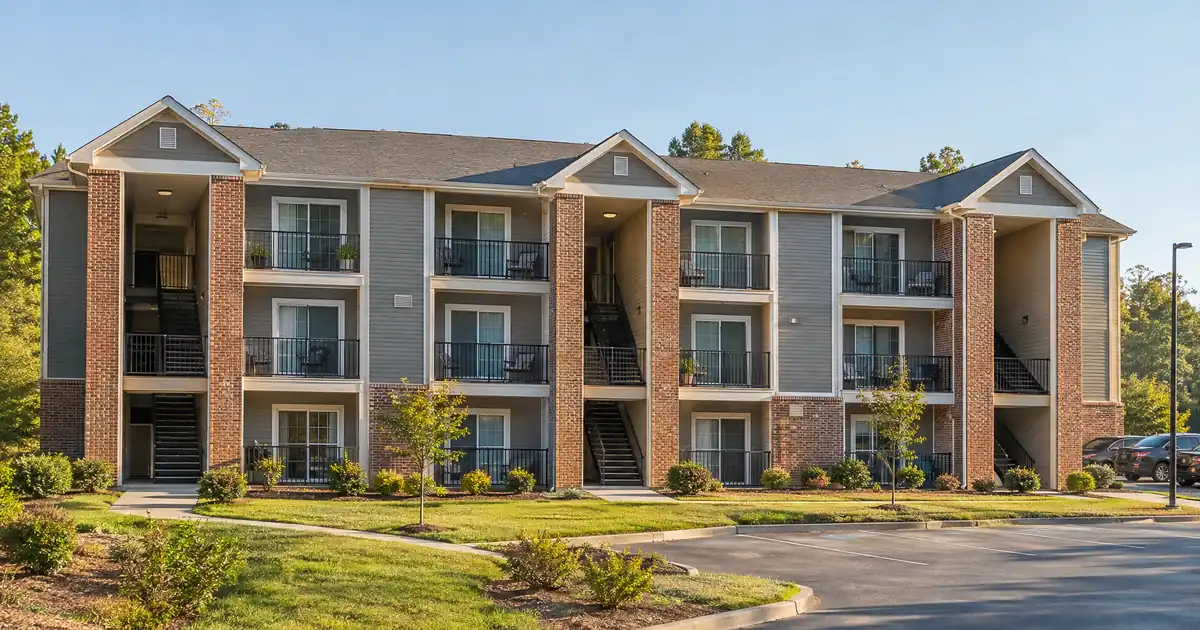
The Quick Read: The right program for a multifamily building is the one that matches your documents, your unit count, and the leverage you need, because lenders that write bank statement files treat a two-to-four-unit building very differently from a five-plus-unit building and a rental differently from a home you live in. A bank statement loan is reviewed around documented income under the applicable program, subject to lender guidelines. A broker that shops several wholesale lenders can match the file to the program.
- On an investment property, a cash-out refinance tops out around 75% LTV. Owner-occupied cash-out runs up to 80% on a primary residence and up to 75% on a second home.
- Qualifying income comes from 12 months of business or personal bank statements, averaged and adjusted by each lender’s expense factor.
- Unit count is the biggest fork. Two-to-four-unit buildings fit residential-style programs, while five-plus-unit buildings often move to commercial-style underwriting.
- Loan sizes generally run from $125,000 to $3,500,000, with reserves commonly around 6 months of the housing payment.
- If your personal income is thin or messy but the building covers its own payment, a DSCR loan may fit better than a bank statement loan.
What Makes a Bank Statement Cash-Out Program Fit a Multifamily Building?
Three things decide the fit: how the lender reads your deposits, how it classifies the building, and how much of the value it will lend against. A program can be strong on one and weak on the others, so the fit matters more than any single feature.
DSCR Cash-Out Calculator
Run the cash-out numbers in your market
Rate is an editable market assumption — the live benchmark loads when available.
Prefilled with starting assumptions — enter your property’s value, balance, taxes, and insurance for a more accurate picture.
Program parameters update from Lendmire’s centralized guideline source. Taxes and insurance are editable estimates.
Fallback assumption · General Freddie Mac market benchmark, not a Lendmire loan offer. Property value, balance, taxes, and insurance are editable estimates. Maximum loan-to-value varies by lender, program, property type, and seasoning. Not a Loan Estimate, approval, or commitment to lend. Program availability and eligibility are subject to lender guidelines, credit approval, property review, and underwriting.
A cash-out refinance replaces your current mortgage with a larger one and pays you the difference. A bank statement version changes only how your income is proven. The lender reads deposits instead of tax returns, which helps when write-offs make your returns look smaller than your real cash flow.
This is not a shortcut around underwriting. It is full documentation with a different source. The lender still checks credit, debts, the property, the appraisal, and reserves. Lendmire is a mortgage broker, so it does not lend. It arranges these files through select wholesale lenders, and each lender sets its own program sheet.
Key Terms Defined
Bank statement loan: A mortgage that is reviewed around averaged deposits from 12 months of statements instead of tax returns.
Non-QM: Short for non-qualified mortgage, a loan that follows a lender’s own underwriting rules instead of the standard consumer-mortgage template.
Expense factor: The share of business deposits a lender assumes goes to costs, so only the remainder counts as your income.
LTV: Loan-to-value, the new loan balance divided by the appraised value of the building.
Seasoning: The waiting period a lender wants after you buy a property or after your current loan starts, before it will refinance.
DSCR: Debt service coverage ratio, the building’s monthly rent divided by its monthly housing obligation, which tests the property instead of you.
Business-purpose loan: A loan made for investment or business use, such as a rental building you do not live in.
Classify the Building First
Count the units before you compare anything. That count sets the lender pool, the appraisal type, and the underwriting logic.
For two-to-four-unit buildings, the appraiser typically uses the small residential income property report, known as Form 1025. Fannie Mae’s Selling Guide describes that form as the report for two- to four-unit properties. Value comes mostly from comparable sales.
Five-plus-unit buildings are generally valued on net operating income and the cap rate, as this BiggerPockets discussion of 1–4 versus 5–12 unit buildings lays out. Net operating income is rent less operating costs, and the cap rate converts it into a value. That is a commercial method, and it pulls the file toward commercial lenders.
| Unit count | Typical lane | What qualifies the file |
|---|---|---|
| 2–4 units | Residential-style programs | You (statements) or the building (DSCR) |
| 5+ units | Commercial-style underwriting | Building income and sponsor strength |
| Live in one unit | Owner-occupied program | You, with owner-occupied rules |
Bank statement programs are built mainly around one-to-four-unit collateral. Some lenders may look at larger buildings, but that depends entirely on the individual program sheet. Confirm the unit count with the broker before you spend money on an appraisal.
How Underwriting Treats Your Deposits, Step by Step
The lender turns a year of deposits into a monthly income figure. Each step below can move that figure up or down.
1. Pick the statement set. Programs in the network use 12 months of statements, business or personal. Personal statements generally skip the expense factor. Business statements do not.
2. Scrub the deposits. The underwriter removes transfers between your own accounts, loan proceeds, refunds, and one-time windfalls. What is left is eligible income.
3. Apply the expense factor. The math is eligible deposits divided by the number of months, times one minus the expense factor, times your ownership share. Scotsman Guide’s trade coverage notes that non-QM lenders can calculate qualifying income from a standard expense factor. Each lender sets its own number, and a third-party profit-and-loss statement or an accountant’s expense letter can sometimes replace a flat factor.
4. Test income against debts. The lender compares your monthly debts, including the new, larger payment, to your qualifying income. If you own several properties, this step is often the bottleneck.
5. Check credit and reserves. Reserves commonly run around 6 months of the housing payment. Credit tiers affect the leverage you can reach.
6. Order the appraisal. Value sets the LTV, and LTV sets your maximum loan.
7. Check seasoning. Lenders look at how long you have held title and how long your current loan has existed. They treat those as two separate tests.
8. Finish the paperwork. Expect a business-purpose declaration on a rental, plus entity and vesting documents if an LLC holds title, subject to lender program eligibility. Many business-purpose files also ask for a personal guarantee.
How Much Cash Can You Actually Take Out?
Your cash-out is the new loan, minus your payoff, minus closing costs. The LTV cap limits the new loan, so equity alone does not guarantee proceeds.
Run the numbers on a building that appraises at 100 units of value. Assume you want the investment-property ceiling of around 75% LTV, which makes the new loan 75 units. Suppose your payoff is 50 units. That leaves up to 25 units of value before closing costs, and the closing costs come off that. These are modeled assumptions, not market data. Final terms depend on lender guidelines, property type, leverage, and the borrower’s complete credit picture.
Three things can shrink that number:
- A lower appraisal. A smaller value cuts the loan directly.
- Debt-to-income limits. A larger loan means a larger payment, and your qualifying income has to support it.
- Seasoning. A building you just bought or renovated may not be eligible.
Leverage depends on how you live in the building. On a primary residence, owner-occupied cash-out runs up to 80% LTV with a fixed expense ratio, or up to 75% with an accountant-prepared ratio. The accountant route is the lower ceiling, not the higher one. A second home runs up to 75%. The 90% figure you may see applies only to primary-residence purchase and rate-term refinances, never to cash-out. Program sheets may trim these ceilings further for multi-unit collateral. These specifics are subject to lender guidelines and a full review of property, leverage, and credit.
Bank Statement, DSCR, or Commercial: Which Lane?
Pick the lane by asking what proves the loan. Bank statements prove you, DSCR proves the building, and commercial underwriting proves both the building and the sponsor behind it.
| Factor | Bank statement | DSCR | Commercial (5+) |
|---|---|---|---|
| Reviewed on | Your deposits | Property rent vs. payment | Building NOI, sponsor |
| Your other debts | Count against you | Usually not tested | Reviewed by lender |
| Best fit | Strong deposits, messy returns | Thin income, strong rents | Larger buildings |
| Typical units | 1–4 | 1–4 and up | 5 and up |
If you carry several loans, your debt-to-income can cap a bank statement file while the building would pass a coverage test on its own. If your deposits are strong but the building has vacancy or deferred maintenance, the reverse can be true.
Other tools exist too. A home equity line is cheaper to set up but is tied to your primary home, and many lenders will not put one on a rental building. Hard money lends against value and is built for short holds. Selling gets you the equity but ends the cash flow. A bank statement cash-out suits an owner who wants to keep the building and has solid deposits.
Where the General Rule Breaks
The rule of thumb is that statements qualify a 2–4 unit rental, and bigger buildings go commercial. These cases bend it.
You live in one unit. An owner-occupied file is a consumer mortgage, so the consumer disclosure rules, including TRID, apply. The owner-occupied LTV ceilings above apply instead of the investment ceiling. Lenders may apply their own multi-unit limits on top.
The building has five or more units. Bank statement programs rarely fit here. A commercial lender or a DSCR program is the more common path, and any exception depends on the lender.
Part of the building is commercial. Ground-floor retail or office space can push a small building into commercial review. Lender sheets differ on how much commercial space they allow.
Title sits in an LLC. This is common on rentals and usually workable, subject to lender program eligibility. Expect guarantor paperwork, and expect the lender to look through the entity to your ownership share.
Your deposits are pass-through money. Client funds headed to subcontractors, or owner draws, may be treated differently from earned revenue. The underwriter will ask what each large deposit is.
Rent and personal deposits mix. Landlords often run rent through the same account as everything else. Some programs count documented lease income toward the building’s own payment, and others test only deposits. Ask before you apply, and keep rent in clearly labeled accounts if you can.
You just bought or renovated. An investor running a buy-rehab-rent-refinance plan can meet title seasoning while the current loan is still new. Lenders check both, so a timing gap can delay eligibility.
Across the wholesale network Lendmire works with, the most common snag is not the program but the deposits. A file with strong income on paper stalls when large unexplained transfers show up between accounts. The stronger files arrive with a one-page explanation of every deposit that is more than a routine rent or revenue payment.
What Does the Business-Purpose Label Change?
On a rental you do not live in, the loan is a business-purpose loan. That means it is reviewed differently from an owner-occupied mortgage and is exempt from the consumer disclosure forms. The federal rule is in CFPB Regulation Z § 1026.3, which exempts business and commercial credit and lists the factors that decide a loan’s primary purpose. Exempt does not mean casual. Lenders still apply their own underwriting standards, and they take the declaration seriously.
How Do You Judge “Best” for Your Own File?
The best program for your situation is the one that scores well on the criteria below. Use them to compare any option a broker shows you.
- Documentation fit: Do the 12 months of statements you have produce enough qualifying income after the expense factor?
- Property fit: Does the program accept your unit count, mix of uses, and entity title?
- Leverage: Does the cash-out LTV ceiling for your occupancy leave enough proceeds after payoff?
- Debts: Does your debt load still work at the larger payment?
- Reserves and size: Can you meet the reserve requirement, and does the building fall in the loan-size range?
- Terms: Check the program sheet for loan term and prepayment terms. Do not assume any alt-doc program offers extended or interest-only structures. Terms depend on the lender’s guidelines, the property type, the leverage, and a full review of the credit profile.
A broker is useful here because lenders weigh these differently. One program may allow more leverage but want deeper reserves. Another may accept an LLC more easily. The broker’s job is to place the scenario where it fits.
Documents to Prepare
Borrower documents:
- Twelve months of business or personal statements, all pages
- Photo ID and credit authorization
- A short explanation of large or unusual deposits
- An accountant-prepared expense ratio or profit-and-loss statement, if you plan to use one
- A schedule of other properties and loans
Property documents:
- Current rent roll and leases
- Mortgage statement for the payoff
- Insurance declaration and entity paperwork if an LLC holds title
- Operating statements for the building, if you have them
When This Isn’t the Right Fit
Skip a bank statement cash-out if your deposits are thin or hard to explain, because the income math will not work. Skip it if your other debts already crowd your income, because the larger payment makes it worse. Skip it if the building is too large for residential-style programs. In those cases, a DSCR loan or a commercial lender is usually the better lane.
Frequently Asked Questions
Can I use bank statements to refinance a building with five or more units?
Usually not with a standard bank statement program. Those programs are built around one-to-four-unit collateral, and larger buildings tend to move to commercial-style underwriting or DSCR. A few lenders may review exceptions, but that depends on the program sheet and the file.
Do I need tax returns for a bank statement cash-out?
No. The program reviews your file on documented income from your deposits, subject to lender guidelines. You still provide full documentation, including statements, credit, asset records, and property information.
What changes if I live in one unit of the building?
The file becomes an owner-occupied consumer mortgage, so consumer disclosure rules apply. Cash-out leverage follows the owner-occupied ceilings of up to 80% LTV on a primary residence, or up to 75% with an accountant-prepared expense ratio. Lenders may trim those limits for multi-unit collateral. The exact numbers vary by lender and program and follow a full review of property, leverage, and credit.
Can an LLC own the building?
Often yes, subject to lender program eligibility. Expect the lender to look through the entity to the owners, and expect guarantor and vesting documents.
Is bank statement or DSCR better for a multifamily cash-out?
It depends on what is stronger, you or the building. If your deposits are strong and your debts are manageable, bank statements work. If your income is thin or complicated but the rent covers the payment, DSCR tests only the property and may fit better.
Next Steps
If you are self-employed and want to see how the numbers work, Lendmire can help you compare bank statement loan options based on your deposits, the property, credit profile, leverage, and your goals. Call 828-256-2183 to talk through your building. Start with the unit count, because it decides which lenders can even look at the file. For a broader view of the product family, see Lendmire’s complete DSCR loans guide.
A deeper walk-through of investment-property equity extraction lives in Lendmire’s guide to cash-out refinance on an investment property.
For current guidelines and terms, see Lendmire’s bank statement loan programs page.
About Lendmire
Lendmire, NMLS# 2371349, is a mortgage brokerage with consumer lending licenses in 16 states. Bank statement, P&L-only, 1099-only and asset-based mortgages are arranged through wholesale lending partners for borrowers whose tax returns understate their income, and each application is reviewed individually by the lender. Scotsman Guide named Lendmire a Top Mortgage Workplace in both 2025 and 2026.
Get Started
Ready to find the right loan for you?
See your offer in seconds. No credit pull, no obligation.
Informational only. Not a Loan Estimate, approval, or commitment to lend. Program availability and eligibility are subject to lender guidelines, credit approval, property review, and underwriting.
References
2. BiggerPockets, Key Differences in 1–4 Units vs. 5–12 Units
3. Scotsman Guide, Rev Up the Engine for Non-QM Lending
4. CFPB Regulation Z § 1026.3, Exempt Transactions
This article is part of Lendmire’s bank statement loan program — full qualification details, guidelines, and scenarios live on the program page.
Related reading: How to Plan and Use a Bank Statement Cash-Out Refinance for a Roof or Storm Damage · How to Plan and Use a Bank Statement Cash-Out Refinance for Repairs Without a Contractor · How Lenders Underwrite a Bank Statement Cash-Out Refinance for a Renovation or ADU
Brandon Miller
Founder & CEO, Mortgage Loan Originator, Lendmire LLC
- Mortgage Loan Originator · NMLS# 1129696 · Verify on NMLS Consumer Access
- North Carolina Real Estate Broker · License# 343312 · Verify on NCREC
- North Carolina Insurance Producer · License# 19053198 · Property, Casualty, Life, Health · Verify on NAIC SBS
- Lendmire LLC · Firm NMLS# 2371349 · Verify firm licensure
Compliance and disclosures. Lendmire (NMLS# 2371349) is a licensed mortgage broker and is not a direct lender, depository institution, financial advisor, or tax professional. Content in this article is general market analysis and educational information — not financial, legal, or tax advice for any specific situation. Lendmire does not guarantee loan approval; every transaction is subject to underwriting by the funding lender. Mortgage pricing and loan program guidelines are subject to change at any time without notice and vary by borrower characteristics, property type, and state regulations. Lendmire complies with Equal Housing Opportunity. Licensure verification: NMLS Consumer Access.