
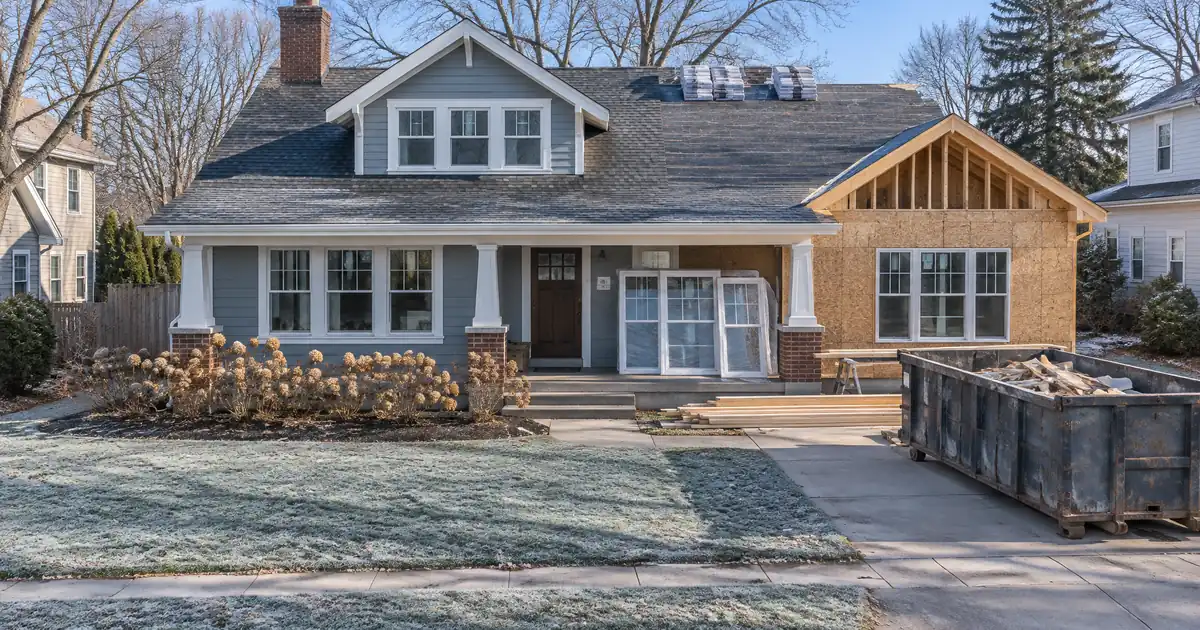
The Quick Read: The program that fits depends on where the flip sits: a purchase-and-rehab loan, a refinance of a finished project, or a handoff to long-term rental financing. Across Lendmire’s wholesale network, hard money terms typically run 6 to 18 months, interest-only, with no prepayment penalty, and a cash-out refinance on a flip typically tops out at 65% of value, subject to lender guidelines. No single program wins on every file, because the appraisal, the payoff balance and the exit plan decide the outcome. Every parameter varies by lender, property, and experience, and nothing here is a commitment to lend.
- Flip leverage is sized on project cost, typically 85% to 93% of cost by experience tier, and capped at 75% of after-repair value.
- A hard money cash-out or rate-and-term refinance typically sits at up to 65% of value on a non-owner-occupied 1-4 unit property.
- Interest-only keeps carry low during the hold. It does not change the balloon due at maturity.
- Cash back is what remains after the old loan, fees and costs come out. On many flips that is little or nothing.
- Terms, leverage and eligibility all vary by lender, property, and experience, so treat each figure as a range to confirm.
What Is a Hard Money Cash-Out Refinance on a Flip?
A hard money cash-out refinance replaces an existing loan on an investment property with a new short-term, interest-only loan that returns some equity as cash. The loan is sized on the property’s value and the investor’s plan, not on a traditional employment income file. Qualification stays asset-based: the property, the plan and the exit.
Two situations get lumped together under this label, and they behave differently.
A purchase-and-rehab flip loan. This funds the acquisition and the renovation. Leverage is measured against project cost and capped against after-repair value (ARV). Rehab money comes out in draws as work is completed.
A refinance of an owned or finished project. This pays off the earlier loan and may return cash. Leverage is measured against value, and the typical ceiling is lower, about 65% of value.
The search phrase mixes these two. The first question to ask is which one you actually need.
How the Program Works, Step by Step
AirDNA describes the common sequence: investors use a short-term loan to buy and renovate, then refinance into a longer-term mortgage. Here is how that plays out inside a file.
1. The short-term loan funds the project. On a flip, most programs in the network size leverage on cost: about 93% of project cost at five or more completed projects, 90% at two or more, and 85% below that. Every tier is capped at 75% of ARV. Up to 100% of the rehab budget funds in draws against completed work. That is a rehab-budget figure, not a purchase LTV. Bridge purchases without rehab run up to 80% of purchase price.
2. Rehab and stabilization. If the plan is to hold the property, the lease and the market rent opinion become part of the next loan’s file. If the plan is to sell, the carry period matters more than anything else on this list.
3. The refinance application. The new lender orders its own appraisal. Your ARV is a planning number. The appraisal sets the loan. Evernest calls the refinance the point where this strategy lives or dies, with appraisal, lender rules and payment size deciding the result.
4. Sizing. On a hard money cash-out, the value test is the main one: up to 65% of value on a non-owner-occupied 1-4 unit property. The loan has to clear the payoff of the old note first.
5. Payoff and proceeds. Cash back is the new loan minus the payoff, minus title, appraisal and origination costs. Ask for an itemized payoff statement before you model anything. Interest, extension fees and exit fees all sit in that number.
6. Title and lien release. The old note has to be retired cleanly at settlement. Clearing title sounds routine, but a missed release or a late payoff letter holds up the file.
What Makes a Program the Best Fit for This Use Case
The best program for your situation is the one whose structure matches your project stage. Lenders that write this product differ on a handful of terms, and a broker that shops a network compares them side by side. These are the criteria that matter.
- Sizing basis. Is the loan sized on cost, as-is value or ARV? A flip loan and a cash-out refinance use different bases, and mixing them up produces bad math.
- Interest treatment. Interest-only is standard. Some programs charge interest on the full balance, and others only on drawn rehab funds. Ask which applies.
- Term and extension. Terms run 6 to 18 months on the current program. There are no multi-year options. Know what an extension would cost if the exit slips.
- Prepayment. Programs in the network typically carry no prepayment penalty. Confirm it in writing, and check for minimum-interest clauses.
- Draw process. Draws release against completed work. Slow inspections cost carry.
- Credit. A 620 minimum score applies, with extra conditions below 660. First-time investors qualify at the lower leverage tiers.
- Exit flexibility. The question that matters most is what happens at month 12 if the sale or refinance is late.
Collateral is non-owner-occupied residential property, 1-4 units, with ground-up construction to 10 units. Loan amounts run up to $5,000,000, with larger balances by exception. Smaller balances vary by lender.
Hard Money Cash-Out vs. Other Routes
| Factor | Flip purchase loan | Hard money cash-out | DSCR cash-out |
|---|---|---|---|
| Sized on | Project cost, ARV cap | Appraised value | Value and rent |
| Typical leverage | 85%-93% cost, 75% ARV cap | Up to 65% of value | Around 75% LTV, standard rentals |
| Payments | Interest-only | Interest-only | Amortizing, IO via select lenders |
| Term | 6-18 months | 6-18 months | 30-year fixed spine |
| Best use | Buy and rehab | Equity from a finished project | Long-term hold |
Hard money is built for a short runway and a defined exit. A DSCR loan is built for a stabilized rental. The two work in sequence more often than in competition.
Where Interest-Only Helps and Where It Misleads
Interest-only keeps the carry low while the property is in transition. That is the entire reason flip loans use it. The balance does not amortize, so the full principal comes due as a balloon at maturity.
Two interest-only layers exist, and they should not be confused. The first is the bridge itself, which is interest-only by design. The second is an optional interest-only period on a long-term rental loan, which only some select lenders offer.
Interest-only also gets misread as a fix for a weak property. It lowers the payment being tested. It does not relax credit floors, leverage caps or reserve rules. And the payment steps up when an interest-only period ends. Model the fully amortized payment before you rely on the lower one.
A Worked Example in Percentages
Take a modeled flip, labeled as an assumption and not as a market fact. Say the all-in cost, including purchase, rehab and carry, comes to 60% of the new appraised value. A cash-out refinance at 65% of value pays off the old note and leaves roughly 5% of value, before closing costs.
Now say all-in cost lands at 70% of appraised value. A 65% loan does not even cover the payoff. The refinance becomes a cash-in event, not a cash-out.
This is why Leading Landlord treats the gap between all-in cost and appraised value as the variable that makes or breaks the strategy. A refinance that cannot return most of your cash is a slow, expensive buy-and-hold.
The breakeven test is simple. Does the redeployed cash earn more than the added interest-only carry on the new, larger balance? If the answer is not clearly yes, skip the cash-out and consider a payoff-only refinance, or sell.
When the Bridge Is Not the End: The Long-Term Handoff
Many investors refinance out of hard money into long-term DSCR financing once the property is stabilized, and Lendmire brokers that path. The details matter more than the label. Across the network, DSCR cash-out refinances top out around 75% LTV on standard long-term rentals, with about 6 months of seasoning as the common expectation. Select programs start at a 1.00 coverage floor, and stronger ratios open better pricing and leverage. Interest-only periods and 40-year terms are available through select lenders in the network. Each figure is subject to lender guidelines and a complete review of property type, leverage, and credit.
Market guidance on the waiting period varies. AirDNA reports that most lenders want 6 to 12 months of rental history before a refinance of this type. The network figure for DSCR cash-out is the one above, about 6 months of seasoning, subject to lender guidelines.
DSCR compares monthly rent to PITIA, which is principal, interest, taxes, insurance and association dues. Clearing 1.00 is not the same as positive cash flow. Repairs, vacancy, management, utilities and capex sit outside the calculation. On an interest-only file, ask whether the ratio is tested on the interest-only payment or the fully amortized one, because programs differ.
DSCR loans are designed for non-owner-occupied investment properties. Because they are business-purpose investor loans, they are reviewed differently from a standard owner-occupied mortgage. Qualification runs primarily on property-level rental income covering the payment, subject to lender guidelines. Reserves vary by lender, leverage, loan size and transaction type, and best hard money cash-out refinance program with only six months of reserve covers that side. The complete DSCR loans guide lays out how coverage, leverage and credit tiers fit together.
Where the General Rule Breaks
The bridge matures before the refinance is available. This is the most common structural trap. If seasoning at the exit lender runs longer than the bridge term, there is a gap. Realestate-Explained notes that a realistic first-time cycle from offer to refinanced and rented runs 6 to 12 months, which sits against a 6 to 18 month hard money term with little cushion. Exits when the clock runs out include a payoff-only refinance, an extension, bringing cash to closing, or a sale.
A low appraisal. A loan sized tightly against your ARV leaves no room. Lofty lists contesting the appraisal with better comps, waiting and re-appraising, or accepting a smaller loan as the standard responses. A reconsideration request should carry recent in-neighborhood sales and condition adjustments, not opinion.
Thin-comp markets. Rural areas and very small metros make the appraisal step riskier. Fewer comparable sales means more room for the appraiser to land light.
Payoff-only vs. cash-out. A refinance that returns nothing beyond payoff and costs is treated differently from one that returns cash. The label changes the leverage ceiling. Do not assume a payoff-only file and a cash-out file price the same.
Rent that does not support the larger loan. On the long-term side, value can be fine and the loan can still shrink because coverage fails at the new balance.
Ineligible property types. Commercial, industrial, land, hospitality and owner-occupied properties are not on the hard money program sheet. On the DSCR side, manufactured homes, log homes and barndominiums are not offered.
Common Mistakes on These Files
- Planning on ARV instead of the lender’s appraisal. The investor’s number is a planning figure. The appraisal is the loan.
- Assuming hard money means no seasoning. Seasoning belongs to the exit lender, not the bridge lender. Check it before the bridge closes.
- Skipping the itemized payoff. Extension and exit fees change net proceeds.
- Stacking a thin cushion on the bridge. A 75% ARV cap leaves little room for a light appraisal or a rehab overrun.
- Treating 1.00 coverage as a profit measure. It measures rent against PITIA. It does not measure what stays in your pocket.
- Ignoring short-term rental rules. Short-term rental rules can vary by city, county, HOA, and property type, so investors should confirm local rules before relying on projected rental income.
Who Each Structure Fits
Pulling equity from a finished flip you plan to hold. A hard money cash-out can bridge the gap if seasoning is the obstacle, though it returns less than a DSCR cash-out might. A DSCR cash-out may carry higher leverage once the property is leased and seasoned.
A stalled flip that is outrunning its bridge. Start with the exit lender’s seasoning and a realistic appraisal. Then decide between an extension and a payoff-only refinance.
Recycling capital into the next purchase. Run the breakeven test above. If all-in cost is close to value, the cash-out will not recycle much.
Who should skip it. If the all-in cost sits above roughly 65% of value, a cash-out refinance on hard money does not return cash. Sale or a payoff-only structure is usually cleaner.
Key Terms Defined
After-repair value (ARV): the estimated value of the property once renovations are complete.
Balloon: the lump-sum principal balance due at the end of an interest-only term.
Cash-out refinance: a new loan that pays off the old one and returns the remaining equity as cash.
Draw: a release of rehab funds after a portion of the work has been completed.
Interest-only: a payment structure where the borrower pays interest and no principal during the term.
Loan-to-cost: the loan amount as a share of total project cost, used on flip loans.
Seasoning: the time you must hold a property before a lender will lend on its appraised value.
What to Prepare Before Asking for a Quote
Bring the purchase settlement statement and the rehab budget. Bring the draw history if work has started and the current payoff letter if the loan is already in place. Add the entity documents if the property is titled in an LLC, subject to lender program eligibility. A lease or rent evidence helps if a DSCR handoff is the plan. A short exit memo should say whether the plan is to sell or hold, and what happens if the first plan slips.
If you are buying, rehabbing or refinancing an investment property on a tight project schedule and want to see how the numbers work, Lendmire can help you compare hard money options based on the project, the exit plan, leverage, and your goals. Reach the team at 828-256-2183 or request a quote through the quote form.
Frequently Asked Questions
Can you cash-out refinance a flip with hard money?
Yes, when the property is a non-owner-occupied 1-4 unit and the value supports it. The typical ceiling is up to 65% of value on a cash-out or rate-and-term refinance, subject to lender guidelines. The new loan has to cover the payoff first, so many flips return little or no cash.
Is a hard money loan always interest-only?
On the current program, yes. Terms run 6 to 18 months, interest-only, with no prepayment penalty. The full balance is due at maturity, so the exit has to be ready. Interest-only periods on long-term rental loans are a separate feature, offered by select lenders.
Does interest accrue on the full loan or only on the drawn balance?
It depends on the program. Some charge interest on the full balance, and some only on funds already drawn. Ask before you commit, because the difference affects carry throughout the rehab.
Is paying off a hard money loan considered a cash-out?
Not by itself. A refinance that returns nothing beyond the payoff and costs is a payoff-only refinance. Lenders treat it differently from a cash-out, and leverage ceilings can differ.
What if the loan matures before the property is ready to sell or refinance?
The usual options are an extension, a payoff-only refinance, bringing cash to closing, or a sale. Evernest lists waiting periods among the main breaking points of this strategy. Build a plan B before the bridge closes, not at month twelve.
About Lendmire
Lendmire is a DSCR-focused mortgage brokerage, NMLS# 2371349, placing investor loans across 41 markets, including Washington, D.C. DSCR eligibility is generally reviewed by the lender around a property’s rental income rather than personal income documentation, which fits LLC-held rentals, self-employed investors, and portfolios scaling past conventional financed-property limits. Scotsman Guide named Lendmire a Top Mortgage Workplace in both 2025 and 2026.
Get Started
Ready to find the right loan for you?
See your offer in seconds. No credit pull, no obligation.
Informational only. Not a Loan Estimate, approval, or commitment to lend. Program availability and eligibility are subject to lender guidelines, credit approval, property review, and underwriting.
References
2. Evernest: BRRRR method risks
3. Leading Landlord: BRRRR method
4. realestate-explained.com: Brrrr Method Real Estate Explained
This article is part of Lendmire’s hard money loan program — full qualification details, guidelines, and scenarios live on the program page.
Related reading: Where to Get a DSCR Cash-Out Refinance With Only 15 Percent Equity · DSCR Cash-Out Refinance When Exiting Hard Money: The 2026 Guide · How Much Can You Borrow With a DSCR Cash-Out Refinance as a Repeat Fix-and-Flip Investor?
Brandon Miller
Founder & CEO, Mortgage Loan Originator, Lendmire LLC
- Mortgage Loan Originator · NMLS# 1129696 · Verify on NMLS Consumer Access
- North Carolina Real Estate Broker · License# 343312 · Verify on NCREC
- North Carolina Insurance Producer · License# 19053198 · Property, Casualty, Life, Health · Verify on NAIC SBS
- Lendmire LLC · Firm NMLS# 2371349 · Verify firm licensure
Required disclosures. Lendmire (NMLS# 2371349) operates as a licensed mortgage broker, not a direct lender or depository. The discussion in this article is general in nature and should not be relied upon as financial, legal, or tax advice — every investment scenario is unique and should be reviewed by a qualified professional. Any loan inquiry is subject to lender underwriting, and this article is not a commitment to lend or a guarantee of approval. Mortgage rates, loan terms, and program guidelines vary by borrower, property, and state, and may change without notice. Equal Housing Opportunity. Verify licensure at NMLS Consumer Access.