
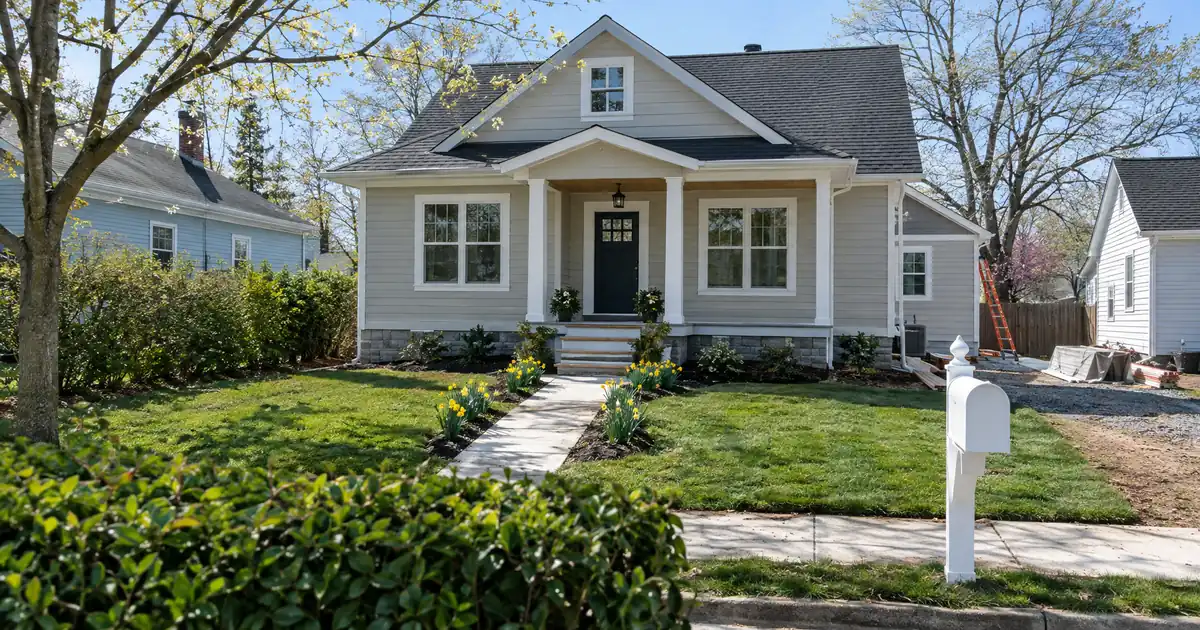
The Quick Read: For a rehabbed rental with a signed lease and no rent collected yet, the best program for your situation is usually a long-term DSCR cash-out or payoff refinance that retires the hard money loan, because that loan sizes on rental coverage and allows more leverage than hard money cash-out does. The signed lease helps prove the unit is rentable. It does not start the ownership clock, and an above-market lease does not raise the number.
- Hard money cash-out and rate/term refinances typically top out around 65% of value. Select wholesale-network DSCR programs typically reach about 75% on a standard rental cash-out, subject to lender guidelines.
- Programs usually count the lower of the signed lease and the appraiser’s market rent.
- Cash-out generally waits on seasoning, about 6 months being the common expectation, so a payoff-only refinance can stop the bridge clock sooner.
- Expect to document the lease with the first month’s rent and the deposit record, not just the signed page.
- Count backward from the bridge maturity date, because rehab, lease-up, appraisal and seasoning all have to fit inside it.
What the Title Really Means
A cash-out refinance can take two forms. One is a hard money loan that refinances an existing loan and returns cash. The other is a refinance out of hard money, where a long-term rental loan pays off the bridge and may return cash too.
Hard money is short-term, interest-only debt built to mature. On the network’s hard money program, terms typically run 6 to 18 months with no prepayment penalty, and cash-out and rate/term refinances typically go up to 65% of value. Loan amounts reach up to $5,000,000, and a 620 credit score is the typical minimum. All of that varies by lender, property, and experience.
A bridge is meant to be replaced. Many investors refinance out of hard money into long-term DSCR financing once the property is stabilized, and Lendmire brokers that path. A DSCR loan is a loan sized mainly on the property’s rent rather than your personal income. That is why the “best program” for this situation is almost always the exit loan, not a second bridge.
For the full picture of how these loans work, read Lendmire’s complete DSCR loans guide.
Which Route Fits Your Situation?
The right route depends on where the project stands today. This table maps the common situations. Every row is subject to lender guidelines and the individual file.
| Situation | Usual best route | Why |
|---|---|---|
| Finished, leased, past seasoning | DSCR cash-out | Higher leverage than bridge cash-out |
| Finished, leased, inside seasoning | Payoff-only DSCR, cash-out later | Stops the bridge clock now |
| Finished, vacant | DSCR on market rent, or lease first | Some programs want a lease for cash-out |
| Rehab unfinished | Extend or stay in the bridge | Exit lenders want completed work |
| Strong equity, thin rent | Smaller cash-out | Less debt lifts the ratio |
The ratio in that last row is the coverage number: monthly rent divided by the full housing payment. Select programs in the network start at 1.00. A separate select-lender path goes below 1.00 with leverage and terms adjusted. Stronger ratios open better pricing and leverage.
Hard Money Cash-Out Versus DSCR Cash-Out
The two products solve different problems. Hard money buys time. DSCR financing buys a long runway.
| Factor | Hard money refinance | DSCR cash-out |
|---|---|---|
| Term | 6-18 months, interest-only | 30-year fixed spine |
| Cash-out ceiling | Up to 65% of value | About 75% on standard rentals |
| Sized on | Asset, plan, and exit | Rent versus the full payment |
| Prepayment penalty | None on the program | Varies by program |
| Best fit | Unfinished or unstable property | Finished, rentable property |
Extended terms of 40 years, interest-only periods, and ARM structures exist through select lenders in the network. Hard money has no multi-year options, so investors who need longer runway refinance into rental financing.
Credit works differently too. Most DSCR programs want around a 660 score, and a 620 floor exists in parts of the network. A 700+ score unlocks the strongest leverage tiers.
What a Signed Lease Does Before Rent Starts
A signed lease is evidence of rent. It is not the rent figure itself. The appraiser’s market rent is the check on it.
Think of the file in four stages:
1. Lease signed, tenant not moved in. You hold an executed lease and perhaps a deposit. The lender can see intent, but no payment history exists.
2. Tenant moves in. The lease is now live. A deposit record and move-in documents back it up.
3. First rent paid. Proof of the first month’s rent turns a promise into a payment.
4. Several months of payments. The file now looks like any seasoned rental.
Many bridge-to-DSCR files stall at stage one or two. The rehab is done and a tenant is placed, but the file lacks a formal lease, a bank deposit record, or proof of the first month’s rent and the security deposit. Documentation gaps, not property problems, are the usual cause.
Here is the point investors miss. The lease does not start or shorten the ownership clock. Seasoning counts from when you took title, so a signed lease does not buy you cash-out before the waiting period passes. What it does is prove the unit is rentable.
Lendmire’s piece Best DSCR Cash-Out Refinance Program With Signed Leases Before Rents Start goes deeper on the long-term-loan side of this question.
Which Rent Counts, the Lease or the Appraisal?
The common convention across the network is the lower of the signed lease and the appraiser’s market rent. A few lenders use only the appraisal rent. A few use the lease whenever one exists. Confirm the rent basis before the appraisal is ordered, because the answer changes how you set the lease.
| Case | Rent usually counted | Effect on the ratio |
|---|---|---|
| Lease below market | The lease | Holds the ratio down |
| Lease at market | Either, same number | Clean file |
| Lease above market | Market rent | Surplus is ignored |
| Vacant | Market rent | Some programs want a lease |
Two lessons follow. First, a lease priced well above market does not help. It gets capped, and it can draw questions. Second, a lease priced under market hurts you, because it governs.
Pricing the lease at or just under the appraiser’s market rent avoids both problems. This is a financing consideration only. Your leasing strategy should still follow the market.
On a one-unit property, the appraiser documents rent on the Single-Family Comparable Rent Schedule, Form 1007. Fannie Mae’s Selling Guide lists that form for one-unit investment properties and the Small Residential Income Property report, Form 1025, for two-to-four-unit properties. DSCR loans are not agency loans, so that is a form-name contrast only. DSCR lenders simply borrow the forms.
The form is built from rental comparables, and the appraiser reconciles them to a final monthly market rent, as shown on Fannie Mae’s Form 1007. That final number is what the underwriter tests your lease against.
How Seasoning Works on a Hard Money Exit
Seasoning is the waiting period between buying a property and cashing out on it. Lender policy sets it, not law. On most programs in the network, about 6 months is the common expectation for a DSCR cash-out refinance.
The clock generally runs from your purchase date. A finished rehab does not restart it, and neither does a new lease. Seasoning also changes how the loan is sized. Inside the window, many programs size on your cost basis rather than the after-repair value. Outside it, appraised value can drive the number.
So an investor who bought with a bridge loan three months ago faces a choice. They can wait for seasoning to clear. They can also do a payoff-only refinance now, which stops the interest-only clock, and cash out later.
Delayed financing is a narrow exception. It applies to documented all-cash buyers and varies by lender, and it waives seasoning only. A hard money purchase generally does not qualify, because the bridge counts as purchase financing. Leverage caps, credit floors and reserve rules still apply.
A Worked Example, in Percentages
These are modeled assumptions, not market data. Say the bridge balance is 60% of the property’s appraised value. Assume a standard long-term rental, and a DSCR cash-out cap of 75% of value.
- Cap on the new loan: 75% of value.
- Bridge payoff: 60% of value.
- Room before closing costs and fees: roughly 15% of value.
Now say the appraisal comes in 10% below what you planned on. The new cap is 75% of a smaller value, or 67.5% of your original expected value. After the 60% payoff, only 7.5% of expected value is left before costs. Costs hit that sliver first.
Closing costs get paid twice on a bridge-plus-DSCR path, once on the bridge and once on the exit. They come out of whatever cash-out remains. A thin margin can disappear.
Rent then tests the same loan. A larger cash-out makes the loan bigger, so the same rent covers less. A smaller cash-out lifts the ratio. The strongest files clear both tests, enough equity and enough rental coverage.
Clearing 1.00 does not mean positive cash flow. DSCR compares rent to the full housing payment, which covers principal, interest, taxes, insurance and any association dues. Repairs, vacancy, management, utilities and capital expenses sit outside the calculation.
Plan Backward From the Maturity Date
Start with the day the bridge matures and work back. Hard money is built to mature, and a lender will not wait for your lease-up.
Fit these pieces inside the term:
1. Rehab completion. Exit lenders generally want finished work.
2. Lease-up. Get the lease signed and the first month’s rent and deposit in hand.
3. Seasoning. Check whether the cash-out clock clears before maturity.
4. Appraisal and underwriting. Leave room for a re-inspection or a low value.
If the clock does not fit, you have three options. Extend the bridge, if your lender allows it. Refinance payoff-only now and cash out later. Or wait out seasoning and accept the carry.
The payoff-only refinance usually wins when carrying costs outrun the benefit of waiting. Waiting wins when the cash-out is large and maturity is far off.
Document Checklist for a Newly Leased Property
Build the file before you apply. Here is what lenders in the network typically ask for, though each program varies.
Bridge records
- Payoff letter for the hard money loan.
- Settlement statement from the purchase.
- Draw history and rehab receipts.
Rental records
- The executed lease with rent, term and parties stated.
- Proof of the first month’s rent and the security deposit.
- A rent roll, for two-to-four-unit properties.
Property records
- Before-and-after photos and proof the work is complete.
- Insurance evidence.
Entity records
- Operating agreement and good standing, if the property is titled in an LLC, subject to lender program eligibility.
Where the General Rule Breaks
Every program has edges. These are the ones that catch investors.
- A low appraisal. It can turn a planned cash-out into a refinance that needs cash from you. A low rent opinion shrinks the loan or sinks the file.
- Vacant or month-to-month. Many programs run these on market rent alone. Some require a leased property for cash-out.
- A related-party lease. A lease with a relative draws closer review and is likely to be underwritten on market rent.
- Short-term rentals. A nightly rate multiplied by 30 is not market rent, and Form 1007 documents monthly rent. On STR collateral, cash-out tops out at 70% against 75% on a standard rental. Expect a 640+ score and about 12 months of hosting history. Short-term rental rules can vary by city, county, HOA, and property type, so investors should confirm local rules before relying on projected rental income.
- Above-market leases. A lease above market can sometimes count with receipts under a specific program provision. That is program-specific, not the default.
- Property types. Manufactured homes, log homes and barndominiums are not offered in the network.
Reserves also vary. They commonly run around 6 months of the full housing payment, and larger loans typically step up. Subject to lender guidelines, conservative files at modest leverage can see them waived.
Common Mistakes That Shrink or Stall the Cash-Out
Most failed exits come from the same handful of errors:
- Signing a lease far above market and expecting the ratio to rise.
- Treating a signed lease as proof of rent with no deposit record.
- Assuming a lease shortens seasoning.
- Planning cash-out on after-repair value inside the seasoning window.
- Letting the bridge mature before the file is built.
- Ignoring the second set of closing costs.
Key Terms Defined
Seasoning is the waiting period a lender wants between buying a property and cashing out on it.
Payoff-only refinance is a rate-and-term refinance that retires the old loan and returns no cash to you.
Cash-out refinance replaces your loan with a larger one and pays you the difference.
DSCR is the debt service coverage ratio: monthly rent divided by the full housing payment.
Market rent is the appraiser’s reconciled opinion of what the unit rents for, built from nearby rental comparables.
Loan-to-value (LTV) is the loan amount as a percentage of the property’s value.
Hard money loan is short-term, interest-only, asset-based bridge debt for investment properties.
Frequently Asked Questions
Do I need a signed lease to cash out of hard money?
Not always, but it helps. Many programs run a vacant property on market rent alone, while some require a leased property for cash-out. Confirm the rule per program before you order the appraisal.
Does a signed lease shorten seasoning?
No. Seasoning counts from when you took title, not from the lease date. A lease proves rentability and supports the rent figure. It does not change the waiting period, except in narrow programs such as delayed financing for documented all-cash buyers.
Should I cash out now or refinance payoff-only first?
It depends on your maturity date, your carry, and how much cash you need. A payoff-only refinance can stop the bridge clock now, with cash-out later after seasoning. Waiting makes sense when maturity is far off and the cash-out is large.
What if the appraisal comes in low?
The loan amount shrinks, because leverage caps apply to the appraised value. Rent shortfalls can cut the amount further or lead to a decline. A smaller loan can still lift your coverage ratio.
Can I go below 1.00 coverage on this kind of refinance?
Select lenders in the network offer programs below 1.00, with leverage and terms adjusted. Many select programs start at 1.00. No-ratio loans are available only through select lenders, generally for borrowers who already own a primary residence. All of it is subject to lender guidelines and credit approval.
Next Step
If you are buying, rehabbing or refinancing an investment property on a short timeline and want to see how the numbers work, Lendmire can help you compare hard money options based on the project, the exit plan, leverage, and your goals. Lendmire is a broker arranging financing through select lenders in its wholesale network across 41 markets, including Washington, D.C. Reach the team at 828-256-2183 or request a quote. Nothing here is a commitment to lend, and every file is underwritten individually.
About Lendmire
A DSCR-focused mortgage broker, Lendmire (NMLS# 2371349) places investor financing across 41 markets — 40 states plus Washington, D.C. — with DSCR eligibility generally reviewed by the lender on property cash flow instead of tax returns, subject to lender guidelines. Scotsman Guide named Lendmire a Top Mortgage Workplace in 2025 and 2026.
Get Started
Ready to find the right loan for you?
See your offer in seconds. No credit pull, no obligation.
Informational only. Not a Loan Estimate, approval, or commitment to lend. Program availability and eligibility are subject to lender guidelines, credit approval, property review, and underwriting.
References
2. Fannie Mae Form 1007, Single-Family Comparable Rent Schedule
This article is part of Lendmire’s hard money loan program — full qualification details, guidelines, and scenarios live on the program page.
Related reading: How a Lender Counts Reserves on a BRRRR Cash-Out Refinance · DSCR vs. Conventional Cash-Out Refinance for a St. Charles MO Rental · Short-Term Rental Cash-Out Refinance Requirements When Your Mortgage Is Almost Paid Off
Brandon Miller
Founder & CEO, Mortgage Loan Originator, Lendmire LLC
- Mortgage Loan Originator · NMLS# 1129696 · Verify on NMLS Consumer Access
- North Carolina Real Estate Broker · License# 343312 · Verify on NCREC
- North Carolina Insurance Producer · License# 19053198 · Property, Casualty, Life, Health · Verify on NAIC SBS
- Lendmire LLC · Firm NMLS# 2371349 · Verify firm licensure
Disclosure information. Lendmire is a state-licensed mortgage brokerage under NMLS# 2371349. Lendmire is not a depository institution, direct lender, or financial advisor — all loans referenced are placed through wholesale lender partners and are subject to each lender's underwriting standards. This article is provided for general informational purposes and is not a commitment to lend, nor does it constitute financial, legal, or tax advice. Loan programs, terms, rates, and qualification standards change without notice and depend on borrower profile, property type, and the state in which the subject property is located. Equal Housing Opportunity provider. NMLS Consumer Access: nmlsconsumeraccess.org.