
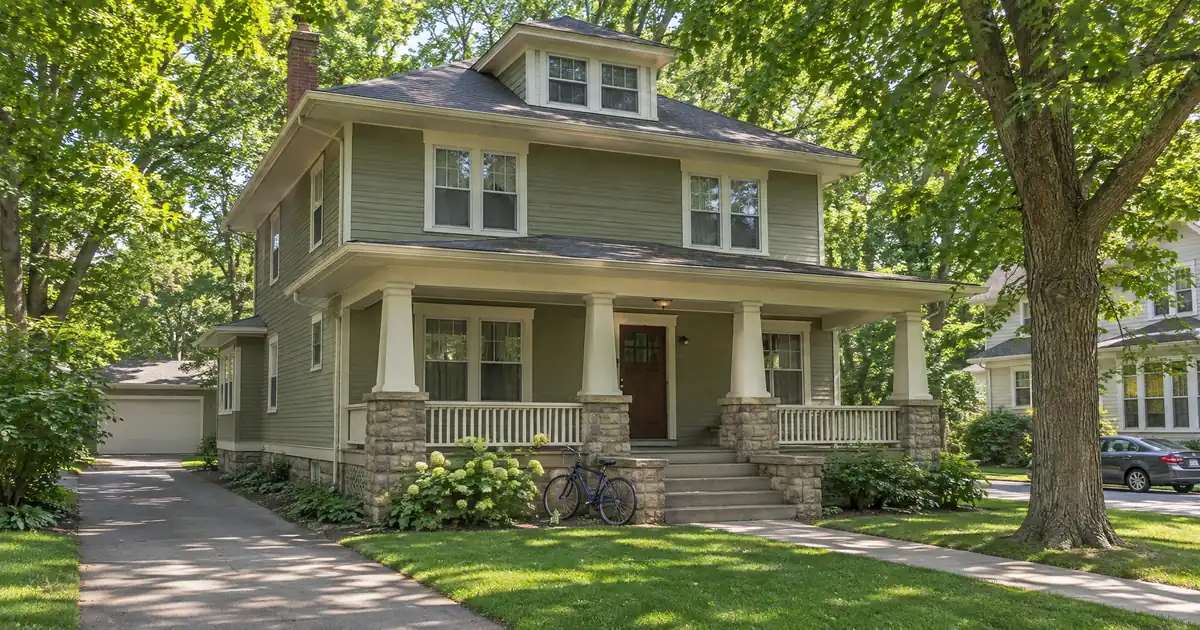
The Quick Read: Usually nothing, because while probate is open the estate owns the house and the heir does not, and a lien can only attach to property the borrower legally owns. The amount becomes a real question only after a deed records title in the heir’s name, an heir’s LLC, or a qualifying trust, and that is when a rental can be sized under a DSCR line.
- Before title records: no line, since the estate, not the heir, owns the property.
- After title records: the size is set by value, combined leverage against any first mortgage, and rent coverage.
- On a second lien, combined loan-to-value runs up to 70% at a 720 score or better, on lines of $50,000 to $500,000, subject to underwriting.
- On a rental with no mortgage, a first lien reaches 75% at 740 or better, subject to underwriting.
- Rent has to cover a stress payment on the whole line at 1.10x or better.
Who Owns the House While Probate Is Open?
The estate owns it. Probate is the court process that collects a dead owner’s assets, pays debts, and passes what is left to the heirs. Until the deed moves, the heir is a beneficiary with an expectation, not an owner with a signature.
The executor holds authority, but only on paper. Cornell’s Legal Information Institute describes letters testamentary as the court document proving an executor’s authority to collect assets, pay debts, and distribute property. Being named in a will is not enough on its own, a point the Wills and Trusts Guide makes plainly. When there is no will, the equivalent document is letters of administration.
Notice what letters do not do. They give authority over estate property. They do not make the heir the owner, and they do not turn the executor into a borrower on the heir’s behalf.
Consumer-finance and legal sources land in the same place. Bankrate says you generally need clear title, meaning the estate settlement is finished and ownership has transferred, and that co-heirs must agree to the loan. A North Carolina probate firm, Pierce Law, frames the test as whether someone has present, provable authority to sign a deed of trust, and notes that one holdout or unknown heir can stop a loan.
Stage by Stage: What Is Borrowable and When
| Stage | Who can sign | Borrowable on a DSCR HELOC |
|---|---|---|
| Death, no letters yet | Nobody | Nothing |
| Letters issued, probate open | Executor, for the estate | Nothing for the heir |
| Deed recorded to the heir, LLC or trust | The new owner | Sized by value, leverage, rent |
| Probate skipped (trust, survivorship) | Successor trustee or survivor, once documented | Sized after a title review |
An executor may sometimes borrow against estate real property with court permission, depending on the state and the will. That is an estate-level loan. It is a different product from an heir’s DSCR line, and it is not what this article sizes.
How the Amount Is Calculated Once Title Clears
Three tests set the line. The smallest result wins.
1. Equity under the leverage cap. The line cannot push total debt above the program’s ceiling against value. The CFPB describes the general logic: a lender takes a percentage of appraised value and subtracts the mortgage balance still owed. The DSCR version works the same way, with its own ceilings.
On a second lien behind a first mortgage the heir keeps, combined loan-to-value (the first mortgage plus the new line, divided by value) runs up to 70% at a 720 score or better. Lines run from $50,000 to $500,000, subject to underwriting. Below 720 there is no second-lien option.
On a rental with no mortgage, the line is a standalone first lien. Loan-to-value reaches 75% at 740 or better and 70% from 700 to 739, on lines up to $500,000. Larger first-lien lines, up to $1,000,000, step down to 65% at 720 or better.
2. Rent coverage. The rent has to clear 1.10x against a qualifying payment. That payment is a fully amortizing payment on the entire credit limit, calculated at a stress rate above the start rate. Taxes and insurance are not part of it. Rent is the lesser of the appraisal’s market rent and the lease, unless three months of receipts support a lease above market. A lease in place is required.
Confirm on the file how the lender treats the first-mortgage payment on a second lien, because that treatment is not published as a fixed formula.
3. Value. Value comes from a fresh valuation tied to the new owner’s file, not a date-of-death figure. Lines to $400,000 use an automated valuation with a property inspection report. Larger lines take a full interior appraisal. Appraisal waivers are not accepted.
Worked Examples (Percentages and Ratios Only)
Sole heir, existing mortgage. Picture a rental valued at $400,000 with a first mortgage still in place. At 70% combined leverage, total debt across both liens tops out at 70% of value. The existing balance eats into that headroom first, so the line is whatever room remains. A smaller balance means a bigger line. A larger one may leave less than the $50,000 minimum, and then no line exists at all.
Paid-off house. Say the same property carries no mortgage and the heir holds a 740 score. A first lien can reach 75% of value, within the $500,000 line cap. At a 700 to 739 score, the ceiling is 70%. The equity is larger, but the rent test now applies to the full line.
Equity exists, but rent falls short. Consider a house with plenty of equity that rents for less than the stress payment on the full line requires. Coverage lands below 1.10x. The line gets capped by rent, not equity, and a smaller line may be the only workable structure. Inherited homes often need repairs or sit vacant, and a lease in place is required, so a vacant house waits for a tenant before it can qualify.
Seasoning and the Draw Rules
A rental bought or refinanced inside the last 6 months is not eligible (that clock runs from the last note date to the new note date), and the owner must have held title for 6 months (settlement date to note date). For an heir, the useful anchor is generally the date title vests, not the date of death. A slow probate pushes the whole sequence back.
Draw mechanics are fixed. At least 80% of the line is drawn at closing, and later draws are at least $5,000. The draw period is 5 years, interest-only on the drawn balance, followed by a 25-year repayment period and a 30-year maturity. The rate is variable. No reserves are required.
A line is revolving, and the CFPB notes lenders can freeze or limit draws if the home value drops significantly or circumstances change. An investor who plans to lean on the line should keep that in mind.
Exceptions That Change the Timeline
Probate-skipping transfers. A transfer-on-death designation, a funded revocable trust, or joint tenancy with survivorship can pass title without court probate. “Skips probate” does not mean “borrow tomorrow.” The successor trustee or surviving owner still has to document the transfer, and a title review decides.
Multiple heirs. Everyone on title has to cooperate. Under this program, title holders who are not borrowers sign a non-borrowing owner acknowledgment and the security instrument.
Out-of-state property. A house in a different state from the decedent’s home can require an ancillary probate with that state’s own letters. A probate attorney should confirm this.
Existing mortgage. Federal due-on-sale rules protect certain death-related transfers from acceleration, but the relative-transfer exception is framed around homes the borrower occupies, so an investor-heir should not assume it applies. The rule protects an existing loan. It does not oblige anyone to fund a new line.
LLC vesting. Title can sit in the owner’s LLC on this investment-property program, with the members signing as guarantors, subject to lender program eligibility. If the decedent held the property through an LLC, whether the membership interest passes through probate is a question for the estate attorney.
Hidden liens. Judgments against an heir can surface once title vests. A title search before you plan around a line matters.
DSCR HELOC, Cash-Out Refinance, Estate Loan, or Sale?
| Option | Title needed first | Structure | Fits when |
|---|---|---|---|
| DSCR HELOC | Yes | Revolving line, 2nd or 1st lien | Keeping a low-balance first mortgage |
| DSCR cash-out refinance | Yes | Lump sum, replaces first mortgage | Wanting one payoff and one loan |
| Estate-level loan | Estate authority | Short-term, court coordination | Estate needs cash during probate |
| Sale | Executor authority | Proceeds to estate | Heirs prefer cash to a rental |
The line makes sense for an heir keeping a first mortgage they like, because a standalone second lien leaves it untouched. A cash-out refinance can be the cleaner structure when the existing loan is expensive or the heir wants one payment.
What to Do During Probate
Plan for no leverage and carry the property from other funds. Taxes, insurance, and any running mortgage still need paying. Then:
- Ask the estate attorney which route puts title in your name: an executor’s deed, a court order, a trust distribution, or a transfer-on-death deed.
- Keep the death certificate, will or probate order, letters, and later the recorded deed together.
- Order a title commitment and payoff letters once the deed records.
- Get the house leased, since a lease in place is required.
- Insure the property. Hazard coverage applies to both liens.
For heirs who would rather lean on personal bank deposits than rent, Lendmire’s article How Much Can You Borrow on a Bank Statement HELOC on an Inherited Home After Probate? covers that different qualification path. Heirs who want the broader qualification picture can read the complete DSCR loans guide.
Key Terms Defined
Letters testamentary: the probate-court document proving an executor’s authority to act for the estate.
Combined loan-to-value (CLTV): the first mortgage balance plus the new line, divided by the property’s value.
Standalone second lien: a line recorded behind the first mortgage the owner keeps, closed on its own rather than with a purchase.
Stress payment: the fully amortizing payment on the whole credit limit used only to test rent coverage.
Non-borrowing owner acknowledgment: a signature from a title holder who is not on the loan, agreeing to the lien.
What Does Not Qualify
The program is offered on non-owner-occupied one-to-four-unit rentals. Rural-designated property, row homes, condotels, leaseholds, and a property listed for sale in the prior 2 months fall outside it. Borrowers must be U.S. citizens, permanent residents, or non-permanent residents with a Social Security number. Per borrower, exposure is capped at 5 loans or $2,500,000 with the program. The program is not a primary-residence product.
Frequently Asked Questions
Can the executor take out a DSCR HELOC on the house?
No, not as an heir’s DSCR line. Letters testamentary prove authority to manage the estate, and any borrowing against estate real property may need court approval. That would be an estate-level loan, a different product from a rent-qualified line written to an heir who owns the property.
Does a will naming me as heir let me borrow?
No. A will states who receives the property, but ownership only moves when the deed records. Until then the estate holds title, and a lender cannot place a lien on property you do not yet own.
How long must I own the house before a line is possible?
Two six-month clocks apply: the line is not available on a rental bought or refinanced in the last 6 months (last note date to new note date), and title must have been held for 6 months (settlement date to note date). For an heir, the practical starting point is when title vests.
Does strong rent solve a title problem?
No. Title comes before rent. Strong coverage helps size the line once you own the house, but it cannot substitute for a recorded deed or for the signatures of every heir on title.
What if the home is in a trust or has a transfer-on-death deed?
Probate may not apply, which can shorten the wait. The successor trustee or surviving owner still has to document the transfer, and a title review decides whether a line can be placed, subject to lender guidelines.
If you are considering a home equity line on a rental property and want to see how the numbers work, Lendmire can help you compare DSCR HELOC options based on the property, the rent, the equity available, credit profile, combined leverage, and your goals. Figures here are program ceilings and floors subject to underwriting, not offers or a commitment to lend.
About Lendmire
Lendmire, NMLS# 2371349, is a mortgage brokerage with consumer lending licenses in 16 states. It arranges DSCR home equity lines of credit on rental property through wholesale lending partners in 15 of its 16 licensed states (every licensed state except Tennessee); each line is written on a non-owner-occupied one-to-four-unit rental and reviewed individually by the lender under the program’s credit and leverage guidelines. Scotsman Guide named Lendmire a Top Mortgage Workplace in both 2025 and 2026.
Get Started
Ready to find the right loan for you?
See your offer in seconds. No credit pull, no obligation.
Informational only. Not a Loan Estimate, approval, or commitment to lend. Program availability and eligibility are subject to lender guidelines, credit approval, property review, and underwriting.
References
1. Cornell LII Wex: Letters testamentary
3. Bankrate: Home equity on inherited property
4. Pierce Law: Loans against inherited property
6. CFPB
This article is part of Lendmire’s DSCR HELOC program — full qualification details, guidelines, and scenarios live on the program page.
Related reading: How Much Can You Borrow on a DSCR HELOC as a Trucker With Equipment Costs? · DSCR HELOC Requirements for Sizing How Much Equity to Borrow · How Much Can You Borrow on a DSCR HELOC Without Changing the Deed?
Brandon Miller
Founder & CEO, Mortgage Loan Originator, Lendmire LLC
- Mortgage Loan Originator · NMLS# 1129696 · Verify on NMLS Consumer Access
- North Carolina Real Estate Broker · License# 343312 · Verify on NCREC
- North Carolina Insurance Producer · License# 19053198 · Property, Casualty, Life, Health · Verify on NAIC SBS
- Lendmire LLC · Firm NMLS# 2371349 · Verify firm licensure
Disclosures. The information presented in this article is general market commentary, not financial, legal, or tax advice. Lendmire is a mortgage brokerage (NMLS# 2371349) — not a direct lender or depository institution — and loan placement is subject to lender underwriting. Nothing in this content represents a commitment to lend. Loan terms, pricing, and program availability vary based on borrower qualifications, property characteristics, and state of subject property, and are subject to change at any time. Lendmire complies with Equal Housing Opportunity requirements. Consumer access: nmlsconsumeraccess.org.