
The Quick Read: Usually, the new loan is sized to pay off your current mortgage plus allowed costs, and the lowest of three limits caps it: 75% of the appraised value, a $4,000,000 loan ceiling, and your eligible assets, which must cover the whole loan, all subject to underwriting. That is how the asset qualifier path works through select programs in Lendmire’s wholesale network. Your equity does not set the loan size. Your payoff does.
- On the asset qualifier path, the maximum is 75% of appraised value on a refinance of a second home, subject to underwriting.
- Loans run up to $4,000,000 on this path, and eligible assets, after the credit percentages, must equal or exceed the entire loan.
- No employment or income is documented, but every qualifying asset is documented with statements.
- A 600 credit score is the published floor on this path, and reserves are not required at or below 75% loan-to-value.
- Taking real cash out turns the file into a different loan with different limits. Leverage, reserves, and pricing vary by lender and program; the final terms follow the full file review.
What Does This Loan Actually Do?
A rate-and-term refinance replaces your current mortgage with a new one that has a different rate, term, or structure. It is not built to pull equity out. The new balance roughly matches what you owe now, plus closing costs and prepaid items you choose to roll in.
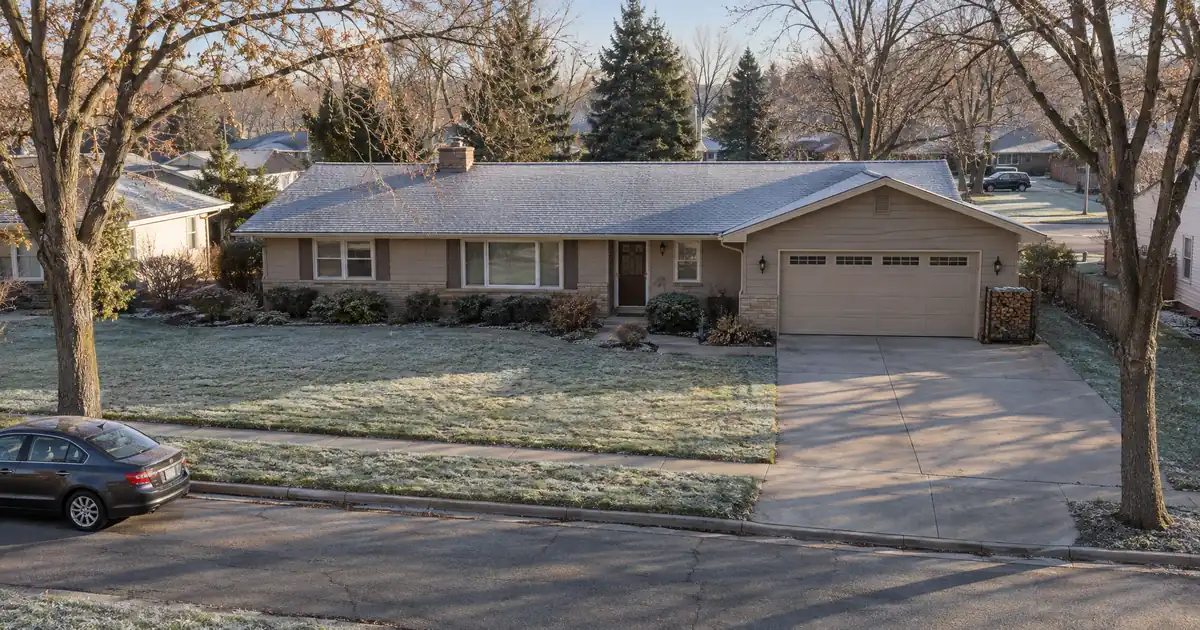
On a second home, that shape matters. A second home is a property you use personally, such as a lake house or a winter condo. Rent cannot be used to qualify. So the lender needs another reason to believe you can carry the loan, and for an asset-rich reader that reason is your balance sheet.
That reader is common in my files. Think of a retiree living off a portfolio, someone who sold a business, or a household that received an inheritance or settlement. Balances are large. Documented income is small or irregular. Asset-based underwriting was built for exactly that profile.
Key Terms Defined
Asset qualifier: A path where eligible assets, after credit percentages, must equal or exceed the whole loan. No employment or income is documented.
Asset depletion: A path where usable assets are divided by 60 months to create a monthly qualifying income. That income then runs through a debt-to-income test.
Rate-and-term refinance: A new loan that replaces the old one to change the rate, term, or structure, without taking meaningful cash out.
Loan-to-value (LTV): The loan amount divided by the appraised value of the property, shown as a percentage.
Seasoning: The length of time funds must sit in an account before the lender counts them.
Debt-to-income (DTI): Your monthly debts, including the new housing payment, divided by your monthly qualifying income.
Reserves: Money left after closing that the lender may require you to keep.
What Are the Two Asset Paths?
An asset-based mortgage comes in two forms, and a borrower is reviewed on one at a time. Mixing the numbers from the two is a common mistake I see. The table keeps them apart for a second home.
| Factor | Asset Qualifier | Asset Depletion |
|---|---|---|
| How you qualify | Assets cover the whole loan | Assets become monthly income |
| Rate-and-term LTV (second home) | Up to 75% | Up to 80% |
| Loan amounts | Up to $4,000,000 | $125,000 to $3,500,000 |
| Credit | 600 minimum score | The lender’s matrix |
| Income documented | None | Derived from assets |
| Reserves | None at or below 75% LTV | No published months |
Every figure is a ceiling or floor on most files, set through select programs and subject to underwriting. They are not offers. This article focuses on the asset qualifier path, because that is the one the title names. The depletion path matters when your assets are large but fall short of the loan amount, and I cover it later.
What Three Limits Set Your Maximum?
Your maximum is the lowest of three numbers. Whichever one binds first is your ceiling, and the other two do not matter for that file.
| Limit | What it measures | When it binds |
|---|---|---|
| Leverage | 75% of appraised value | Low appraisal or small equity |
| Loan-size band | Up to $4,000,000 | Very large payoffs |
| Asset coverage | Eligible assets vs. full loan | Modest balances or heavy retirement holdings |
The first limit is leverage. On the qualifier path, a refinance of a second home reaches up to 75% of the appraised value. Because a rate-and-term loan is sized to your payoff, you usually sit well under that ceiling unless your equity is thin.
The second is the loan-size band, up to $4,000,000. Few second-home payoffs reach it.
The third is the one people underestimate. Your eligible assets must equal or exceed the entire loan, not just a down payment. A $800,000 loan needs at least $800,000 of countable assets. For many borrowers, this is the limit that binds.
How Do Your Assets Get Counted?
Not every dollar counts at face value. On the qualifier path, the lender applies a credit percentage to each account type, and accounts combine.
| Asset | Share that counts |
|---|---|
| Brokerage accounts | 100% |
| Certificates of deposit | 100% |
| Money market | 100% |
| Savings | 100% |
| 401(k) and IRA, under age 59½ | 90% |
| 401(k) and IRA, 59½ or older | 100% |
Here is a sanctioned example of the math, which is illustrative only. The lender’s own calculation governs. Say you want an $800,000 loan. You hold $330,000 in brokerage accounts, $300,000 in a 401(k) while under 59½, and $200,000 in savings.
- Brokerage: $330,000 at 100% counts as $330,000.
- 401(k): $300,000 at 90% counts as $270,000.
- Savings: $200,000 at 100% counts as $200,000.
Together that is $800,000 of usable assets, which matches the loan, so the file is reviewed on assets alone. Change one input and the picture shifts. If you were 59½ or older, the same 401(k) would count at 100%, adding $30,000 of cushion. If your accounts were $50,000 lighter, you would fall short and the loan amount would have to drop.
Seasoning applies too. On the qualifier path, funds need 60 days of seasoning, and the lender reviews two months of statements for each qualifying account. The assets are documented in full. No income documentation never means no documentation.
Cryptocurrency, precious metals, collectibles, and pledged or borrowed funds are not published as eligible on either path. The documented route is converting them to a seasoned cash balance in a regulated account, with the source reviewed by the lender.
What Counts as Rate-and-Term, and What Pushes It Into Cash-Out?
The loan is rate-and-term when its purpose is to pay off the existing first mortgage and cover the cost of doing so. Rolling closing costs and prepaids into the balance is normal. The new loan then runs a little above your payoff.
Cash back is where programs draw a line. Most programs allow a small amount of cash at closing without calling the loan cash-out, and each program defines that allowance differently. Past it, the file becomes cash-out, which carries its own leverage limit, credit expectations, and reserve rules. Whether cash-out proceeds are allowed on the asset qualifier path, and at what leverage, is set by the lender and is not published. I do not quote a figure, and you should be wary of anyone who does without seeing your file.
Two situations deserve a note. First, paying off a second lien or a home equity line can be treated as cash-out unless that debt was used to buy the property. Second, a low appraisal shrinks the 75% ceiling, which can leave a payoff that no longer fits. The lender uses the current appraised value, not what you paid.
If your second home is a condo, the property type adds its own review items. Lendmire’s piece How Much You Can Borrow for a Rate-and-Term Investment Refinance on Condo Properties covers how condo status affects that kind of file. It is written for investment condos, so use it for the property-type angle only.
Why Is a Second Home Treated Differently Than a Primary Residence?
A second home is personal-use property, and lenders weigh it a little more carefully than the home you live in. For your main residence, the same qualifier path uses the same 75% refinance ceiling in the parameters I work from. The extra scrutiny shows up in occupancy review, the appraisal, and how the lender reads your overall file.
The bigger difference is rent. You cannot count rent to qualify a second home. DSCR loans are designed for non-owner-occupied investment properties. Because they are business-purpose investor loans, they are reviewed differently from a standard owner-occupied mortgage. If you actually rent the house most of the year, it may belong in that category, and the comparison changes. A DSCR loan looks at the property’s rent against its full payment. An asset-based second-home loan looks at you.
The asset depletion path sets investment property leverage lower than second-home leverage. On rate-and-term refinances there, a second home reaches up to 80% and an investment property up to 65%. Declaring the wrong occupancy is not a harmless shortcut. The lender reviews the file, and the declaration drives which limits apply.
For a deeper look at how investors weigh these paths, the complete DSCR loans guide explains when a rental-based loan makes more sense than a personal one.
What If My Assets Don’t Cover the Whole Loan?
Then the asset depletion path may fit better. Instead of matching assets to the loan, it converts usable assets into monthly income. Haircuts are steeper, because the lender is counting assets as a source of ongoing income.
On this path, cash accounts and CDs count at 100%, securities at 80%, private stock at 75%, retirement accounts at 70% at any age, and real-estate equity at 60%. Usable assets are divided by 60 months.
Take the sanctioned example. You hold $1,500,000 in securities, which counts at 80%, so $1,200,000. You also hold $300,000 in cash at 100%. That is $1,500,000 usable, divided by 60 months, for $25,000 of monthly qualifying income. That income must then carry the housing payment and your other debts through the debt-to-income test.
There are minimums. Qualified assets must be at least the lesser of $1,000,000 or 1.25 times the loan balance, and never below $250,000 liquid when depletion is your only income source. Credit follows the lender’s score and loan-amount matrix. A first-time investor on this path needs a 700 score, though that applies to investment purchases rather than a second-home refinance.
One practical point from my desk: on a rate-and-term refinance the housing payment often changes little. The debt-to-income test is therefore usually less of a squeeze than it would be on a purchase. The assets and the appraisal tend to decide the file.
What Can Lower Your Number?
Most files come in below a borrower’s first guess for one of these reasons.
- A softer appraisal. The 75% ceiling moves with the value, so a low appraisal cuts the maximum loan.
- Retirement-heavy assets. Under 59½, a 401(k) or IRA counts at 90%, and on the depletion path it counts at 70%.
- Unseasoned funds. Money moved in last month has not met the 60-day seasoning on the qualifier path.
- Assets that don’t count. Custodial accounts, escrow accounts, foreign funds, cash on hand, and stock options are not eligible on the depletion path.
- Rolled-in costs. Financing too much in costs can nudge the loan past the rate-and-term line.
- A thin credit file. The qualifier path’s floor is 600, but the loan also rests on housing history, with one 30-day late in the last twelve months considered case by case.
Market swings matter, too. If your brokerage balances drop between application and review, the usable total drops with them. Leave yourself a cushion above the loan amount.
Does Federal Lending Law Allow This?
Yes. Lenders must make a reasonable, documented judgment that you can repay. Regulation Z’s ability-to-repay rule says that judgment can rest on income or assets other than the value of the property securing the loan. The property itself cannot be what you count.
That is why the assets are verified and not taken on faith. The CFPB’s small-entity compliance guide says the lender must verify the amounts it relies on and sets no numeric debt-to-income threshold. Legal commentary at the Consumer Financial Services Review notes that non-QM lenders may rely on assets, yet must still consider debt-to-income or residual income.
The practical takeaway: the rule permits asset-based lending, but it does not set your loan size. The leverage cap, loan-size band, and asset percentages come from the program guidelines your file is placed under.
Which Path Fits Which Borrower?
Use this table as a starting point, not a verdict.
| Your situation | Likely fit |
|---|---|
| Assets exceed the loan, no income to document | Asset qualifier |
| Large portfolio, assets below the loan amount | Asset depletion |
| You document income through deposits | Bank statement program |
| You rent the property to tenants | DSCR loan |
| Steady W-2 or tax-return income | Standard documented-income loan |
The bank statement program is for borrowers who document income with deposits. Business-purpose rental financing is DSCR. Neither uses the qualifier path’s asset test.
One more tradeoff is liquidity. Assets you use to qualify are assets you must keep documented through the file, and the same dollars cannot serve twice. A borrower who uses the whole portfolio to reach the loan amount has little left for anything else, so size the loan with that in mind.
Tax treatment varies; consult a qualified professional.
Frequently Asked Questions
Is an asset qualifier loan the same as asset depletion?
No, although the names get used loosely. On the qualifier path, eligible assets must equal or exceed the whole loan. On the depletion path, usable assets are divided by 60 months to create monthly income that goes through a debt-to-income test. A borrower is reviewed on one path at a time.
Are my assets taken or frozen?
The property secures the loan, and the program documents your assets without liquidating them. You provide statements, and the lender reviews them to confirm the balances are real and seasoned. Keep the balances in place through review, since a drop lowers the usable total.
Can I take cash out in a rate-and-term refinance?
Only a small allowance, and each program defines it differently. Beyond that allowance the loan is treated as cash-out, which has separate limits. Whether cash-out is allowed on the asset qualifier path is set by the lender and is not published, so ask for the specific program’s terms.
Do retirement accounts count fully?
It depends on your age and path. On the qualifier path, a 401(k) or IRA counts at 90% under age 59½ and at 100% at 59½ or older. On the depletion path, retirement accounts count at 70% at any age.
How much needs to be left after closing?
On the qualifier path, no reserves are required at or below 75% loan-to-value, and the lender sets them above that. The depletion path has no published reserve months. Your assets still have to cover the full loan on the qualifier path, so the practical cushion is whatever you hold above that amount.
Next Step
If you are qualifying on assets rather than income and want to see how the numbers work, Lendmire can help you compare asset-based mortgage options based on your statements, the property, credit profile, leverage, and your goals. Lendmire is a mortgage broker that arranges these loans through select lenders in its network. Its consumer mortgage lending is licensed in 16 states: Alabama, California, Colorado, Florida, Georgia, Indiana, Michigan, Montana, New Mexico, North Carolina, Ohio, Pennsylvania, Tennessee, Texas, Virginia, and Washington. Reach the team at 828-256-2183 or through the quote request page. Every file is underwritten individually. This is not a commitment to lend.
About Lendmire
As a mortgage broker (NMLS# 2371349), Lendmire helps self-employed and high-net-worth borrowers in 16 states qualify on bank statements, a profit-and-loss statement, 1099s or liquid assets instead of tax returns, through wholesale lenders. Lendmire is never the lender; program terms are set by the lender and its guidelines. Scotsman Guide named Lendmire a Top Mortgage Workplace in both 2025 and 2026.
Get Started
Ready to find the right loan for you?
In about 30 seconds you can review financing options available for your home or investment property. No commitment required.
Informational only. Not a Loan Estimate, approval, or commitment to lend. Program availability and eligibility are subject to lender guidelines, credit approval, property review, and underwriting.
References
1. CFPB Regulation Z § 1026.43, ability-to-repay requirements
2. CFPB ATR/QM Small Entity Compliance Guide
3. Consumer Financial Services Review, CFPB Addresses Non-QMs Under Ability-to-Repay Rule
This article is part of Lendmire’s asset-based mortgage program — full qualification details, guidelines, and scenarios live on the program page.
Related reading: Can You Do a Cash-Out Refinance on an Asset Depletion Loan? · How Jumbo Loan Asset Depletion Rules Work for a Second Home · Asset Qualifier Mortgage vs Bank Statement Mortgage
Brandon Miller
Founder & CEO, Mortgage Loan Originator, Lendmire LLC
- Mortgage Loan Originator · NMLS# 1129696 · Verify on NMLS Consumer Access
- North Carolina Real Estate Broker · License# 343312 · Verify on NCREC
- North Carolina Insurance Producer · License# 19053198 · Property, Casualty, Life, Health · Verify on NAIC SBS
- Lendmire LLC · Firm NMLS# 2371349 · Verify firm licensure
Legal disclosures. Lendmire (NMLS# 2371349) is a state-licensed mortgage brokerage that arranges financing through wholesale lender relationships. Lendmire is not a direct lender, depository institution, or registered financial advisor. The discussion above is general informational content about real estate financing — it is not financial, legal, or tax advice, and readers should consult licensed professionals for guidance on their individual circumstances. Loan inquiries are subject to lender underwriting; this article does not represent a commitment to lend. Loan terms, rates, and qualification standards vary by borrower, property, and state, and are subject to change at any time. Equal Housing Opportunity. NMLS Consumer Access: nmlsconsumeraccess.org.