
Final terms depend on lender guidelines, property type, leverage, and the borrower’s complete credit picture.
The Quick Read: No, not in practice, because a bank statement loan changes how your income is proven but not how the lender sees a condotel, and through the select wholesale programs Lendmire works with, condotel purchases top out at 75% LTV, which means at least 25% down before any other factor is considered. LTV, or loan-to-value, is the loan balance as a percentage of the purchase price. Every figure here is a ceiling through select wholesale programs, subject to full underwriting. These specifics are subject to lender guidelines and a full review of property, leverage, and credit.
- The building sets the down payment. Your documentation method sets how you prove income.
- Condotel ceilings run 75% on a purchase and 65% on a cash-out, and 50% on a cash-out through the bank program.
- A regular warrantable condo can go to 85%, and a non-warrantable condo to 80%, so the condotel label costs you leverage.
- Bank statements can still carry the income side of a condotel file cleanly.
- Above $4,000,000, every figure is reviewed case by case before submission.
What Makes a Condotel Different From a Condo?
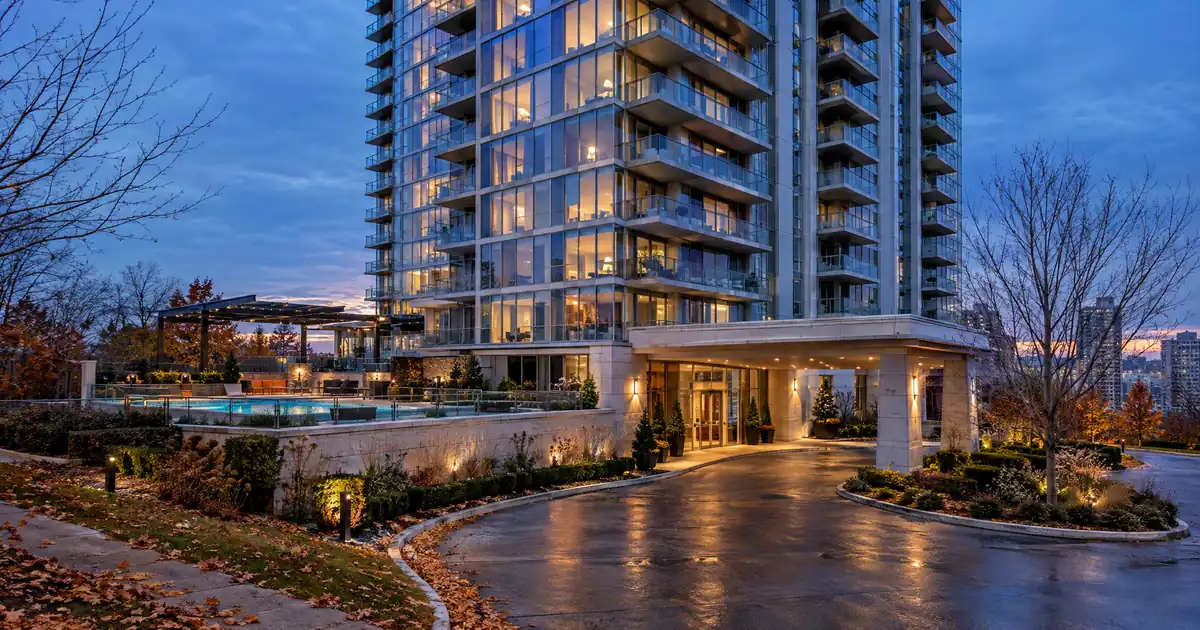
A condotel is a condo building that runs like a hotel. Owners hold title to individual units, but a rental desk, an operator, or a rental pool manages the nightly stays. Lenders call this a non-warrantable property, which is a building that falls outside standard agency lending rules.
Underwriters classify the building before they look at you. They ask a few plain questions:
- Is there a front desk or a rental desk?
- Is there daily housekeeping?
- Does an operator control the rentals?
- Do owners share rental income in a pool?
Any of these can tag the project as a condotel. The first answer sets which loan lane the file belongs in.
Why Does the Property Set the Down Payment, Not Your Income Method?
Lenders size the down payment around collateral risk. A condotel’s income depends on guests, seasons, and an operator’s decisions, so the lender wants more equity behind the loan. That risk shows up in the maximum LTV.
Across the wholesale network, the pattern is consistent. Income documentation and property type are two separate reviews. Bank statements answer “can this borrower carry the loan?” The building review answers “how much will we lend against this asset?” The second answer is the one that fixes your down payment.
The leverage ceilings by property type look like this on typical files:
| Property type | Purchase ceiling | Cash-out ceiling |
|---|---|---|
| Warrantable condo | Up to 85% | Per size ladder |
| Non-warrantable condo | Up to 80% | Per size ladder |
| Condotel | 75% | 65% (50% on the bank program) |
These are maximums through select wholesale programs, and a file at the ceiling needs strong credit, reserves, and a clean building. Smaller loans sit at the top of the range. Larger loans step down from it.
How Does a Bank Statement Loan Work on a Condotel?
A bank statement loan is reviewed around documented income under the applicable program, subject to lender guidelines, instead of traditional personal-income documentation. The lender reads 12 or 24 consecutive months of deposits and converts them into monthly income. Most self-employed borrowers use this path because traditional personal-income documentation shows write-offs, not cash flow.
The steps run like this:
1. Pick personal or business statements. Business statements require at least 25% ownership.
2. Total the eligible deposits. Transfers from your own business into your personal account count at 100%.
3. Apply an expense ratio. Fixed ratios depend on the business type and the number of employees, with a lower ratio for a service business with no employees and higher ratios for businesses with more employees or any product business. An accountant-provided ratio is another option.
4. Divide by the statement months. The result is your qualifying monthly income.
5. Check debt-to-income. DTI, the share of income that goes to debt, can run up to 50%.
Statements must be consecutive. A transaction history printout does not replace them.
Here is how the paths compare:
| Documentation path | What it verifies | Best fit |
|---|---|---|
| Bank statements (12 or 24 months) | Deposit history after an expense ratio | Self-employed with strong cash flow |
| Profit-and-loss only | Business earnings, capped at 80% | Owners with clean books |
| Asset-based | Liquid assets spread over 36, 60 or 84 months | Wealthy borrowers with thin income |
| DSCR | Rent versus the property’s debt | Investors buying for rental income |
Whichever path you choose, the 75% condotel ceiling stays put. Asset-based paths apply to primary and second homes only. The DSCR versus bank statement comparison for investors covers how to pick between the income tracks.
Can Anything Get You Below 20% Down?
Terms depend on the lender’s guidelines, the property type, the leverage, and a full review of the credit profile.
Not on a condotel in the network Lendmire places files with. The ceiling is 75% on a purchase, so the smallest down payment is 25%, and that assumes the borrower and the building both land at the top of the range. Strong credit helps you reach the ceiling. It does not raise it.
You may see ads that promise less. Ask four questions before you trust one:
- Which building type does the number apply to?
- Is it a primary residence, a second home, or an investment?
- What loan size does it cover?
- Is it a purchase or a cash-out?
Lower-down numbers usually belong to a regular condo or a different occupancy. They rarely describe a condotel purchase.
Leverage also shrinks as loans grow. On a condotel bought as a second home or investment property, the size ladder pushes the ceiling lower above roughly $2,500,000 to $3,000,000. Above $4,000,000, every figure is reviewed case by case before submission, so no flat number applies. On a $4,000,000 to $5,000,000 loan, the general investment-property ladder sits near 65% on review, well under the condotel’s 75% at smaller sizes.
Lendmire’s piece Bank Statement Loan With 10% Down vs 20% Down explains where lower down payments do exist. Those cases involve standard property types, not condotels. The exact numbers vary by lender and program and follow a full review of property, leverage, and credit.
Why Doesn’t Your 20% Down Math Carry Over?
Final terms depend on the lender’s guidelines, the property type, and the borrower’s complete credit picture.
The 20% figure comes from conventional lending. NerdWallet’s down payment explainer notes that 20% is mainly the point where many lenders stop requiring mortgage insurance on a conventional loan. It also lists down payments on second homes and investment properties as varying. So 20% is neither a floor nor a ceiling for non-QM files.
Standard agency financing is also out for condotels. Fannie Mae’s selling guide lists projects operated as hotels or motels among ineligible projects. Fannie Mae’s Condo Status Finder FAQ adds that it cannot finance projects that manage daily or short-term rentals. That is why a condotel loan lands in non-QM, and why your conventional pre-approval, if you have one, tells you little.
Because the building triggers the ineligibility, your income documents are not the problem. A rental desk sends the building to a different lane. It does not disqualify your bank statements.
What Does the Lender Review on the Building?
Expect a project questionnaire, which is a form the HOA or operator completes about the building’s finances and operations. Underwriters read it for several things:
- The rental program, rental-pool agreement, or hotel management agreement.
- The budget and reserve information.
- Insurance coverage.
- Litigation disclosures.
- The appraisal.
Some programs add unit-level overlays, such as a kitchen or a minimum square footage. Treat those as program-specific, not universal.
For the income side, a DSCR file normally needs a rent schedule or a short-term-rental income analysis. DSCR, or debt service coverage ratio, is rental income divided by the property’s monthly debt obligations. It qualifies primarily on property-level rental income covering the payment, subject to lender guidelines. Sub-1.00 coverage programs exist through select lenders in the network, but LTV and terms adjust when coverage runs thin.
Short-term rental rules can vary by city, county, HOA, and property type, so investors should confirm local rules before relying on projected rental income.
Investment condotel loans are business-purpose investor loans, so they are reviewed differently from a standard owner-occupied mortgage. Occupancy matters. A second-home condotel and an investment condotel can carry different leverage cells, and second homes are limited to one unit. Label the purchase honestly.
Three Scenarios With Real Numbers
These are modeled situations, not promises of approval.
A physician buying in a mid-size loan band. Say you buy a condotel as an investment property with a loan between $300,000 and $1,000,000. The condotel ceiling is 75% on a purchase, so plan on 25% down. The regular investment-property cell reaches 85% at 700+ credit, but the condotel cap overrides it. Reserves run about three to six months depending on size. First-time investors typically need 12 months.
A founder with business statements. Say you own 60% of an S-corp with three employees and use 24 months of business statements. The lender applies a 40% expense ratio to eligible deposits and divides the rest by 24. Owner transfers into your personal account count in full. The income can support the file, but the down payment still follows the 75% condotel ceiling. For this profile, income qualification is rarely the obstacle. Equity is.
A high-balance purchase. Run the numbers on a loan above $4,000,000. Everything goes to case-by-case review before submission. The bank program’s own ladder applies, and it steps down to 65% at $4,000,000 to $5,000,000 on review for an investment-property purchase. The super-jumbo overlays also apply, including a 700 credit floor, 0x30x24 housing history, and no rural property. Expect more cash down, not less.
What If 25% Down Is Too Much?
Each figure is subject to lender guidelines and a complete review of property type, leverage, and credit.
You have four honest options, and none involve a trick.
1. Switch building type. A warrantable condo can reach 85% on a purchase through select programs, so a regular condo cuts the down payment sharply. A non-warrantable condo reaches 80%.
2. Use existing equity. Cash-out on another property can fund the down payment, within the ladder’s cash-out cap. The portfolio program caps cash-in-hand at $1,500,000 above 60% LTV. Cash-out proceeds cannot satisfy reserves above the super-jumbo line.
3. Add an asset path. Liquid assets can qualify you where deposits fall short, but they do not change the property’s ceiling.
4. Wait and save. If the building is the goal, building the 25% cushion may beat forcing a weaker deal. Leverage, reserves, and pricing vary by lender and program; the final terms follow the full file review.
Does the Return Justify the Cash?
Often it is thinner than people expect. An investor on BiggerPockets describes 35% down on a Maui condotel and a cash-on-cash return of 1.86% after the resort’s management fee. That is one investor’s account, not a market average. It does show how an operator’s share can shrink the yield on a large down payment.
A DSCR that passes does not mean cash flow is healthy. The ratio tests whether rent covers the debt. It does not capture the operator’s cut or vacancy swings. Run both numbers before you commit.
Exit matters too. The lender pool that limits you at purchase limits your buyer at resale. That is a liquidity cost on top of the down payment.
Key Terms Defined
Condotel: A condo building with hotel-style operations, such as a rental desk or rental pool.
Non-warrantable: A property outside standard agency lending rules, often because of rentals, litigation, or HOA issues.
Bank statement loan: A mortgage that is reviewed around documented income from 12 or 24 months of deposits, after an expense ratio.
Expense ratio: The share of deposits the lender treats as business costs rather than income.
Reserves: Liquid money left after closing, counted in months of housing payments.
Rental pool: An arrangement where owners share rental income from the building’s units.
Who Is This For, and Who Should Walk Away?
A condotel bank statement loan suits an established, self-employed investor with real equity, solid credit, and a building that passes review. You should already be comfortable with the cash-on-cash math after the operator’s share.
Walk away if you are counting on a small down payment. Also walk away if the deal only works at 85% leverage, or if the building has heavy litigation, weak reserves, or an operator you cannot vet. A different property often beats a stretched condotel.
Tax treatment can depend on how the funds are used and how the property is held; investors should keep clear records and speak with a qualified tax professional before relying on any deduction.
Frequently Asked Questions
Can a bank statement loan lower the down payment on a condotel?
No. Bank statements change how your income is documented, not how the lender views the building. The condotel ceiling of 75% on a purchase stays the same, so plan on at least 25% down through select wholesale programs, subject to underwriting. Terms vary by lender guidelines, property type, leverage, credit profile, and full file review.
Does a rental desk disqualify my bank statement income?
No. The rental desk moves the building into a non-QM lane. Your 12 or 24 months of deposits can still qualify you under the applicable program, subject to lender guidelines.
Is the cash-out limit different on a condotel?
Yes. A condotel cash-out caps at 65% through select wholesale programs, and at 50% on the bank program. Both sit below the purchase ceiling.
Can I use a DSCR loan instead of bank statements?
Often, yes. A DSCR file qualifies primarily on property-level rental income covering the payment. Sub-1.00 programs exist through select lenders, but LTV and terms adjust. Condotel leverage ceilings still apply, and you should compare how each track treats the building. The complete DSCR loans guide explains the rental-income path in detail.
What credit score do I need?
The portfolio program starts at a 660 floor. Many leverage cells require 700 or higher, and files above the super-jumbo line need 700. Higher scores unlock the top of each ceiling.
Where to Go From Here
If you are financing a high-balance property on business or personal bank statements and want to see how the numbers work, Lendmire can help you compare super jumbo bank statement loan options based on your deposits, the property, credit profile, leverage, and your goals. Lendmire’s consumer mortgage lending is licensed in 16 states: AL, CA, CO, FL, GA, IN, MI, MT, NM, NC, OH, PA, TN, TX, VA, and WA. Lendmire is a broker and a commitment to lend only comes from a lender after full underwriting. Call 828-256-2183 to talk through a condotel file before you make an offer.
About Lendmire
Lendmire is a non-QM mortgage brokerage (NMLS# 2371349) arranging DSCR investor loans in 41 markets, including Washington, D.C. DSCR eligibility is generally reviewed around property-level rental income rather than personal income, subject to lender and program guidelines, a fit for self-employed investors and LLC-owned portfolios. Lendmire was recognized as a Scotsman Guide Top Mortgage Workplace in 2025 and 2026.
Get Started
Ready to find the right loan for you?
In about 30 seconds you can review financing options available for your home or investment property. No commitment required.
Informational only. Not a Loan Estimate, approval, or commitment to lend. Program availability and eligibility are subject to lender guidelines, credit approval, property review, and underwriting.
References
1. NerdWallet: How much down payment for a house
2. Fannie Mae Selling Guide: Ineligible Projects
3. Fannie Mae Condo Status Finder FAQ
4. BiggerPockets: Condotel in Maui, first investment property
This article is part of Lendmire’s super jumbo bank statement loan program — full qualification details, guidelines, and scenarios live on the program page.
Related reading: How to Qualify for a Super Jumbo Bank Statement Loan for a Condotel Unit · Bank Statement Loan vs Asset Depletion Loan for Attorneys · How to Document a High Net Worth Bank Statement Loan
Brandon Miller
Founder & CEO, Mortgage Loan Originator, Lendmire LLC
- Mortgage Loan Originator · NMLS# 1129696 · Verify on NMLS Consumer Access
- North Carolina Real Estate Broker · License# 343312 · Verify on NCREC
- North Carolina Insurance Producer · License# 19053198 · Property, Casualty, Life, Health · Verify on NAIC SBS
- Lendmire LLC · Firm NMLS# 2371349 · Verify firm licensure
Disclosures. The information presented in this article is general market commentary, not financial, legal, or tax advice. Lendmire is a mortgage brokerage (NMLS# 2371349) — not a direct lender or depository institution — and loan placement is subject to lender underwriting. Nothing in this content represents a commitment to lend. Loan terms, pricing, and program availability vary based on borrower qualifications, property characteristics, and state of subject property, and are subject to change at any time. Lendmire complies with Equal Housing Opportunity requirements. Consumer access: nmlsconsumeraccess.org.