
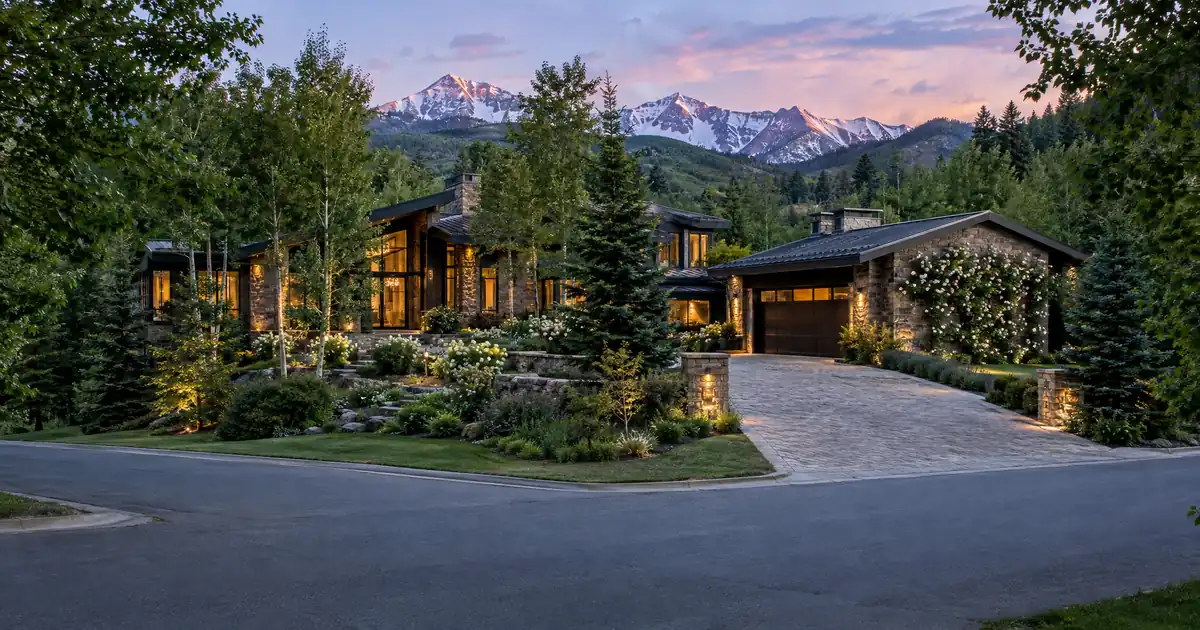
The Quick Read: You buy the acreage with cash drawn from a line of credit secured by taxable securities, then replace that line with a permanent super jumbo mortgage, and the whole plan works only if the takeout lender accepts the borrowed funds, the land appraises as a home site, and the pledged portfolio holds its value until the new loan closes.
- The line is secured by your securities account, not by the land, so the property title stays clean at purchase.
- Raw land usually cannot be taken out. The takeout lender needs a home or income-producing structure to underwrite.
- Acreage is the sharpest limit: through select wholesale programs, files above the super-jumbo line carry a ten-acre maximum and no rural property.
- Whether the takeout is treated as a purchase or as a cash-out refinance changes the leverage ceiling by several points.
- Confirm the takeout lender’s treatment of borrowed funds before you draw anything.
Why Investors Stack These Two Loans
The stack exists for one reason: an investor with a large taxable portfolio wants to move on a property without selling securities. A securities-backed line of credit (SBLOC) lets the portfolio stay invested while the land closes. The mortgage then turns a short, callable loan into long-term debt.
That sounds clean on paper. In a real file, the weak point is the handoff between the two loans. The line lender cares about the value of your securities. The mortgage lender cares about the property, your credit, your reserves and where the money came from. Neither one manages the other’s risk.
Lendmire is a mortgage broker, not a lender. It shops this kind of file across wholesale programs, and the treatment of SBLOC funds is the first thing it checks, because it differs from program to program.
Key Terms Defined
SBLOC: A revolving line of credit secured by securities in a taxable investment account, with interest due on the amount drawn.
Super jumbo: A loan size above the point where a lender stops treating the file as standard jumbo. Each lender draws its own line, so it is a convention and not a legal category.
Takeout: The permanent mortgage that pays off the temporary financing.
Maintenance call: A demand from the line lender to add collateral or repay because the pledged securities fell in value.
Seasoning: The ownership period a lender wants to see before it treats a refinance as something other than a purchase.
Delayed financing: A refinance of a recent cash purchase, treated more like a purchase than a cash-out when the program allows it.
How Does the Sequence Run, Step by Step?
The sequence has six steps, and each one has a decision point.
1. Open and size the line. Pledge taxable, non-retirement securities. Keep the draw well below the maximum, because the cushion is what protects you later.
2. Confirm the takeout treatment first. Ask the broker whether the target program counts SBLOC proceeds as acceptable source funds or as a liability. Do this before the line is drawn, not after.
3. Draw and close the land purchase. The wire goes to the title company. The settlement statement shows the sale and the funds used.
4. Build the paper trail. Keep the line agreement, the draw record, the wire confirmation and the settlement statement together in one folder.
5. Apply for the takeout. The file is either a purchase-style loan or a refinance that retires the line. The program decides which.
6. Pay off the line at closing. The payoff has to fit inside the new loan and the cash you bring. If it does not, the line stays open and the structure has failed.
What the Line Lender Allows
The SBLOC is non-purpose credit. FINRA describes it as a revolving line borrowed against securities in your investment accounts. Proceeds can fund real estate. They generally cannot buy more securities. Retirement accounts generally cannot be pledged.
The risk sits in the maintenance call. The SEC and FINRA investor alert on SBLOCs explains that a drop in collateral value can force you to add collateral or repay within a specified period, typically two or three days. If you cannot, the firm can sell your securities. The alert also lists unintended tax consequences and market swings that magnify losses.
The line is also variable and callable, and it sits underneath a long-term mortgage. A market drop between the draw and the takeout can trigger a call, and the mortgage lender has no control over that. A call can drain the cash you needed at closing.
How the Takeout Lender Looks at an SBLOC-Funded Purchase
Agency lending is the contrast case. The Fannie Mae Selling Guide accepts borrowed funds secured by an asset as a down-payment source, on the reasoning that they are a return of equity. That rule covers conforming loans. It does not govern a super jumbo or non-QM takeout.
Across the wholesale network, this is where programs split. Some count the line as acceptable source funds once the file shows the agreement, the draw and the wire. Others treat the open balance as a liability against the borrower. Some also net the pledged assets out of the reserves the borrower can claim. Each of those choices moves the file.
The takeout lender also reads the line differently depending on the transaction type. This table shows the difference, using the primary-residence ladder for a loan between $2,000,000 and $2,500,000, through select wholesale programs and subject to full underwriting.
| Factor | Purchase-style takeout | Cash-out style takeout |
|---|---|---|
| Typical ceiling, primary | 80% LTV | 70% LTV |
| Credit tier in this band | 720+ | 720+ |
| Who repays the line | New loan plus your cash | New loan plus more of your cash |
| Main risk | Lender won’t treat it as a purchase | Payoff gap at closing |
The gap between 80% and 70% is the part investors miss. If the program treats your SBLOC-funded acquisition as a cash-out, the new loan is smaller as a share of value, and you cover the rest of the line from money outside the pledged account.
Acreage Is the Hard Part
Acreage is where otherwise clean files fail. Through select wholesale programs, a rural property is allowed up to 80% leverage only on ten acres or less, and never above $3,000,000. On a primary residence above $3,500,000, and on a second home or investment property above $3,000,000, the overlays add a 700 credit floor, no rural property and a ten-acre maximum. Final terms depend on lender guidelines, property type, leverage, and the borrower’s complete credit picture.
That means a large parcel can push you out of a super jumbo program no matter how strong your portfolio is. Three questions decide it:
- How many acres is the parcel, and does the lender count the excess as part of the value?
- Is the zoning residential, agricultural or mixed?
- Is most of the appraised value in the land or in the home?
Some programs carve excess land out of the value used for the loan. That is a lender policy, not a law. A buyer who needs the full parcel in the loan should know the acreage limit before contract.
Raw land. Land with no structure has no rent and no residence to underwrite. A DSCR calculation needs a rent figure, and a primary-residence file needs a home. So a land-only purchase usually cannot be taken out this way. It needs a house or income-producing building on the site. Confirm this against the specific program before you rely on it.
Above the size line. Every loan above $4,000,000 is reviewed case by case before submission. The bank portfolio program, which carries twelve-month-statement files to $30,000,000, starts its own ladder above $4,000,000 and runs 65% to $5,000,000, 60% to $10,000,000 and 55% to $30,000,000, all on review. Acreage at that size is a negotiation, not a lookup.
How the Borrower Gets Qualified
The takeout does not care that your portfolio is large. It cares about documented income, credit, reserves and liquidity. A line draw is borrowed money, so it is not income.
High-net-worth, self-employed borrowers usually qualify through one of three paths, through select wholesale programs and subject to full underwriting:
- Bank statements. Twelve or 24 months of personal or business deposits, reduced by an expense ratio. Transfers from your own business into a personal account count in full.
- Asset paths. An asset allowance divides liquid assets by 36, 60 or 84 months. Assets-only qualification needs liquid assets equal to the loan amount plus closing costs. Retirement accounts count at 70%, or 80% at age 59 and a half. Business funds, gifts and cryptocurrency never count.
- Property cash flow. On an investment property, a DSCR file qualifies primarily on property-level rental income covering the payment, subject to lender guidelines. Sub-1.00 coverage is available through select lenders, with adjusted leverage and terms. Read the complete DSCR loans guide for how that path works.
Pricing and available terms vary by lender, borrower profile, property type, and full underwriting review. Debt-to-income can run to 50%. Reserves are typically 3 months to $500,000, 6 months to $1,500,000 and 9 months above that.
An open SBLOC balance can hit two places at once. It may count against your debt ratio, and the pledged securities may drop out of your reserve count. Ask which one the program applies, and run the file both ways.
Leverage on a Primary Residence by Size
Leverage steps down as the loan grows. Through select wholesale programs on a primary residence, purchases run about 90% to $1,000,000, 85% to $2,000,000, 80% to $3,000,000 and 75% to $4,000,000 at the top credit tier. Above $4,000,000, every figure is reviewed case by case. Second homes and investment property run about five points lower at each size.
Cash-out ceilings are lower than purchase ceilings at every step. That matters here because a refinance that retires the line can fall into the cash-out column. The bank portfolio program also sets its own limits on interest-only structures, so if you plan to carry the new loan interest-only, check that ceiling separately.
A Modeled Example
Run the numbers on a modeled assumption: a $2,400,000 home on eight acres, bought as a primary residence with the SBLOC covering the whole price. These are assumptions, not market data.
The takeout lands in the $2,000,000 to $2,500,000 band. Acreage is under the ten-acre limit. If the program treats the takeout as a purchase, the ceiling is 80% LTV at a 720 credit tier, so the remaining 20% of the line must be repaid from other cash. If the program treats it as a cash-out, the ceiling is 70%, and the payoff gap grows to 30%. These specifics are subject to lender guidelines and a full review of property, leverage, and credit.
Now stress the line. If the pledged portfolio falls during underwriting and a call lands, you may have to repay part of the line out of the same cash you were saving for closing. A buyer who drew only part of the available line, and kept liquid cash outside the pledged account, handles that call without disturbing the file.
Experience across this kind of file points one way. The files that stall are rarely about the size of the loan. They stall because the borrower drew the line first, then learned the takeout program wanted a different treatment of the funds.
Edge Cases Where the General Rule Breaks
- Low appraisal. If the home and land appraise below your cost, the new loan is capped below the line balance. You owe the difference out of pocket.
- Another asset-backed loan. If the funds came from a loan against some other asset, the takeout lender may require a payoff. That is program-specific.
- Entity vesting. Closing in an LLC varies by program.
- Texas home equity. Texas 50(a)(6) loans take a 5-point leverage reduction and stop at $3,000,000 on the portfolio program.
- Cash-out proceeds as reserves. Above the super-jumbo line, cash-out proceeds cannot satisfy reserves.
Lendmire’s pieces on how an SBLOC bridge works on a purchase versus a cash-out takeout and on cashing out a super jumbo loan on acreage property go deeper on the two branches.
Who This Fits and Who It Doesn’t
The stack fits a buyer with a large taxable portfolio, documented deposits or assets, a parcel at or under ten acres with a home on it, and cash outside the pledged account. It also fits a buyer who wants to avoid realizing gains on a sale.
It does not fit a buyer with raw land, a parcel well over ten acres at a high loan size, or a thin cushion above the line’s collateral requirement. It also does not fit a buyer who cannot cover the payoff gap if the takeout treatment comes back as cash-out.
Tax treatment can depend on how the funds are used and how the property is held; investors should keep clear records and speak with a qualified tax professional before relying on any deduction.
Frequently Asked Questions
Can the super jumbo lender count SBLOC proceeds as my down payment?
It depends on the program. Agency rules accept secured borrowed funds, but a non-QM or bank portfolio program sets its own policy. Some count the funds with a clean paper trail, and others treat the balance as a liability. Ask before you draw.
Does the SBLOC lien show up on the land?
No. The lien sits on the securities account, so title should show no mortgage on the acreage after closing. That is a function of how the line is structured, and the title company confirms it at settlement.
What happens if my portfolio drops before the takeout closes?
The line lender can issue a maintenance call. The SEC and FINRA alert describes a typical cure window of two or three days, and the firm can sell securities if you do not cure it. Keep a buffer and hold cash outside the pledged account.
How many acres can a super jumbo loan cover?
Through select wholesale programs, ten acres is the maximum above the super-jumbo line, with no rural property. Rural property is held to 80% leverage on ten acres or less and never above $3,000,000. Larger parcels need case-by-case review, and the lender may carve the excess out of value. Terms depend on the lender’s guidelines, the property type, the leverage, and a full review of the credit profile.
Where does Lendmire fit in this?
Lendmire arranges the takeout through a wholesale network and compares programs on how they treat borrowed funds, acreage and reserves. Consumer lending is licensed in 16 states: AL, CA, CO, FL, GA, IN, MI, MT, NM, NC, OH, PA, TN, TX, VA and WA. Programs change, and every file is underwritten individually.
Acreage will keep deciding these files long after the borrower’s portfolio stops being the issue, so count the acres and confirm the funding treatment before the first draw.
For current guidelines and terms, see Lendmire’s super jumbo bank statement loan programs page.
About Lendmire
Lendmire (NMLS# 2371349), a non-QM mortgage broker serving investors in 41 markets including Washington, D.C., helps structure DSCR scenarios commonly evaluated around a property’s rental income rather than personal income paperwork, subject to lender guidelines. A Scotsman Guide Top Mortgage Workplace in 2025 and 2026, Lendmire places loans through wholesale investor lenders and is not a direct lender.
Get Started
Ready to find the right loan for you?
In about 30 seconds you can review financing options available for your home or investment property. No commitment required.
Informational only. Not a Loan Estimate, approval, or commitment to lend. Program availability and eligibility are subject to lender guidelines, credit approval, property review, and underwriting.
References
1. FINRA: Securities-Backed Lines of Credit
2. SEC and FINRA Investor Alert on Securities-Backed Lines of Credit
3. Fannie Mae Selling Guide B3-4.3-15: Borrowed Funds Secured by an Asset
This article is part of Lendmire’s super jumbo bank statement loan program — full qualification details, guidelines, and scenarios live on the program page.
Related reading: Can a Cash-Out Super Jumbo IO Loan Reset Into a New IO Term? · 40-Year Amortization on a Super Jumbo Purchase vs Cash-Out Loan · How to Fund a Cash Purchase With an SBLOC Then Cash Out Super Jumbo
Brandon Miller
Founder & CEO, Mortgage Loan Originator, Lendmire LLC
- Mortgage Loan Originator · NMLS# 1129696 · Verify on NMLS Consumer Access
- North Carolina Real Estate Broker · License# 343312 · Verify on NCREC
- North Carolina Insurance Producer · License# 19053198 · Property, Casualty, Life, Health · Verify on NAIC SBS
- Lendmire LLC · Firm NMLS# 2371349 · Verify firm licensure
Disclosures. The information presented in this article is general market commentary, not financial, legal, or tax advice. Lendmire is a mortgage brokerage (NMLS# 2371349) — not a direct lender or depository institution — and loan placement is subject to lender underwriting. Nothing in this content represents a commitment to lend. Loan terms, pricing, and program availability vary based on borrower qualifications, property characteristics, and state of subject property, and are subject to change at any time. Lendmire complies with Equal Housing Opportunity requirements. Consumer access: nmlsconsumeraccess.org.