
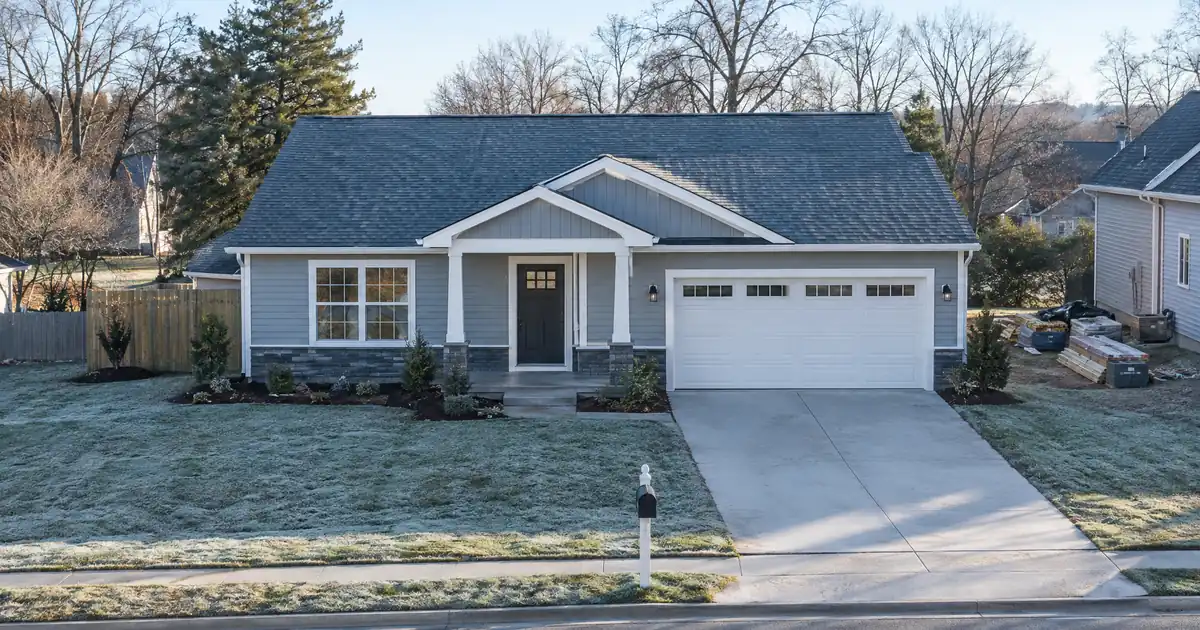
The Quick Read: Buying a tenant-occupied house on hard money suits an investor who can show a clean lease, a clear exit and a loan term with room to spare, while waiting for a vacant house suits an investor who wants a clean closing and a rehab done before any tenant arrives. Hard money reviews the property’s rental income, the plan and the exit, so occupancy changes what rent evidence the permanent lender can see and which obligations the buyer inherits. It does not change the logic of the DSCR test.
- Hard money is short-term and asset-based; DSCR is long-term and rent-based. They answer different questions.
- An occupied house hands you a lease, a deposit liability and rent evidence on day one.
- A vacant house gives you a clean closing, but you carry the property until a tenant is in place.
- The appraiser’s market-rent opinion usually decides the rent a permanent lender credits, not the rent you hope to collect.
- Exit timing is the real risk on either path.
Two loans sit inside this decision, and they get mixed up. Hard money is a short-term bridge secured by the property. DSCR Investor Loans is the long-term loan many investors refinance into. Occupied versus vacant is not a rule inside either one. It is a question about what evidence you can show and what you inherit.
What this loan actually costs to carry.
Hard money is sized against the project and priced by time. Enter the deal and see how much the program will lend, the cash required at closing, the carry while you hold it, and what is left at the exit.
Leverage tiers on the current program: 85% with fewer than 2, 90% with 2 or more, 93% with 5 or more completed projects — every tier capped at 75% of after-repair value. Loan amounts up to $5,000,000, larger by exception; terms of 6 to 18 months, interest-only, no prepayment penalty. The rehab portion funds in draws against completed work, not at closing.
Program parameters shown update from Lendmire’s centralized guideline source. Rate, points, and months are editable assumptions, not quoted terms.
Cost cap sets the loan · positive spread
Illustrative estimate only — not a quote, Loan Estimate, approval, or commitment to lend. Rate, points, and months are editable assumptions. Hard money is business-purpose financing for real estate investors, not a consumer mortgage. Leverage on the current program tops out at 93% of project cost for investors with a documented track record, capped at 75% of after-repair value, with rehab funding up to 100% of the documented budget released in draws; actual terms vary by lender, borrower experience, property, and exit. Lendmire is a mortgage broker, not a lender.
Side-by-Side
The hard money column below reflects the Lendmire network’s published hard money parameters. The DSCR column describes the common long-term exit, using typical ranges that vary by lender, property and experience.
| Factor | Occupied purchase | Vacant purchase |
|---|---|---|
| Hard money basis | Property, plan, exit | Property, plan, exit |
| Rent evidence | Lease, rent roll, estoppel | Appraiser’s market-rent opinion |
| Legal inheritance | Lease and deposit pass with the building | None |
| Rehab access | Limited by the tenancy | Open on day one |
| Entity vesting | Individual or LLC, lender-level question | Same |
| Timeline risk | Notice periods and lease terms | Rehab and lease-up time |
| Reserves | Hard money and DSCR lenders each set their own | Same, plus carry during vacancy |
| Property types | 1-4 units on hard money | Same |
The honest read of the table: the rows that differ are about evidence and obligations. The rows that match are about the lender’s view of the asset.
What the Hard Money Side Looks At
Across the wholesale network, hard money on a non-owner-occupied 1-4 unit property is underwritten on the collateral, the business plan and the exit. Leverage depends on the deal and the borrower’s track record. Bridge purchases without rehab run up to 80% of purchase price. Fix-and-flip files are sized on project cost, from 85% of project cost with fewer than two completed projects, to 90% at two or more and 93% at five or more, each capped at 75% of after-repair value. Cash-out and rate-and-term refinances on hard money top out near 65% of value. Terms run 6 to 18 months, interest-only, with no prepayment penalty. A 620 credit score is the floor, with added conditions below 660. All of this varies by lender, property and experience, and none of it is a commitment to lend.
Occupancy does not appear as a leverage tier. What it changes is the file: a lender will want the lease and a rent roll, and the exit story has to include a tenant who is already there.
When Buying Occupied Is the Better Fit
Occupied wins when the house is already rent-ready, the lease is at or near market, and the exit is a refinance into long-term financing. The tenant is a proof point. The rent shows up in the appraisal, and the permanent lender has an actual lease to review next to the appraiser’s rent schedule.
A few conditions make occupied work:
- The lease is documented. Get every written lease and a rent roll showing rent and deposit by unit. A law firm’s guide to purchasing a tenant-occupied building lists these as baseline closing documents.
- An estoppel is in the file. A tenant estoppel certificate confirms lease term, current rent, deposit and any side deals. Lenders taking an occupied property as collateral often want the landlord’s statements verified, and an estoppel does that.
- Little or no rehab is needed. Occupancy limits access. If the value depends on gutting the kitchen, an occupied house is the wrong tool.
- The exit has buffer. Hard money terms are short. A 6 to 18 month window needs room for the appraisal, the new lender’s review and any surprise.
The lease and the deposit pass with the building. In most U.S. jurisdictions the buyer generally steps into the landlord’s position and takes the property subject to the existing tenancy, as RentalRealEstate’s guide to selling with tenants in place explains. The deposit is typically credited to the buyer on the settlement statement or transferred outright, and state law governs. Settlement reconciliation matters here. A tenant who claims a bigger deposit than the seller disclosed becomes the buyer’s problem, which is exactly what the estoppel is meant to prevent.
Run the numbers on a rent-ready duplex with both units leased. At the refinance, the file shows two leases, two rent histories and an appraisal with a rent schedule. For one-unit investment property, the appraiser prepares Form 1007, the Single-Family Comparable Rent Schedule, which Fannie Mae’s Selling Guide names for one-unit investment properties qualified on rental income. Form 1025 is the 2-4 unit equivalent. DSCR loans are not agency products, so this is form-name context only. The practical point: the appraiser’s market-rent opinion, not the lease, usually governs the number a lender credits. A high lease does not lift the ratio. A low lease can pull it down.
The Below-Market Lease Problem
This is the quiet failure mode on occupied files. A long-term lease at below-market rent can depress both the value and the coverage on a small multifamily building. The seller may price the house as if the rent were market. The permanent lender sees the lease and the appraisal and works from what the file supports. Ask for the lease before you price the deal, not after.
Rent Control and Local Rules
Local rent rules can limit increases on an inherited tenancy, which changes the rent a lender will see. This is a title and counsel question, not a financing one.
When Waiting for a Vacant House Is the Better Fit
Vacant wins when the property needs real work, when the lease on an occupied option looks weak, or when you want a clean closing with no inherited obligations. You control access on day one, you choose the tenant, and the rehab runs without anyone living in the house.
A vacant house can still get long-term financing. Rates are not quoted here. Whether a given program requires a lease for a vacant file is a lender-level convention, so confirm it on the specific scenario.
What you give up by waiting is time and carry. The costs are lease-up months, turnover and insurance exposure. Standard property policies often narrow or exclude coverage such as vandalism, water damage and glass breakage once a house has sat empty past a window of roughly 30 to 60 days, according to Financial Samurai’s explanation of the vacancy clause. The clock generally does not reset at renewal. Get a quote that reflects a vacant or rehab status before the loan, not after a loss.
Waiting also has a cost nobody prices: the deals you pass on. Occupied inventory can sit for other buyers because access is limited and the tenancy scares some of them off. If you only buy vacant, you narrow your own pool.
Picture an investor holding a rehab-heavy house with a dated kitchen and a failing roof. The vacant version lets the crew start immediately, and the tenant moves in after the work, with the appraisal reflecting the finished product. On an occupied version the same crew works around a household. For that deal, vacant is the right call, even if the wait is longer.
The Exit Is the Real Risk
Both paths fail the same way: the exit does not close before the hard money term ends. Hard money terms are short, interest-only and end in a balloon, so a missed exit turns into pressure fast. Many investors refinance out of hard money into long-term DSCR financing once the property is stabilized, and Lendmire brokers that path through its wholesale network.
Here is what DSCR looks like on that exit. Most files land at 75%-80% LTV on a purchase, with select high-leverage programs reaching 85% LTV at roughly a 700+ score. Cash-out refinances top out around 75% LTV across most of the network, and about 6 months of seasoning is the common expectation. Coverage of 1.00 is where select programs start, and stronger ratios open better terms. A separate select-lender path takes coverage below 1.00, with leverage and terms adjusted. Most programs want a score near 660, a 620 floor exists in parts of the network, and 700+ opens the strongest leverage tiers. Reserves commonly run around 6 months of PITIA, vary by lender, leverage, loan size and transaction type, and step up on larger loans. Everything is subject to lender guidelines.
Seasoning is the piece occupied buyers underestimate. A recent purchase on hard money followed by a quick plan to refinance still faces the lender’s own ownership-period expectation, documented by the settlement statement. Files that assume it away get kicked back. The complete DSCR loans guide covers the long-term side in full.
One caution on the exit: clearing 1.00 is not positive cash flow. The ratio compares rent to PITIA only. Repairs, vacancy, management, utilities and capex sit outside it. An occupied house with a clean 1.00 can still bleed money.
Key Terms Defined
Estoppel certificate: A signed statement from the tenant confirming lease terms, rent, deposit and any side agreements.
Bona fide tenant: Under the foreclosure rule, a tenant who is not the prior owner or a close family member and who pays roughly market rent under an arm’s-length lease.
Lease-up: The period between a house being ready and a tenant paying rent.
Seasoning: The ownership period a lender expects before allowing a cash-out refinance on a recent purchase.
Balloon: The full remaining balance due when a short-term loan reaches the end of its term.
Market rent: The appraiser’s opinion of what the property would rent for, which usually governs the rent credited at refinance.
A Balanced Verdict
Buy occupied when the house is rent-ready, the lease is documented and near market, the estoppel is clean and the hard money term leaves real buffer. Wait for vacant when the house needs work that the tenancy would block, when the lease is weak, or when you want a clean closing and control of the tenant. Neither path is safer by default. Occupied trades control for evidence. Vacant trades time for control.
If you are buying, rehabbing or refinancing an investment property on a short timeline and want to see how the numbers work, Lendmire can help you compare hard money options based on the project, the exit plan, leverage and your goals. Request a quote through the quote form.
Tax treatment varies; consult a qualified professional.
Frequently Asked Questions
Do hard money lenders lend on tenant-occupied properties?
Many do, because hard money reviews the property’s rental income, the plan and the exit rather than occupancy. On non-owner-occupied 1-4 unit property, expect the lender to ask for the lease and rent roll. Terms, leverage and experience requirements vary by lender and property, and nothing is a commitment to lend.
Do I have to keep the tenant after I buy?
Usually the lease runs with the property, so a tenant under a valid lease generally stays through the term. On foreclosure purchases, the federal rule gives bona fide tenants at least 90 days’ notice and may let them stay to the end of a bona fide lease. State and local law can add protection. A negotiated buyout is the common alternative.
Can a vacant house qualify for a DSCR refinance?
Yes, in many programs. The appraiser’s market-rent opinion on Form 1007 or 1025 is a standard way to evidence rent with no lease in place. Whether a particular program wants a lease is a lender-level question, so confirm it on the specific file.
Does a higher in-place lease raise my coverage?
Not reliably. Appraised market rent usually governs, so a lease above market does not lift the ratio, and a lease below market can pull it down. Coverage is rent against the full monthly obligation, and 1.00 is where select programs start.
What if the exit slips past the hard money term?
That is the central risk on both paths. The balloon comes due whether or not the refinance has closed. Build buffer into the term, line up the appraisal and lease documents early, and know the seasoning expectation of the permanent lender before you close on the bridge.
About Lendmire
As a DSCR and non-QM mortgage broker, Lendmire — NMLS# 2371349 — connects investors with wholesale lending channels across 41 markets, including Washington, D.C. The property’s rental income, not the borrower’s tax returns, is central to lender review, which works for self-employed operators and portfolios beyond four financed properties. Scotsman Guide named Lendmire a Top Mortgage Workplace in both 2025 and 2026.
Get Started
Ready to find the right loan for you?
In about 30 seconds you can review financing options available for your investment property. No commitment required.
Informational only. Not a Loan Estimate, approval, or commitment to lend. Program availability and eligibility are subject to lender guidelines, credit approval, property review, and underwriting.
References
1. Cardile Law: purchasing a tenant-occupied building
2. RentalRealEstate: selling with tenants in place
3. Fannie Mae Selling Guide B4-1.2-01
4. Financial Samurai: vacancy clause
This article is part of Lendmire’s hard money loan program — full qualification details, guidelines, and scenarios live on the program page.
Related reading: Can a Co-Living House With Room Leases Qualify for a DSCR Loan? · DSCR Cash-Out Now vs Waiting for Hard Money and Rehab Card Payoff · Can a DSCR Lender Release a Detached Unit From the House?
Brandon Miller
Founder & CEO, Mortgage Loan Originator, Lendmire LLC
- Mortgage Loan Originator · NMLS# 1129696 · Verify on NMLS Consumer Access
- North Carolina Real Estate Broker · License# 343312 · Verify on NCREC
- North Carolina Insurance Producer · License# 19053198 · Property, Casualty, Life, Health · Verify on NAIC SBS
- Lendmire LLC · Firm NMLS# 2371349 · Verify firm licensure
Required disclosures. Lendmire (NMLS# 2371349) operates as a licensed mortgage broker, not a direct lender or depository. The discussion in this article is general in nature and should not be relied upon as financial, legal, or tax advice — every investment scenario is unique and should be reviewed by a qualified professional. Any loan inquiry is subject to lender underwriting, and this article is not a commitment to lend or a guarantee of approval. Mortgage rates, loan terms, and program guidelines vary by borrower, property, and state, and may change without notice. Equal Housing Opportunity. Verify licensure at NMLS Consumer Access.