
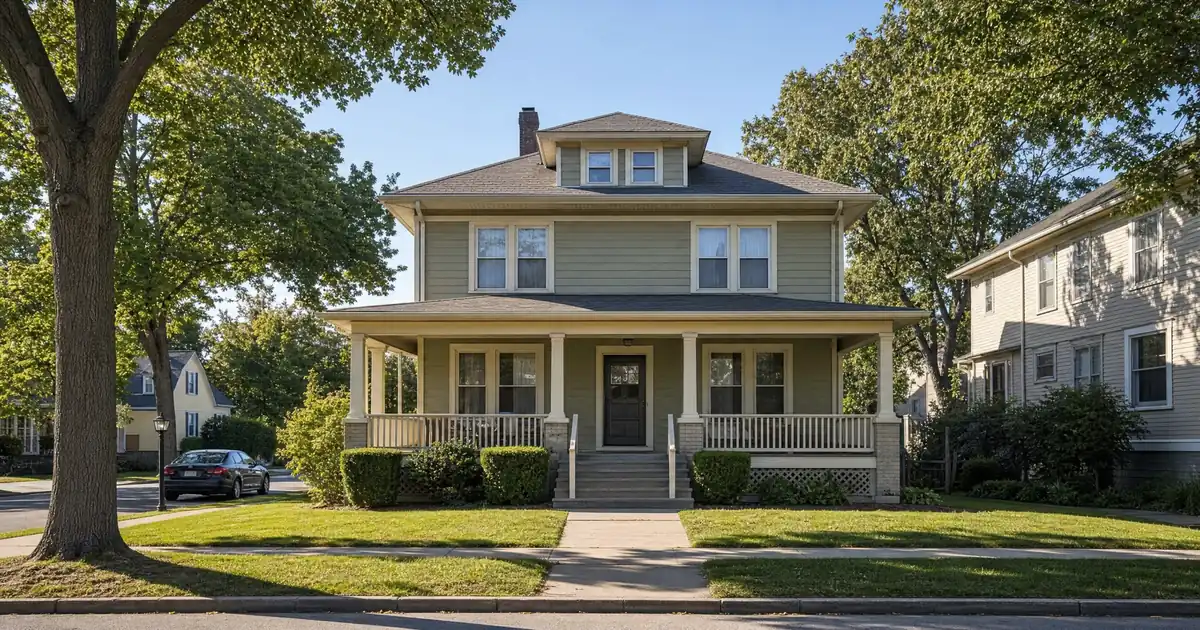
The Quick Read: Not directly. A HELOC attaches to a property the borrower already owns. It can’t attach to a property that hasn’t closed yet. Investors use it a different way. They draw cash from an existing property’s equity. Then they put that cash toward the down payment on a separate loan — usually a DSCR loan — for the property they’re actually buying. That’s two loans and two underwriting files for one deal.
Can a HELOC Directly Finance the Property You’re Buying?
No. A home equity line of credit is a second lien. It gets recorded against a property already on title in the borrower’s name. It can’t be recorded against a house that hasn’t closed escrow yet. This is the part investors get backward most often. They hear “HELOC for an investment property” and assume the HELOC pays for the purchase. It doesn’t. It finances the cash that goes into the purchase.
How large a line the equity supports in your market.
An equity line is sized by combined loan-to-value, occupancy, and credit — not by rental coverage. Switch the occupancy or the credit band and the ceiling moves with it.
Investment-property lines require a 700 minimum credit score. Second-home tiers reach 640; primary-residence tiers reach 600.
A debt-to-income ratio above 45% requires 680+ credit. Profiles under 640 are limited to single-family homes. At least 75% of the approved line is drawn at closing. Ceilings, floors, and caps update from Lendmire’s centralized guideline source.
Line estimate
Illustrative estimate only — not a quote, Loan Estimate, approval, or commitment to lend. The rate is an editable assumption; equity-line pricing is variable through both the draw and repayment periods and never converts to fixed. Occupancy and credit drive the ceiling together: investment property runs to 70% combined LTV with a 700 credit floor and a $500,000 cap; a second home runs to 70% at a 640 floor with a $500,000 cap; a primary residence reaches up to 80% at a 600 floor, and its $750,000 maximum line applies only at 75% combined LTV or below with 720+ credit and a full appraisal. Lines above $500,000 require a full appraisal. Credit, debt-to-income, property type, and full underwriting review all affect the final line.
The property backing the HELOC and the property being bought are almost never the same asset. For a new purchase, you’re looking at two different addresses, two different valuations, and two different loan files on two different underwriters’ desks.
The Two Scenarios That Actually Work
Investors fund a purchase with a HELOC in one of two ways. Mixing them up is where files go sideways.
Scenario one: Draw equity from a primary residence. Use that cash as the down payment on a new rental. This is the more common path. Primary-residence equity tends to run larger, and the borrower’s income and credit are already established.
Scenario two: Draw equity from an existing rental to fund the down payment on the next one. This is the classic scaling move. Here, title matters a lot. Lendmire’s wholesale network requires the collateral property to be held in the individual borrower’s name or in an inter vivos revocable living trust. LLCs, corporations, and partnerships can’t hold title on this line. If the rental is already deeded to an LLC, the investor has two options. Re-vest it personally first, or pull equity a different way. A DSCR cash-out refinance is worth comparing here, since DSCR loans don’t carry that same personal-vesting rule.
That one distinction — who can hold title — is the sharpest difference between a HELOC and a DSCR loan. It trips up more scaling investors than credit score or debt-to-income ever does.
Key Terms Defined
HELOC (home equity line of credit): a revolving credit line secured by a second lien on a property the borrower already owns. You draw against it as needed, instead of getting one lump sum.
Draw period: the window — five years on Lendmire’s investment-property line — when the borrower can pull funds, usually on an interest-only basis.
CLTV (combined loan-to-value): the first mortgage balance plus the new HELOC, measured against the property’s value. This number caps how much you can draw.
DSCR loan (debt-service-coverage-ratio loan): a non-owner-occupied loan reviewed on the target property’s rental income compared to its housing payment, not on personal income documents.
Seasoning: how long funds need to sit in an account, or how long a property needs to be owned, before a lender will count them toward a new transaction.
How the Investment-Property HELOC Line Is Built
The network’s investment-property line caps at 70% CLTV and a $500,000 maximum line. There’s no higher tier for a non-owner-occupied property, no matter how strong the credit profile is. A 700 score and a 720 score both land at the same 70% ceiling. Credit above 700 doesn’t buy more leverage here — it just opens up other parts of the file. Final terms depend on lender guidelines, property type, leverage, and the borrower’s full credit picture.
Two draw structures exist across the wholesale network: a 3-year interest-only draw with a 17-year repayment on the higher-leverage path, and a 5-year interest-only draw with a 25-year repayment on the longer-runway path — a quoted CLTV always carries its own structure. Tennessee is different: a five-year draw with a ten-year repayment. At least 75% of the approved line has to be drawn at closing. This isn’t a line you open and leave alone. Debt-to-income across the program tops out at 50%. On the investment-property line specifically, the 700 credit floor already beats the tighter 45%/680 tier used for lower credit profiles elsewhere in the program. Bank-statement income needs a 680 minimum in other parts of the network. But since investment property already floors at 700, that tighter number never comes into play here.
The line caps at $500,000, and full appraisals only apply above that threshold. So an investment-property HELOC in this network usually closes on an automated valuation, not a walk-through appraisal — though a borrower can ask for one. Property eligibility covers single-family homes, 2-4 units, PUDs, townhomes, and condominiums, including non-warrantable condos, plus modular factory-built homes. Manufactured homes, co-ops, condotels, timeshares, barndominiums, log homes, and anything zoned commercial, mixed-use, or agricultural don’t qualify.
What Actually Sinks the File Before It Starts
Exposure limits trip up experienced investors more than new ones. A borrower can hold up to three of these lines, with a combined cap of $750,000. Own more than 15 financed properties, and you’re out of eligibility entirely. Credit derogatories carry their own waiting periods too. Bankruptcy needs four years from discharge or dismissal. Foreclosure needs seven years. A short sale, deed-in-lieu, or pre-foreclosure needs four years.
State rules add another layer. Texas ties its 12-day waiting period and one-lien-at-a-time rule to primary residences only. Investment and second-home properties in Texas run as regular non-homestead deals, though acreage caps at 10. New Mexico and Ohio scale the CLTV cap to the borrower’s credit profile, instead of using one flat number. In Indiana, North Carolina, Pennsylvania, Tennessee, Texas, and Washington, a property listed for sale — or listed in the past 60 days — doesn’t qualify for this line at all.
This HELOC program runs through Lendmire’s 16 full-service states: Alabama, California, Colorado, Florida, Georgia, Indiana, Michigan, Montana, New Mexico, North Carolina, Ohio, Pennsylvania, Tennessee, Texas, Virginia, and Washington. That’s a smaller map than the DSCR investor-loan side of the business. There, Lendmire (NMLS# 2371349) arranges DSCR loans across 40 states plus Washington, D.C. through its wholesale lending relationships. It’s worth knowing these two products don’t cover the same footprint.
HELOC, Cash-Out Refi, or DSCR Loan — Which One Is Actually Funding What
| Financing Tool | Attaches To | Role in a Purchase Strategy | Structure |
|---|---|---|---|
| HELOC (investment) | Property already owned | Draws cash for the new down payment | Revolving line, interest-only draw, then amortizing |
| Home equity loan | Property already owned | Lump-sum cash for the new down payment | Fixed lump sum, amortizing from closing |
| Cash-out refinance | Property already owned | Replaces existing loan; difference funds the purchase | Single new first-lien loan |
| DSCR loan | The property being acquired | Finances the acquisition itself | Reviewed on the property’s rental income |
A DSCR loan and a HELOC solve different problems when you’re pulling equity. A HELOC leaves the existing property’s first mortgage alone and adds a revolving second lien on top. A cash-out refinance replaces the whole first loan instead. Which one fits your situation usually comes down to the balance already sitting on that first mortgage.
Getting the Draw to Actually Count on the New Purchase
Once the HELOC funds land in a bank account, they get the same scrutiny as any large deposit on the acquisition loan. Underwriters generally want the money seasoned first. Experian notes that lenders typically want funds to sit in an account for at least 60 days before an application. This keeps a large deposit from looking like undisclosed debt. A HELOC draw is, by definition, borrowed money. So the file needs the HELOC statement showing the draw, the deposit record, and the wire instructions to all line up — a clean paper trail from line to closing table.
There’s a useful contrast in how agency guidelines treat borrowed funds in general. Fannie Mae’s selling guide draws a line between two types of borrowed money. Unsecured borrowed money is generally not an acceptable funding source. But funds borrowed against an asset the borrower already owns and pledges as collateral get treated differently. A HELOC, secured by real property, falls into that second, more favorable category. That distinction matters, even though DSCR loans don’t run on agency rules themselves.
Why the Actual Purchase Usually Ends Up as a DSCR Loan
DSCR loans are built for non-owner-occupied investment properties. They’re business-purpose loans, not standard owner-occupied mortgages, so they get reviewed under a different framework. Compliance Alliance calls this the business-purpose exemption for non-owner-occupied rental financing. The file gets reviewed on the target property’s income, not the borrower’s traditional personal-income paperwork.
Across the wholesale network Lendmire works with, purchase leverage on these files typically lands at 75-80% LTV. Select high-leverage programs reach 85% for borrowers with roughly a 700-plus score. Credit floors run as low as 620 in parts of the network, though most programs want something closer to 660. A 700-plus score is where the strongest leverage tiers open up. A 1.00 DSCR — rent covering the full monthly obligation — is where select programs start. It’s not a universal benchmark. Stronger coverage generally opens better leverage and pricing. Loan sizes typically run up to $3,000,000 on standard programs, with smaller balances available through select lenders. Above roughly $2,500,000, the network generally settles into 30-year fixed structures.
Coverage below 1.00 isn’t automatically off the table. It’s available through select lenders in the network, with leverage and terms adjusted to match. No-ratio structures skip the rent-to-payment test entirely. These exist through a narrower set of lenders, generally for borrowers who already own a primary residence. Reserves vary by lender, size, and leverage. A conservative rate-and-term refinance under $1,500,000 at modest leverage can waive reserves entirely, while loans above that size typically step up to roughly nine months of PITIA. None of this replaces the equity check. A bigger down payment lowers the payment and can lift the coverage ratio, but it never overrides a credit floor, a reserve requirement, or a property-type rule. The strongest files clear both tests at once: enough equity and enough rental income.
Lendmire’s complete DSCR loans guide walks through how that math gets built file by file. Investors weighing DSCR financing against straight conventional financing on the acquisition side should read that comparison before choosing either path.
A Modeled Scenario
Say an investor holds equity in an existing rental, owned free of any LLC vesting issues. Investment-property CLTV caps at 70% across the network with a $500,000 maximum line and a hard 700 credit floor — second homes carry the same 70% ceiling from a 640 floor. The draw covers the down payment and closing costs on a new purchase — say, a duplex listed near $350,000. That purchase gets financed separately with a DSCR purchase loan at 75% LTV. Modeled rents clear somewhere around 1.15x coverage on the new property’s own payment. That’s two files and two closings. The HELOC balance keeps growing on the original rental, no matter how the new duplex performs. These specifics are subject to lender guidelines and a full review of property, leverage, and credit.
That last point is the risk people underestimate. If the new property underperforms, the HELOC obligation on the first property doesn’t pause. It’s a separate lien with its own repayment schedule, tied to a property the investor already owns. That payment needs to stay current no matter how the new deal plays out.
Where the Tax Question Actually Belongs
Tax treatment can depend on how the funds are used and how the property is held. Investors should keep clear records and talk to a qualified tax professional before relying on any deduction tied to a HELOC draw used for a rental purchase.
Mistakes Worth Avoiding
A few patterns show up again and again on files structured this way.
Assuming the HELOC eliminates the down payment requirement — it doesn’t. It just changes where the money comes from, savings versus borrowed equity. The acquisition loan still needs to document where every dollar came from.
Assuming any borrowed money disqualifies the down payment — that’s not true across the board. Underwriting guidelines generally split borrowed money into two buckets. Unsecured debt is typically unacceptable as a down-payment source. Funds borrowed against an asset you already own and pledge as collateral get treated differently. That same secured-versus-unsecured split shows up across non-QM underwriting too.
Assuming the collateral property can stay titled to an LLC on this HELOC — it can’t, on this particular line. Vesting has to sit with the individual or a revocable living trust, subject to lender program eligibility on whichever loan ultimately finances the new purchase.
Treating “1.00 DSCR” as proof of positive cash flow on the new purchase — it isn’t. The ratio only compares rent to the housing payment. Repairs, vacancy, management, and capital expenses sit outside that calculation entirely.
If you’re weighing a HELOC against a straight cash-out refinance on the existing rental, run both structures side by side before choosing. The extra hour it takes is worth it.
Investors putting this strategy together — pulling equity from one property to fund the next — can call Lendmire at 828-256-2183 or request a quote to see how the leverage, credit profile, and rental coverage line up on their specific file.
Loan approval is never guaranteed, and nothing here is a commitment to lend. Every scenario described here depends on lender approval and on borrower, property, and program guidelines, which can change without notice. This article is general information only, not financial, legal, or tax advice.
Frequently Asked Questions
Can I use a HELOC on the property I’m about to buy?
No — a HELOC needs an existing lien position on a property already on title in the borrower’s name. It can’t be placed on a property before closing, which is why investors use it to fund the down payment on a separate acquisition loan rather than as the acquisition loan itself.
Does the investment-property HELOC line go above $500,000?
No. Larger equity-pull needs on a rental typically point toward a DSCR cash-out refinance instead.
Can my LLC hold the property that secures the HELOC?
Not on this line. Title has to sit with the individual borrower or an inter vivos revocable living trust; LLCs, corporations, and partnerships can’t hold title on this particular program, which is a real structural difference from how a DSCR loan can be vested, subject to lender program eligibility.
Do I need a full appraisal to get an investment-property HELOC?
Usually not.
About Lendmire
Lendmire (NMLS# 2371349) is a mortgage brokerage built around DSCR investor lending, with programs available in 41 markets, including Washington, D.C. DSCR lenders commonly evaluate rental-income coverage instead of personal income paperwork — a practical fit for LLC-owned and multi-property investors. Terms vary by lender, property, leverage, and program. Scotsman Guide named Lendmire a Top Mortgage Workplace in both 2025 and 2026.
Get Started
Ready to find the right loan for you?
In about 30 seconds you can review financing options available for your investment property. No commitment required.
Informational only. Not a Loan Estimate, approval, or commitment to lend. Program availability and eligibility are subject to lender guidelines, credit approval, property review, and underwriting.
References
1. Experian
This article is part of Lendmire’s investment property HELOC program — full qualification details, guidelines, and scenarios live on the program page.
Related reading: Use HELOC To Buy Rental Property · How To Use A HELOC To Invest · Will Bank Refi HELOC Into 30 Year Fixed Investment Property?
Brandon Miller
Founder & CEO, Mortgage Loan Originator, Lendmire LLC
- Mortgage Loan Originator · NMLS# 1129696 · Verify on NMLS Consumer Access
- North Carolina Real Estate Broker · License# 343312 · Verify on NCREC
- North Carolina Insurance Producer · License# 19053198 · Property, Casualty, Life, Health · Verify on NAIC SBS
- Lendmire LLC · Firm NMLS# 2371349 · Verify firm licensure
Required disclosures. Lendmire (NMLS# 2371349) operates as a licensed mortgage broker, not a direct lender or depository. The discussion in this article is general in nature and should not be relied upon as financial, legal, or tax advice — every investment scenario is unique and should be reviewed by a qualified professional. Any loan inquiry is subject to lender underwriting, and this article is not a commitment to lend or a guarantee of approval. Mortgage rates, loan terms, and program guidelines vary by borrower, property, and state, and may change without notice. Equal Housing Opportunity. Verify licensure at NMLS Consumer Access.