
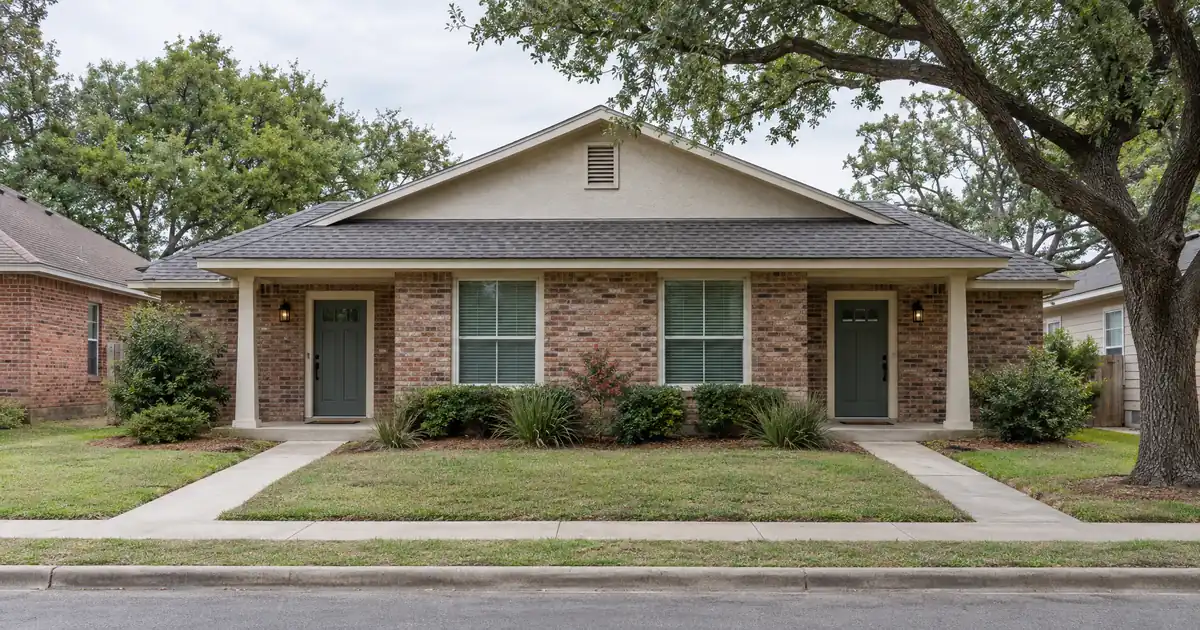
The Quick Read: A free-and-clear Texas rental can support one bank statement cash-out when the lender underwrites the borrower’s documented deposits instead of the property’s rent, and Texas homestead equity limits do not apply because the property is not the borrower’s home. The loan is reviewed on documented income under the applicable program, subject to lender guidelines. Lendmire arranges these files through select lenders in its wholesale network.
- Investment-property cash-out tops out around 75% LTV, so the appraisal and the borrower’s income both set the ceiling.
- The file uses 12 months of business or personal bank statements, averaged into monthly income.
- A paid-off property still counts as a cash-out, because the new loan pulls equity out of an asset with no existing lien.
- Loan sizes typically run from $125,000 to $3,500,000, with reserves commonly around 6 months of the housing payment.
- If the borrower lives in the Texas property, it is a homestead and this entire path changes.
Key Terms Defined
Free and clear: A property with no mortgage or other lien against it, so the new loan becomes the only debt on the title.
Cash-out: A loan secured by property you already own, where the borrower receives equity as cash at closing.
Bank statement loan: A non-QM mortgage that qualifies the borrower on average monthly deposits instead of traditional personal-income documentation or pay stubs.
Expense factor: The percentage a lender subtracts from business deposits to estimate what the owner actually keeps.
Reserves: Liquid funds the borrower keeps after closing, usually counted in months of the housing payment.
Homestead: A Texas property the owner lives in, which carries special constitutional protections and lending limits.
DSCR Cash-Out Calculator
Run the cash-out numbers in Texas
Rate source: Freddie Mac 30-yr average via FRED® — Federal Reserve Bank of St. Louis · effective Oct 8, 2026
Prefilled with starting assumptions — enter your property’s value, balance, taxes, and insurance for a more accurate picture.
Program parameters update from Lendmire’s centralized guideline source. Taxes and insurance are editable estimates.
As of Oct 8, 2026 · General Freddie Mac market benchmark, not a Lendmire loan offer. Property value, balance, taxes, and insurance are editable estimates. Maximum loan-to-value varies by lender, program, property type, and seasoning. Not a Loan Estimate, approval, or commitment to lend. Program availability and eligibility are subject to lender guidelines, credit approval, property review, and underwriting.
Does Texas’s Home-Equity Law Apply to a Rental?
No. Texas’ strict cash-out rules cover homesteads, not rentals. The cap on leverage, the waiting period and the fee limits attach to the borrower’s home. A rental the borrower does not occupy sits outside that framework.
The Texas A&M Real Estate Research Center explains that the state constitution protects the homestead from forced sale, with a short list of exceptions. Texas home equity loans exist inside those protections. A rental has no homestead status, so the lender’s own program rules decide the terms instead.
This is why many Texas landlords are surprised to learn the process is simpler than they feared. The state constitution is not the constraint. The lender’s program is.
Here is the catch. Homestead status follows how the property is used, not how the borrower labels it. A Texas property the borrower lives in stays a homestead even if the borrower thinks of it as an investment. That file belongs in a different lane, which Lendmire’s piece Can a Texas Homestead Hold a Bank Statement HELOC and a Cash-Out Lien? covers in detail.
Does a Paid-Off Rental Count as a Cash-Out?
Yes. Lenders treat any loan that pulls equity from a property with no existing debt as a cash-out. Free and clear does not make it a purchase, and it does not make it a simple refinance.
The distinction matters for leverage. On an investment-property cash-out, most programs in Lendmire’s wholesale network top out around 75% LTV. That ceiling applies to the appraised value, not to what you paid. Equity is rarely the binding limit on a paid-off rental, since the borrower already owns it outright. The binding limit is usually the borrower’s income and the program’s leverage cap.
For a deeper look at how leverage works on a debt-free asset, see Lendmire’s article Cash-Out Refinance LTV Requirements on a Free-and-Clear Rental.
What Does “Bank Statement” Mean on a Rental Cash-Out?
It means the lender qualifies the borrower, not the property. Instead of asking whether the rent covers the new payment, the lender asks whether the borrower’s documented deposits support it.
That is a different question, and it changes who the product suits. A self-employed owner with strong deposits and thin tax-return income may fit this lane well. An investor with a clean rent roll and little documented personal income may fit the rental-income lane better. Lendmire’s complete DSCR loans guide covers that second lane in full.
Non-QM lending is a mainstream market, not a fringe one. HousingWire reports that in a recent year non-QM originations reached about $239 billion. Bank statement loans made up about 34% of that volume and investor or DSCR loans about 29%.
| Factor | Bank Statement Path | Rental-Income (DSCR) Path |
|---|---|---|
| What is underwritten | Borrower’s deposits | Property’s rent |
| Key documents | 12 months of statements | Lease or rent schedule |
| What limits proceeds | Income, DTI, LTV cap | Rent coverage, LTV cap |
| Best fit | Self-employed with strong deposits | Investors building a portfolio |
How Underwriting Treats the File, Step by Step
Underwriting turns 12 months of deposits into one monthly income figure, then tests that figure against the borrower’s total debts. The steps below reflect how most programs across Lendmire’s network handle it. Individual lender guidelines control the details.
1. Choose the statements. The program uses 12 months of business or personal bank statements.
2. Strip out non-income credits. Transfers between your own accounts, loan proceeds and refunds do not count as income.
3. Apply the expense factor on business accounts. Lenders reduce business deposits by an expense factor. It varies by lender and program, and a CPA-supported figure may justify a lower one. Personal statements generally carry no expense factor.
4. Average the result. Eligible deposits are divided by 12 to produce monthly qualifying income.
5. Run the debt-to-income test. The lender compares that income to the borrower’s debts, including the new cash-out payment. The old property has no payment, because it is free and clear.
6. Build the property file. Expect an appraisal, credit review, title work and proof of insurance. A rent schedule is added with the appraisal where the program requires one.
Deposit consistency decides many outcomes. A recent drop in deposits usually draws a letter of explanation. It can also push the lender to a shorter or more conservative review. Credit profile, appraised value and the program’s leverage cap round out the decision.
A Worked Example Using Only Ratios
Consider a self-employed owner with a free-and-clear Texas rental and a strong 12-month deposit history. The numbers below are modeled assumptions, not market data.
- Existing lien: none.
- Requested leverage: the program maximum of 75% LTV on an investment-property cash-out.
- Qualifying income: averaged from 12 months of business deposits after the expense factor.
- Test that decides the file: whether the owner’s debt-to-income ratio stays within the program limit after the new payment is added. Final terms depend on the lender’s guidelines, the property type, and the borrower’s complete credit picture.
If the DTI test clears at the full 75%, the appraisal sets the proceeds. If it does not clear, the borrower can request less leverage. A lower loan amount means a lower payment, which improves the ratio. In practice, many investors take less than the maximum anyway.
This is where a bank statement cash-out differs from a rent-based one. On a rent-based file, a thin rent coverage ratio caps the loan. Here, thin personal income does. Neither test measures whether the property is profitable, only whether the file qualifies. Coverage is not cash flow.
Where the General Rule Breaks
Five edge cases change the answer, and each one is worth screening before applying.
The borrower occupies the property. A Texas home the borrower lives in is a homestead, not a rental. It also changes the disclosure regime. An owner-occupied file is a consumer mortgage, so TRID disclosures apply. A bank statement loan on a non-owner-occupied rental, including a short-term rental, is business-purpose and exempt from TRID. The two never mix on the same property.
The proceeds go to personal use. Federal law exempts credit extended primarily for a business or commercial purpose. The CFPB’s Regulation Z rule says the creditor must decide in each case whether the transaction is primarily for an exempt purpose. If most of a cash-out pays personal debts, a rental loan can be pulled into consumer-credit rules. Tell the lender the true use of the funds.
The owner might occupy it. A law-firm explainer from Doss Law says a loan is treated as consumer credit if the owner expects to occupy the property more than 14 days in the coming year, unless the property has more than two housing units. A rental that doubles as a vacation home deserves a hard look.
The borrower holds title in an LLC. Credit to an entity that is not a natural person is separately exempt under Regulation Z. Many bank statement programs still close in the borrower’s personal name, however. LLC vesting is a program-specific question, subject to program terms, so ask before assuming it works.
One more case: declining deposits. If recent months are weaker than the average, the average may not tell the full story. A borrower in that position may fit the rental-income path better, where the property’s rent carries the file.
Which Path Fits Your Situation?
The decision turns on whose numbers are stronger, yours or the property’s. Choose the bank statement path when your deposits are strong, your traditional personal-income documentation understates your income, and you want to qualify on your own cash flow. Choose the rental-income path when the rent is strong, you plan to keep buying, or your deposits are uneven.
Scaling is the bigger issue. Every new mortgage on a personal-income loan stacks against the same income base, so a portfolio built that way hits a ceiling. A rental-income loan reviews each property on its own rent. An investor planning three or four more purchases should weigh that before choosing.
Caution belongs here too. Putting a lien on a debt-free asset trades safety for liquidity. Many experienced investors borrow less than the maximum, or choose a line of credit instead, when they are uneasy about leverage. Keep, borrow or sell are all real answers.
Tax treatment can depend on how the funds are used and how the property is held; investors should keep clear records and speak with a qualified tax professional before relying on any deduction.
Why Deals Fall Apart Late
Most late failures trace back to something a screen would have caught on day one. Check these before applying:
- You live in the property, even part of the year.
- The lender does not offer cash-out on rentals at all.
- Deposits dropped in recent months and you have no explanation ready.
- Business and personal statements are mixed in one account.
- Statement names do not match the name on title.
- You plan to use most of the proceeds for personal debts.
- Your reserves are below the roughly six months many programs expect.
A good broker screens for these before the file is submitted, so the first lender contacted is a realistic fit.
Frequently Asked Questions
Can I do a bank statement cash-out if my Texas rental is held in an LLC?
Sometimes. Many bank statement programs close in the borrower’s personal name, so LLC vesting depends on the specific program. If entity ownership matters to you, raise it at the start. Some investors move title after closing, but that is a separate decision to review with an attorney.
Does Texas’ 80% cap apply to my rental?
No. That cap belongs to homestead home equity loans. On an investment-property cash-out through Lendmire’s network, leverage typically tops out around 75% LTV, subject to lender guidelines, credit and the appraisal.
How many months of bank statements does a program usually need?
The program Lendmire arranges through its network uses 12 months of business or personal statements. Some lenders elsewhere review longer periods. Shorter or longer lookbacks depend on individual lender program sheets.
Do personal bank statements get an expense factor?
Generally no. Business statements carry an expense factor because not all deposits are profit. Personal statements typically do not. The exact factor varies by lender and can sometimes be lowered with CPA documentation.
Does coverage on a rental mean it cash-flows?
No. Passing an income or coverage test only means the file qualifies. Whether the property actually cash-flows depends on rent, vacancy, taxes, insurance and maintenance.
Run Your Own Numbers
If you are self-employed and want to see how the numbers work, Lendmire can help you compare bank statement loan options based on your deposits, the property, credit profile, leverage and your goals. An editable calculator on the site gives an illustrative estimate to frame the conversation. Final terms come from the lender’s review of your file and are not a commitment to lend.
For how equity extraction works on an investment property, see Lendmire’s guide to cash-out refinance on an investment property.
About Lendmire
Lendmire — NMLS# 2371349 — is a mortgage brokerage specializing in DSCR investor loans, helping arrange financing across 41 markets, including Washington, D.C., through wholesale and investor-lending channels. The model centers on property-level rental income reviewed by the lender rather than W-2 documentation, subject to lender guidelines, suiting entity-owned and multi-property investors. Lendmire holds Scotsman Guide Top Mortgage Workplace recognition for 2025 and 2026.
Get Started
Ready to find the right loan for you?
In about 30 seconds you can review financing options available for your home or investment property. No commitment required.
Informational only. Not a Loan Estimate, approval, or commitment to lend. Program availability and eligibility are subject to lender guidelines, credit approval, property review, and underwriting.
References
1. Texas A&M Real Estate Research Center — What to Know About Home Equity Loans in Texas
2. HousingWire — Non-QM Loans Guide
3. CFPB — Regulation Z, 12 CFR 1026.3
4. Doss Law — Business Purpose Exemption Simplified
5. Cornell Legal Information Institute — 12 CFR 1026.3
This article is part of Lendmire’s bank statement loan program — full qualification details, guidelines, and scenarios live on the program page.
Related reading: Bank Statement HELOC Requirements on a Primary Home vs. a Rental · DSCR Purchase vs Bank Statement HELOC vs Cash-Out for a Rental · How Much a Bank Statement HELOC Covers on a DSCR Rental Purchase
Guides: Bank Statement Loans in Texas
Brandon Miller
Founder & CEO, Mortgage Loan Originator, Lendmire LLC
- Mortgage Loan Originator · NMLS# 1129696 · Verify on NMLS Consumer Access
- North Carolina Real Estate Broker · License# 343312 · Verify on NCREC
- North Carolina Insurance Producer · License# 19053198 · Property, Casualty, Life, Health · Verify on NAIC SBS
- Lendmire LLC · Firm NMLS# 2371349 · Verify firm licensure
Compliance and disclosures. Lendmire (NMLS# 2371349) is a licensed mortgage broker and is not a direct lender, depository institution, financial advisor, or tax professional. Content in this article is general market analysis and educational information — not financial, legal, or tax advice for any specific situation. Lendmire does not guarantee loan approval; every transaction is subject to underwriting by the funding lender. Mortgage pricing and loan program guidelines are subject to change at any time without notice and vary by borrower characteristics, property type, and state regulations. Lendmire complies with Equal Housing Opportunity. Licensure verification: NMLS Consumer Access.