
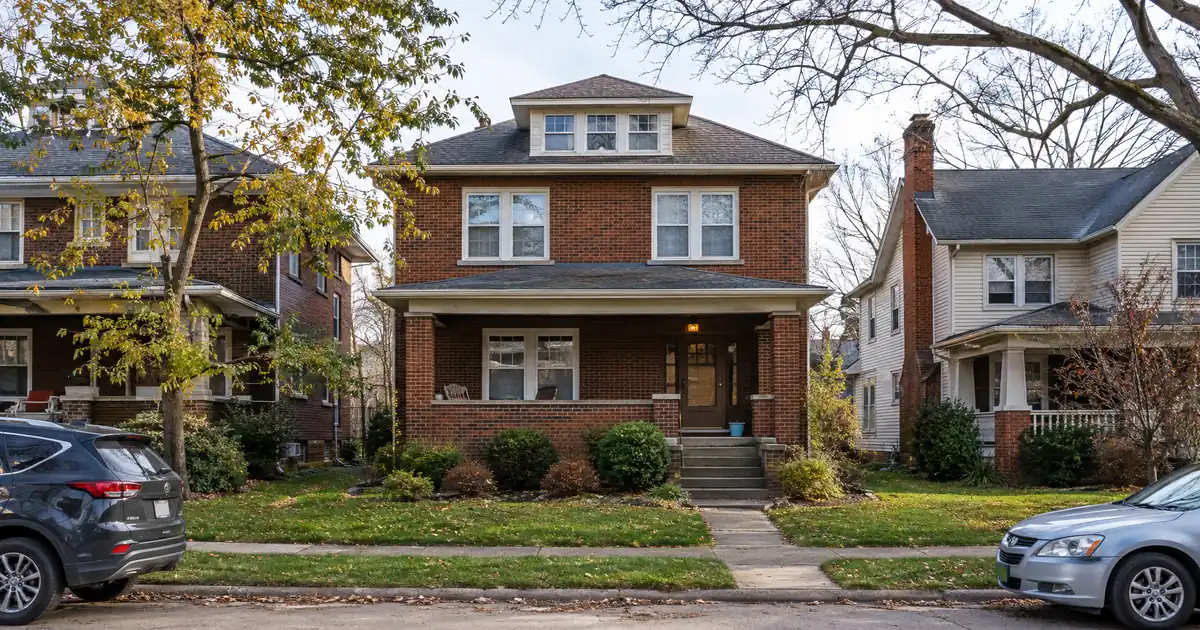
Ohio University’s Athens campus enrolled 23,264 students in the most recent fall term. Census Reporter’s profile counts 23,396 residents in a city of 9.9 square miles. The student body is roughly the size of the whole city, and that ratio drives every appraisal, rent schedule, and coverage calculation on an Athens cash-out file.
This article covers the equity side only: pulling capital out of a rental you already own. DSCR financing for Athens, Ohio investors runs through wholesale lenders that Lendmire works with across 41 markets, including D.C. Lendmire (NMLS# 2371349) is a DSCR-focused mortgage broker, so it structures and places these files but does not lend or approve them.
DSCR Cash-Out Calculator
Run the cash-out numbers in Athens, OH
Rate source: Freddie Mac 30-yr average via FRED® — Federal Reserve Bank of St. Louis · effective Sep 24, 2026
Prefilled with starting assumptions — enter your property’s value, balance, taxes, and insurance for a more accurate picture.
Program parameters update from Lendmire’s centralized guideline source. Taxes and insurance are editable estimates.
As of Sep 24, 2026 · General Freddie Mac market benchmark, not a Lendmire loan offer. Property value, balance, taxes, and insurance are editable estimates. Maximum loan-to-value varies by lender, program, property type, and seasoning. Not a Loan Estimate, approval, or commitment to lend. Program availability and eligibility are subject to lender guidelines, credit approval, property review, and underwriting.
TL;DR: A DSCR cash-out refinance on an Athens, Ohio rental is underwritten primarily on the property’s rental income measured against its full monthly obligation, then capped by loan-to-value on a fresh appraisal. Seasoning from title recording and documented reserves gate the file. Proceeds depend on coverage and appraised value, never on what the investor paid.
- Athens campus enrollment is 23,264, but off-campus demand comes from a narrower pool. Prop-Metrics shows a ZIP 45701 median near $235,000, with days on market lengthening to 70.
- A cash-out is typically capped at 75% LTV, with about six months of ownership seasoning.
- A single 3BR at the RentCast median lands below 1.0x on full PITIA. Two-unit buildings stack better.
- The Ridges redevelopment is a long-dated supply factor to monitor.
Athens Market Snapshot
A quick read on the Athens investor landscape — figures come from the cited sources below. Confirm current property-level numbers before underwriting.
| Metric | Detail |
|---|---|
| University enrollment | 30,682 total (Ohio University news release) |
| Population | 23,396 (Census Reporter (ACS 2024 5-yr)) |
Where Athens Equity Actually Comes From
Athens equity comes mostly from a low purchase basis and forced improvements, not from fast market appreciation. The price data is modest. Prop-Metrics, an aggregator that pulls from Zillow and Realtor.com, reports the ZIP 45701 median at $235,000, up 6.4% year over year. The same page cites Zillow’s one-year projection at just +0.7%. Days on market rose 15% to 70.
Two signals point in different directions. Last year’s gain looks decent, but the forward projection is flat and homes sit longer. Treat the aggregator as directional. An investor who bought a few years ago at a low basis may have real cushion under the 75% ceiling. An investor who bought recently near the current median may find that a refinance mostly reshuffles debt.
Cash-out math also has a rent side. RentCafe reports an average Athens rent of $1,672, up 5.98%, and 67% of households renting. That data covers only buildings with 50 or more units, so it skews toward large complexes. The RentCast figures on the Prop-Metrics page look more like small-landlord stock: $684 for a 1BR, $660 for a 2BR, $1,430 for a 3BR, and $1,770 for a 4BR. The 2BR figure sitting below the 1BR figure is a small-sample oddity, and it is why rent assumptions here need care.
Divide the $1,430 3BR figure by the $235,000 median and you get roughly 0.6% of price per month. Large-complex rents push that toward 0.7%. That is an illustrative range mixing two sources, not a market statistic.
The Appraisal Is the Weak Link
On Athens files the appraisal is the step most likely to reduce the cash-out amount, and the 75% ceiling applies to the new appraised value, not the purchase price. Thin comps, lengthening days on market, and student-oriented layouts all push appraisers toward conservative numbers.
Three things tend to cause trouble:
1. Comp selection. Multi-bedroom houses built for shared student occupancy do not compare cleanly to standard family homes. If the appraiser pulls conventional comps, the value can come in light.
2. Rent schedule support. The appraiser’s market-rent opinion feeds the coverage number. Per-bed leases need to be presented as a whole-unit rent, or the schedule looks inconsistent.
3. Condition. Older close-in stock often carries deferred items. Document recent capital work with invoices before the appraiser arrives.
Appraisal reconsideration is a routine step here, not an emergency move. A packet with recent in-neighborhood sales, before-and-after condition photos, and renovation invoices can recover value when the first pass misses. Without a paper trail, the request goes nowhere.
The failure mode is easy to describe. An investor assumes headline appreciation carries to the property, orders the appraisal, and finds the comps do not support it. Then the leverage, proceeds, and next-purchase plan all get reworked.
Which Rentals Carry the Coverage Number?
Small multifamily carries the number best in Athens, and single-family houses at median rents tend to fall short. Run the numbers on the two structures using modeled assumptions, not sourced rents. Both use a $235,000 value at 75% LTV with coverage calculated on full PITIA, meaning principal, interest, taxes, and insurance.
Single-family 3BR. Assume rent of $1,430, the RentCast 3BR median. Coverage lands around 0.9x including taxes and insurance, below the 1.00 benchmark most standard DSCR programs are built around. A file like this is not dead. A lender may review a sub-1.00 program, an interest-only structure, lower leverage, or extra reserves, subject to lender guidelines, credit approval, and property review. Each option costs the investor something in proceeds or pricing.
Up/down duplex. Assume two separate 2BR units at $950 each. That is a modeled figure between the RentCast 2BR median and the asking range on Zillow’s Athens County house listings, which run from $1,250 to $1,500 for a 2BR/2BA. Coverage comes out in the low-1.2s including taxes and insurance. Using the Apartments.com student-housing average of $912 per unit, covered below, lands right around 1.2x. Using the RentCast 2BR figure of $660 per unit drops it below 1.00 again.
So the duplex clears the benchmark only if the rents hold. Honestly, that is a genuine toss-up on any one building. The property-type advantage is real but depends on documented in-place rents, not asking rents.
The Athens listing market does include this structure. A Realmo listing for the county describes an up/down duplex with two 2BR/1BA units, each with a private entry and separate utilities. The listing’s “low vacancy” language is broker marketing, not data. Separately metered units let two rents stack against one loan, which is why two-unit buildings usually beat single-family houses here.
For conservative underwriting, Apartments.com puts the average Athens student-housing apartment at $912, across 109 listings. Use it as a floor, not a forecast.
One more property type to weigh: multi-bedroom houses, some advertised up to nine bedrooms. Per-bed pricing can look strong, but it is lease-cycle dependent, and it makes a rent roll harder to document. Larger houses can also be harder for an appraiser to comp. Treat them as a second choice for cash-out files unless the lease paperwork is clean.
Who Actually Rents Off Campus
Underwrite against the off-campus pool, not the 30,682 total headline. Ohio University reported that figure across all campuses and online, up 3.6%, with 4,550 first-year students on the Athens campus. Athens-campus enrollment includes 17,254 undergraduates, 5,017 graduate students, and 993 medical students.
Not all of those students rent from private landlords. The university’s housing requirement has first- and second-year Athens-campus students living in university-sanctioned housing with a meal plan, over two full academic years, with a defined set of exemptions. One exemption covers commuting from a parent’s permanent residence within 50 driving miles. Off-campus demand comes mainly from juniors, seniors, graduate students, and exempt students.
That has two file-level effects. Demand tracks the academic calendar, so leases tend to be timed to the school year. And the pool is predictable. A third-year cohort follows the two-year on-campus stretch, which helps with lease-in-place documentation. Enrollment growth also supports demand, though it does not guarantee any single building’s rent.
Non-student demand adds ballast. Athens County’s economic development council says healthcare is the county’s largest job-growth sector and names OhioHealth O’Bleness among the largest employers. It also lists biotech companies including QuidelOrtho, Stirling Ultracold, and InfinixBio. No employer headcounts were available for these, so treat them as demand anchors, not sized inputs. Workforce single-family rentals near hospital and university staff are the natural fit for this pool.
Neighborhoods Where Refinance Files Tend to Pencil
No source gives neighborhood-level price or rent bands for Athens, so this section is qualitative. It names submarkets and what each means for a cash-out file.
Uptown and the Court Street core. Apartments.com’s off-campus overview describes Court Street as running through the center of town. It is the highest-density, most walkable renter area. Rent schedules here are the easiest to support with comps, but purchase basis was probably higher, so cash-out headroom depends on when the investor bought.
East State Street and Elmwood Place. This is a National Register historic district. Landlord marketing describes it as roughly a 12-minute walk from campus, with multi-bedroom houses. Older stock means condition documentation matters at appraisal.
The close-in grid. Local landlords name Mill, High, Palmer, Congress, Franklin, Kurtz, and Kern streets as the student rental core. These blocks mix houses and small buildings. Duplex and triplex conversions here are the likeliest fit for stacked-rent coverage.
West Side. Krause Rentals describes houses with yards, suited to graduate students, staff, and families. Leases run more steadily here, and the file looks more like a standard workforce rental.
Near East and Hudson Avenue. WOUB reports that the city plans eight new affordable three-bedroom homes of 1,450 square feet at the end of Hudson Avenue, delayed. It is a small supply add, but it is one to track for lower-priced rentals.
Apartment complexes. Monticello Village, Mill Street Village, and Kershaw Greene are Zillow-listed. Asking rents there, such as Monticello Village 2BR from $1,190, are asking-rent data only. They inform a ceiling, not an in-place figure.
Lease Timing and the Documents a Lender Asks For
On student-heavy files the friction is documentation, not credit. The cleaner Athens files from a documentation standpoint tend to be the ones where the rent story is unambiguous on paper.
Lendmire’s deal desk sees a consistent pattern in college-town markets like this one. Files stall when leases are per-bed while the appraisal schedule shows whole-unit rent, or when a lease term ends before the file reaches lender review. Investors who consolidate a rent roll with unit-level totals and current lease copies have fewer preventable gaps, though a clean packet does not guarantee approval.
Here is what a cash-out file typically needs:
1. Lease evidence. Current leases for every unit, with a rent roll that matches. Gaps between academic-year leases need an explanation, since a lender may otherwise fall back on the appraiser’s market-rent figure.
2. Seasoning proof. About six months of ownership from title recording, shown by the settlement statement. Files that assume seasoning away get returned.
3. Entity documents. If the property sits in an LLC, the operating agreement and good-standing paperwork go in early, subject to lender program eligibility.
DSCR vs. conventional financing
Two common ways to finance an investment property in Athens, OH. They qualify you differently — here’s how investors weigh them.
Why investors choose it
- Qualifies on the property’s rental income — no personal tax returns, W-2s, or pay stubs needed to document income.
- No personal debt-to-income ceiling to clear, so existing mortgages and obligations don’t cap your borrowing the same way.
- Can be closed in an LLC, keeping the property inside a business entity.
- Built for scaling — not held to the limit on number of financed properties that conventional financing applies.
- Underwriting centers on the deal: generally qualifies when the rent covers the payment, a 1.00x coverage ratio being a common baseline (confirmed in underwriting).
- Designed specifically for investment property, including long-term and, where the program allows, short-term rentals.
Where it’s strong
- Often the lowest ongoing financing cost for a buyer who fully qualifies on personal income — a fit for a first property or a cost-first purchase.
Trade-offs for investors
- Requires full personal income documentation and must fit within a debt-to-income limit — salary, existing debts, and other mortgages all count.
- Typically held in your personal name rather than a business entity.
- Caps how many financed properties you can carry, which can become a ceiling as a portfolio grows.
- Evaluates you as a borrower as much as the property, which usually means more paperwork.
How investors usually choose: a first or single property often optimizes for the lowest financing cost; portfolio builders often optimize for leverage, vesting in an LLC, and scaling past conventional caps. The right answer depends on your goals, the property, and current guidelines — both paths run through select lenders in Lendmire’s wholesale network, with eligibility and terms confirmed in underwriting.
4. Reserves documentation. About six months of PITIA in verifiable funds, typically. Statements should show the money is the borrower’s, not a recent unexplained deposit.
5. Title clearance. Older Athens stock can carry old liens or easements. Clearing title before the appraisal lands avoids surprises later.
Credit tiers run from a 620 floor up through 660, 680, and 700, and stronger tiers generally help the file. All of these are typical guidelines from the wholesale network and vary by borrower, property, and loan scenario. Balances in Athens often sit below what standard programs favor, so smaller loans may route through select lenders in the network.
For the mechanics of the ratio itself, the guide “What Is a DSCR Loan” covers it. For the equity-extraction side, the guide “The Refi Options” walks through seasoning and leverage caps. Investors weighing this against a bank product can read the conventional-vs-DSCR tradeoffs. Rate-and-term alternatives are covered under refinancing options.
The Ridges and Other Supply (Watch, Don’t Panic)
The Ridges redevelopment is the largest supply variable in Athens, and it cuts both ways. The Athens County Independent reports a state-approved transfer of 27 acres of the former state hospital grounds to developers. Ohio University estimates about 750 dwellings and housing for 1,700 to 2,000 people over a 10-to-15-year build-out.
The bearish read: new units compete with older close-in stock. The bullish read: added housing supports the area around it, and construction is phased and slow. New-home construction in Athens has slowed sharply over the past decade, according to an advocate quoted in the Athens Messenger. That same story reports enrollment growth straining supply and Ohio University leasing over 400 beds in nearby apartment complexes.
No reliable vacancy source turned up, so this article does not quote one. Investors should assume the tension between constrained supply and long-dated additions is real, and they should stress-test rents at the low end.
Verify current local rental rules, taxes, and insurance with qualified local professionals before committing to any refinance plan.
Putting Proceeds to Work
Cash-out proceeds are only as useful as the next deal’s coverage math. The equity available depends on rent used for lender review, PITIA, reserves, and the 75% LTV ceiling. It is not a guaranteed figure, and an investor should not count it until the appraisal is back. Terms vary by lender guidelines, property type, leverage, credit profile, and full file review.
A few uses fit the Athens market:
- A second duplex. Proceeds fund the down payment on another two-unit building, using the coverage math above.
- Capital work. Renovations on older stock can support both rent and appraised value, though that is a reason to keep receipts, not a promise.
- Reserves. The refinance itself requires reserves, so some proceeds may go straight back to fund that requirement.
The thoughtful read is that Athens rewards patient holders, not fast flippers. Appreciation is modest, days on market are stretching, and the strongest cash flow comes from stacking rents in small buildings. An investor who needs proceeds to chase appreciation elsewhere might reasonably argue for waiting. An investor with a low basis and documented rents has a better case for pulling equity now. To see how this fits a specific file, investors can compare DSCR options or reach Lendmire at 828-256-2183. Lendmire’s Ohio DSCR loan programs cover the state-level program picture.
Before You Order the Appraisal
Athens is a market where the property’s paper matters more than its address. Leases, rent rolls, seasoning proof, and renovation records decide how much of the equity is usable. Which of your Athens rentals would still hold coverage if the appraisal came in light and the rents were pulled from the low end of the range?
Frequently Asked Questions
How do you qualify for a DSCR loan in Athens, Ohio?
Qualification centers on the property’s rental income compared with its full monthly obligation, with 1.00 as the common benchmark. Lenders also review credit, typically from a 620 floor, plus reserves of about six months of PITIA and the property itself. For Athens, lease evidence matters most, since student rentals run on academic-year leases. All of it is subject to lender guidelines and credit approval.
What are the requirements for a cash-out refinance on an investment property in Athens, Ohio?
The typical guideline is a 75% LTV ceiling on the new appraised value and about six months of ownership from title recording. A coverage of 1.00 is the usual threshold, along with documented reserves, though a lender may review a sub-1.00 file with lower leverage or extra reserves. Loan amounts up to $3,000,000 are available on standard programs, and smaller balances route through select lenders. Proceeds depend on the appraisal and coverage, so they cannot be promised in advance. Exact terms depend on the lender’s guidelines, property type, leverage, and a full review of the borrower’s file.
How does rental income affect DSCR refinance eligibility in Athens?
Rental income sets the coverage number, which is the property’s rent used for lender review measured against its full monthly obligation. Lendmire arranges DSCR investor loans through wholesale lenders. A key feature is that eligibility is commonly evaluated on the property’s income rather than personal income paperwork, subject to lender guidelines. In Athens, a two-unit building with documented leases usually shows stronger coverage than a single-family rental at median rent.
Does Ohio University’s enrollment growth help an Athens cash-out appraisal?
It supports demand, but it does not set the appraised value. Athens-campus enrollment has risen from 20,926 to 23,264 over recent fall terms, per Ohio University’s data. An appraiser still relies on comparable sales and the rent schedule. Because first- and second-year students are required to live in university housing, off-campus demand comes from a narrower pool than the headline.
Will The Ridges redevelopment hurt rents on existing rentals?
It might add competition, though the build-out is long and phased. The plan calls for about 750 dwellings over 10 to 15 years, so supply arrives in stages, not all at once. Investors should stress-test rents at the low end and favor buildings whose coverage holds without optimistic assumptions.
About Lendmire
Lendmire (NMLS# 2371349), a non-QM mortgage broker serving investors in 41 markets including Washington, D.C., helps structure DSCR scenarios commonly evaluated around a property’s rental income rather than personal income paperwork, subject to lender guidelines. Recognized as a 2026 Scotsman Guide Top Workplace and a top-ranked workplace in 2025, Lendmire places loans through wholesale investor lenders and is not a direct lender.
Get Started
Ready to find the right loan for you?
In about 30 seconds you can review financing options available for your investment property. No commitment required.
Informational only. Not a Loan Estimate, approval, or commitment to lend. Program availability and eligibility are subject to lender guidelines, credit approval, property review, and underwriting.
References
1. Ohio University enrollment by level
4. Ohio University enrollment news release
5. Census Reporter (ACS 2024 5-yr)
6. RentCafe, Athens rent trends
7. Zillow’s Athens County house listings
8. Realmo listing for the county
10. ohio.edu — Housing Requirement
11. exemptions
12. Athens County Economic Development Council
13. WOUB reports
14. Athens County Independent, The Ridges
15. Athens Messenger, housing strain
16. a 2026 Scotsman Guide Top Workplace
17. Scotsman Guide — Top Workplaces 2025
This article is part of Lendmire’s investment property cash-out refinance program — full qualification details, guidelines, and scenarios live on the program page.
Related reading: DSCR Cash Out Refinance in Athens, Ohio: How Seasoning and LTV Work in Athens · Cash Out Refinance Investment Property in Strongsville, Ohio: How the Cash-Out Math Clears in Strongsville · DSCR Cash Out Refinance in Gahanna, Ohio: Flat Prices and a Creekside Supply Test
Guides: Investment Property Cash-Out Refinance in Ohio
Brandon Miller
Founder & CEO, Mortgage Loan Originator, Lendmire LLC
- Mortgage Loan Originator · NMLS# 1129696 · Verify on NMLS Consumer Access
- North Carolina Real Estate Broker · License# 343312 · Verify on NCREC
- North Carolina Insurance Producer · License# 19053198 · Property, Casualty, Life, Health · Verify on NAIC SBS
- Lendmire LLC · Firm NMLS# 2371349 · Verify firm licensure
Important disclosures. Lendmire (NMLS# 2371349) is a licensed mortgage brokerage. Lendmire is not a direct lender, depository institution, or financial advisor. All loan inquiries are subject to lender underwriting; this article does not constitute a commitment to lend. Rates, terms, and program guidelines are subject to change without notice and vary by borrower profile, property type, and state. Information in this article is general in nature and is not financial, legal, or tax advice. Equal Housing Opportunity. NMLS Consumer Access: nmlsconsumeraccess.org.