
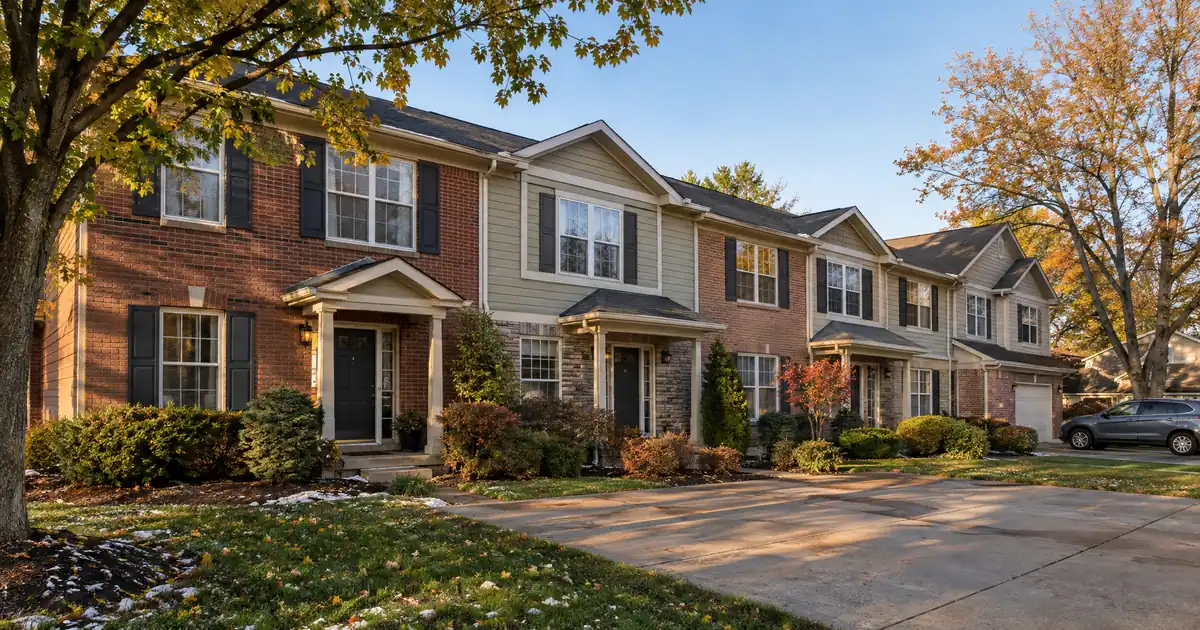
If you own a rental in Strongsville that has appreciated since you bought it, the question isn’t whether you have equity. It’s whether the rent on that property can carry a larger loan once the lender adds taxes and insurance to the payment. Most cash-out conversations skip that second half. Lendmire is a DSCR-focused mortgage broker that arranges these refinances through its wholesale lending network, and the Strongsville file has a specific shape worth understanding before you order an appraisal.
DSCR Cash-Out Calculator
Run the cash-out numbers in Strongsville, OH
Rate source: Freddie Mac 30-yr average via FRED® — Federal Reserve Bank of St. Louis · effective Sep 24, 2026
Prefilled with starting assumptions — enter your property’s value, balance, taxes, and insurance for a more accurate picture.
Program parameters update from Lendmire’s centralized guideline source. Taxes and insurance are editable estimates.
As of Sep 24, 2026 · General Freddie Mac market benchmark, not a Lendmire loan offer. Property value, balance, taxes, and insurance are editable estimates. Maximum loan-to-value varies by lender, program, property type, and seasoning. Not a Loan Estimate, approval, or commitment to lend. Program availability and eligibility are subject to lender guidelines, credit approval, property review, and underwriting.
The Short Version:
A DSCR cash-out refinance in Strongsville, Ohio is underwritten primarily on the property’s rental income measured against its full monthly obligation, so the deal rests on a recorded title date, a documented lease, an appraisal and a lender’s coverage review.
- Zillow puts the typical Strongsville home value at $369,344, up 3.0% year over year.
- Cash-out leverage typically tops out at 75% LTV, with about 6 months of seasoning.
- Only about 1.0% of the housing stock is small multifamily, so comps are thin.
- Rent growth is lagging value growth, which pressures coverage on single-family rentals.
Strongsville Market Snapshot
A quick read on the Strongsville investor landscape — figures come from the cited sources below. Confirm current property-level numbers before underwriting.
| Metric | Detail |
|---|---|
| Home prices | $357K median (Redfin Strongsville Housing) |
| Typical rents | Rent $1,451 (Matthews Cleveland Multifamily) |
| Employment | 8,600+ employees (Cleveland Magazine) |
| Vacancy | 3.68% metro (Matthews Cleveland Multifamily) |
Where the Equity Comes From
Strongsville equity is real but the price sources disagree, so pick one and stay with it. Zillow’s index shows $369,344 and a 3.0% annual gain, with homes going pending in about seven days. Redfin’s median sale price reads lower at $357K, down 2.2%, on only 32 sales in the month. That’s a different method and a small sample, not a contradiction. This article uses the Zillow figure as the baseline.
What matters for a cash-out is the appraiser’s view, not the portal’s. With listings running tight and few sales per month, appraisers lean on older or wider-radius comps. Expect that. A reconsideration packet with recent in-city sales and condition adjustments is a routine step, not a crisis.
The Rent Side Doesn’t Match
Value is outpacing rent here. RentCafe shows average apartment rent up 1.02% year over year at $1,383, though that covers only buildings with 50 or more units. Zumper’s all-property average is $2,124, a mixed-type listing figure with conflicting year-over-year readings. Zillow’s rental data puts a 3BR near $2,099.
Run the numbers on a modeled single-family rental. Assume a $370,000 value, a 3BR renting for $2,100, and a 75% LTV cash-out. Dividing that rent by full PITIA, meaning principal, interest, taxes, and insurance, lands below 1.00, in the high-0.8s. That is a modeled assumption, not a quote, and it uses conservative Ohio-average tax and insurance loads. Terms vary by lender guidelines, property type, leverage, credit profile, and full file review.
Here’s the catch. Sub-1.00 doesn’t end the conversation, but it changes it. Options a lender may review include a lower LTV (the same modeled property lands right around 1.00 at roughly 60% LTV), a sub-1.00 program, or an interest-only structure. Qualification stays subject to lender guidelines, credit approval, and property review. The bigger lesson: don’t size the refinance off a higher appraisal and assume rent will catch up. Matthews’ Cleveland multifamily report shows metro rent growth slowing from the prior quarter, which is a reminder that rent gains are not something to underwrite on faith.
The point here is the ratio.
Why Tenants Keep Showing Up
The demand story is employment, not a single landlord-friendly neighborhood. Cleveland Magazine reports the city’s four business parks are 98% occupied, with more than 8,600 employees at over 160 companies. Manufacturing anchors it, including semiconductor components and aerospace landing gear. Data USA shows the largest resident sectors as health care (3,160 people), manufacturing (2,879), and retail (2,283).
Then there’s the vacancy read. Matthews names Strongsville/Medina among the two tightest Cleveland submarkets at 2.2% vacancy, against 3.68% for the metro. The pipeline is thin too: 1,430 units under construction, 0.82% of inventory. Little new supply lowers the risk of concessions during the seasoning window.
The corridors that feed this demand are easy to name. The Pearl Road retail corridor around SouthPark Mall pulls retail and service workers. The Cleveland Clinic family health and surgery center on South Park Center anchors healthcare hiring. The Ohio 82 and Foltz Parkway employment zone supports workforce tenants looking for single-family homes and townhomes. Tenants can also commute to Cleveland or Akron, so demand doesn’t hang on one employer. That’s a qualitative point; no tenant-profile data was found.
Thin Stock Cuts Both Ways
Strongsville is an owner-occupied city: 82% of households own, 18% rent. About 80% of the 19,118 housing units are single-family detached, and small multifamily is roughly 1.0%. Attached homes run 4.40%.
The good side: scarcity keeps renter competition low for what does exist. The bad side: comps are sparse, and a duplex or triplex is a rarity, not a plan. An investor counting on stacking small multifamily here should confirm comp depth first. A neighboring market may suit that strategy better.
Working DSCR brokers see a recurring pattern in owner-occupied suburbs like this one: the rent-to-value math is thinnest on single-family and strongest on small multifamily or townhomes, and the files that stall are the ones where the appraiser can’t find a matching comp. Bring your own rent evidence before the lender asks for it.
The File Mechanics: Seasoning, LTV, Reserves
Typical cash-out guidelines through the network run like this, subject to lender guidelines and varying by borrower, property, and loan scenario:
- LTV: up to 75% on cash-out. The 80% figure is a purchase number. It doesn’t apply here.
- Seasoning: about 6 months of ownership, measured from title recording.
- Coverage: a 1.00 baseline on rent used for lender review against PITIA.
- Credit: a 620 floor, with better terms generally available at 660, 680, and 700.
- Reserves: about 6 months of PITIA.
- Loan size: up to $3,000,000 on standard programs, with smaller balances routed through select lenders.
Where these files break is documentation, not math. Seasoning gets assumed away on recent purchases, and lenders read the recorded date, not the closing-table date. Reserves documentation arrives as a screenshot instead of statements. For LLC-held rentals, entity documents have to be complete and current, depending on program guidelines. Lease evidence is the fourth gap: a month-to-month tenant with no written lease invites a market-rent appraisal instead.
For the concept behind the ratio, see the guide “What Is a DSCR Loan”. For the trade-offs against a W-2 loan, see the program-to-program comparison. Refinance specifics sit on the refinance details page.
Where the Proceeds Go
Equity is only useful if it buys something. Thinking it through honestly: Strongsville itself may not be where the next deal sits. Thin small-multifamily stock and a single-family rent-to-value ratio that runs tight at current prices point toward lower-basis or multi-unit properties elsewhere. The stronger play might be keeping the Strongsville rental as a stable, low-vacancy hold and deploying the proceeds into a higher-coverage asset, though an investor who wants local concentration could argue the other way.
Either way, size the cash-out to the rent, not the appraisal. Ohio DSCR investor loans through the network cover other Ohio markets if the next purchase lands outside the city. To test a specific property, request a scenario review or call 828-256-2183. Verify current local rental rules, taxes, and insurance with qualified local professionals before underwriting.
Frequently Asked Questions
How do you qualify for a DSCR cash-out refinance in Strongsville, Ohio?
Qualification centers on the property’s rent against its full PITIA, typically at a 1.00 baseline, along with a credit score generally at 620 or higher and about 6 months of reserves. The property also needs roughly 6 months of ownership from title recording, and cash-out is capped at 75% LTV. Final eligibility depends on lender guidelines, credit approval, and property review.
What are the requirements for an investment property loan in Strongsville, Ohio?
Expect a recorded title date, a lease or rent evidence, an appraisal with a rent schedule, reserves documentation, and entity documents if an LLC holds title, subject to program terms. Single-family and townhome rentals are the common product here. Manufactured homes, log homes, and barndominiums fall outside the network’s DSCR programs.
DSCR vs. conventional financing
Two common ways to finance an investment property in Strongsville, OH. They qualify you differently — here’s how investors weigh them.
Why investors choose it
- Qualifies on the property’s rental income — no personal tax returns, W-2s, or pay stubs needed to document income.
- No personal debt-to-income ceiling to clear, so existing mortgages and obligations don’t cap your borrowing the same way.
- Can be closed in an LLC, keeping the property inside a business entity.
- Built for scaling — not held to the limit on number of financed properties that conventional financing applies.
- Underwriting centers on the deal: generally qualifies when the rent covers the payment, a 1.00x coverage ratio being a common baseline (confirmed in underwriting).
- Designed specifically for investment property, including long-term and, where the program allows, short-term rentals.
Where it’s strong
- Often the lowest ongoing financing cost for a buyer who fully qualifies on personal income — a fit for a first property or a cost-first purchase.
Trade-offs for investors
- Requires full personal income documentation and must fit within a debt-to-income limit — salary, existing debts, and other mortgages all count.
- Typically held in your personal name rather than a business entity.
- Caps how many financed properties you can carry, which can become a ceiling as a portfolio grows.
- Evaluates you as a borrower as much as the property, which usually means more paperwork.
How investors usually choose: a first or single property often optimizes for the lowest financing cost; portfolio builders often optimize for leverage, vesting in an LLC, and scaling past conventional caps. The right answer depends on your goals, the property, and current guidelines — both paths run through select lenders in Lendmire’s wholesale network, with eligibility and terms confirmed in underwriting.
Will a typical Strongsville 3BR rental clear 1.00 on a cash-out?
Often not at full leverage. A modeled $370,000 home renting near $2,100 lands in the high-0.8s at 75% LTV including taxes and insurance, and near 1.00 around 60% LTV. Lower leverage, a lower basis, or a structure a lender reviews for sub-1.00 files can change the result.
Does thin rental stock in Strongsville affect the appraisal?
It can. With few active listings and only dozens of monthly sales, appraisers may reach for older or wider-radius comps. A well-documented appraisal reconsideration with recent in-city sales is the standard fix.
Can Lendmire help investors explore DSCR financing for properties outside Ohio?
What to Watch Over the Next Quarter
Three indicators will tell you whether to move on a Strongsville cash-out or wait:
1. Submarket vacancy. If Strongsville/Medina’s 2.2% reading in the Matthews report drifts toward the 3.68% metro level, rent assumptions soften.
2. Rent versus value. Zillow’s 3.0% annual value gain against RentCafe’s 1.02% rent gain is the gap to track. If rents close it, coverage improves without changing leverage.
3. Business-park occupancy and the Foltz Parkway extension. The parks’ 98% occupancy is what sustains workforce tenant demand, so any slip there is the earliest warning.
For current guidelines and terms, see Lendmire’s DSCR loan programs page.
About Lendmire
Lendmire is a DSCR-focused mortgage brokerage, NMLS# 2371349, placing investor loans across 41 markets, including Washington, D.C. DSCR eligibility is generally reviewed by the lender on a property’s rental income rather than personal income documentation, which fits LLC-held rentals, self-employed investors, and portfolios scaling past conventional financed-property limits. Lendmire is recognized as a 2026 Scotsman Guide Top Workplace and a 2025 Scotsman Guide Top Mortgage Workplace.
Get Started
Ready to find the right loan for you?
See your offer in seconds. No credit pull, no obligation.
Informational only. Not a Loan Estimate, approval, or commitment to lend. Program availability and eligibility are subject to lender guidelines, credit approval, property review, and underwriting.
References
1. Zillow Home Values, Strongsville
2. NeighborhoodScout, Strongsville
3. Redfin Strongsville Housing Market
4. Matthews Cleveland Multifamily Report
6. RentCafe Strongsville Rent Trends
7. Zumper Strongsville Rent Research
8. Zillow Rental Manager, Strongsville
10. Cleveland Clinic Strongsville Family Health and Surgery Center
11. a 2026 Scotsman Guide Top Workplace
12. a 2025 Scotsman Guide Top Mortgage Workplace
This article is part of Lendmire’s investment property cash-out refinance program — full qualification details, guidelines, and scenarios live on the program page.
Related reading: DSCR Cash Out Refinance in Strongsville, Ohio: How the Cash-Out Math Clears in Strongsville · Cash Out Refinance Investment Property in Wooster, Ohio: Hospital Corridor Duplex Equity · DSCR Cash Out Refinance in Wooster, Ohio: Equity From Duplexes Near the Hospital Corridor
Guides: Investment Property Cash-Out Refinance in Ohio
Brandon Miller
Founder & CEO, Mortgage Loan Originator, Lendmire LLC
- Mortgage Loan Originator · NMLS# 1129696 · Verify on NMLS Consumer Access
- North Carolina Real Estate Broker · License# 343312 · Verify on NCREC
- North Carolina Insurance Producer · License# 19053198 · Property, Casualty, Life, Health · Verify on NAIC SBS
- Lendmire LLC · Firm NMLS# 2371349 · Verify firm licensure
Disclosure information. Lendmire is a state-licensed mortgage brokerage under NMLS# 2371349. Lendmire is not a depository institution, direct lender, or financial advisor — all loans referenced are placed through wholesale lender partners and are subject to each lender's underwriting standards. This article is provided for general informational purposes and is not a commitment to lend, nor does it constitute financial, legal, or tax advice. Loan programs, terms, rates, and qualification standards change without notice and depend on borrower profile, property type, and the state in which the subject property is located. Equal Housing Opportunity provider. NMLS Consumer Access: nmlsconsumeraccess.org.