
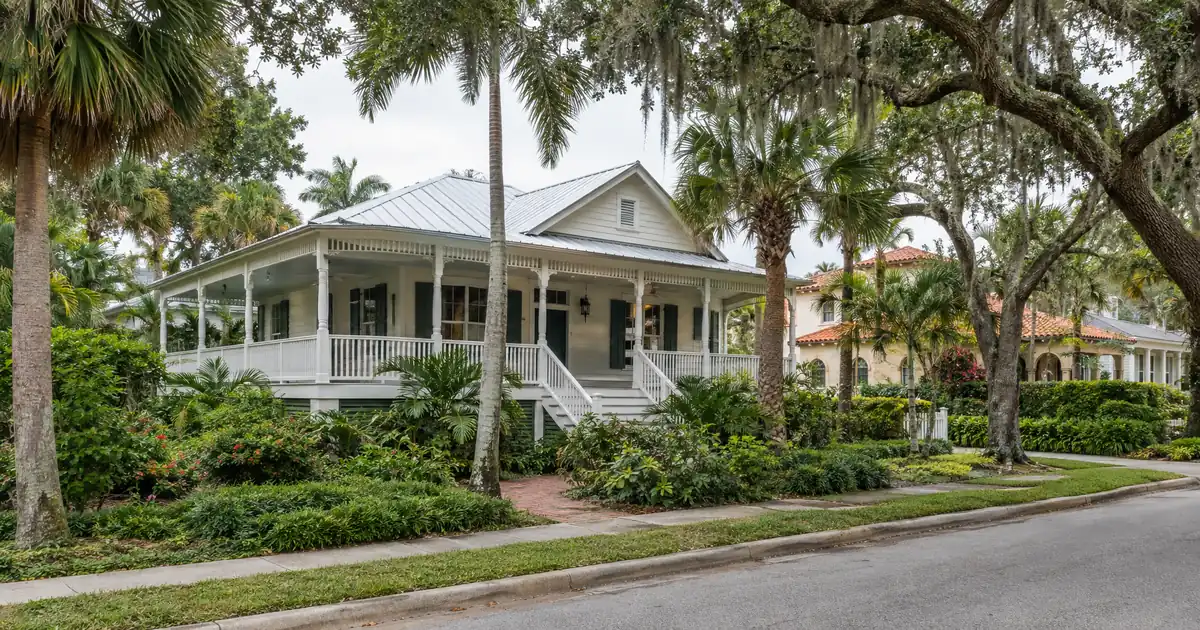
The average home value in Boca Raton sits at $576,025, up 2.2 percent over the past year according to Zillow’s Home Value Index. The obvious objection: if prices are already this high, how much equity is actually left to pull out? Fair question. But Boca Raton’s pricing data is unusually scattered — Bankrate puts the median sale price at $682,500, up 8.5 percent year over year, while Data USA reports a median property value of $722,700. That spread isn’t noise. It reflects a market where appreciation is concentrated unevenly, and the neighborhoods where it’s concentrated hardest are exactly where a cash-out refinance makes the most sense.
At a Glance: A cash-out refinance on a Boca Raton investment property is underwritten primarily on the property’s current market rent measured against its full monthly obligation, once the loan clears a six-month seasoning period and stays within Florida’s lender-specific 70 percent loan-to-value ceiling for cash-out transactions.
DSCR Cash-Out Calculator
Run the cash-out numbers in Boca Raton, FL
Rate source: Freddie Mac 30-yr average via FRED® — Federal Reserve Bank of St. Louis · effective Sep 17, 2026
Prefilled with starting assumptions — enter your property’s value, balance, taxes, and insurance for a more accurate picture.
Program parameters update from Lendmire’s centralized guideline source. Taxes and insurance are editable estimates.
As of Sep 17, 2026 · General Freddie Mac market benchmark, not a Lendmire loan offer. Property value, balance, taxes, and insurance are editable estimates. Maximum loan-to-value varies by lender, program, property type, and seasoning. Not a Loan Estimate, approval, or commitment to lend. Program availability and eligibility are subject to lender guidelines, credit approval, property review, and underwriting.
- Boca Raton Square homes carry a median sale price of $767,000, up 4 percent year over year, with no HOA dues eroding the ratio
- Century Village West condos list at a median $125,000 with one-bedroom rents around $1,450
- West Boca one-bedroom rents average about $2,380 versus a higher East Boca and waterfront tier
- Citywide median rent runs $2,424, a 33.9 percent premium over the wider Miami metro’s $1,810 median
- Florida’s cash-out ceiling caps proceeds at 70 percent loan-to-value, below the standard 75 percent nationally
Boca Raton Market Snapshot
A quick read on the Boca Raton investor landscape — figures come from the cited sources below. Confirm current property-level numbers before underwriting.
| Metric | Detail |
|---|---|
| Home prices | $682,500 median (Bankrate Housing Market) |
| Typical rents | $2,944 avg (RentCafe) |
| University enrollment | 32,185 students fall 2025 (Wikipedia) |
| Employment | 19,000 employees (2025) (Wikipedia) |
Boca Raton Square: Appreciation Without an HOA Drag
Boca Raton Square is the cleanest cash-out story in the city. Ranch homes from the late 1950s through the 1970s, palm-lined streets, and a median sale price of $767,000 — up 4 percent year over year, per Homes.com listing data. Investors bought here years ago at a fraction of that number, and the appreciation isn’t rent-driven. It’s land-driven. Older homes are getting torn down and rebuilt at multi-million-dollar price points, which pushes comparable sales up even where rents haven’t moved nearly as fast.
That’s a distinction worth sitting with. A property here is more of a long-hold equity vehicle than a cash-flow machine, and pulling equity out through a refinance — rather than selling — lets an investor keep the underlying land position while redeploying the gain. No HOA fees means one less line item competing with rent inside the coverage math, which matters when Florida’s cash-out ceiling caps proceeds at 70 percent loan-to-value rather than the 75 percent ceiling common elsewhere.
Run the numbers on a $767,000 valuation at that 70 percent ceiling. Assuming a modeled monthly rent near $4,900 — an assumption for illustration, not a sourced comp — against full PITIA (principal, interest, property tax near 0.91 percent of value annually, and insurance near 0.80 percent annually, both Florida averages baked into the modeling), coverage lands in the neighborhood of 1.05x to 1.10x. That’s workable, not generous. Investors chasing tighter margins here should expect the lender’s file to lean hard on the appraisal and the rent comp, not just the sale history.
Century Village West: The Small-Balance Play
Century Village West flips the math entirely. Median condo listing price: $125,000, per Redfin. One-bedroom rents average roughly $1,450, with at least one documented active listing showing a tenant paying $1,400 a month. That’s the steepest rent-to-price ratio found anywhere in Boca Raton — nowhere close to the $576,000 to $955,000 range that defines the broader single-family and condo market.
There’s an asterisk, and it’s not small. This is a 55-plus deed-restricted community with heavy HOA involvement. Association dues sit alongside the mortgage payment in the tenant’s effective cost of living, and while they’re not part of the technical PITIA calculation a lender runs, they function the same way in practice — they narrow what’s left over after debt service. A property that pencils to strong coverage on rent-and-mortgage alone can look different once dues are stacked on top, and the deed restrictions cut the eligible tenant pool to older, non-family renters. Worth knowing before assuming the ratio on paper survives contact with reality.
There’s also a structural quirk here that matters for anyone chasing multi-unit income. Standalone duplexes and triplexes barely exist in Boca Raton — Zillow lists exactly two duplex/triplex properties citywide, and Trulia shows the same count for multi-family. The workaround investors are actually using is bundled condo packages: one active listing groups four separate Century Village units — a mix of one- and two-bedroom condos in a well-maintained 55-plus community — into a single investor purchase. If the plan is multi-door income stacking in this market, it’s built by aggregating several low-basis condo units, not by finding a classic fourplex that doesn’t exist.
Golden Triangle and the No-HOA Premium Near Mizner Park
East Boca’s Golden Triangle — the pocket adjacent to downtown and Mizner Park — carries no HOA at all, a detail that matters more than it sounds. Original 1950s homes have increasingly been demolished for larger, modern rebuilds since the early 2000s, pushing values up in a corridor already commanding the city’s highest rents thanks to walkability, beach proximity, and Mizner Park’s restaurant and retail base. Boca Square, a nearby value-oriented pocket, offers a similar no-HOA structure at more accessible price points with a family-heavy tenant base that tends to reduce turnover.
The appreciation case gets more dramatic — and less reliable — a few miles inland. Boca West, the country club submarket, shows an average home price of $558,000 with a reported 63.6 percent year-over-year gain according to Redfin’s neighborhood data. That number should be read with real skepticism. A jump that size in a small, thin comp set usually says more about limited sales volume than about the underlying market. It’s a useful reminder that hyper-local Boca Raton pricing swings wildly between pockets, and a single-neighborhood appreciation figure isn’t something to underwrite against without a fresh appraisal.
East Boca Versus West Boca: The Refinance Trade-Off
West Boca is the cash-flow side of the city; East Boca and the waterfront are the appreciation side, and a cash-out refinance strategy should pick one lane deliberately rather than expect both. One-bedroom rents in the 33428 zip code average around $2,380, compared with consistently higher figures near downtown and the water, per local rent data. That’s not a huge gap, but paired with West Boca’s lower entry price, it tilts the math toward current income rather than future appreciation.
East Boca and the waterfront run the other direction — higher rents, but also higher basis, and appreciation that’s often driven more by land scarcity and rebuild activity than by rent growth. An investor sitting on an East Boca property that’s appreciated well past its purchase price is a better cash-out candidate than a rent-optimization candidate; the equity is doing more work than the lease is. West Boca is closer to the inverse — modest equity gains, but rent that already covers debt service with more room to spare.
Citywide, median rent sits at $2,424, a 33.9 percent premium over the broader Miami metro’s $1,810 median. That’s not a temporary spike tied to a single bad comp — it’s been a persistent gap tied to the corporate base, Florida Atlantic University proximity, snowbird demand, and constrained inventory in gated and waterfront communities. For DSCR math specifically, a durable rent premium over the metro matters more than a citywide vacancy figure — and Boca Raton’s reported 16.32 percent vacancy rate is almost certainly inflated by seasonal second homes sitting empty part of the year rather than true rental vacancy. Unit-level rent comps carry more weight here than any citywide average.
The Seasoning Clock and Florida’s Tighter Ceiling
A cash-out refinance on an investment property generally requires around six months of ownership from the date title recorded, measured against a minimum qualifying coverage ratio of 1.00 — rent has to at least match the full monthly obligation for standard programs to work. In Florida, cash-out proceeds are capped at the same 75 percent loan-to-value ceiling that applies in other states. That ceiling isn’t trivial on a $700,000-plus property — it determines how much equity actually converts to usable capital for the next acquisition.
Credit tiers commonly run from 620 up through 680 and 700, with pricing and leverage improving at the higher bands, and reserve requirements generally sit around six months of PITIA — climbing closer to nine months on loans above $1.5 million, which is relevant for anyone refinancing a higher-value east Boca or waterfront property. None of these are guarantees; they’re program parameters subject to lender review, credit profile, and the specific property. Reviewing how DSCR coverage is calculated before running comps on a specific address saves time later in the process.
Files coming out of markets with this kind of price dispersion — where a $125,000 condo and a $955,000 single-family home sit inside the same zip code — tend to hit the same friction point at the deal desk: the appraisal and the rent comp need to agree with each other, and in a market this fragmented, they don’t always start out that way. The cleaner files are usually the ones where the borrower pulled a rent comp from the specific submarket rather than a citywide average, since a Century Village number and a Boca West number describe two entirely different properties.
Who’s Actually Signing the Leases
Boca Raton’s tenant base isn’t one thing — it’s layered, and that layering is what keeps demand from tracking any single industry’s ups and downs. Florida Atlantic University enrolled 32,185 students in fall 2025, and only about 15 percent live on campus, meaning something north of 27,000 students need off-campus housing in a given year — a structural demand base near the FAU corridor that doesn’t disappear in a downturn. Lynn University adds another roughly 3,500 students, many international, to the same renter pool.
Then there’s the corporate layer. Office Depot’s parent company employs 19,000 people companywide from its Boca Raton headquarters, generating $12.1 billion in annual revenue, and ADT Inc. runs its 12,800-employee company from the same city. Add IBM’s local R&D presence and Johnson Controls’ security manufacturing operations — 741 and 600 local employees respectively, per the Business Development Board of Palm Beach County’s employer directory — and Boca Raton has a genuine corporate-headquarters tenant base that few Florida cities its size can match.
The third layer runs on shift work rather than salary. Boca Raton Regional Hospital operates 400 beds with roughly 800 physicians and 2,000 nursing and support staff, sitting inside the broader Baptist Health South Florida network’s roughly 23,000-employee regional footprint. Hospital staff turnover and shift patterns generate steady mid-income rental demand that doesn’t move with corporate layoff cycles — a different rhythm than the Office Depot or ADT tenant, and one worth weighing when picking a submarket.
Only 34 percent of Boca Raton households rent, according to RentCafe — a low share for a city anchored by two universities. That’s a supply signal, not a demand problem: rental inventory is structurally tighter here relative to demand than in a typical college town, which is part of why the rent premium over Miami metro has held up rather than compressed.
Comparing the Cash-Out Path to Other Refinance Routes
A DSCR cash-out refinance differs from a rate-and-term refinance mainly in purpose and in the equity math involved — cash-out pulls funds against built-up value subject to the lower 70 percent Florida ceiling, while a rate-and-term move restructures the existing loan without extracting proceeds. Investors weighing the two, or comparing DSCR underwriting against a conventional refinance path generally, can review where DSCR and conventional diverge or look at refinancing options more broadly before deciding which route fits a specific Boca Raton property.
Frequently Asked Questions
How do you qualify for a DSCR cash-out refinance in Boca Raton?
Qualification generally centers on the property’s rent measured against its full monthly obligation — taxes and insurance included — rather than the borrower’s personal income documents. Boca Raton’s insurance and tax loads run higher than inland Florida markets, so the coverage ratio should be modeled with those costs built in from the start, not added as an afterthought after the appraisal comes back.
What are the requirements for an investment property loan in Boca Raton, Florida?
Standard requirements typically include a minimum six months of seasoning from the recorded purchase date, a credit score generally starting near 620 with better terms at higher tiers, and reserves around six months of PITIA (closer to nine months above $1.5 million). Florida properties are additionally subject to a lender-specific cash-out ceiling near 70 percent loan-to-value rather than the 75 percent standard used elsewhere. Manufactured homes, log homes, and barndominiums fall outside these programs entirely.
DSCR vs. conventional financing
Two common ways to finance an investment property in Boca Raton, FL. They qualify you differently — here’s how investors weigh them.
Why investors choose it
- Qualifies on the property’s rental income — no personal tax returns, W-2s, or pay stubs needed to document income.
- No personal debt-to-income ceiling to clear, so existing mortgages and obligations don’t cap your borrowing the same way.
- Can be closed in an LLC, keeping the property inside a business entity.
- Built for scaling — not held to the limit on number of financed properties that conventional financing applies.
- Underwriting centers on the deal: generally qualifies when the rent covers the payment, a 1.00x coverage ratio being a common baseline (confirmed in underwriting).
- Designed specifically for investment property, including long-term and, where the program allows, short-term rentals.
Where it’s strong
- Often the lowest ongoing financing cost for a buyer who fully qualifies on personal income — a fit for a first property or a cost-first purchase.
Trade-offs for investors
- Requires full personal income documentation and must fit within a debt-to-income limit — salary, existing debts, and other mortgages all count.
- Typically held in your personal name rather than a business entity.
- Caps how many financed properties you can carry, which can become a ceiling as a portfolio grows.
- Evaluates you as a borrower as much as the property, which usually means more paperwork.
How investors usually choose: a first or single property often optimizes for the lowest financing cost; portfolio builders often optimize for leverage, vesting in an LLC, and scaling past conventional caps. The right answer depends on your goals, the property, and current guidelines — both paths run through select lenders in Lendmire’s wholesale network, with eligibility and terms confirmed in underwriting.
How does rental income affect DSCR refinance eligibility in Boca Raton?
Rental income is the primary qualifying factor rather than a supplement to it. Lendmire arranges DSCR programs built around evaluating a property’s rent against its debt obligation instead of traditional personal-income documentation or pay stubs — a structural advantage for Boca Raton investors whose personal income may not match the size of a $700,000-plus refinance.
Why does Century Village West show such different DSCR math than East Boca?
Price is the driver — a median $125,000 condo needs far less rent to clear a 1.00 coverage floor than a $767,000 Boca Raton Square home does, even though the Century Village rent itself is lower in absolute dollars. The trade-off is the 55-plus HOA structure, which narrows the tenant pool and adds a dues line that isn’t part of the core PITIA calculation but functions the same way against the tenant’s budget.
Does Boca Raton’s high reported vacancy rate signal a rental oversupply problem?
Not based on available data. The 16.32 percent figure almost certainly reflects seasonal second homes and part-year snowbird occupancy rather than long-term rental units sitting empty, and no reliable metro-wide long-term-rental vacancy percentage has been separately verified. Unit-level rent comps in the specific submarket matter more here than any citywide average.
For current guidelines and terms, see Lendmire’s DSCR loan programs page.
About Lendmire
Lendmire (NMLS# 2371349) is a mortgage brokerage focused on DSCR investor financing, arranging programs through wholesale and investor-lending channels across 41 markets, including Washington, D.C. DSCR loans are evaluated by the lender on property cash flow rather than personal income, subject to lender guidelines, and the programs support LLC-titled closings — subject to program terms — along with investors holding four or more financed properties. Lendmire was also recognized as a top-ranked workplace in 2026.
Boca Raton’s equity isn’t sitting where most people assume it is — it’s parked in land under the ranch homes of Boca Raton Square and in the rebuild premium of the Golden Triangle, not evenly spread across the median. The investors who pull that equity out deliberately, submarket by submarket, rather than refinancing off a citywide average, will come out ahead.
For broader investor-financing rules and property-type coverage across the state, see Florida DSCR loans.
A deeper walk-through of investment-property equity extraction lives in cash-out refinance on an investment property.
Scotsman Guide’s Top Mortgage Workplace list for 2025 documents Lendmire’s recognition.
Get Started
Ready to find the right loan for you?
In about 30 seconds you can review financing options available for your investment property. No commitment required.
Informational only. Not a Loan Estimate, approval, or commitment to lend. Program availability and eligibility are subject to lender guidelines, credit approval, property review, and underwriting.
References
2. Data USA
4. RentCafe
5. Florida Atlantic University
6. Wikipedia
7. Homes.com
8. Redfin
9. Redfin’s
10. cynthiagardens.com — Boca Raton Rent
11. Lynn University
12. Business Development Board of Palm Beach County’s
13. Boca Raton Regional Hospital
14. Scotsman Guide — Top Workplaces 2026
15. Scotsman Guide 2025 Top Mortgage Workplace
This article is part of Lendmire’s investment property cash-out refinance program — full qualification details, guidelines, and scenarios live on the program page.
Related reading: Luxury Rental DSCR Loans In Boca Raton: Complete Guide · Cash Out Refinance Investment Property in Kendall, Florida: How Much Equity Can You Pull Out? · DSCR Loans West Palm Beach: Investor Financing for Palm Beach Island, Downtown, Jupiter & Real Estate Investors
Guides: Investment Property Cash-Out Refinance in Boca Raton, FL · Investment Property Cash-Out Refinance in Florida
Brandon Miller
Founder & CEO, Mortgage Loan Originator, Lendmire LLC
- Mortgage Loan Originator · NMLS# 1129696 · Verify on NMLS Consumer Access
- North Carolina Real Estate Broker · License# 343312 · Verify on NCREC
- North Carolina Insurance Producer · License# 19053198 · Property, Casualty, Life, Health · Verify on NAIC SBS
- Lendmire LLC · Firm NMLS# 2371349 · Verify firm licensure
Legal disclosures. Lendmire (NMLS# 2371349) is a state-licensed mortgage brokerage that arranges financing through wholesale lender relationships. Lendmire is not a direct lender, depository institution, or registered financial advisor. The discussion above is general informational content about real estate financing — it is not financial, legal, or tax advice, and readers should consult licensed professionals for guidance on their individual circumstances. Loan inquiries are subject to lender underwriting; this article does not represent a commitment to lend. Loan terms, rates, and qualification standards vary by borrower, property, and state, and are subject to change at any time. Equal Housing Opportunity. NMLS Consumer Access: nmlsconsumeraccess.org.