
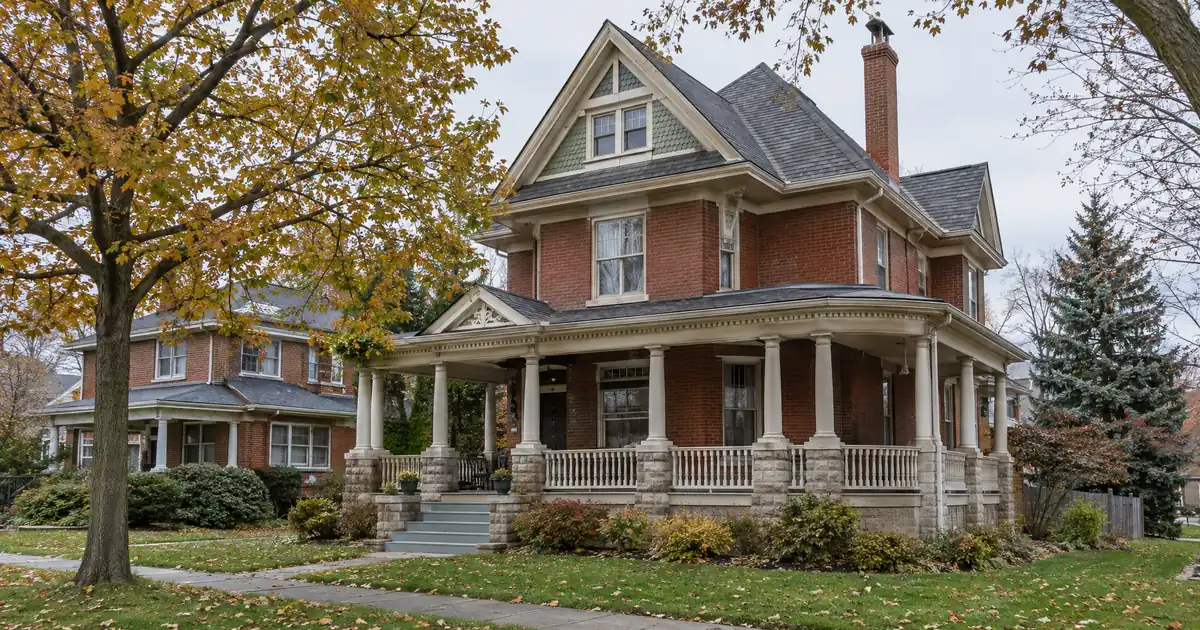
Most Bowling Green owners who want to pull equity out hit the same wall. The building is a duplex or a converted house near campus, few comparable multi-unit sales exist for an appraiser to lean on, and the rent roll turns over on the academic calendar. A cash-out refinance on this kind of property is doable, but the appraisal and the coverage math decide how much equity comes out, not the owner’s optimism. Homes.com puts the 12-month median sale price at $282,875, up 6 percent, so equity is building. What matters is which properties convert it into usable capital.
At a Glance: A cash-out refinance on an investment property in Bowling Green, Ohio is underwritten primarily on the rental income the building produces measured against its full monthly obligation, with proceeds capped at a percentage of appraised value once the ownership seasoning window has passed.
DSCR Cash-Out Calculator
Run the cash-out numbers in Bowling Green, OH
Rate source: Freddie Mac 30-yr average via FRED® — Federal Reserve Bank of St. Louis · effective Sep 24, 2026
Prefilled with starting assumptions — enter your property’s value, balance, taxes, and insurance for a more accurate picture.
Program parameters update from Lendmire’s centralized guideline source. Taxes and insurance are editable estimates.
As of Sep 24, 2026 · General Freddie Mac market benchmark, not a Lendmire loan offer. Property value, balance, taxes, and insurance are editable estimates. Maximum loan-to-value varies by lender, program, property type, and seasoning. Not a Loan Estimate, approval, or commitment to lend. Program availability and eligibility are subject to lender guidelines, credit approval, property review, and underwriting.
- Cash-out LTV tops out at 75 percent, and seasoning runs about six months from title recording.
- BGSU reports 15,273 undergraduates, anchoring campus-adjacent rentals.
- Bowling Green West’s $1,670 average rent against a $318,954 median price compresses coverage below 1.0x.
- Duplex inventory is thin, so appraisers may pull comps from across Wood County.
Program terms are typical guidance and subject to lender guidelines, credit approval and property review.
Bowling Green Market Snapshot
A quick read on the Bowling Green investor landscape — figures come from the cited sources below. Confirm current property-level numbers before underwriting.
| Metric | Detail |
|---|---|
| Home prices | 8 sales (Redfin housing market) |
| Typical rents | $1,670 average (NeighborhoodScout) |
| University enrollment | New students up 4%/14%/36% (BGSU News) |
| Employment | 450 jobs (NBC24, Abbott plant) |
Where Does Bowling Green Equity Actually Sit?
Equity sits in the older small-building stock near campus and downtown. That stock is where rent-to-value holds up best, and it’s where a working refinance file usually starts. The newer, pricier single-family homes on the west side build equity too, but they cover their obligations poorly.
The city’s headline prices depend on the source, and the sources measure different things. Homes.com’s 12-month sale median of $282,875 covers the widest sample. Redfin shows a $255,000 median for its most recent monthly snapshot, but only eight homes sold that month, so treat it as a thin read. Census-derived data on Kurby shows a median home value of $205,700 among a population of 30,157 and a median household income of $41,346. Use the $282,875 figure as the working median and read the others as the floor of a range.
Housing mix explains why small buildings matter here. NeighborhoodScout reports 39.73 percent of units are single-family detached, 39.17 percent sit in large apartment complexes, and 11.68 percent are duplexes or converted small buildings. That last slice is the DSCR-friendly one. It’s also small.
The Campus Core and Downtown: Small Buildings Do the Work
Older houses converted to apartments and small multi-unit buildings around East Wooster, Lehman Avenue and the downtown corridor are the strongest refinance candidates in the city. Tenant demand is anchored to BGSU and to hospital and university staff, so the rent roll rarely depends on one household.
The demand engine is real and growing. BGSU reported its largest freshman class in history, at over 4,000 students, with engineering new-student numbers up 36 percent. A local report from BG Independent News says total undergraduate enrollment rose more than 3 percent the next fall, with new students from Wayne County, Michigan up 39 percent. Growing enrollment supports the vacancy and rent assumptions an underwriter has to accept on a campus-adjacent rent roll.
Rent evidence is messy, and honest analysis says so. RentCafe shows an average of $1,129 up 6.59 percent, with 2-bedrooms at $983 and 3-bedrooms at $1,315, but that covers only buildings with 50 or more units. Apartments.com lists 1-bedrooms near $669 and 2-bedrooms near $859. A small older building typically prices closer to the second set than the first. Don’t blend them into one “median rent.” Pick the range that matches the actual building.
Student-lease seasonality comes with this territory. Summer, semester and full-year leases all circulate, and turnover follows the academic calendar. How a lender reads a rent roll like that depends on the program and the lease documentation, so raise it early in the file rather than at the appraisal.
Bowling Green West: A Good Neighborhood, A Thin Number
Bowling Green West is a lovely place to own and a poor place to chase coverage. Coverage there lands well under 1.0x on a full-obligation basis, which changes what a cash-out file looks like.
NeighborhoodScout’s profile of Bowling Green West shows a median price of $318,954 against an average rent of $1,670, in a mostly owner-occupied area of medium to large single-family homes and townhomes. Run the numbers on that pairing. At 75 percent of value, with taxes and insurance included in the obligation (Ohio averages of roughly 1.59 percent and 0.35 percent of price a year), coverage comes out around 0.8x. That is a modeled result, not a sourced figure.
Below 1.00x on long-term rent alone doesn’t end the conversation, but it changes the path. A lender might review a sub-1.00 program, an interest-only structure, a lower leverage tier or a larger cash reserve position. Each option carries its own pricing and requirements, and eligibility depends on lender guidelines, credit profile, reserves and property review. Nothing here should be read as a promise. Owners with a west-side rental are better off asking whether the equity is worth pulling at those terms.
Modeled Math: A Duplex Near Campus
A modeled duplex near campus can clear 1.0x with a small cushion, while an equivalent-value single-family rental on the west side cannot. The gap is rent-per-dollar-of-value.
Picture an investor holding a duplex valued at $250,000 (a modeled assumption, not a listing). Assume each 2-bedroom unit rents for $900, inside the range Apartments.com and RentCafe suggest, for $1,800 combined. At 75 percent LTV, with taxes and insurance built into the obligation, coverage lands around 1.05x to 1.10x. That’s a modeled band, rounded down. It clears the common 1.00x benchmark, and the margin is real but not wide.
Now the tension. Lifting rent by $100 per unit moves coverage meaningfully. Losing one tenant for a semester erases the cushion. That’s why a stable rent roll and lease documentation matter more here than in a market with year-round leases. The math clears, but barely, and barely in a student market is worth stress-testing before the appraisal is ordered.
Most standard programs use 1.00x as the baseline because the rent covers the obligation at that level. Some lenders review lower ratios, but those files typically need lower leverage, more reserves or different pricing. To see how the arithmetic plays out on a specific building, this walkthrough of DSCR cash-out refi mechanics covers the inputs.
The Appraisal Problem Nobody Mentions
Thin multi-unit inventory is the hidden constraint on Bowling Green cash-outs. Owners of duplexes and fourplexes should plan for a wide comp radius and a conservative value.
A Zillow duplex search for Bowling Green showed zero homes for sale at the time of research, while Wood County’s page showed 27. Those are live snapshots and will move. The point holds anyway. An appraiser valuing a Bowling Green duplex often has to look beyond city limits for sales, and the value that comes back sets the 75 percent ceiling. A rare multi-unit is also hard to replace once sold, so pulling equity from one, rather than trading out of it, is often the smarter move.
Working DSCR brokers see a recurring pattern in small university markets: the file that stumbles is rarely the borrower, it’s the value. Coverage looks fine on rent, then the appraisal comes in on a comp set stretched across a county, and the available proceeds shrink. The files that go smoothest arrive with a clean rent roll, written leases and a realistic value expectation set before the order goes in. Lendmire, a DSCR-focused mortgage broker, structures files around that reality, and owners can talk through the file before an appraisal is ordered.
One more angle on valuation is worth flagging as inference. NewHomeSource lists new homes in the area from $303,990 to $579,990 across 11 communities. New-build sales at those levels can lift appraised values for larger single-family rentals on the north and west sides. Older student-area stock won’t necessarily get the same lift, so comp selection matters. That’s an inference from price bands, not a sourced appraisal outcome.
Who Rents Twelve Months a Year?
Non-student tenants supply the lease stability a cash-out file wants. The city has two sources: a hospital and a very large new plant.
Wood County Hospital, at West Wooster Street, offers cancer treatment, orthopedic surgery and rehabilitation, per the city’s healthcare page. It draws clinical and support staff who rent for the long term. The larger story is Abbott. JobsOhio describes a $536 million, 360,000-square-foot manufacturing facility, and the announcement projected 450 permanent jobs. Abbott’s careers page describes the plant as under construction, but check current status before relying on an opening date. Those are working-household jobs that don’t follow a semester schedule.
The mayor said Abbott’s arrival “increased our need to address the housing deficit in Bowling Green,” per BG Independent News. The Sentinel-Tribune reports a $1 million state grant toward 117 workforce housing lots near Brim and Bishop roads, with construction expected to start early the following year. Officials describing demand as outrunning supply supports low-vacancy underwriting. New lots also add competition from renters who can afford to buy. Both facts belong in the same picture. The city’s workforce page lists advanced manufacturing, aerospace, automotive, logistics and robotics as skilled-labor sectors, so the employment base isn’t a single-plant bet.
Seasoning and the 75 Percent Ceiling
Seasoning is about six months of ownership, measured from title recording, and the LTV ceiling on a cash-out is 75 percent. Those two facts set the timeline and the size of every Bowling Green refinance.
Equity available depends on rent used for lender review, the full monthly obligation, reserves (typically about six months) and that 75 percent cap. It’s never a guaranteed figure. Pricing and available terms vary by lender, borrower profile, property type, and full underwriting review. Loan amounts run up to $3,000,000 on standard programs, though a typical Bowling Green building sits far below that, and smaller balances route through select lenders in the network. Manufactured homes, log homes and barndominiums fall outside these programs.
An investor who bought a campus-area duplex, improved it and now holds it beyond the seasoning window is the classic candidate. Say you own a property with a recent appraisal above what you paid. The refinance resets the loan against the new value, up to the cap, and the difference in balance becomes capital. The investor refinance breakdown covers how that compares with a rate-and-term refinance, and the side-by-side comparison shows why a bank’s income-based approach often doesn’t fit owners with several properties. The guide “What Is a DSCR Loan” explains the coverage ratio itself.
What the Proceeds Buy Next
Cash-out proceeds are most valuable when they buy the thing Bowling Green is short of: small multi-unit rentals. Because that inventory is scarce, the next deal may sit outside the city, and that’s a legitimate strategy.
Homes.com puts the Bowling Green single-family median at $295,000 against $124,000 for Toledo, about 20 miles away. The cost gap sends yield-minded buyers toward the Toledo metro, though rent and price levels there aren’t part of this research. An owner might pull equity from a Bowling Green duplex that’s appreciated with enrollment and redeploy it where rent-to-price runs higher. This one’s a genuine toss-up: keeping the Bowling Green asset preserves scarce local inventory, while redeploying toward yield can lift cash flow. Investors focused on appreciation could argue the other way. Statewide program details sit on the page for DSCR loans in Ohio.
DSCR vs. conventional financing
Two common ways to finance an investment property in Bowling Green, OH. They qualify you differently — here’s how investors weigh them.
Why investors choose it
- Qualifies on the property’s rental income — no personal tax returns, W-2s, or pay stubs needed to document income.
- No personal debt-to-income ceiling to clear, so existing mortgages and obligations don’t cap your borrowing the same way.
- Can be closed in an LLC, keeping the property inside a business entity.
- Built for scaling — not held to the limit on number of financed properties that conventional financing applies.
- Underwriting centers on the deal: generally qualifies when the rent covers the payment, a 1.00x coverage ratio being a common baseline (confirmed in underwriting).
- Designed specifically for investment property, including long-term and, where the program allows, short-term rentals.
Where it’s strong
- Often the lowest ongoing financing cost for a buyer who fully qualifies on personal income — a fit for a first property or a cost-first purchase.
Trade-offs for investors
- Requires full personal income documentation and must fit within a debt-to-income limit — salary, existing debts, and other mortgages all count.
- Typically held in your personal name rather than a business entity.
- Caps how many financed properties you can carry, which can become a ceiling as a portfolio grows.
- Evaluates you as a borrower as much as the property, which usually means more paperwork.
How investors usually choose: a first or single property often optimizes for the lowest financing cost; portfolio builders often optimize for leverage, vesting in an LLC, and scaling past conventional caps. The right answer depends on your goals, the property, and current guidelines — both paths run through select lenders in Lendmire’s wholesale network, with eligibility and terms confirmed in underwriting.
Verify current local rental rules, taxes and insurance with qualified local professionals before committing capital.
Frequently Asked Questions
How do you qualify for a cash-out refinance on a rental in Bowling Green, Ohio?
Qualification centers on the property’s rent against its full monthly obligation, with a common 1.00x benchmark, a minimum credit score around 620, and roughly six months of reserves. The property generally needs about six months of ownership from title recording, and proceeds are capped at 75 percent of appraised value. Final eligibility depends on lender guidelines, credit approval and property review.
What are the requirements for an investment property loan in Bowling Green, Ohio?
Expect a rental-income-based review, credit in the 620-and-up range, and reserves equal to about six months of the monthly obligation. Property type matters: duplexes, small converted buildings and single-family rentals are typical fits, while manufactured homes, log homes and barndominiums fall outside these programs. Requirements vary by borrower, property and loan scenario.
Can a student-lease rental near BGSU still qualify?
Yes, in many cases, though lease structure gets extra attention. Semester, summer and full-year leases all circulate near campus, and enrollment growth supports the rent assumptions. How a lender treats a given rent roll varies by program, so written leases and a clear rent history help the file.
Will a Bowling Green appraisal have enough comparables for a duplex?
Often not inside city limits. Zillow showed no duplexes for sale in the city and 27 in Wood County at the time of research, so appraisers may widen the search radius. That can hold the appraised value, and therefore the 75 percent proceeds cap, below what an owner expects.
For current guidelines and terms, see Lendmire’s DSCR loan programs page.
About Lendmire
Lendmire is a non-QM mortgage brokerage (NMLS# 2371349) arranging DSCR investor loans in 41 markets, including Washington, D.C. DSCR eligibility is generally reviewed around property-level rental income rather than personal income, subject to lender and program guidelines, making it a fit for self-employed investors and LLC-owned portfolios. Lendmire was recognized as a 2026 Scotsman Guide Top Mortgage Workplace and a 2025 Scotsman Guide Top Workplace. Investors can reach the team at 828-256-2183.
Get Started
Ready to find the right loan for you?
In about 30 seconds you can review financing options available for your investment property. No commitment required.
Informational only. Not a Loan Estimate, approval, or commitment to lend. Program availability and eligibility are subject to lender guidelines, credit approval, property review, and underwriting.
References
1. Homes.com
2. Redfin
3. NeighborhoodScout, Bowling Green West
4. BGSU largest freshman class
6. Kurby
8. BG Independent News, undergraduate enrollment
9. RentCafe, Bowling Green rent trends
10. Apartments.com
11. Zillow duplex search for Bowling Green
13. NewHomeSource
14. bgohio.gov — City’s healthcare page
15. JobsOhio, Abbott announcement
17. Sentinel-Tribune, workforce housing grant
18. bgohio.gov — City’s workforce page
19. a 2026 Scotsman Guide Top Mortgage Workplace
20. a 2025 Scotsman Guide Top Workplace
This article is part of Lendmire’s investment property cash-out refinance program — full qualification details, guidelines, and scenarios live on the program page.
Related reading: DSCR Cash Out Refinance in Bowling Green, Kentucky: Pulling Equity from Small Multifamily · Cash Out Refinance Investment Property Bowling Green Kentucky · Cash Out Refinance Investment Property in Fairfield, Ohio: Equity Math on Flat Rents
Guides: Investment Property Cash-Out Refinance in Ohio
Brandon Miller
Founder & CEO, Mortgage Loan Originator, Lendmire LLC
- Mortgage Loan Originator · NMLS# 1129696 · Verify on NMLS Consumer Access
- North Carolina Real Estate Broker · License# 343312 · Verify on NCREC
- North Carolina Insurance Producer · License# 19053198 · Property, Casualty, Life, Health · Verify on NAIC SBS
- Lendmire LLC · Firm NMLS# 2371349 · Verify firm licensure
Legal disclosures. Lendmire (NMLS# 2371349) is a state-licensed mortgage brokerage that arranges financing through wholesale lender relationships. Lendmire is not a direct lender, depository institution, or registered financial advisor. The discussion above is general informational content about real estate financing — it is not financial, legal, or tax advice, and readers should consult licensed professionals for guidance on their individual circumstances. Loan inquiries are subject to lender underwriting; this article does not represent a commitment to lend. Loan terms, rates, and qualification standards vary by borrower, property, and state, and are subject to change at any time. Equal Housing Opportunity. NMLS Consumer Access: nmlsconsumeraccess.org.