
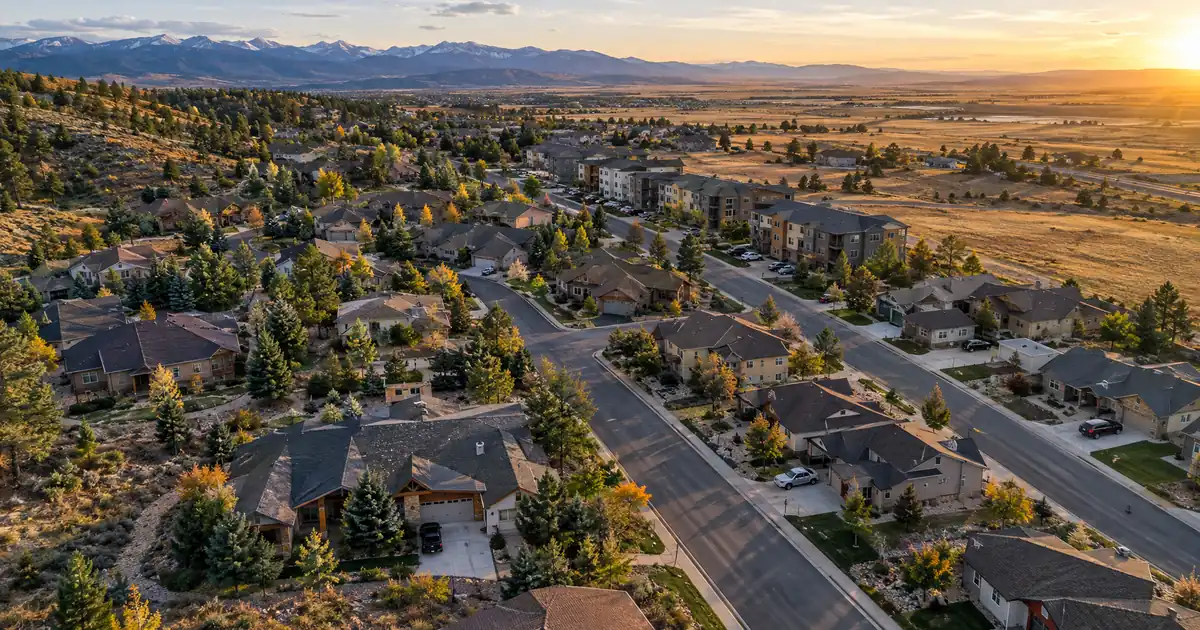
Per Redfin, Brighton homes averaged 76 days on market versus 42 the prior year, while the median sale price slipped 1.3 percent to $515,000. Prices are not running away. Any equity an investor pulls here comes from the original basis, from forced value, or from rent that still covers the full monthly obligation at a lower loan-to-value. It does not come from market momentum.
DSCR Cash-Out Calculator
Run the cash-out numbers in Brighton, CO
Rate source: Freddie Mac 30-yr average via FRED® — Federal Reserve Bank of St. Louis · effective Sep 24, 2026
Prefilled with starting assumptions — enter your property’s value, balance, taxes, and insurance for a more accurate picture.
Program parameters update from Lendmire’s centralized guideline source. Taxes and insurance are editable estimates.
As of Sep 24, 2026 · General Freddie Mac market benchmark, not a Lendmire loan offer. Property value, balance, taxes, and insurance are editable estimates. Maximum loan-to-value varies by lender, program, property type, and seasoning. Not a Loan Estimate, approval, or commitment to lend. Program availability and eligibility are subject to lender guidelines, credit approval, property review, and underwriting.
The Quick Read:
A cash-out refinance on a Brighton, Colorado rental is underwritten primarily on the property’s rental income measured against its full monthly obligation, with loan-to-value capped at 75 percent and roughly six months of title seasoning, all subject to lender guidelines, credit review, and appraisal.
- Median sale price sits at $515,000, per Redfin, so equity depends on basis, not appreciation.
- Detached houses average $2,960 in rent, per Apartments.com.
- Modeled coverage on a median single-family rental lands just under 1.0 at 75 percent LTV.
- Lower LTV is the lever: around 65 percent lifts coverage past 1.1.
Lendmire (NMLS# 2371349) helps arrange DSCR financing for Brighton, Colorado investors as part of a broader non-QM footprint reaching 41 markets, including D.C. This article covers the equity-extraction side only: what Brighton rentals can support when an investor who already owns the property wants capital back out.
Brighton East Farms Sets the Ceiling (and the Test)
Brighton East Farms is the clearest example of the tension in this market. Per Redfin’s city guide, the east-side suburban area carries a $625,228 median sale price. Redfin’s rental page lists a median rent of $3,170 there. That works out to roughly 0.5 percent monthly rent-to-price by Lendmire Research’s calculation, mixing two Redfin pages that are undated relative to each other, so read it as directional.
Run the numbers on it this way, using those two figures as modeled inputs. At 75 percent LTV, rent divided by the full monthly obligation (principal, interest, taxes, and insurance) comes out below 0.90. Drop to 60 percent LTV and coverage rises to roughly 1.05. Near 50 percent it reaches the 1.2 range. The house rents well. The price is simply high enough that full-leverage debt service outruns the rent.
Sub-1.00 files at full leverage still have paths a lender may review: a lower-LTV cash-out, a sub-1.00 program, or an interest-only structure. Whether any of them fit depends on lender guidelines, credit approval, and property review.
Two other Redfin-guide areas mark the edges of the map:
- Buffalo Run. This newer subdivision shows a $560,000 median sale price. Redfin gives it a walk score of 9 out of 100, so it is a car-dependent, commuter-oriented pocket. No neighborhood-level rent data exists to test coverage.
- Todd Creek Riverside. The median here is $1,187,500, but the sample is small. Skip it for DSCR purposes.
Downtown near US 85 and the master-planned Prairie Center have no sourced price data, so they stay qualitative. Both are worth watching if comps surface.
Why a Flat Market Changes the Cash-Out Math
Brighton cash-outs will be sized by coverage, not by LTV, because values are not compounding. Zillow puts the average home value at $496,093, down 2.8 percent over the past year. That is lower than Redfin’s $515,000 median because the two use different methodologies, but both point the same direction. Repit estimates ZIP 80601’s five-year value trend at only about 0.1 percent, and it puts the cap rate near 3.1 percent on a 35 percent expense assumption. Treat Repit as an aggregator estimate, not a market fact.
That cap-rate figure matters. At a 3.1 percent cap rate, debt service eats most of the net income at high leverage. The 75 percent LTV ceiling is a ceiling, not a target, and in Brighton the binding constraint will usually be the 1.00 coverage baseline. That baseline is common because rent covers the payment at that level. Some lenders may review lower or no-ratio scenarios, but those typically require stronger compensating factors, lower leverage, different pricing, or more cash in.
Seasoning is the other gate. Most programs look for about six months of ownership measured from title recording before a cash-out, so an investor who closed recently has to wait. A flat market also makes the appraisal the main variable. With homes sitting 76 days, appraisers may have thin fresh comps to work with.
Consider a scenario where an investor bought a detached three-bedroom well below the $515,000 median, paid for light rehab, and held past seasoning. Appraised near the median, that property can support a cash-out at 65 percent LTV with coverage above 1.1, and the proceeds are then available for the next acquisition. Buy at the median with no rehab, and the same refinance returns little. The equity in Brighton is created on the buy side and released on the refinance side.
Where Coverage Clears: Houses, Townhomes, and the Missing Duplex
Detached single-family is the product that works in Brighton, and small multifamily barely exists. Per NeighborhoodScout, single-family detached is 70.77 percent of housing units, large apartment complexes are 17.37 percent, attached homes are 7.34 percent, and duplexes or small multifamily are only 2.53 percent. Investors hunting for a fourplex to stack rents will find thin inventory and little comparable data.
Houses rent at a premium to apartments. Apartments.com puts the average house rent at $2,960, while RentCafe shows a $2,772 average for three-bedroom apartment units. Against the Redfin single-family median of $527,870 (from the city guide), the house rent is roughly 0.56 percent of price. That mixes two sources and dates, so it is directional.
Model it with $2,960 rent against $527,870 at 75 percent LTV, including taxes and insurance. Coverage comes in around 0.95, just under the baseline. At 65 percent LTV it moves to about 1.1. At 60 percent it reaches roughly 1.15. The same house can qualify or miss depending on how much of the equity the investor wants out.
The lower-basis options are attached. Redfin shows townhouses at a $362,500 median and condos at $318,500. Entry prices are lower, which can improve rent-to-value, but no Brighton townhome or condo rent data turned up to confirm coverage. HOA dues count in the full monthly obligation. The thinner the rent margin, the more a monthly HOA charge moves the ratio.
The stronger play might be the townhome over the detached house for cash-out sizing, since a lower value with comparable rent could clear 1.00 at a higher LTV. But without sourced townhome rents, that is a hypothesis to test with actual leases, not a conclusion.
(A note on metro districts: per the City of Brighton, 33.03 percent of city land sits in a metro district. Newer master-planned communities like Brighton Crossings, Bromley Park, Platte River Ranch, Ridgeline Vista, and Village at Southgate are on the city’s list. Whatever those obligations are on a target property, they belong in the full-obligation figure before coverage is calculated.)
One observation from the deal desk side applies to markets like this one. Files in commuter suburbs with mostly newer stock tend to hit friction in two places: the appraisal rent schedule landing below the lease in place, and the gap between a seller-era HOA figure and the current one. Cleaner files come in with the signed lease, a current HOA or district statement, and a payoff letter. Sizing the loan off the appraiser’s rent, not the lease, avoids a re-trade on the coverage number.
The Tenant Base: Turbines, Hospital Shifts, and a Long Commute
Brighton’s rental demand is workforce demand. The city sits 23 miles from downtown Denver and 17 miles from Denver International Airport, and Census Bureau QuickFacts shows a population of 42,059, a median age of 34, and a 31.1-minute mean commute. Many residents drive out for work, but several employers anchor local leases.
The City’s major employers list names Intermountain Health Platte Valley Medical Center, Vestas, Transwest, Target, Wells Concrete, King Soopers, WalMart Supercenter, and the City itself. Headcounts were not sourced, so treat the ranking as qualitative. Three facts stand out:
- Vestas. The wind-turbine maker operates a nacelle factory in Brighton, and Vestas lists starting manufacturing pay of $20.50 to $30.00 per hour. That is an unusual tenant profile among Denver-metro suburbs. Current plant headcount was not confirmed, so the article makes no job-count claim.
- Intermountain Health Platte Valley Medical Center. The hospital is the anchor medical employer, and healthcare shift work supports steady rental demand.
- 27J Schools. The district employs over 2,000 team members, making it a large public-sector payroll headquartered in Brighton.
The Brighton Economic Development Corporation also points to a 1.8-million-square-foot Class A industrial park in the Bromley Industrial Park along I-76, which adds logistics jobs to the mix. Buckley Space Force Base in Aurora adds 12,000 employees within commuting range. No four-year institution is based in Brighton, so this is not a student market.
For a lender, demand tied to manufacturing, healthcare, and government payrolls supports longer tenancies and a steadier in-place rent. It does not support rent growth. The next section explains why.
Which Rent Number Do You Underwrite?
Use the in-place lease or a conservative appraiser rent, not a market-average headline. Brighton’s rent sources disagree, and all of them show flat to falling apartment rents.
| Source | Average rent | Trend |
|---|---|---|
| RentCafe | $1,939 | Down 0.97% YoY |
| Apartments.com | $1,587 | Down 4.7% YoY |
| Redfin | $1,940 | Down $42 MoM |
The spread reflects methodology, not a real $350 gap. RentCafe uses Yardi Matrix data on buildings with 50 or more units, Apartments.com reports a lower average across listings, and Redfin’s city figure sits close to RentCafe’s. Zillow’s older rental median is stale and is not used here.
Apartment supply is also new. RentCafe says 86 percent of buildings were built since 2000, with an average age around 16 years. Newer garden-style complexes compete directly with single-family rentals at the lower end, so falling apartment rents give no cushion to a thin coverage ratio.
No sourced Brighton vacancy rate was found. The Apartment Association of Metro Denver publishes a vacancy and rent report by submarket, but it is subscriber-only and was not accessible here. Until someone pulls it, this article does not state a vacancy number. Renters make up a minority of households at 29 percent, so the rental pool is real but not deep.
What the Proceeds Do Next
The 75 percent LTV ceiling is the hard stop, and the real number is whatever coverage, reserves, and the appraisal allow. Typical guideline ranges for this kind of file: seasoning of about six months, a 1.00 coverage baseline on rent used for lender review versus full obligation, reserves around six months of the monthly obligation (more on balances above $1,500,000), and credit tiers starting at a 620 floor with pricing and leverage improving at 660, 680, and 700. Loan amounts run up to $3,000,000 on standard programs, and smaller balances route through select lenders in the network. Manufactured homes, log homes, and barndominiums fall outside these programs entirely. All of it is subject to lender guidelines and program terms.
Here is how the proceeds typically get used in a market like this. An investor with a seasoned rental releases cash at a conservative LTV, keeps the retained loan sized so coverage clears 1.00 with some margin, and deploys the capital into a lower-basis acquisition, where the equity is created again. The equity recycle pathway walks through that loop, and Lendmire’s refi programs cover rate-and-term options for investors who want lower debt service instead of cash. Investors weighing this against a conventional route can read the comparison. Those holding title in an LLC should confirm entity eligibility, subject to lender program eligibility.
The guide “What Is a DSCR Loan” is explained in detail on the pillar page, and the broader DSCR loan options for Colorado investors sit on the state hub. For a file-specific conversation, reach Lendmire at 828-256-2183.
DSCR vs. conventional financing
Two common ways to finance an investment property in Brighton, CO. They qualify you differently — here’s how investors weigh them.
Why investors choose it
- Qualifies on the property’s rental income — no personal tax returns, W-2s, or pay stubs needed to document income.
- No personal debt-to-income ceiling to clear, so existing mortgages and obligations don’t cap your borrowing the same way.
- Can be closed in an LLC, keeping the property inside a business entity.
- Built for scaling — not held to the limit on number of financed properties that conventional financing applies.
- Underwriting centers on the deal: generally qualifies when the rent covers the payment, a 1.00x coverage ratio being a common baseline (confirmed in underwriting).
- Designed specifically for investment property, including long-term and, where the program allows, short-term rentals.
Where it’s strong
- Often the lowest ongoing financing cost for a buyer who fully qualifies on personal income — a fit for a first property or a cost-first purchase.
Trade-offs for investors
- Requires full personal income documentation and must fit within a debt-to-income limit — salary, existing debts, and other mortgages all count.
- Typically held in your personal name rather than a business entity.
- Caps how many financed properties you can carry, which can become a ceiling as a portfolio grows.
- Evaluates you as a borrower as much as the property, which usually means more paperwork.
How investors usually choose: a first or single property often optimizes for the lowest financing cost; portfolio builders often optimize for leverage, vesting in an LLC, and scaling past conventional caps. The right answer depends on your goals, the property, and current guidelines — both paths run through select lenders in Lendmire’s wholesale network, with eligibility and terms confirmed in underwriting.
Investors should also verify current local rental rules, taxes, and insurance with qualified local professionals before committing.
Frequently Asked Questions
How do you qualify for a DSCR cash-out refinance in Brighton, Colorado?
The property’s rental income has to cover its full monthly obligation, with a 1.00 baseline common on standard programs. The borrower also needs a credit score meeting the program floor (620 is the lowest tier), about six months of reserves, and a property that appraises at a value supporting no more than 75 percent LTV. Personal income documentation is generally not the focus, subject to lender guidelines.
What are the requirements for an investment property loan in Brighton, Colorado when you’re pulling cash out?
Expect about six months of ownership measured from title recording, a 75 percent LTV ceiling, an appraisal with a rent schedule, and reserves of roughly six months. Loan sizes run up to $3,000,000 on standard programs. Eligible property types are typically detached homes, townhomes, condos, and small multifamily, while manufactured homes, log homes, and barndominiums are not eligible.
Does Brighton’s flat pricing limit how much equity I can pull out?
Yes, if the property was bought near the median. Per Redfin, the median sale price is $515,000 and down 1.3 percent year over year, and Zillow shows a 2.8 percent decline. Equity is largest on houses bought at a discount, rehabbed, or held long enough to build principal paydown. Coverage also caps proceeds, since a median single-family rental sits just under 1.0 at 75 percent LTV.
Do metro districts affect a cash-out refinance on a Brighton rental?
They can, because any district obligation on the property adds to the monthly obligation that rent must cover. Per the City of Brighton, about a third of city land sits in a metro district, mostly in newer master-planned communities. Get the district statement for the specific property and include it in the coverage math before choosing an LTV.
Can Lendmire help arrange DSCR financing for an investment property in Brighton?
Yes. Lendmire is a non-QM mortgage broker arranging DSCR investor loans. Its cash-out programs cap at 75 percent LTV and review eligibility primarily on the property’s rental income, subject to lender guidelines and credit approval.
The Broker’s Read on Brighton
Buy the basis, not the median. The Brighton cash-out that works is a detached house bought below $515,000, rented near $3,000, held past six months, and refinanced at 60 to 65 percent LTV, where coverage clears 1.1 with room for an appraiser’s lower rent. Pushing to 75 percent on a median-priced house leaves the file sitting right at the 1.00 line, and in a market with 76-day sales cycles and falling apartment rents, that is where the appraisal and the lease have to be airtight.
About Lendmire
As a non-QM mortgage broker (NMLS# 2371349), Lendmire facilitates DSCR investor loans across 41 markets, including Washington, D.C. DSCR eligibility is generally reviewed around property-level rental income instead of personal income documentation, subject to lender guidelines, serving LLC-structured portfolios and self-employed borrowers who don’t fit conventional boxes. Lendmire is a two-time Scotsman Guide Top Mortgage Workplace, recognized as a 2025 Scotsman Guide Top Workplace and a 2026 Scotsman Guide Top Workplace.
Get Started
Ready to find the right loan for you?
In about 30 seconds you can review financing options available for your investment property. No commitment required.
Informational only. Not a Loan Estimate, approval, or commitment to lend. Program availability and eligibility are subject to lender guidelines, credit approval, property review, and underwriting.
References
1. Redfin: Brighton housing market
2. Apartments.com: Brighton houses
3. Redfin: Brighton city guide
4. Redfin: Brighton rental market
5. Zillow: Brighton home values
7. NeighborhoodScout: Brighton real estate
8. RentCafe: Brighton rent trends
9. City of Brighton: Metropolitan Districts
10. City of Brighton: About Brighton
11. Census Reporter: Brighton profile
12. City’s major employers list
13. Vestas: Manufacturing careers
15. livability.com — Moving to Adams County Co Here Are 11 Great Communities to Consider
16. Apartments.com: Brighton rent trends
17. Apartment Association of Metro Denver
18. a 2025 Scotsman Guide Top Workplace
19. a 2026 Scotsman Guide Top Workplace
This article is part of Lendmire’s investment property cash-out refinance program — full qualification details, guidelines, and scenarios live on the program page.
Related reading: Luxury Rental DSCR Loans In New Jersey · Jersey Shore Vacation Rental Loans: DSCR Financing In Ocean City, Cape May And Long Beach Island · DSCR Cash-out Refinance In New Jersey: Pulling Equity From A Rental
Guides: Investment Property Cash-Out Refinance in Colorado
Brandon Miller
Founder & CEO, Mortgage Loan Originator, Lendmire LLC
- Mortgage Loan Originator · NMLS# 1129696 · Verify on NMLS Consumer Access
- North Carolina Real Estate Broker · License# 343312 · Verify on NCREC
- North Carolina Insurance Producer · License# 19053198 · Property, Casualty, Life, Health · Verify on NAIC SBS
- Lendmire LLC · Firm NMLS# 2371349 · Verify firm licensure
Compliance and disclosures. Lendmire (NMLS# 2371349) is a licensed mortgage broker and is not a direct lender, depository institution, financial advisor, or tax professional. Content in this article is general market analysis and educational information — not financial, legal, or tax advice for any specific situation. Lendmire does not guarantee loan approval; every transaction is subject to underwriting by the funding lender. Mortgage pricing and loan program guidelines are subject to change at any time without notice and vary by borrower characteristics, property type, and state regulations. Lendmire complies with Equal Housing Opportunity. Licensure verification: NMLS Consumer Access.