
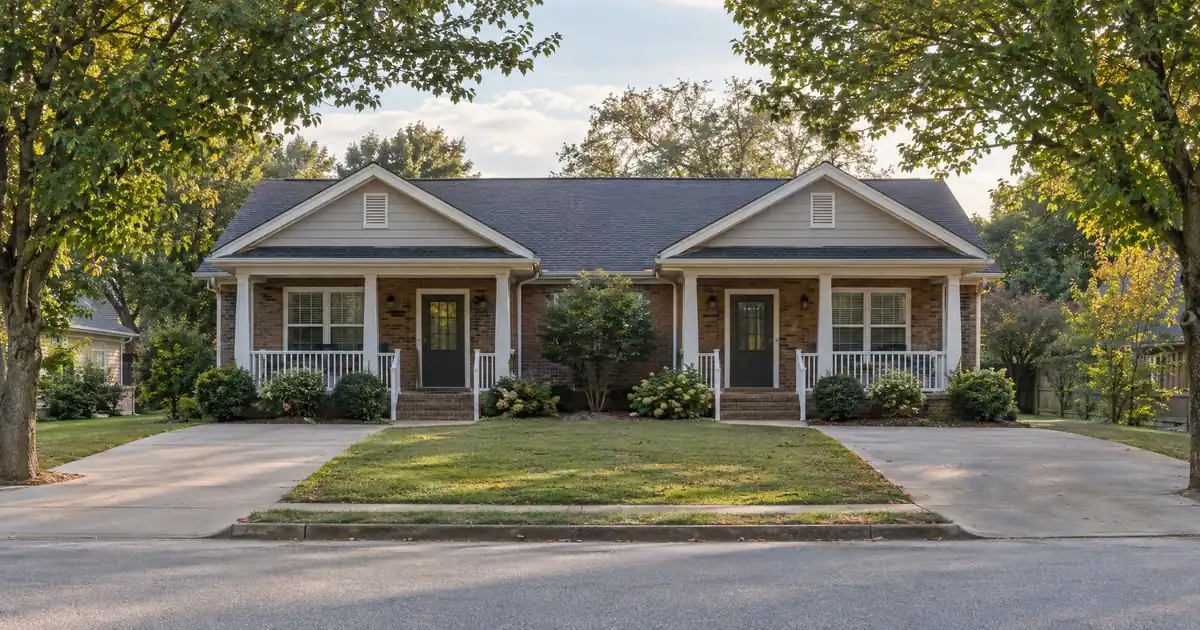
A duplex in the Tennessee Tech corridor hits the DSCR math like this. Model it at a $360,000 appraised value, with two 3-bedroom sides each renting for about $1,460. Gross rent lands near $2,900 a month. At 75 percent LTV, with taxes and insurance built into the monthly obligation, the coverage number sits around 1.3x. Put a single-family house at the same value and the same $1,460 rent, and coverage drops to roughly 0.7x. These are modeled assumptions, not market quotes, but the gap between the two is the whole story of cash-out refinancing in Cookeville.
The Short Version: A cash-out refinance on a Cookeville, Tennessee rental is underwritten primarily on the property’s rental income measured against its full monthly obligation. To get there, the file typically needs seasoning evidence and signed leases, an appraisal, and reserves documentation, and a settlement reconciliation then confirms how much in proceeds the loan can size to.
DSCR Cash-Out Calculator
Run the cash-out numbers in Cookeville, TN
Rate source: Freddie Mac 30-yr average via FRED® — Federal Reserve Bank of St. Louis · effective Oct 1, 2026
Prefilled with starting assumptions — enter your property’s value, balance, taxes, and insurance for a more accurate picture.
Program parameters update from Lendmire’s centralized guideline source. Taxes and insurance are editable estimates.
As of Oct 1, 2026 · General Freddie Mac market benchmark, not a Lendmire loan offer. Property value, balance, taxes, and insurance are editable estimates. Maximum loan-to-value varies by lender, program, property type, and seasoning. Not a Loan Estimate, approval, or commitment to lend. Program availability and eligibility are subject to lender guidelines, credit approval, property review, and underwriting.
Tennessee Tech enrolled 10,773 students this fall, its highest in more than a decade. Fifty-nine percent of households rent, and duplexes, converted homes, and small buildings make up 18.87 percent of housing units. Cash-out caps at 75 percent LTV, with about six months of seasoning from title recording. The appraisal is the pressure point, because local value estimates disagree widely.
Cookeville Market Snapshot
A quick read on the Cookeville investor landscape — figures come from the cited sources below. Confirm current property-level numbers before underwriting.
| Metric | Detail |
|---|---|
| University enrollment | 10,773 students (WBBJ (Tennessee Tech enrollment)) |
| Employment | 2,400+ employees (LinkedIn, CRMC) |
Why Duplexes Beat Houses on the Coverage Number
Small multi-unit buildings clear the debt-coverage test more easily than single-family homes in Cookeville because two leases carry one set of taxes, one insurance policy, and one loan. The same logic applies to triplexes and fourplexes. Single-family houses are the harder file.
Start with who lives where. RentCafe reports that 8,586 households, or 59 percent, are renter-occupied, with a 3-bedroom average of $1,465 and a 2-bedroom average of $1,216. Caveat: that data covers buildings with 50 or more units, so it is a ceiling check for small-building rents, not a comp. Haircut it. If the modeled duplex rent comes in 10 percent lighter, coverage still holds in the low 1.2s. A single-family house would be in trouble at the base rent, let alone the haircut.
The housing mix supports the duplex thesis. NeighborhoodScout puts single-family detached at 48.75 percent of units, large apartment complexes at 24.79 percent, and duplexes, converted homes, and small buildings at 18.87 percent. That small-building slice is where an owner with equity usually holds a cash-out candidate.
Rent-by-the-bedroom student houses are a separate question. They can look strong on paper because four leases stack into one gross figure. Lenders often underwrite them differently, though, using a market-rent appraisal instead of the sum of individual bedroom leases, and some programs scrutinize the lease structure itself. An investor holding one of these should assume the appraiser’s market-rent schedule will drive the number, not the rent roll. Stack-of-leases income may help the file or may be set aside. Don’t count on it.
This one’s a genuine toss-up for owners with both types: the student house may show the higher gross yield, but the duplex with standard 12-month leases produces the cleaner file.
The Appraisal Is the Real Gate
In Cookeville, the appraisal decides how much cash comes out, and the local value data is inconsistent enough that a conservative appraisal should be the planning case. Vendors disagree on the basics. Zillow shows a typical home value of $298,970, up 4.3 percent over the past year. NeighborhoodScout shows a median home value of $361,520. Houzeo shows a median sale price of $356,950, up 1.99 percent. Redfin’s later read had $367K, up 2.1 percent. Metro-level data from Will It Flow went the other direction, at $328K and down 4.7 percent. Definitions differ (city versus metro, typical versus median), so treat all of it as directional.
What the numbers agree on: appreciation is flat to modest. That changes how a refinance should be planned. Proceeds will come mainly from the DSCR-supported loan amount and the appraisal, not from a price run-up. Owners who bought a few years ago and expect equity to appear on its own are the ones who get surprised.
The softness signals matter for appraisers. Houzeo reports 56.5 days on market, a 3.39-month supply, and sales at 97.22 percent of asking, with the share of houses carrying price reductions climbing from 59.65 percent to 77.14 percent. When most listings are cutting price, appraisers lean conservative on adjustments. Plan around that.
Thin multifamily comps add to it. Homes.com shows 9 multi-family homes and duplexes for sale, and Realmo counts 8 active multifamily properties, plus 27 off-market leads. Those are point-in-time counts. The takeaway is that an appraiser has few like-for-like sales to pull. Appraisal reconsideration is a routine step here, not an emergency. A packet with recent in-town sales of comparable duplexes, plus an itemized list of capital improvements, is how value gets recovered when the first number lands light.
Seasoning, LTV, and What Actually Comes Out
Equity extraction on these files comes down to three program limits: seasoning, the LTV ceiling, and coverage. Typical guidelines in the wholesale network call for about six months of ownership measured from title recording, a cash-out ceiling of 75 percent LTV, and a minimum coverage of 1.00x on rent against full monthly obligation including taxes and insurance. How the cash-out works is laid out on the pillar page. Credit tiers generally start at a 620 floor, and reserves are typically about six months of the full housing obligation. Everything is subject to lender guidelines, and none of it is a commitment to lend.
Seasoning is where files get kicked back. The clock runs from the recording date on the settlement documents, not from the contract date or the day the investor started renovations. Owners who assume the six months have already passed tend to learn otherwise during the title review. If the property sits in an LLC, the entity documents have to line up with the title, subject to lender program eligibility.
Equity available is not a fixed figure. It depends on rent used for lender review, the full monthly obligation, reserves, and the 75 percent cap. Two borrowers with the same appraised value can walk away with different proceeds if one property has a lower rent used for lender review.
DSCR files in markets like this one typically look like a small-building owner with real equity and a clean 12-month lease, paired with an appraisal that comes in a bit under the owner’s expectation. The files that move cleanly have the rent roll, signed leases, and proof of reserves in the package before the appraisal is ordered. The ones that stall are usually missing lease evidence for one unit, or carry an entity name that doesn’t match title.
A practical rule: if the number clears 1.00 only on the owner’s optimistic rent, run it again at the appraiser’s market rent. That’s the number that counts.
Where the Rent Comes From
Cookeville’s rental demand sits on three anchors: a university, a regional hospital, and a manufacturing and logistics base. Each supports long-term leases in different parts of town.
The university. Tennessee Tech reported 10,701 students the prior fall, and this fall’s total is 10,773. The one-year gain is small, so the story is stability, not a surge. Retention matters more than the headline: nearly 80 percent of the latest freshmen are continuing. Engineering enrollment hit a record 3,239, and the school calls itself the state’s only polytechnic. Nursing and business are the next-fastest-growing colleges. Growth in nursing and engineering leans toward career-track and clinical-rotation tenants, which supports 12-month leases on duplexes and small multifamily, not only bed-by-bed leasing.
The hospital. Cookeville Regional Medical Center (CRMC) is the regional referral center. Employer-supplied profiles describe a 269-bed campus serving more than 400,000 residents in the Upper Cumberland region, with approximately 2,400 employees (self-reported, so treat it as approximate). In the sources found, it is the largest single workforce anchor in town.
The industrial base. The Tennessee Department of Economic and Community Development lists Averitt Express at an estimated 1,150 employees, headquartered in Cookeville, Cummins Filtration at 600, and Transtar Industries at 500. The Upper Cumberland Business Journal adds Aphena Pharma Solutions, ATC Automation, FedEx, Ficosa, and Putnam County Schools to the employer mix, and notes that surrounding counties come to Cookeville to shop, eat, and work.
On scale: Census Reporter counts 36,088 residents in the city, with a median household income of $51,375. The Cookeville-Putnam County Chamber cites county median household income rising from roughly $44,500 to about $62,800 over five years. Modest incomes keep rents modest, and that is why unit count, not rent per unit, drives coverage here.
Submarkets: Where Equity Sits (and Where It Doesn’t)
There is no reliable submarket-level price or rent data for Cookeville, so this section is qualitative. It is based on how the demand drivers map to the ground, not on neighborhood price bands.
The campus corridor. The streets around Dixie Avenue, Maddux Avenue, and the West Broad area carry older houses and duplexes with student and staff demand. Equity here often comes from older purchases. The file risks are condition and the rent-by-room question above.
Near the hospital. Duplexes and small buildings around CRMC draw clinical staff and rotation-based tenants. Listing aggregators show a townhome fourplex near both the university and the hospital, which is the kind of product with the cleanest stacked-lease profile. It sits between two demand anchors.
The I-40 and eastern corridor. Manufacturing and logistics employment around Highlands Business Park (home to Ficosa) supports workforce rentals. Single-family homes here suit lower-leverage, steadier refinances, where the investor takes less cash out in exchange for a coverage number that holds.
Algood side and west Cookeville. Newer homes may carry lower headline yields but steadier tenancy, per a local property manager’s commentary. Newer product often appraises cleanly, which helps a cash-out, but single-family coverage is thin at a 75 percent draw. Realistically, many owners here either pull less or accept the lower proceeds.
Older downtown stock raises the usual condition questions: plumbing, HVAC age, and roofs. Appraisers adjust for them, and so do lenders reviewing the property.
Where the Answer Flips
Cash-out makes sense when the property is a duplex or small building with standard leases, the owner has passed the six-month mark from recording, and the coverage number clears 1.00x on the appraiser’s rent, not the owner’s. It stops making sense when the proceeds depend on appreciation that the local data doesn’t show.
It also flips on purpose. An owner with a single-family rental near a 0.7x coverage profile at a full 75 percent draw has two options: take less out, or take nothing out. A smaller draw lowers the monthly obligation and lifts the coverage number, and that can be the right call if the capital would only fund a marginal next deal. The stronger play might be to use the proceeds to buy a duplex, which is the property type that carries coverage in this market, though an investor chasing appreciation could argue for holding the equity in place instead.
DSCR vs. conventional financing
There are two common ways to finance an investment property in Cookeville, TN, and they qualify you differently — here’s how investors weigh them.
Why investors choose it
- Qualifies on the property’s rental income — no personal tax returns, W-2s, or pay stubs needed to document income.
- No personal debt-to-income ceiling to clear, so existing mortgages and obligations don’t cap your borrowing the same way.
- Can be closed in an LLC, keeping the property inside a business entity.
- Built for scaling — not held to the limit on number of financed properties that conventional financing applies.
- Underwriting centers on the deal: generally qualifies when the rent covers the payment, a 1.00x coverage ratio being a common baseline (confirmed in underwriting).
- Designed specifically for investment property, including long-term and, where the program allows, short-term rentals.
Where it’s strong
- Often the lowest ongoing financing cost for a buyer who fully qualifies on personal income — a fit for a first property or a cost-first purchase.
Trade-offs for investors
- Requires full personal income documentation and must fit within a debt-to-income limit — salary, existing debts, and other mortgages all count.
- Typically held in your personal name rather than a business entity.
- Caps how many financed properties you can carry, which can become a ceiling as a portfolio grows.
- Evaluates you as a borrower as much as the property, which usually means more paperwork.
How investors usually choose: a first or single property often optimizes for the lowest financing cost; portfolio builders often optimize for leverage, vesting in an LLC, and scaling past conventional caps. The right answer depends on your goals, the property, and current guidelines — both paths run through select lenders in Lendmire’s wholesale network, with eligibility and terms confirmed in underwriting.
Proceeds should have a destination before the application goes in. The cleanest use of extracted equity is a down payment on a second small-building purchase, where the new asset carries its own rent. Pulling cash for an unspecified purpose, in a market where appraisal risk is the main hazard, adds cost without a plan. (Reserves requirements apply to the refinanced property, so cash earmarked for the next deal shouldn’t double as the reserves.)
For investors comparing structures, the comparison page covers how DSCR underwriting differs from income-based loans, and the guide “What Is a DSCR Loan” walks through the baseline 1.00x benchmark. Tennessee-wide program context lives on the page for DSCR loans in Tennessee, and the refinance pathway for investor properties covers rate-and-term versus cash-out structures. Owners ready to size a file can start your quote or call Lendmire at 828-256-2183. Investors should also verify current local rental rules, taxes, and insurance with qualified local professionals.
Frequently Asked Questions
How do you qualify for a DSCR cash-out refinance in Cookeville?
Qualification centers on the property’s rent against its full monthly obligation, typically at 1.00x or better, plus a credit score at or above a 620 floor and about six months of ownership from title recording. Reserves of roughly six months of the full obligation are common. Final eligibility depends on lender guidelines, the appraisal, and credit review.
What are the requirements for an investment property cash-out loan in Cookeville, Tennessee?
Expect a 75 percent LTV ceiling, a lease or market-rent schedule, entity documents if the property is held in an LLC, proof of reserves, and clean title. The appraisal sets value, so thin duplex comps in Cookeville make a well-documented comp packet worth preparing early. Program terms vary by lender.
Will Cookeville’s price trend create enough equity for a cash-out?
Not on appreciation alone. Local sources show flat-to-modest movement, with one vendor’s change at about 2 percent and another’s near 4 percent, and a metro-level figure running negative. Cash-out proceeds will come mostly from the DSCR-supported loan amount and the appraisal. Owners who bought below current value, or who improved the property, have the clearest equity.
Do rent-by-the-bedroom student houses qualify at their full gross rent?
Not automatically. Lenders may underwrite these using a market-rent appraisal instead of the sum of individual leases, and lease structure can affect the review. Assume the appraiser’s market rent is the qualifying figure and test the coverage number against it.
Watchlist for the Next Quarter
Three indicators will show whether the Cookeville cash-out case is strengthening or softening:
1. Price-reduction share and days on market. Houzeo’s 77.14 percent reduction figure is the baseline. If it eases and sale-to-list moves back toward asking, appraisals get easier.
2. Multifamily listing depth. Today’s counts of 8 to 9 active listings mean thin comps. More recorded duplex sales means better appraisal support for owners.
3. Tennessee Tech’s retention and nursing and engineering growth. Another year of retention near 80 percent keeps the 12-month-lease tenant pool intact around campus and the hospital.
For current guidelines and terms, see Lendmire’s DSCR loan programs page.
About Lendmire
Lendmire (NMLS# 2371349) is a non-QM mortgage broker that arranges DSCR financing for real estate investors in 41 markets: 40 states plus Washington, D.C. Because deals are underwritten primarily on property cash flow instead of personal income documentation, the structure suits self-employed buyers and entity-owned portfolios. Lendmire places loans through wholesale investor lenders and is not a direct lender. It has been recognized by Scotsman Guide as a 2026 Top Workplace and named a 2025 Scotsman Guide Top Workplace.
Get Started
Ready to find the right loan for you?
In about 30 seconds you can review financing options available for your investment property. No commitment required.
Informational only. Not a Loan Estimate, approval, or commitment to lend. Program availability and eligibility are subject to lender guidelines, credit approval, property review, and underwriting.
References
1. WBBJ, Tennessee Tech enrollment
3. NeighborhoodScout, Cookeville real estate
5. Zillow
6. Houzeo, Cookeville housing market
7. Will It Flow
8. Homes.com
9. Realmo
10. Tennessee Tech enrollment release
11. Tennessee Tech College of Engineering release
12. CRMC
14. Upper Cumberland Business Journal
15. Cookeville-Putnam County Chamber
16. recognized by Scotsman Guide as a 2026 Top Workplace
17. a 2025 Scotsman Guide Top Workplace
This article is part of Lendmire’s investment property cash-out refinance program — full qualification details, guidelines, and scenarios live on the program page.
Related reading: DSCR Loans In Cookeville, Tennessee · DSCR Cash Out Refinance in Martin, Tennessee: How Campus-Town Rent Math Clears at 75% LTV · DSCR Cash Out Refinance in Lebanon, Tennessee: The 2026 DSCR Refinance Guide to the Square
Guides: Investment Property Cash-Out Refinance in Tennessee
Brandon Miller
Founder & CEO, Mortgage Loan Originator, Lendmire LLC
- Mortgage Loan Originator · NMLS# 1129696 · Verify on NMLS Consumer Access
- North Carolina Real Estate Broker · License# 343312 · Verify on NCREC
- North Carolina Insurance Producer · License# 19053198 · Property, Casualty, Life, Health · Verify on NAIC SBS
- Lendmire LLC · Firm NMLS# 2371349 · Verify firm licensure
Important disclosures. Lendmire (NMLS# 2371349) is a licensed mortgage brokerage. Lendmire is not a direct lender, depository institution, or financial advisor. All loan inquiries are subject to lender underwriting; this article does not constitute a commitment to lend. Rates, terms, and program guidelines are subject to change without notice and vary by borrower profile, property type, and state. Information in this article is general in nature and is not financial, legal, or tax advice. Equal Housing Opportunity. NMLS Consumer Access: nmlsconsumeraccess.org.