
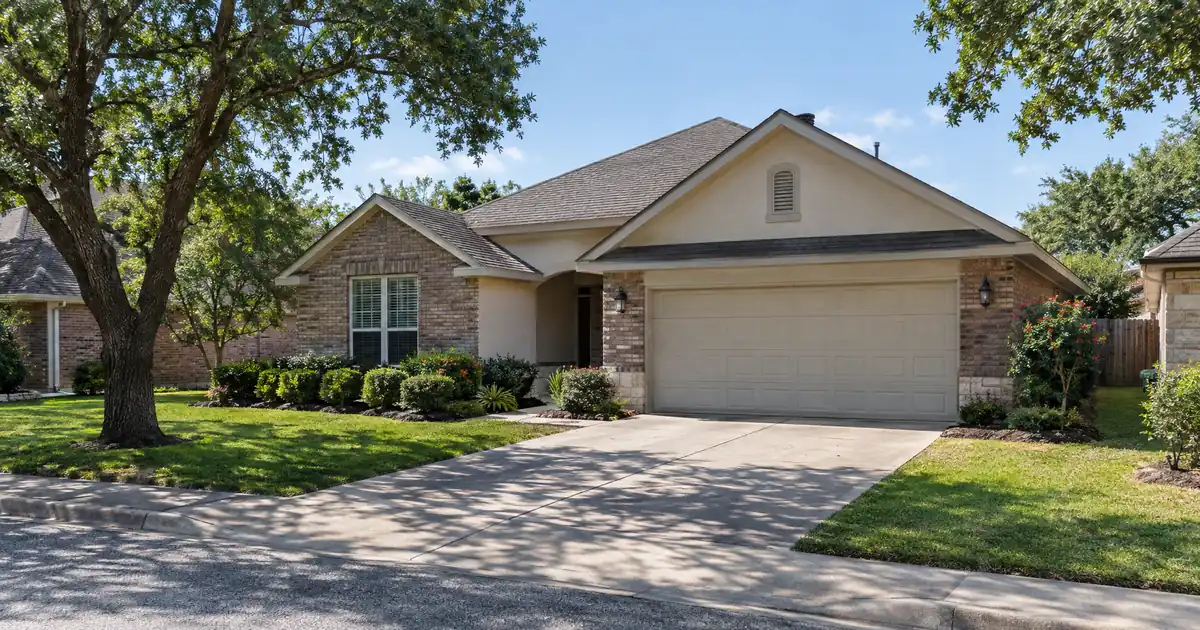
Gainesville’s cash-out risk isn’t slow appreciation. It’s an appraisal that lands below the number in the investor’s head. Redfin puts the median sale price at $260K, up 3.9% year over year, yet median price per square foot slid 7.8% and homes now average 119 days on market versus 88 a year earlier. Price up, price per foot down, buyers taking longer. That combination is how a cash-out refinance investment property plan in Gainesville, Texas ends up with a smaller check than the spreadsheet promised.
The Quick Read: Cash-out refinancing in Gainesville, Texas fits investors who already own entry-priced workforce rentals and can document rent that covers the full monthly obligation, because DSCR files are underwritten primarily on the property’s rental income measured against that obligation, then sized by a 75% LTV ceiling on the appraised value. Final terms depend on lender guidelines, property type, leverage, and the borrower’s complete credit picture.
DSCR Cash-Out Calculator
Run the cash-out numbers in Gainesville, TX
Rate source: Freddie Mac 30-yr average via FRED® — Federal Reserve Bank of St. Louis · effective Oct 1, 2026
Prefilled with starting assumptions — enter your property’s value, balance, taxes, and insurance for a more accurate picture.
Program parameters update from Lendmire’s centralized guideline source. Taxes and insurance are editable estimates.
As of Oct 1, 2026 · General Freddie Mac market benchmark, not a Lendmire loan offer. Property value, balance, taxes, and insurance are editable estimates. Maximum loan-to-value varies by lender, program, property type, and seasoning. Not a Loan Estimate, approval, or commitment to lend. Program availability and eligibility are subject to lender guidelines, credit approval, property review, and underwriting.
- Redfin shows a $260K median sale price and 119 days on market, so appraisal risk deserves real attention.
- About 976 new apartment units are leasing or delivering in a city of roughly 18,800 people.
- Modeled coverage on entry homes near $200K runs around 1.1x including taxes and insurance. Median-priced homes run thinner.
- Cash-out files typically need about six months of seasoning and about six months of reserves.
The Appraisal Is the Real Gatekeeper
Equity extraction in Gainesville depends on the appraised value, and the published price signals disagree. Redfin’s $260K figure is a median of recent sales. Zillow’s home value index shows an average of $202,669, up only 0.1% over the past year. Those measure different things, a sale price versus a modeled value, but the spread tells you something: the market is not giving investors a rising tide to borrow against.
Volume is thin too. Redfin counted 46 homes sold in a recent month, down from 53. With few sales, appraisers lean on a small comp set, and one stale or mismatched comp moves the result. This is why Gainesville is a cash-flow-led market. County-level Redfin data shows prices down 4.0% year over year at one point this year, and the city’s median sits well below the national figure.
Here’s the practical read. Don’t build a cash-out plan on appreciation you hope shows up. The refinance thesis works when the investor bought below market, added value, and can show rent that carries the loan at 75% LTV (the hard ceiling on a cash-out) without leaning on a generous appraisal. Run the numbers at a haircut value first. If the deal still produces usable proceeds, the appraisal becomes upside rather than a requirement. These specifics are subject to lender guidelines and a full review of property, leverage, and credit.
Where the Rent Covers the Debt (and Where It Doesn’t)
Coverage works on entry-priced homes and gets thin at the city median. Every ratio below is a modeled scenario using assumed rents and a full obligation that includes principal, interest, taxes, and insurance. Treat them as illustrations, not sourced market data.
The rent anchors come from Zillow Rental Manager, which shows house rents running from $377 to $2,300 with a median of $1,500. That page’s date labels are inconsistent, so treat the median as approximate. Zillow listings in the 76240 zip show a 2-bedroom house near $1,200 and a 3-bedroom near $1,895 as asking rents on individual properties. Those are asks, not medians.
Scenario one: the entry-priced rental. Consider a 3-bedroom house valued near $200,000 and renting for $1,500. At 75% LTV, coverage models at roughly 1.1x including taxes and insurance, rounded down. That clears the 1.00 baseline most standard programs are built around, with a modest cushion. Terms vary by lender guidelines, property type, leverage, credit profile, and full file review.
Scenario two: the median-priced rental. Run the numbers on a house appraising at the $260K Redfin median. Using the same $1,500 rent, coverage drops to the low-to-mid 0.80s. Push rent to $1,850, near the top of the 3-bedroom asks in the research, and coverage only reaches about 1.0x. So at the median price, single-family rent-to-value is thin for a 75% LTV cash-out. Exact terms depend on the lender’s guidelines, property type, leverage, and a full review of the borrower’s file.
A sub-1.00 file isn’t automatically dead. A lender may review lower-leverage structures, an interest-only period, or a sub-1.00 program, usually with stronger credit, bigger reserves, and different pricing. Each step trades away some of the cash you came for, and approval remains subject to lender guidelines, credit review, and property review.
DSCR files in markets like this one typically look the same. The borrower bought an older house, did light renovation, and now holds a lease at a rent that clears coverage at a conservative value but not at an optimistic one. The files that go smoothly arrive with a signed lease, a rent comp pulled from similar listings, and an investor who sized the ask to the lower of the two appraisal outcomes. The files that stall usually assumed a value the comps never supported.
That’s the thing about 3-bedroom workforce houses here. The rent band is fairly tight, so the price you carry the property at decides almost everything about the ratio.
Which Gainesville Submarkets Pencil
No reliable neighborhood-level price or rent source exists for Gainesville, so what follows is qualitative. The only figures are the city-wide numbers above.
Downtown and the Historic Core
Older, smaller homes near the courthouse square are the strongest fit for the cash-out thesis. The Gainesville EDC describes a historic home district of houses and churches from the late 1800s to early 1900s, with brick-paved streets and the Morton Museum nearby.
The investor angle: buy the dated bungalow at a low basis, renovate, and refinance once the lease is in place. Tenants are local workers and service-sector households. The catch is condition. Older housing stock invites appraisal findings and repair costs that eat proceeds. Skip any property where the renovation budget is a guess.
Liberty Pointe and the Helena Street Area
New-build single-family rentals for workforce households make sense here, and the pricing cuts against cash-out. Liberty Pointe is a master-planned single-family community off Helena Street, and the city approved a planned development for 946 housing units. No rent or price data turned up, but new construction usually carries a higher basis than the entry-priced stock in the previous scenario. That pushes the ratio toward the thin end.
Fresh builds do help with condition, so appraisal surprises are rarer. They don’t help with coverage. This is a buy-and-hold area, not an equity-extraction one, unless the investor bought at a builder discount.
North Grand Avenue and the Safran Seats Corridor
The tenant base here is good and the competition is the problem. Per the Cooke County Record, Safran Seats employs hundreds at its North Grand Avenue facility, and the 222-unit NorthPark Apartments sits on the same corridor as the newest multifamily addition. Manufacturing and aerospace workers anchor demand, and the EDC reports that 22% of the Cooke County workforce is in manufacturing.
Honest caution: new apartments next door compete directly with small-investor houses. Concessions during lease-up can pull rents down on nearby older rentals. An investor refinancing here should lock in a long lease before applying, not after.
Highway 82 and the I-35 Corridor
The city manager says Gainesville has the busiest section of Highway 82 in Texas. The I-35 rebuild runs from FM 3002 to the Red River, and the EDC says it will include six lanes with an option for eight. Texas Contractor lists TxDOT phase costs of $210M, $280M, and $187M.
That’s real infrastructure investment, but it cuts two ways. Construction can disrupt properties directly beside the corridor while it’s underway. Longer term, better connectivity supports logistics and highway-service employment. Houses a few blocks off the corridor are a cleaner bet than anything fronting it.
The East Side Apartment Zone
Rock Creek Apartments on the east side along Highway 82 is the largest single piece of new supply, at 754 units. Treat this as a multifamily supply zone, not a small-investor target. Rental houses near it will feel pressure when it leases up.
Near Campus and the Hospital
North Central Texas College enrolled 8,106 students in a recent academic year per UnivStats, but only 2,153 were full-time, and enrollment spans multiple campuses and online. It’s a commuter college, so this is not a dorm-replacement market. Staff, dual-credit families, and part-time students create modest, steady 2-3 bedroom demand near the I-35 and California Street area.
North Texas Medical Center is a 60-bed acute care hospital. Nurses, techs, and clinic staff are a steady tenant pool, and no headcount was published. That’s useful for lease stability, not for any particular rent premium.
Lake Kiowa and Black Hill Farm
Skip both for this strategy. Lake Kiowa is a private gated lake community and a second-home market, not workforce rental. Vintage Square and Black Hill Farm are family-oriented master-planned areas that skew owner-occupied, and no pricing turned up.
The Supply Wave: Gainesville’s Real Cash-Out Risk
About 976 new apartment units are coming to a city of 18,772 people. That’s the number that should shape every underwriting decision here.
The Cooke County Record reports that NorthPark received certificates of occupancy and is now leasing, and that Rock Creek was on track to deliver soon after. It counts more than 1,600 housing units in the broader pipeline. The city’s growth is real: World Population Review estimates steady annual population growth, with the current count up meaningfully from the 2020 census. Household income is modest, per the same source. But a city can grow and still absorb apartments slower than they’re delivered.
One aggregator cites a rental vacancy rate of 1%. That figure is low-grade and probably predates this new supply, so use it as a directional sign of tight conditions rather than a number to underwrite.
Might the new apartments simply capture tenants who would have rented houses anyway? That is possible. The EDC’s plan to add 1,500 new homes tied to 2,500 new jobs at the Gateway Industrial Park improvements suggests employment growth is part of the story. But concessions on 976 apartments can compress rents on older houses before job growth fills them. The conservative play is to underwrite to current rent comps, not to hoped-for post-absorption rents.
Multi-Unit Isn’t the Shortcut
Duplexes and small multifamily look attractive for stacked income, but the county data doesn’t favor them. RentalSource lists Cooke County average rents of $998 for a 1-bedroom, $1,240 for a 2-bedroom, and $1,684 for a 3-bedroom. Redfin’s county multi-family page shows seven multi-family homes for sale at a median listing price of $450K.
Two 2-bedroom units gross about $2,480 a month. Against a $450K price, that’s about 0.55% gross rent-to-value, before any expenses. A single 3-bedroom at $1,684 against a $260K house comes to about 0.65%. At 75% LTV with taxes and insurance, a $450K duplex at those rents models in the low 0.80s. Multi-unit only wins if the duplex or fourplex is priced well below that median. Check individual listings rather than trusting the median. Every figure here varies by lender and program — guidelines, property type, leverage, and credit profile all apply.
This is a genuine toss-up for investors who find a below-median duplex. The coverage math favors a cheap duplex, but exit liquidity is thinner with only seven listings in the county. A single-family house sells to a broader pool of buyers.
Seasoning, Leverage, and Where the Proceeds Go
For cash-out, the program typically requires about six months of ownership measured from title recording, a 75% LTV ceiling, and a 1.00 minimum coverage baseline on rent used for lender review against the full monthly obligation. Credit tiers generally start at a 620 floor, and reserves of about six months of that obligation are typical. Standard programs reach up to $3,000,000, with smaller balances routed through select lenders in the network. Exact eligibility depends on lender guidelines, credit, reserves, and property review.
Proceeds are not a promised figure. They depend on rent used for lender review, the full obligation, reserves, and that 75% cap. In a market with soft price momentum, that cap bites harder. An investor who bought a rental at a deep discount and renovated may see real equity at a conservative appraisal. One who bought near market and counted on appreciation likely won’t.
DSCR vs. conventional financing
There are two common ways to finance an investment property in Gainesville, TX, and they qualify you differently — here’s how investors weigh them.
Why investors choose it
- Qualifies on the property’s rental income — no personal tax returns, W-2s, or pay stubs needed to document income.
- No personal debt-to-income ceiling to clear, so existing mortgages and obligations don’t cap your borrowing the same way.
- Can be closed in an LLC, keeping the property inside a business entity.
- Built for scaling — not held to the limit on number of financed properties that conventional financing applies.
- Underwriting centers on the deal: generally qualifies when the rent covers the payment, a 1.00x coverage ratio being a common baseline (confirmed in underwriting).
- Designed specifically for investment property, including long-term and, where the program allows, short-term rentals.
Where it’s strong
- Often the lowest ongoing financing cost for a buyer who fully qualifies on personal income — a fit for a first property or a cost-first purchase.
Trade-offs for investors
- Requires full personal income documentation and must fit within a debt-to-income limit — salary, existing debts, and other mortgages all count.
- Typically held in your personal name rather than a business entity.
- Caps how many financed properties you can carry, which can become a ceiling as a portfolio grows.
- Evaluates you as a borrower as much as the property, which usually means more paperwork.
How investors usually choose: a first or single property often optimizes for the lowest financing cost; portfolio builders often optimize for leverage, vesting in an LLC, and scaling past conventional caps. The right answer depends on your goals, the property, and current guidelines — both paths run through select lenders in Lendmire’s wholesale network, with eligibility and terms confirmed in underwriting.
The recycling logic is the point of the exercise. Pull equity from a seasoned Gainesville rental and redeploy it into the next acquisition, ideally another entry-priced house below the median where coverage clears more comfortably. Holding in an LLC works subject to lender program eligibility. The qualification mechanics differ from conventional underwriting.
Investors who want to test a specific property can run the numbers with Lendmire or call 828-256-2183. Verify current local rental rules, taxes, and insurance with qualified local professionals before committing, since all of them affect coverage.
Frequently Asked Questions
Does Gainesville’s slow appreciation make a cash-out refinance pointless?
No, but it changes the thesis. Redfin’s county data shows soft price movement, so proceeds rarely come from market lift. They come from buying below value, renovating, and documenting rent that carries the loan at a conservative appraisal. Plan on equity you created, not equity the market handed you.
Will the new apartment buildings hurt my rental’s coverage ratio?
They can, mainly through lease-up concessions near North Grand Avenue and the east side. About 976 units from NorthPark and Rock Creek compete with older houses for the same workforce renters. Pull current rent comps and favor a long lease in place before the appraisal.
Is a duplex a better cash-out candidate than a single-family house here?
Only if it’s priced below the county’s roughly $450K multi-family median. At that median and county average rents, gross rent-to-value is about 0.55%, lower than the roughly 0.65% a single 3-bedroom produces on a $260K house. A below-median duplex can flip that math, but the county has only seven listings to compare.
How long must I own a Gainesville rental before refinancing?
Typically about six months from title recording. A renovated property still needs a lease or documented market rent, and the lender reviews the file against its own guidelines. Seasoning timing and appraisal outcome matter more than how long the renovation took.
Which Gainesville rentals are best positioned for a DSCR cash-out?
Older entry-priced houses near the historic core and other workforce areas, ideally valued near $200K with rent near $1,500. Those model around 1.1x including taxes and insurance at 75% LTV. Median-priced homes and new builds run thinner, and approval remains subject to program review.
Where Gainesville Goes From Here
The next 6-24 months will likely separate Gainesville investors into two groups. The first holds entry-priced houses with leases in place, and those refinance cleanly if the apartment lease-up stays orderly. The second bought near the $260K median expecting appreciation, and they’ll find coverage thin and appraisals cautious.
Expect the I-35 rebuild and the industrial park housing plan to support demand but not lift values fast enough to rescue mispriced deals. If the 976 new apartment units absorb without heavy concessions, rents on older houses hold and equity extraction stays viable for low-basis owners. If not, the investors who stress-tested coverage at a lower rent will be the ones still able to pull cash out.
For current guidelines and terms, see Lendmire’s DSCR loan programs page.
About Lendmire
Lendmire, NMLS# 2371349, is a DSCR and non-QM mortgage brokerage with investor loan programs in 41 markets, including Washington, D.C. Lenders commonly review DSCR eligibility around a property’s rent rather than personal income documentation, subject to lender guidelines. The brokerage also helps arrange financing for LLC-owned portfolios beyond conventional financed-property limits. It was recognized as a 2026 Scotsman Guide Top Workplace and a top-ranked workplace in 2025, as covered in the 2026 industry recognition release.
For broader investor-financing rules and property-type coverage across the state, see Texas DSCR loans.
For the mechanics of pulling equity out of a rental property, see cash-out refinance on an investment property.
Get Started
Ready to find the right loan for you?
In about 30 seconds you can review financing options available for your investment property. No commitment required.
Informational only. Not a Loan Estimate, approval, or commitment to lend. Program availability and eligibility are subject to lender guidelines, credit approval, property review, and underwriting.
References
1. Redfin: Gainesville, TX Housing Market
2. Zillow Home Values: Gainesville, TX
3. Zillow Rental Manager: Gainesville, TX
5. kxii.com — Rapid Growth Happening Gainesville
6. Cooke County Record: Gainesville Housing Development Boom
7. Gainesville EDC: Major Employers
8. EDC
9. Texas Contractor: I-35 Project in Cooke County
10. North Central Texas College
11. UnivStats: North Central Texas College Enrollment
12. Community Hospital Corporation: North Texas Medical Center
13. World Population Review: Gainesville, TX
14. Redfin’s county multi-family page
15. a 2026 Scotsman Guide Top Workplace
16. Scotsman Guide — Top Workplaces 2025
17. EIN Presswire — Lendmire Recognized as a 2026 Top Workplace by Scotsman Guide
This article is part of Lendmire’s investment property cash-out refinance program — full qualification details, guidelines, and scenarios live on the program page.
Related reading: DSCR Cash Out Refinance in Gainesville, Texas: Pulling Equity Ahead of the Apartment Wave · Cash Out Refinance Investment Property Gainesville Georgia · DSCR Cash Out Refinance in Coppell, Texas: Can Your Rent Cover a Bigger Loan Balance?
Guides: Investment Property Cash-Out Refinance in Texas
Brandon Miller
Founder & CEO, Mortgage Loan Originator, Lendmire LLC
- Mortgage Loan Originator · NMLS# 1129696 · Verify on NMLS Consumer Access
- North Carolina Real Estate Broker · License# 343312 · Verify on NCREC
- North Carolina Insurance Producer · License# 19053198 · Property, Casualty, Life, Health · Verify on NAIC SBS
- Lendmire LLC · Firm NMLS# 2371349 · Verify firm licensure
Disclosures. The information presented in this article is general market commentary, not financial, legal, or tax advice. Lendmire is a mortgage brokerage (NMLS# 2371349) — not a direct lender or depository institution — and loan placement is subject to lender underwriting. Nothing in this content represents a commitment to lend. Loan terms, pricing, and program availability vary based on borrower qualifications, property characteristics, and state of subject property, and are subject to change at any time. Lendmire complies with Equal Housing Opportunity requirements. Consumer access: nmlsconsumeraccess.org.