
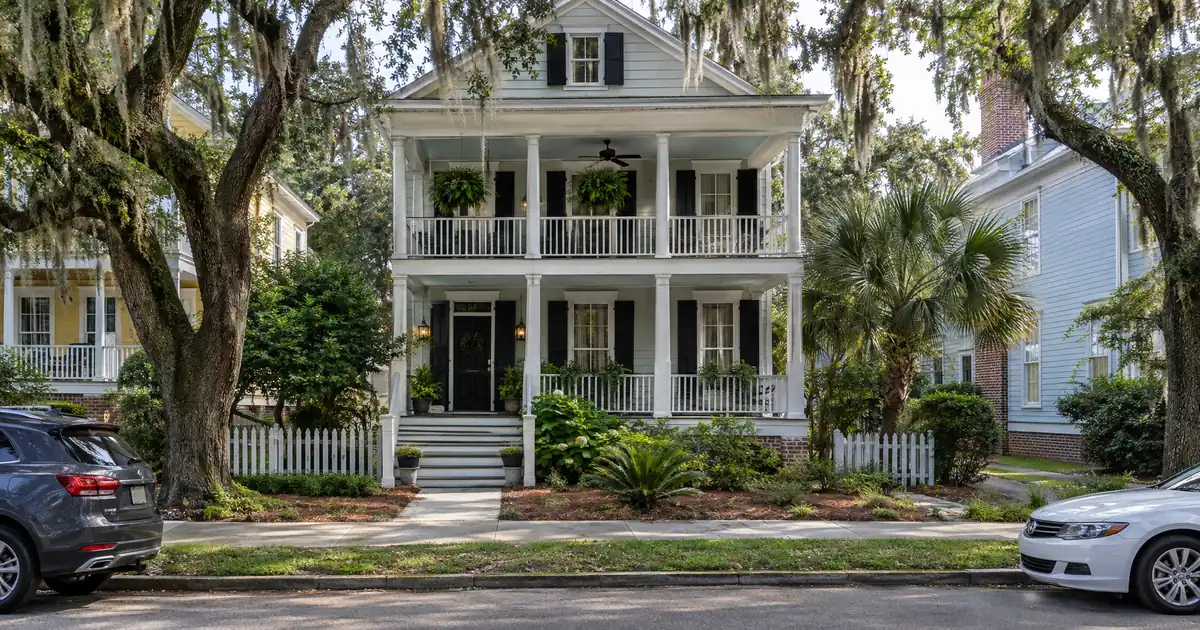
The waterfront redevelopment story is the most tempting reason to pull equity out of a Georgetown rental, and it is the one to underwrite last. The two biggest legacy industrial employers here are gone, and the plan that was supposed to replace them has already wobbled. A cash-out in this market works only when the rental income holds up on its own. Investors underwriting deals in Georgetown, South Carolina can use DSCR programs Lendmire arranges, available across 41 markets, including D.C. Lendmire (NMLS# 2371349) is a DSCR-focused mortgage broker, not a lender.
DSCR Cash-Out Calculator
Run the cash-out numbers in Georgetown, SC
Rate source: Freddie Mac 30-yr average via FRED® — Federal Reserve Bank of St. Louis · effective Sep 24, 2026
Prefilled with starting assumptions — enter your property’s value, balance, taxes, and insurance for a more accurate picture.
Program parameters update from Lendmire’s centralized guideline source. Taxes and insurance are editable estimates.
As of Sep 24, 2026 · General Freddie Mac market benchmark, not a Lendmire loan offer. Property value, balance, taxes, and insurance are editable estimates. Maximum loan-to-value varies by lender, program, property type, and seasoning. Not a Loan Estimate, approval, or commitment to lend. Program availability and eligibility are subject to lender guidelines, credit approval, property review, and underwriting.
The Quick Read:
A Georgetown, South Carolina cash-out fits investors who already own workforce single-family or small multi-unit rentals, because the loan is underwritten primarily on the property’s rental income measured against its full monthly obligation, then sized by a 75 percent LTV ceiling and about six months of title seasoning.
- Redfin puts the city median sale price at $325K, down 7.2 percent year over year.
- Modeled coverage lands near 1.05 at a $250K value and in the low 0.8s at $325K. Tidelands Health anchors the steadiest tenant pool in town.
- Waterfront redevelopment is upside only; the steel-site contract has been terminated.
- Thin duplex comps can cap appraised value and cash-out proceeds.
Georgetown Market Snapshot
A quick read on the Georgetown investor landscape — figures come from the cited sources below. Confirm current property-level numbers before underwriting.
| Metric | Detail |
|---|---|
| Home prices | 37 sales (Redfin, Georgetown city) |
| Employment | 670+ employees (WPDE, IP/RDE redevelopment) |
Start With the Core, Not the Waterfront
The historic core is where a cash-out has the most defensible story. Historic downtown, Front Street and the Harborwalk hold more than 60 National Register buildings and five museums, per Discover Georgetown SC. That tourism-and-heritage draw supports steady interest in older housing stock near the water. Maryville, another named neighborhood, sits in the same workforce-priced tier.
No sourced rent or price data exists at the neighborhood level here. That’s a real limitation, and it shapes how a cash-out should be sized. An investor can’t lean on a submarket rent band to justify a stretch. The appraisal and a fresh rent schedule from the property itself will have to carry the file.
The gated golf and waterfront communities (Belle Isle, Wedgefield Plantation, South Island Plantation) skew toward second-home use and higher price points. DeBordieu is luxury oceanfront near Pawleys Island. Neither is a workforce cash-flow play. Skip them for a DSCR cash-out built on long-term rent.
The Price Problem: Which Median Do You Believe?
The city’s price data disagrees with itself, and the disagreement matters for every equity calculation. Redfin’s reported median sale price for a recent three-month window sits well above Zillow’s figure, and it has slipped compared with a year earlier, while homes are taking somewhat less time to sell than they did the year before. Only a small number of homes sold in June, which makes for a thin sample.
Zillow’s Home Value Index sits much lower, at an average home value of $250,282, down 1.7 percent, with homes going pending in about 35 days. Different methodology, different geography, different story. This article uses the Redfin median as the canonical city figure and treats Zillow as the low-side bracket.
Here’s the catch for equity extraction: a flat-to-softening market means a property bought a few years ago has not necessarily gained the value a cash-out needs. Investors who assume appreciation did the work may find the appraisal comes in short. Check the value before building a next-deal budget around the proceeds.
What the Coverage Math Looks Like
Run the numbers on a modeled Georgetown single-family rental, using assumptions rather than cited market data. Assume $1,550 in monthly rent and standard 30-year financing at 75 percent LTV, with taxes and insurance estimated at typical South Carolina averages.
At a $250K appraised value, that produces coverage near 1.05, including taxes and insurance. At a $325K appraised value, the same rent produces coverage in the low 0.8s. The higher value lifts the loan balance, but nothing in the market says the rent rises with it.
That spread is the whole argument for skepticism. Coverage of 1.00x is a common baseline because rent covers the full monthly obligation at that level, and most standard programs are built around it. A borrower who sits below it isn’t necessarily shut out. Some lenders review sub-1.00 files with lower leverage, more reserves, stronger credit, or an interest-only structure, and pricing and proceeds change accordingly. All of that is subject to lender guidelines, credit approval and property review. Investors who want a sense of how the ratio is built can start with the DSCR fundamentals.
Honestly, the smaller-value scenario is the healthier one. A modest loan against a property that rents well beats a large loan against an optimistic appraisal.
Who Is Actually Renting Here
The tenant base is workforce-heavy. According to RentCafe, 29 percent of city households are renter-occupied and 71 percent are owner-occupied, and average apartment rent is $1,589, up 3.67 percent. One important caveat: RentCafe covers only buildings with 50 or more units. Those skew toward newer complexes, so the figure is a ceiling-style reference for a single-family or duplex owner, not a comp.
Income supports the workforce read. Per aggregated American Community Survey data from southcarolina-demographics.com, median household income is $56,981. Data USA shows resident employment slipping from 3.83K to 3.75K, with Accommodation and Food Services (774 people), Retail Trade (638) and Health Care and Social Assistance (479) leading. Two of those three sectors ride tourism seasonality.
Population is soft too. The Census Bureau is the official source for city demographics, and the last full count, cited by Wikipedia, was 8,403 against 9,163 a decade earlier. The county tells a different story: 63,404 residents at the last Census, with an estimate of 65,912 since. That growth is likely coastal rather than in the city itself.
A county housing needs assessment, published by the Coastal Observer, noted limited affordable rentals in the East Submarket. That study is older and county-level, so it’s qualitative support only, but it points the same direction as the tenure mix: workforce-priced units are the scarce product.
Healthcare Is the Anchor (With an Asterisk)
Tidelands Health is the demand driver most worth underwriting. The SC Daily Gazette reports it employs more than 2,500 people across Georgetown, Horry and Williamsburg counties and owns hospitals in Georgetown and Murrells Inlet with a combined 170 beds. The Coastal Observer ranks it the county’s largest employer, with the county school district second. Nurses, techs and support staff are less exposed to tourism swings than food-service and retail workers.
Now the asterisk. At the time of reporting, MUSC Health was weighing a deal for control of Tidelands, and the Gazette noted the system had received $40 million in Medicaid payment boosts. I could not verify how that ended. Treat the hospital as a demand driver, not a guarantee, and confirm current ownership before leaning on it in a lender narrative.
The Mill Closures and the Redevelopment That Isn’t
The International Paper mill closed, affecting more than 670 employees, according to WPDE. The Coastal Observer reported that 646 of 674 mill workers lived in the county. The steel mill was mothballed shortly after. Both losses plausibly explain the shrinking population and softer prices.
DSCR vs. conventional financing
Two common ways to finance an investment property in Georgetown, SC. They qualify you differently — here’s how investors weigh them.
Why investors choose it
- Qualifies on the property’s rental income — no personal tax returns, W-2s, or pay stubs needed to document income.
- No personal debt-to-income ceiling to clear, so existing mortgages and obligations don’t cap your borrowing the same way.
- Can be closed in an LLC, keeping the property inside a business entity.
- Built for scaling — not held to the limit on number of financed properties that conventional financing applies.
- Underwriting centers on the deal: generally qualifies when the rent covers the payment, a 1.00x coverage ratio being a common baseline (confirmed in underwriting).
- Designed specifically for investment property, including long-term and, where the program allows, short-term rentals.
Where it’s strong
- Often the lowest ongoing financing cost for a buyer who fully qualifies on personal income — a fit for a first property or a cost-first purchase.
Trade-offs for investors
- Requires full personal income documentation and must fit within a debt-to-income limit — salary, existing debts, and other mortgages all count.
- Typically held in your personal name rather than a business entity.
- Caps how many financed properties you can carry, which can become a ceiling as a portfolio grows.
- Evaluates you as a borrower as much as the property, which usually means more paperwork.
How investors usually choose: a first or single property often optimizes for the lowest financing cost; portfolio builders often optimize for leverage, vesting in an LLC, and scaling past conventional caps. The right answer depends on your goals, the property, and current guidelines — both paths run through select lenders in Lendmire’s wholesale network, with eligibility and terms confirmed in underwriting.
A developer, River Development Equities, later agreed to buy the paper mill site with a plan that reached the Liberty Steel land east of Highway 17. Then, per Live 5 News, it terminated its contract for the steel property, saying its timeline ran out before approvals came through. The paper mill outcome is reported separately and its current status is unconfirmed.
The SC Sea Grant Consortium describes a community split between courting tourism and retirees and reviving the port for manufacturing. Not settled. So no, don’t underwrite a waterfront appraisal tailwind. Anything that lifts downtown or riverfront values is upside, not a base case.
Property Type: Where Cash-Out Proceeds Get Squeezed
Single-family workforce rentals are the logical fit here, with small two-to-four-unit properties next. Duplex inventory in the broader Georgetown area is thin and skews toward beach-adjacent product, with only occasional listings in the historic district. Few true small-multifamily comps means less depth for an appraiser, and out-of-city comps can drag or distort the value that drives proceeds.
That cuts against the usual advice to “move up to a duplex to boost coverage.” A duplex may cover its obligation more comfortably per dollar of value, but if the appraisal can’t be supported locally, the extra coverage doesn’t reach the proceeds. It’s a genuine toss-up, and it depends on what recent sales the appraiser can actually find.
How the Equity Gets Sized
Cash-out proceeds are the product of a few constraints, not a fixed number. Typical guidelines cap cash-out LTV at 75 percent, and about six months of ownership, measured from title recording, is common before a cash-out. Credit tiers generally start at a 620 floor and step up through 660, 680 and 700, with better tiers typically supporting stronger terms. Reserves run around six months of the full monthly obligation, and standard programs go up to $3,000,000 in loan amount, with smaller balances routed through select lenders in the network. All of it is subject to lender guidelines and varies by borrower, property and loan scenario.
The dollar figure that comes out the other end depends on the appraisal, rent used for lender review, reserves and that 75 percent ceiling. It is not guaranteed. Investors comparing structures can review refinance details or pulling equity with a DSCR cash-out, and those weighing paperwork burdens can see the guide “Where DSCR and Conventional Diverge”.
In markets with softening values like this one, the common friction point on files is the gap between the value an owner expects and the value the appraisal supports. The cleaner files from a documentation standpoint tend to arrive with a current lease, a realistic rent schedule and reserves already documented in the account. Files that lead with a hoped-for value and a stretched rent assumption tend to stall when the appraisal lands. Lendmire’s deal desk sees this pattern repeatedly in workforce-priced coastal-adjacent markets.
Where the Proceeds Should Go (and Where They Shouldn’t)
Cash-out capital is only as good as the next deal. In Georgetown, redeploying into more Georgetown workforce rentals stacks the same tenant-demand risk twice. Diversifying into a different market makes more sense for many owners, and South Carolina DSCR financing covers the state’s other submarkets. Lendmire’s own beach-versus-workforce framing treats Georgetown as a long-term-rental play and Pawleys as a beach market, so the two behave differently.
Before any of this, verify current local rental rules, taxes and insurance with qualified local professionals. Then run the file through a scenario quote with a fresh rent figure, or call 828-256-2183.
Frequently Asked Questions
How do you qualify for a DSCR cash-out refinance in Georgetown, South Carolina?
Qualification rests mainly on the property’s rent measured against its full monthly obligation, typically with a 1.00 baseline, along with credit, reserves and seasoning. Pricing and available terms vary by lender, borrower profile, property type, and full underwriting review. Lender guidelines, property review and credit approval decide the outcome.
What are the requirements for an investment property loan in Georgetown, South Carolina?
Typical requirements include a 75 percent LTV ceiling on a cash-out, about six months of title seasoning, a credit floor around 620 and documented reserves. Rental income, rather than personal income paperwork, does most of the qualifying work. Terms vary by lender, property and leverage.
Does the paper mill closure hurt cash-out appraisals in Georgetown?
It can, indirectly. The closures removed the county’s largest industrial payrolls, and the city’s median sale price is down 7.2 percent. An appraiser working from recent sales will reflect that softness. Cash-out sizing should assume a value near current comps, not a value from before the closures.
Why is duplex financing harder to size in Georgetown?
Small-multifamily inventory is thin and skews toward beach-adjacent areas, so appraisers may lean on comps from outside the city. Fewer close comps can reduce the appraised value that proceeds are based on. That’s a sizing risk, not a program restriction.
Can Lendmire help arrange DSCR financing for an investment property in Georgetown?
Yes. Lendmire arranges DSCR investor loans, and Georgetown falls within that footprint. Its programs focus on the property’s rental income coverage rather than personal income documentation, subject to lender program requirements.
For current guidelines and terms, see Lendmire’s DSCR loan programs page.
Get Started
Ready to find the right loan for you?
See your offer in seconds. No credit pull, no obligation.
Informational only. Not a Loan Estimate, approval, or commitment to lend. Program availability and eligibility are subject to lender guidelines, credit approval, property review, and underwriting.
About Lendmire
Lendmire (NMLS# 2371349) is a mortgage brokerage built around DSCR investor lending, with programs available in 41 markets, including Washington, D.C. DSCR lenders commonly evaluate rental-income coverage instead of personal income paperwork, a practical fit for LLC-owned (subject to lender program eligibility) and multi-property investors. Terms vary by lender, property, leverage and program. The firm is a top-ranked workplace in 2026 and a 2025 Scotsman Guide Top Workplace.
The Georgetown investors who size their cash-out to a conservative appraisal and a documented rent, and treat the waterfront as a bonus rather than a plan, will come out ahead.
This article is part of Lendmire’s investment property cash-out refinance program — full qualification details, guidelines, and scenarios live on the program page.
Related reading: DSCR Cash Out Refinance in Georgetown, South Carolina: Pulling Equity in a Mill-Town Transition · DSCR Cash Out Refinance in Georgetown, Texas: Equity in an Owner-Heavy Market · DSCR Cash Out Refinance in Simpsonville, South Carolina: The 2026 DSCR Guide to Fairview Road
Guides: Investment Property Cash-Out Refinance in South Carolina
References
1. Freddie Mac 30-yr average via FRED® — Federal Reserve Bank of St. Louis
2. Redfin
7. RentCafe
8. southcarolina-demographics.com
9. Data USA
10. Census Bureau
11. SC Daily Gazette
12. Coastal Observer
Brandon Miller
Founder & CEO, Mortgage Loan Originator, Lendmire LLC
- Mortgage Loan Originator · NMLS# 1129696 · Verify on NMLS Consumer Access
- North Carolina Real Estate Broker · License# 343312 · Verify on NCREC
- North Carolina Insurance Producer · License# 19053198 · Property, Casualty, Life, Health · Verify on NAIC SBS
- Lendmire LLC · Firm NMLS# 2371349 · Verify firm licensure
Required disclosures. Lendmire (NMLS# 2371349) operates as a licensed mortgage broker, not a direct lender or depository. The discussion in this article is general in nature and should not be relied upon as financial, legal, or tax advice — every investment scenario is unique and should be reviewed by a qualified professional. Any loan inquiry is subject to lender underwriting, and this article is not a commitment to lend or a guarantee of approval. Mortgage rates, loan terms, and program guidelines vary by borrower, property, and state, and may change without notice. Equal Housing Opportunity. Verify licensure at NMLS Consumer Access.