
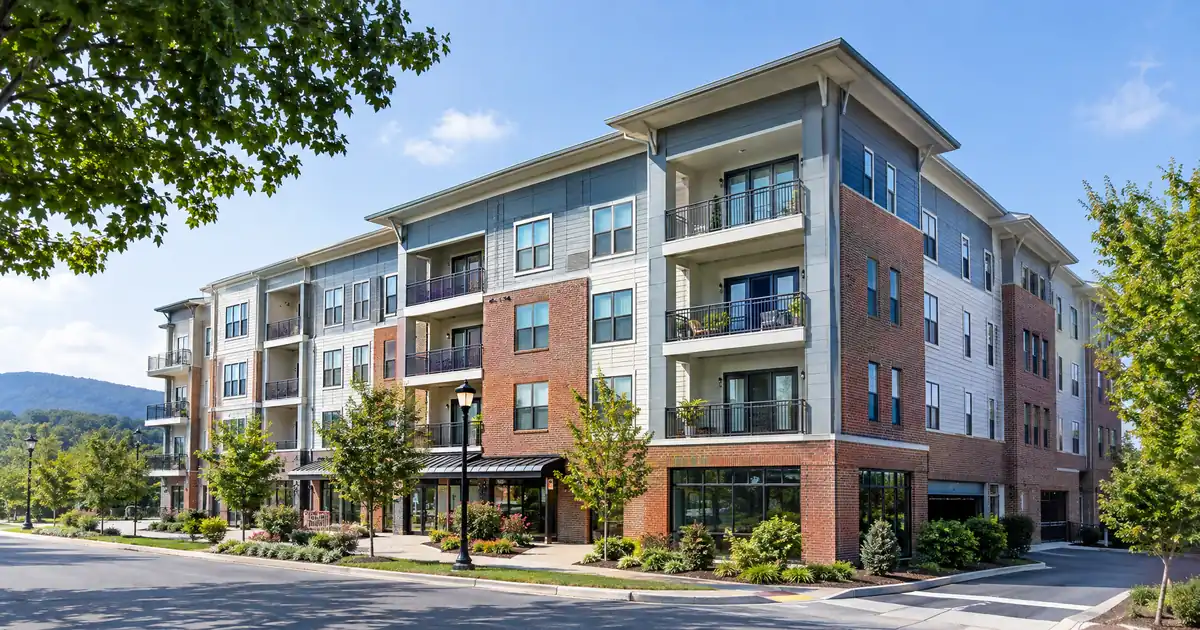
If you own a rental in Harrisburg worth $480,000 or more, here’s the question most cash-out conversations skip: does the rent support the new loan, or only the appraisal? In this town the appraisal is usually the easy part. The coverage math is where equity extraction gets decided.
Harrisburg is an appreciation-led suburb, not a cash-flow market. Its rents sit thin against its prices, so the amount you can pull depends less on how much equity you have on paper and more on how far the property’s rent stretches against a full monthly obligation. That distinction shapes everything below.
DSCR Cash-Out Calculator
Run the cash-out numbers in Harrisburg, NC
Rate source: Freddie Mac 30-yr average via FRED® — Federal Reserve Bank of St. Louis · effective Sep 24, 2026
Prefilled with starting assumptions — enter your property’s value, balance, taxes, and insurance for a more accurate picture.
Program parameters update from Lendmire’s centralized guideline source. Taxes and insurance are editable estimates.
As of Sep 24, 2026 · General Freddie Mac market benchmark, not a Lendmire loan offer. Property value, balance, taxes, and insurance are editable estimates. Maximum loan-to-value varies by lender, program, property type, and seasoning. Not a Loan Estimate, approval, or commitment to lend. Program availability and eligibility are subject to lender guidelines, credit approval, property review, and underwriting.
The Short Version: A DSCR cash-out refinance on a Harrisburg, North Carolina rental is underwritten primarily on the property’s rental income measured against its full monthly obligation, taxes and insurance included, with proceeds capped by the lender’s loan-to-value ceiling and subject to appraisal.
- Zillow puts the typical Harrisburg home value near $478,680, so the rent-to-price ratio is the binding constraint.
- The cash-out LTV ceiling is 75%, and at Harrisburg prices the coverage ratio, not the ceiling, will often set your number.
- About 6 months of ownership, measured from title recording, is the typical seasoning benchmark.
- Slow sales and falling rents make a lower-LTV structure the more defensible choice on most single-family files.
- Townhomes near Town Center are the most plausible property type for pairing equity extraction with workable coverage.
Harrisburg Market Snapshot
A quick read on the Harrisburg investor landscape — figures come from the cited sources below. Confirm current property-level numbers before underwriting.
Why Equity Is Easy and Coverage Is Hard Here
Harrisburg’s home values are high and its rents are not proportionally high. Zumper’s data shows average house rent at $2,295 per month, down about 3% year over year, against sale prices that Redfin puts at a median near $483K and Movoto puts at $550,000. Those sources use different months and methods, so treat the spread as a range. Zillow’s typical value sits near $478,680, essentially flat over the past year.
Run the ratio yourself. Using the rent above against the $483K to $550K sale range gives a gross monthly rent-to-price ratio of about 0.42% to 0.48%. That’s Lendmire Research’s own estimate, not a published figure. It works out to roughly 5% to 5.7% of price per year, gross, before taxes, insurance, or debt service.
Not a cash-flow ratio. A pricing ratio.
Now a modeled example, with inputs labeled as assumptions and coverage measured against full PITIA (principal, interest, taxes, and insurance, using NC-average tax and insurance loads). Assume a single-family rental valued at $483,000 and renting at $2,295. At the 75% cash-out ceiling, coverage lands around 0.8x. At roughly 60% LTV it approaches but stays just under 1.0x. Getting to a clean 1.0x takes something near 55% LTV. Those are modeled bands, and actual results move with credit, loan terms, and the appraisal. Terms vary by lender guidelines, property type, leverage, credit profile, and full file review.
So what does that mean for you? The “75% LTV cash-out” you see advertised is a ceiling, not a plan. On a median-priced Harrisburg house, the leverage you can actually use is often lower.
What the Lender Actually Weighs
Cash-out here follows a familiar pattern, subject to lender guidelines and property review:
- LTV: Up to 75% on a cash-out. The 80% figure belongs to purchases and doesn’t apply.
- Seasoning: Typically about 6 months from title recording before a cash-out is considered.
- Coverage: A 1.00x benchmark is common, meaning rent used for lender review covers the full monthly obligation. Some lenders review lower ratios, but usually with lower leverage, more reserves, or different terms.
- Credit and reserves: Tiers generally start at a 620 floor and step up through 660, 680, and 700. Reserves run about six months of PITIA, more on very large balances.
- Loan size: Up to $3,000,000 on standard programs, though a Harrisburg rental will fall well below that.
Equity available depends on rent used for lender review, the full obligation, reserves, and the LTV ceiling. It isn’t a guaranteed figure. Terms vary by borrower, property, and loan scenario. Lendmire’s full breakdown of how the coverage ratio works covers the mechanics if you want the formula in detail.
The Appraisal Risk Nobody Prices In
Sales are slowing. Redfin’s data shows homes sitting 87 days on market against 75 a year earlier, on a small monthly sample of roughly 30 sales, so read it as directional. Movoto reports 74 days against 41 in its latest month. Rocket Homes’ market report shows 47.2% of sales closing below asking in its reporting period, on an older data point.
Fewer sales and more below-ask closings mean fewer and softer comps for the appraiser. Picture an investor who bought a Harrisburg house at a strong price when demand was hotter. After seasoning, the refinance appraisal could land at or below the purchase price, and the cash-out shrinks accordingly.
Past appreciation has been strong in this corner of Cabarrus County, and the town grew to an estimated 20,742 residents, up 9.1% from 2020. But underwriting a refinance on the long-run trend rather than the current comp set is how investors end up short at the table. Base your expected proceeds on today’s sold prices. Treat further appreciation as a bonus.
Where the Coverage Pencils Best
Honestly, this is a market where the property type matters more than the street.
Townhomes near Town Center
Livability describes Harrisburg as having no single dominant residential center, with Town Center holding the strongest concentration of restaurants, offices, civic services, and attached housing. Attached product is the most plausible entry point for an investor who wants lower basis and a rent that still holds. The caveat: Apartments.com currently lists about 40 newly built apartments and 48 townhomes for rent, so there’s competing supply. That’s a snapshot, not absorption data. It does argue for underwriting at current rent with no growth assumed.
Western Harrisburg along Rocky River Road and I-485
Blume and Abbington sit here, with practical access to the interstate, Concord Mills, and the Atrium site. Commuters heading to University City and Uptown Charlotte are the tenant base. Detached homes dominate, which puts them squarely in the thin-coverage category above. Lower leverage is the workable structure.
The N.C. 49 corridor
The main commercial spine connects the town to UNC Charlotte, roughly 4 miles from Town Center, and northeast Charlotte. It suits tenants tied to the university and retail employment. No verified enrollment figure surfaced in the research, so treat the university as a nearby demand driver rather than a quantified one.
Harmony, Robinson Church Road, and Hickory Ridge Road
The eastern side has newer, lower-density detached subdivisions. Family renters in single-family homes are the typical profile. These are also the highest-basis, lowest-yield product in town, which makes them the strongest appraisal story and the weakest coverage story.
Multi-unit stock is the gap. The research found no evidence of meaningful duplex, triplex, or fourplex supply in Harrisburg. Investors who want unit-stacking income may find the math easier in Concord, Kannapolis, or northeast Charlotte, which changes where cash-out proceeds might go next.
The Demand Story Behind the Rent
Tenant demand rests on regional employment, not local headcount. Data USA reports about 10.2 thousand employed residents, with Finance and Insurance the largest industry at 1,583 workers, Health Care and Social Assistance at 1,223, and Professional, Scientific, and Technical Services at 1,201. The average commute is 29.6 minutes, and the homeownership rate is 91.5%.
That last number cuts two ways. A 91.5% ownership rate means the rental pool is small, which supports occupancy for the units that exist. It also means Harrisburg is an owner’s market, and the rental base doesn’t justify the price of entry the way a denser rental town would.
Regional anchors help. Atrium Health Cabarrus in Concord is a 457-bed hospital with more than 4,200 employees. Cabarrus Economic Development lists 323 new jobs and $553M invested in a beverage production hub, plus a Kroger fulfillment center expected to create nearly 700 jobs. Those are county-level demand drivers, not Harrisburg employers.
A closer catalyst is the local Atrium emergency site. WCNC reports it will move from a freestanding ER toward full care, which would make it Cabarrus County’s second full-service emergency facility, with surgery units and patient beds planned. Confirm current status before you lean on it. A hospital doesn’t rewrite the rent-to-price ratio overnight (it can steady long-term tenant demand for nearby housing, though).
What Deal Desks See in Markets Like This
In affluent, owner-heavy suburbs like this one, the common friction point on cash-out files isn’t the borrower. It’s the gap between the value the owner expects and the coverage the rent supports. The cleaner files tend to arrive with a current lease, a realistic rent comp, and a leverage target already trimmed to what the property can carry. Files that start from the 75% ceiling and work backward often end up restructured mid-stream, sometimes toward a lower loan amount, sometimes toward a sub-1.00 program review with more reserves and a lower LTV.
Three Ways to Use the Proceeds
The right answer depends on where the money goes.
If you’re pulling equity to buy another rental in a higher-yield submarket, the extraction makes structural sense. You trade a low-yield, high-basis asset’s idle equity for a property that covers itself. Concord, Kannapolis, or a multi-unit in northeast Charlotte would fit.
DSCR vs. conventional financing
Two common ways to finance an investment property in Harrisburg, NC. They qualify you differently — here’s how investors weigh them.
Why investors choose it
- Qualifies on the property’s rental income — no personal tax returns, W-2s, or pay stubs needed to document income.
- No personal debt-to-income ceiling to clear, so existing mortgages and obligations don’t cap your borrowing the same way.
- Can be closed in an LLC, keeping the property inside a business entity.
- Built for scaling — not held to the limit on number of financed properties that conventional financing applies.
- Underwriting centers on the deal: generally qualifies when the rent covers the payment, a 1.00x coverage ratio being a common baseline (confirmed in underwriting).
- Designed specifically for investment property, including long-term and, where the program allows, short-term rentals.
Where it’s strong
- Often the lowest ongoing financing cost for a buyer who fully qualifies on personal income — a fit for a first property or a cost-first purchase.
Trade-offs for investors
- Requires full personal income documentation and must fit within a debt-to-income limit — salary, existing debts, and other mortgages all count.
- Typically held in your personal name rather than a business entity.
- Caps how many financed properties you can carry, which can become a ceiling as a portfolio grows.
- Evaluates you as a borrower as much as the property, which usually means more paperwork.
How investors usually choose: a first or single property often optimizes for the lowest financing cost; portfolio builders often optimize for leverage, vesting in an LLC, and scaling past conventional caps. The right answer depends on your goals, the property, and current guidelines — both paths run through select lenders in Lendmire’s wholesale network, with eligibility and terms confirmed in underwriting.
If you’re pulling equity to reduce a higher-cost balance or fund improvements, run the coverage first. A cash-out that pushes the property below 1.0x can trade one problem for a tighter one.
If you’re pulling equity just because the number is available, that’s a signal to pause. In a market with falling rents and slower sales, a lower-LTV structure that leaves a cushion is often the better call. A conventional refinance may also price better if your income documents cleanly, though it won’t stretch across a growing portfolio the way property-based underwriting can. The side-by-side comparison lays out where that line falls.
Sub-1.00 structures do exist through select lenders. They typically involve lower leverage, stronger credit, and more reserves, and qualification stays subject to lender guidelines, credit approval, and property review. If the property doesn’t reach coverage on a standard structure, it’s worth asking whether the asset is right for a cash-out at all. The refi options walk through the alternatives. Also verify current local rental rules, taxes, and insurance with qualified local professionals.
Investors with entity-held properties should note that LLC-titled loans are subject to lender program eligibility. Lendmire’s North Carolina DSCR loan programs page covers the state-level specifics, and you can start your quote or call 828-256-2183 to talk through a specific property.
The Question Worth Asking
Before you order an appraisal, ask what your Harrisburg rental would rent for today, not what it rented for when you bought it, and what leverage that rent will comfortably carry. If that number is lower than the equity on paper suggests, is the equity really the constraint, or is the coverage?
Frequently Asked Questions
How do you qualify for a DSCR cash-out refinance in Harrisburg, NC?
Qualification centers on the property’s rent measured against its full monthly obligation, with a 1.00x benchmark common. Lenders also review credit (tiers generally start at a 620 floor), reserves of about six months of PITIA, and about six months of seasoning. At Harrisburg prices, single-family coverage is often the tightest test. Final eligibility depends on lender guidelines, credit approval, and property review.
What are the requirements for an investment property loan in Harrisburg, North Carolina?
Expect a property-based coverage review, an appraisal, a credit review, and reserves. Cash-out leverage tops out at 75%. Manufactured homes, log homes, and barndominiums fall outside these programs. Requirements vary by borrower, property, and loan scenario, so confirm details for your specific file.
Will slower sales in Harrisburg hurt my refinance appraisal?
Yes, it can. Fewer sales and more below-ask closings give appraisers softer comps, and a value at or below your purchase price would shrink the cash-out. Days on market have stretched in both Redfin and Movoto data. Base expected proceeds on recent sold prices, not on the long-run trend.
Do townhomes or detached homes work better for a cash-out in Harrisburg?
Townhomes near Town Center generally offer a lower entry price against comparable rent, so coverage tends to be easier to reach. Detached homes carry higher basis and thinner rent-to-price ratios, so they usually need lower leverage. The tradeoff is more competing rental supply among attached units.
For current guidelines and terms, see Lendmire’s DSCR loan programs page.
About Lendmire
A DSCR-focused mortgage broker, Lendmire (NMLS# 2371349) places investor financing across 41 markets, 40 states plus Washington, D.C. Lenders generally review eligibility on the property’s cash flow rather than traditional personal-income documentation, subject to lender guidelines. Scotsman Guide named Lendmire a 2025 Scotsman Guide Top Mortgage Workplace and a 2026 Scotsman Guide Top Mortgage Workplace.
Get Started
Ready to find the right loan for you?
See your offer in seconds. No credit pull, no obligation.
Informational only. Not a Loan Estimate, approval, or commitment to lend. Program availability and eligibility are subject to lender guidelines, credit approval, property review, and underwriting.
References
1. Zillow — Home Values Harrisburg NC
3. Zumper: Harrisburg rent research
4. Redfin: Harrisburg housing market
5. Movoto — Harrisburg NC Market Trends
6. rocket.com — Market Reports Harrisburg
8. Livability
10. Cabarrus Economic Development
11. WCNC: Harrisburg hospital expansion
12. a 2025 Scotsman Guide Top Mortgage Workplace
13. a 2026 Scotsman Guide Top Mortgage Workplace
This article is part of Lendmire’s investment property cash-out refinance program — full qualification details, guidelines, and scenarios live on the program page.
Related reading: DSCR Cash Out Refinance Harrisburg North Carolina · Cash Out Refinance Investment Property Greensboro North Carolina · DSCR Cash Out Refinance Highlands North Carolina
Guides: Investment Property Cash-Out Refinance in North Carolina
Brandon Miller
Founder & CEO, Mortgage Loan Originator, Lendmire LLC
- Mortgage Loan Originator · NMLS# 1129696 · Verify on NMLS Consumer Access
- North Carolina Real Estate Broker · License# 343312 · Verify on NCREC
- North Carolina Insurance Producer · License# 19053198 · Property, Casualty, Life, Health · Verify on NAIC SBS
- Lendmire LLC · Firm NMLS# 2371349 · Verify firm licensure
Disclosure information. Lendmire is a state-licensed mortgage brokerage under NMLS# 2371349. Lendmire is not a depository institution, direct lender, or financial advisor — all loans referenced are placed through wholesale lender partners and are subject to each lender's underwriting standards. This article is provided for general informational purposes and is not a commitment to lend, nor does it constitute financial, legal, or tax advice. Loan programs, terms, rates, and qualification standards change without notice and depend on borrower profile, property type, and the state in which the subject property is located. Equal Housing Opportunity provider. NMLS Consumer Access: nmlsconsumeraccess.org.