
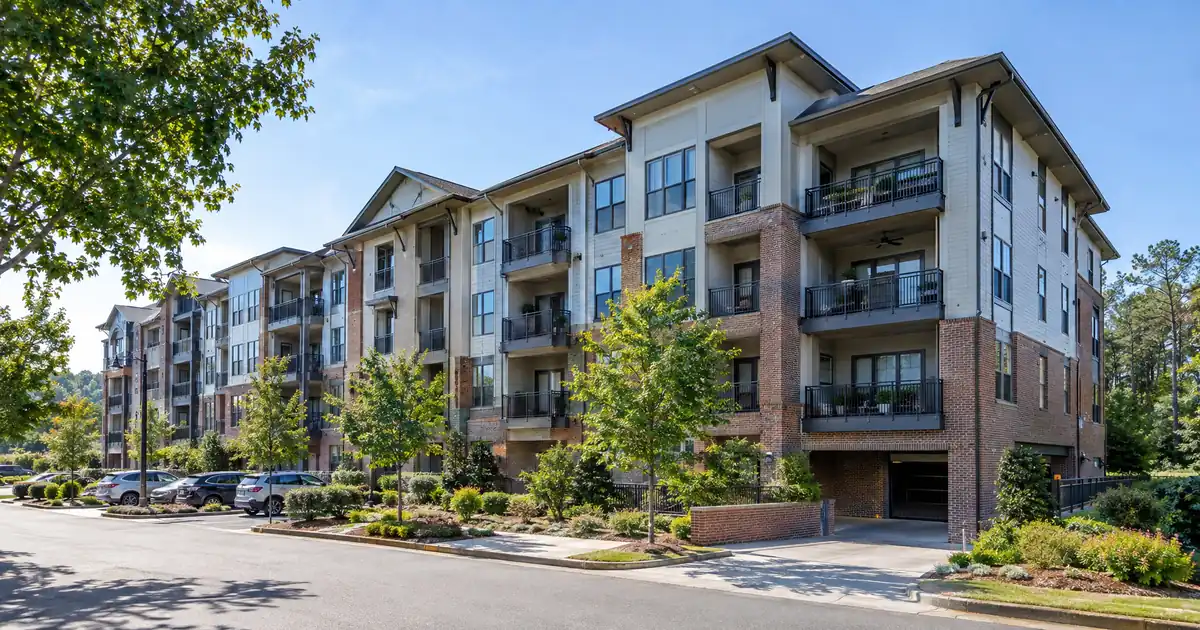
The standard objection to pulling equity from a Jefferson rental is arithmetic. A house here rents for about $2,200 a month, according to Zumper, against a median sale price of $392,000 per Redfin. That is a monthly rent-to-value ratio near 0.56 percent, well short of the 1 percent rule of thumb. Cashing out at the maximum loan-to-value pushes the new debt higher still. This article takes the objection head-on, because the coverage math in Jefferson is tight, and it is also manageable if the loan is sized correctly.
Jefferson, Georgia rental property investors can tap DSCR programs that Lendmire arranges, available across 41 markets, including Washington, D.C. Lendmire (NMLS# 2371349) is a mortgage broker, so lenders in its network review eligibility and approve. The focus below is the owner who already holds a Jefferson property and wants to know how much capital it can release.
DSCR Cash-Out Calculator
Run the cash-out numbers in Jefferson, GA
Rate source: Freddie Mac 30-yr average via FRED® — Federal Reserve Bank of St. Louis · effective Sep 24, 2026
Prefilled with starting assumptions — enter your property’s value, balance, taxes, and insurance for a more accurate picture.
Program parameters update from Lendmire’s centralized guideline source. Taxes and insurance are editable estimates.
As of Sep 24, 2026 · General Freddie Mac market benchmark, not a Lendmire loan offer. Property value, balance, taxes, and insurance are editable estimates. Maximum loan-to-value varies by lender, program, property type, and seasoning. Not a Loan Estimate, approval, or commitment to lend. Program availability and eligibility are subject to lender guidelines, credit approval, property review, and underwriting.
At a Glance:
A DSCR cash-out refinance in Jefferson, Georgia is underwritten primarily on the property’s rental income measured against its full monthly obligation, so it suits investors holding seasoned single-family rentals with real equity who are willing to size the new loan below the maximum.
- Single-family houses dominate Jefferson’s thin rental stock; small multifamily inventory is not documented.
- Modeled coverage at the 75 percent LTV ceiling lands below 1.00x on typical house rents.
- Dropping toward the low-to-mid 60s percent LTV brings coverage back to roughly 1.0x.
- Roughly six months of seasoning from title recording is the baseline before a cash-out.
- New-build comps can inflate appraised value, so check what the number rests on.
Jefferson Market Snapshot
A quick read on the Jefferson investor landscape — figures come from the cited sources below. Confirm current property-level numbers before underwriting.
| Metric | Detail |
|---|---|
| Home prices | 14 sales (Redfin, Jefferson housing market) |
| University enrollment | ~4,300 students (City of Jefferson, Community) |
What Do Jefferson’s Price and Rent Numbers Actually Say?
Jefferson’s prices are roughly flat to modestly positive over the past year, and the sources disagree enough that no single figure should anchor a cash-out plan. This article uses Redfin’s $392,000 median sale price as its reference point, because it is a sold-price figure, and treats the others as a range.
Redfin’s read comes with a caveat. It shows prices down 9.94 percent year over year, but only 14 homes sold in the month, so the median swings with the mix of sales. Price per square foot, a steadier measure, is $182 and up 2.2 percent. Homes averaged 57 days on market versus 93 the year before. Zillow places the average home value higher, at $418,668, up 1.1 percent, reflecting a different methodology that smooths thin-sale volatility. U.S. News lands lower, at a median home value of $375,233. Movoto’s median list price of $486,000 is an asking-price figure, so it runs structurally higher than any sold-price series.
The takeaway for an owner: value is a band of roughly $375,000 to $419,000 on resale product, and an appraisal can land anywhere in it.
Rent data is messier. RentCafe puts average apartment rent at $1,806, but that covers only buildings with 50 or more units, so it skews toward newer complexes and says little about a small landlord’s house. Zumper’s figures are better matched to a single-family hold: $2,200 for a house, $2,087 for an apartment, and $1,413 for a two-bedroom. Zumper notes that inventory is too thin to populate every category, and its page is undated. Treat $2,200 as a directional house-rent anchor, not a guaranteed lease figure. No source in the research publishes a vacancy rate or cap rate for Jefferson, and none is estimated here.
The Coverage Problem at 75 Percent (and How to Solve It)
At the 75 percent LTV ceiling, a Jefferson house with typical rent models below 1.00x on full debt service, and the fix is a smaller cash-out, not a better headline. The 1.00x benchmark is common because rent covers the payment at that level. Some lenders review lower ratios, but those files usually need stronger compensating factors, lower leverage, or more cash retained.
Run the numbers on a modeled property. Assume a house valued near $400,000 and rent of $2,200, a modeled input drawn from the Zumper house average. Coverage is rent divided by the full monthly obligation: principal, interest, taxes, and insurance. At 75 percent LTV, modeled coverage including taxes and insurance comes out around 0.9x. At roughly 65 percent LTV, it moves to right around 1.0x. At 60 percent LTV, it sits modestly above 1.0x. These are modeled bands, not quotes, and actual results depend on the lender, credit tier, and property review.
The cash-out lever works against you here. The coverage test applies to the new, larger loan, not the old balance. An owner whose payoff sits at 55 percent of current value has 20 points of room under the 75 percent cap, but taking all of it may produce a sub-1.00 file. Taking 10 points, ending near 65 percent LTV, tends to keep coverage near the baseline.
When the number falls below 1.00x, a few structures may be worth reviewing: a sub-1.00 program, an interest-only period, or reduced leverage with a smaller cash-out. Each carries trade-offs in pricing, reserves, or proceeds, and qualification stays subject to lender guidelines, credit approval, and property review. The DSCR qualification mechanics explain how the ratio is built.
The stronger play in Jefferson might be a modest cash-out on a well-rented house rather than a maximum extraction. Investors chasing the largest possible check could argue otherwise. But a file that clears 1.00x on long-term rent alone avoids the pricing and leverage concessions that sub-1.00 structures bring.
Seasoning, Appraisals, and the New-Build Problem
Seasoning is the gate and appraisal is the risk. A cash-out generally needs about six months of ownership measured from title recording, so a Jefferson house bought recently with value-add work may not be ready yet. Once it is, the appraisal decides whether the equity exists on paper.
Jefferson’s comp set is unusual. According to Move With Momentum, a brokerage marketing page built on listing data, the median new-build listing is about $469,190, near $200 per square foot on a typical 2,340-square-foot home. Only about 10 percent of new homes list under $394,000. LGI Homes, Chafin Communities, and Pulte are the most active builders by current listings. Use these figures directionally, since they come from marketing data.
The implication is a mismatch. New construction lists well above the resale medians of $375,000 to $419,000. An appraiser pulling those comps may support a high value, or may adjust them down because a resale house lacks a new-build premium. Check how much of the supporting value depends on that premium before sizing a 75 percent cash-out. (This is the step investors skip, and it is the one that moves the number most.)
For owners considering the next move, the equity-extraction mechanics cover how the structure works.
Where the Rental Stock Actually Sits
Jefferson has no documented submarket that clearly wins on rent-to-value. The research found no neighborhood-level rent data, so the corridors below are described by character, not ranked.
The Winder Highway and U.S. 129 corridor is the commercial and medical spine. The Northeast Georgia Health System opened an 11,000-square-foot medical plaza there, housing urgent care, family medicine, orthopedic and general surgery, and cardiology. Rental houses with fast road access to that corridor and to I-85 serve commuters, though the research has no price or rent data for those streets.
Historic downtown has six historic districts, per Explore Georgia, and a walkable square. Character homes there are scarce and tightly held, and the research offers no rent comps. Treat it as a hold-and-refinance location, not a data-backed yield play.
Traditions of Braselton, a master-planned golf community with a Jefferson address, is a poor DSCR target. A brokerage listing page shows an average list price of $709,219 across roughly 70 homes. That is upscale, owner-occupied product, and rents are unlikely to cover debt service at those values.
Hoschton and Braselton neighborhoods such as Trilogy Park and Chateau Elan sit adjacent, but the research has no price or rent data for them. Hyperlocal sold comps and actual rent listings are the only reliable way to size any of these.
DSCR vs. conventional financing
There are two common ways to finance an investment property in Jefferson, GA, and they qualify you differently — here’s how investors weigh them.
Why investors choose it
- Qualifies on the property’s rental income — no personal tax returns, W-2s, or pay stubs needed to document income.
- No personal debt-to-income ceiling to clear, so existing mortgages and obligations don’t cap your borrowing the same way.
- Can be closed in an LLC, keeping the property inside a business entity.
- Built for scaling — not held to the limit on number of financed properties that conventional financing applies.
- Underwriting centers on the deal: generally qualifies when the rent covers the payment, a 1.00x coverage ratio being a common baseline (confirmed in underwriting).
- Designed specifically for investment property, including long-term and, where the program allows, short-term rentals.
Where it’s strong
- Often the lowest ongoing financing cost for a buyer who fully qualifies on personal income — a fit for a first property or a cost-first purchase.
Trade-offs for investors
- Requires full personal income documentation and must fit within a debt-to-income limit — salary, existing debts, and other mortgages all count.
- Typically held in your personal name rather than a business entity.
- Caps how many financed properties you can carry, which can become a ceiling as a portfolio grows.
- Evaluates you as a borrower as much as the property, which usually means more paperwork.
How investors usually choose: a first or single property often optimizes for the lowest financing cost; portfolio builders often optimize for leverage, vesting in an LLC, and scaling past conventional caps. The right answer depends on your goals, the property, and current guidelines — both paths run through select lenders in Lendmire’s wholesale network, with eligibility and terms confirmed in underwriting.
Working DSCR brokers see a recurring pattern in thin, owner-dominated exurban markets: coverage is decided less by the neighborhood than by the individual lease and the appraisal. Files with a documented lease and a clean comp set clear review. Files built on listing-site rent averages often get adjusted.
The renter pool is small. According to RentCafe, 943 households, or 20 percent, rent, while 3,669, or 80 percent, own. Competing supply includes 44 recently built apartments listed on Apartments.com, with required monthly fees of $118 to $195 on top of base rent. That is a supply signal, not measured oversupply. But advertised base rents may understate what tenants pay, so a rent estimate built from those listings can mislead. Brightside at Jefferson, a townhome community of 3 and 4 bedroom homes with attached garages, sets the quality benchmark for professionally managed rentals. The new-home pipeline is single-family, and no sign of new 2 to 4 unit product turned up. Duplex or fourplex underwriting would need local rent comps from a broker or property manager.
One property-type note for a rural-edge market: manufactured homes, log homes, and barndominiums fall outside these DSCR programs. If an acreage property fits that description, it does not belong in this plan.
Who Pays the Rent? Employment and Commute Anchors
Jefferson’s tenant demand rests on commuter access, with a modest local employment base. Data USA shows resident employment led by retail trade at 1,008 workers, educational services at 973, and health care and social assistance at 773. Many residents likely work elsewhere.
The City of Jefferson says Jackson County’s economy is growing as the Atlanta market expands northeast along I-85, and that the area has attracted manufacturing and distribution companies with several new industrial parks. Jackson Alliance reports that the Amazon fulfillment center was announced with 1,000 jobs at its grand opening. That is a projected launch figure, not a current headcount. U.S. News reports that 86.9 percent of commuters drive to work, and Jackson Alliance notes that Hwy 129 is a four-lane divided highway and that I-85 widens the employer pool.
Healthcare gives a stable non-cyclical tenant base, but the larger jobs sit outside town. The county’s only hospital is Northridge Medical Center in Commerce, per Jackson County, and the Northeast Georgia Medical Center campus in Braselton is the nearest NGHS hospital. Jefferson works as a residential base for hospital staff and distribution workers, not as a hospital town. The population has grown from under 4,000 to nearly 16,000 over roughly two decades, according to Homes.com. The Census Bureau’s QuickFacts page is the authoritative check on current counts, since published estimates for the city range from about 15,000 to over 17,000.
Zumper’s page notes that median rent in Jefferson is 38 percent above Athens. That hints that some Athens-area workers may live in Jefferson, but it does not prove it.
Where Does the Cash Go After the Closing?
Proceeds are capital, and the right use depends on what the reserve requirement leaves behind. Programs typically look for about six months of reserves, rising to about nine months on loans above $1,500,000, so some of the extracted equity may need to stay liquid. Typical credit tiers run 620, 660, 680, and 700, with 620 as the floor, and standard programs go up to $3,000,000, subject to lender guidelines. Available equity depends on rent used for lender review, full debt service, reserves, and the 75 percent ceiling, so it is never a guaranteed figure.
Picture an investor holding a Jefferson house with a payoff near 55 percent of value. Taking the maximum cash-out creates a file below 1.00x. Taking a smaller draw, ending near 65 percent LTV, keeps the file near the baseline while still releasing 10 points of value. That is less capital, but a cleaner approval path, and the released equity can fund a down payment on a second rental where the rent-to-price math is stronger. Given Jefferson’s roughly 0.56 percent rent-to-value ratio, the cash-out may work better as a funding source for a lower-priced property elsewhere than as a Jefferson reinvestment. LLC-held rentals can qualify, subject to lender program eligibility. Every figure here varies by lender and program — guidelines, property type, leverage, and credit profile all apply.
For a comparison with traditional financing, the guide “Where DSCR and Conventional Diverge” sets out the trade-offs. Investors weighing local options can review DSCR loan options for Georgia investors or run the numbers with Lendmire at 828-256-2183. As with any local rental, verify current local rules, taxes, and insurance with qualified local professionals.
Frequently Asked Questions
Can a Jefferson rental clear 1.00x at the 75 percent cash-out ceiling?
Not on typical house rents. Modeled coverage at 75 percent LTV, including taxes and insurance, runs around 0.9x on a roughly $400,000 house renting near $2,200. Reducing the cash-out toward the mid-60s percent LTV range brings the number near 1.0x. Eligibility remains subject to lender review.
How long must I own a Jefferson property before cashing out?
About six months, measured from title recording. An owner who just bought and renovated a house needs to wait out that window before the equity can be released.
Which Jefferson value should I trust when sizing the loan?
None of the published figures. They range from $375,233 to $418,668, with Redfin’s $392,000 median in between. The appraisal controls the value, so ask the lender how new-build comps are being handled.
Is there a strongest Jefferson neighborhood for rent-to-value?
No source supports naming one. The research found no neighborhood-level rent data. Winder Highway, downtown, and the Hoschton and Braselton edges are all plausible, and each needs actual rent listings and sold comps.
Should I expect duplex or fourplex cash-out options in Jefferson?
Not much. No data on small multifamily inventory turned up, and the new-home pipeline is single-family. Single-family rentals dominate the thin renter pool.
Why Jefferson’s Thin Rental Pool Matters
The final number is the one that frames the whole market. Only 943 Jefferson households rent, a 20 percent share. A cash-out on a well-leased house here is borrowing against scarcity as much as against yield.
For current guidelines and terms, see Lendmire’s DSCR loan programs page.
Get Started
Ready to find the right loan for you?
In about 30 seconds you can review financing options available for your investment property. No commitment required.
Informational only. Not a Loan Estimate, approval, or commitment to lend. Program availability and eligibility are subject to lender guidelines, credit approval, property review, and underwriting.
About Lendmire
Lendmire is a DSCR-focused mortgage brokerage, NMLS# 2371349, placing investor loans across 41 markets, including Washington, D.C. DSCR eligibility is generally reviewed by the lender on a property’s rental income rather than personal income documentation, which fits LLC-held rentals, self-employed investors, and portfolios scaling past conventional financed-property limits. The firm is a top-ranked workplace in 2026 and a 2025 Scotsman Guide Top Mortgage Workplace.
This article is part of Lendmire’s investment property cash-out refinance program — full qualification details, guidelines, and scenarios live on the program page.
Related reading: Luxury Rental DSCR Loans In New Jersey · Jersey Shore Vacation Rental Loans: DSCR Financing In Ocean City, Cape May And Long Beach Island · DSCR Cash-out Refinance In New Jersey: Pulling Equity From A Rental
Guides: Investment Property Cash-Out Refinance in Georgia
Brandon Miller
Founder & CEO, Mortgage Loan Originator, Lendmire LLC
- Mortgage Loan Originator · NMLS# 1129696 · Verify on NMLS Consumer Access
- North Carolina Real Estate Broker · License# 343312 · Verify on NCREC
- North Carolina Insurance Producer · License# 19053198 · Property, Casualty, Life, Health · Verify on NAIC SBS
- Lendmire LLC · Firm NMLS# 2371349 · Verify firm licensure
Compliance and disclosures. Lendmire (NMLS# 2371349) is a licensed mortgage broker and is not a direct lender, depository institution, financial advisor, or tax professional. Content in this article is general market analysis and educational information — not financial, legal, or tax advice for any specific situation. Lendmire does not guarantee loan approval; every transaction is subject to underwriting by the funding lender. Mortgage pricing and loan program guidelines are subject to change at any time without notice and vary by borrower characteristics, property type, and state regulations. Lendmire complies with Equal Housing Opportunity. Licensure verification: NMLS Consumer Access.