
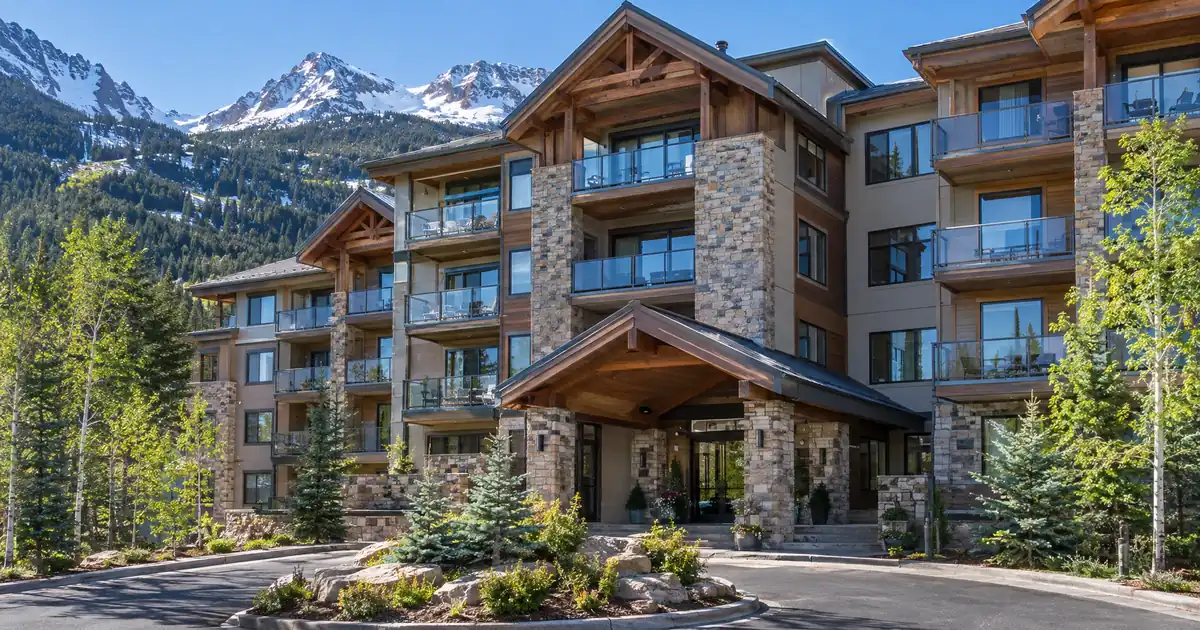
The objection is obvious, and most investors raise it in the first five minutes: the rent doesn’t cover the loan. In a resort village where a typical asking value sits near $870,000 and a 12-month lease asks about $3,300 a month, that objection is mostly correct. This article addresses it directly, because the investors who pull equity out of Keystone successfully are the ones who stop pretending the objection isn’t there.
The setup is unusual. Point2Homes reports 3,598 housing units against 1,216 residents, so most of Keystone’s housing stock isn’t built for year-round tenants at all. Long-term rent here competes with a condo market designed for vacationers. Lendmire (NMLS# 2371349), a DSCR-focused mortgage broker, arranges cash-out refinances on rentals like these, and the honest read is that the structure works best as an equity play rather than a cash-flow play.
DSCR Cash-Out Calculator
Run the cash-out numbers in Keystone, CO
Rate source: Freddie Mac 30-yr average via FRED® — Federal Reserve Bank of St. Louis · effective Sep 24, 2026
Prefilled with starting assumptions — enter your property’s value, balance, taxes, and insurance for a more accurate picture.
Program parameters update from Lendmire’s centralized guideline source. Taxes and insurance are editable estimates.
As of Sep 24, 2026 · General Freddie Mac market benchmark, not a Lendmire loan offer. Property value, balance, taxes, and insurance are editable estimates. Maximum loan-to-value varies by lender, program, property type, and seasoning. Not a Loan Estimate, approval, or commitment to lend. Program availability and eligibility are subject to lender guidelines, credit approval, property review, and underwriting.
TL;DR: A cash-out refinance on a Keystone investment property fits owners with substantial equity in a 12-month-leased condo or townhome, because the loan is underwritten primarily on the property’s rental income measured against its full monthly obligation. Expect the appraisal and leverage limit to drive proceeds more than rent does.
- Cash-out leverage is capped at 75 percent LTV, with about 6 months of ownership typically required.
- Zillow shows Keystone values near $868,798, and they have softened year over year.
- Sample 12-month asks, run against full PITIA (principal, interest, taxes, insurance) across a typical rate range, compute to coverage in the mid-0.6 range at high leverage, well short of a 1.00 floor.
- Underwrite to the year-round lease, never the winter-season or furnished ask.
- Nearby Dillon and Silverthorne are where small workforce-style rentals are likelier to pencil.
Keystone Market Snapshot
A quick read on the Keystone investor landscape — figures come from the cited sources below. Confirm current property-level numbers before underwriting.
| Metric | Detail |
|---|---|
| Home prices | $975K median (Redfin) |
| Typical rents | $600–$1,000 rent need (Summit Daily) |
| Employment | ~2,300 jobs (Town of Keystone, 10.28.2025) |
| Vacancy | <0.5% (Summit Daily) |
Why the Coverage Math Is the Whole Story Here
Keystone cash-out files live or die on one number: rent against full PITIA at 75 percent LTV. On current asking values, that number runs below 1.00 at maximum leverage, and investors should see it before they order an appraisal.
Zillow’s home value index puts the average Keystone home at $868,798, down 8.6 percent over the past year. Redfin’s condo snapshot showed a median listing price of $975K and a typical 108 days on market, though that snapshot is dated and worth treating as directional. On the rent side, Zillow sample listings in ZIP 80435 include a 3-bedroom, 1,447 square foot unit at $3,525 a month, a 2-bedroom at $3,300 and a 3-bedroom, 1,007 square foot unit at $3,200. These are individual asks, not a market median.
Run the numbers on a condo valued near the Zillow average, refinanced at 75 percent LTV, with a modeled 12-month rent of $3,300. Including taxes and insurance, coverage lands in the mid-0.6 range. That’s a modeled assumption, not a sourced market figure, and rounding down is the honest call. Even the $3,525 ask doesn’t change the conclusion.
The standard DSCR benchmark is 1.00x, where rent covers the full obligation. Some lenders review lower coverage, but usually with lower leverage, different pricing or more cash behind the file, and eligibility turns on lender guidelines, credit profile, reserves and property review. To reach 1.00 on the same asset, leverage would likely need to drop toward 45 percent LTV or lower. Options a lender might review include a sub-1.00 program, an interest-only structure, or a smaller cash-out request. None of those is a promise. Qualification stays subject to lender guidelines, credit approval and property review.
Not pretty. But it’s better to see it now than after the appraisal fee.
What the Equity Pull Actually Depends On
Proceeds in Keystone are set by appraised value, the 75 percent ceiling and reserves, not by how much the property could theoretically rent for. Since values are softening, the appraisal is the variable investors should stress-test first.
The verified program guidelines here are straightforward. Cash-out leverage tops out at 75 percent LTV, never the 80 percent figure that applies to purchases. Lenders typically look for about 6 months of ownership measured from title recording. Credit tiers generally run 620, 660, 680 and 700, with 620 as the floor, and reserves are typically around 6 months of PITIA (more on balances above $1,500,000). Standard programs reach loan amounts up to $3,000,000, and because DSCR loans aren’t bound by conforming limits, Keystone’s price points don’t push a file into jumbo-style documentation. These are guideline ranges, not commitments, and exact terms vary by borrower, property and lender.
Here’s the catch. A value decline hits twice. The appraisal comes in lower, so the 75 percent ceiling produces a smaller loan, and the equity available to take out shrinks along with it. An owner who bought at peak and watched the index slide 8.6 percent may find the cash-out math has less room than the original purchase math implied. Seasoning is the easier hurdle. Appraisal risk is the harder one.
Equity available is never a guaranteed cash figure. The calculator converts percentages to dollars once the inputs are real, and the cash-out refinance walkthrough covers the mechanics of how proceeds are sized. For the broader mechanics of how rent is measured against the obligation, the guide “What Is a DSCR Loan” sets out the framework.
Who Actually Rents Here (and Who Doesn’t)
Keystone’s durable long-term tenant is a non-resort worker. Resort staff are largely housed by their employer, so a private landlord underwrites to a narrower pool than the headline payroll suggests.
The Town of Keystone’s housing work session packet, prepared by Economic & Planning Systems (a draft), counts about 2,300 jobs in town. Roughly 1,160 sit inside the Keystone Resort planned development, while about 1,171 are elsewhere in town. The consultant treats that second group as the town’s housing gap. Summit Daily’s coverage of the draft noted that Vail Resorts largely covers the housing impact of its own employees, and that officials worried the assessment might understate the need.
The investor takeaway is narrow but useful. Underwrite to the non-resort year-round worker: healthcare, government, school district, retail and services. The Northwest Colorado Council of Governments lists Summit County’s largest employers, including Keystone Resort, Copper Mountain Resort, St. Anthony Summit Medical Center, Summit County Government, Summit School District and Summit Fire & EMS. The same profile gives no headcounts, so nobody should quote employer-level payroll numbers for this market.
Employer-supplied beds also take seasonal demand off the table. Vail Resorts said nearly 2,000 beds make up its Summit County bed base, its largest company-wide. That leaves private condos to serve year-round locals, which supports a 12-month lease as the income basis.
The Wintergreen Ceiling
The nearest workforce competitor caps what a Keystone landlord can realistically charge at the low end. Wintergreen’s restricted rents and waitlist demand tell you both how deep the need is and how hard the ceiling sits.
Summit County Government describes Wintergreen as 196 rental units on more than 28 acres along US-6 between Keystone and Dillon. Rents on 120 of them are capped at an average of 100 percent AMI, and residents must work at least 30 hours a week in the county. A county needs assessment found a need for 2,528 more workforce units over five years, and renter focus groups voiced a need for rents of $600–$1,000 a month. That’s a wide gap to Keystone’s market condo asks.
Two readings of that gap compete. The bull case says unmet demand keeps non-restricted condos leased, and waitlists suggest tenants exist. The bear case says most workforce tenants can’t afford $3,200-plus, which caps the addressable pool. The data supports both, which is why a single-asset, single-tenant cash-out here deserves a real vacancy cushion in the investor’s own planning.
Where Small Workforce Rentals Might Pencil Better
Adjacent Dillon and Silverthorne are the more realistic small-multifamily and workforce-rental submarkets in the Keystone orbit. Keystone itself has almost no duplex, triplex or fourplex stock, so the income-stacking thesis belongs next door.
Redfin counted 67 condos, 27 townhouses and just 1 multi-family unit for sale in a one-month snapshot. That’s thin. Zillow lists typical values near $868,798 for Keystone and $871,455 for Silverthorne, essentially identical, so the purchase basis doesn’t favor one over the other. ZIP 80435 spans both Keystone and Dillon, which blurs the line further. The brief turned up no verified multi-unit rent data for any of these towns, so anyone claiming a specific rent-to-value ratio on a Keystone fourplex is guessing.
ADU income is a similar dead end. The town’s draft housing strategy says an ADU program is “no longer recommended,” so don’t underwrite ADU rent in Keystone without confirming it locally. Summit County separately manages approved accessory units, but no Keystone-level ADU rent or count data was found.
A genuine toss-up: a duplex in Silverthorne might produce better coverage than a Keystone condo at similar value, but exit liquidity and stock are thinner, and the research doesn’t quantify either. Investors weighing that swap should get real rent comps before committing.
River Run, Mountain House and Lakeside: Resort Inventory, Not Workforce Rentals
The resort-core submarkets are appreciation stories with second-home demand. They suit an equity pull only when the owner has a 12-month lease in place and realistic expectations about coverage.
River Run Village, the base village, has new dining and retail, per the Denver Gazette. Demand there is resort and second-home driven. Mountain House, the second slopeside base area, and Lakeside Village around Keystone Lake carry similar resort-condo inventory. The resort spans three mountains and 3,148 skiable acres, per Wikipedia, and sits roughly 70 miles from Denver. Amenity depth supports values but doesn’t convert into tenant rent.
The research offers no reliable neighborhood-level price or rent splits, so no submarket should be ranked on coverage here. It would be invented precision. The submarkets differ in tenant base and demand source, not in any documented rent-to-value spread.
Wintergreen sits two miles from the resort on US-6, and the Tenderfoot employee-housing area near the conference center houses Vail employees. Both are employer-linked or restricted supply, and both compete for the same tenant a private landlord wants.
Seasonal Asks Will Overstate Your Coverage
Underwrite the 12-month lease, never the ski-season ask. Seasonal and furnished listings in Summit County run far above year-round rents, and a DSCR built on them will overstate coverage.
HotPads shows a Summit County median asking rent of $3,200 against a national median of $1,469. It’s a listing-based figure, so treat it as an asking rent. Individual seasonal offerings, such as a Keystone single-family home posted at $8,000 a month for a five-month ski term, sit well above anything a 12-month tenant pays. A 1-bedroom condo asking $4,500 in the same ZIP looks seasonal or furnished too.
Owners moving a unit from vacation use to 12-month leasing have a local pathway: the Summit Combined Housing Authority runs the Housing Works Initiative, which matches owners with local workers. Whether that route helps a specific refinance depends on the lease in place at application and on lender rules for seasoning the rental income.
Don’t read the vacancy statistics at face value either. The 2020 Census recorded a 26.6 percent rental vacancy rate in Summit County, per Wikipedia citing Census data, but that figure mostly reflects second homes and seasonal units. It isn’t a tenant-availability measure. The better signal is that the county’s housing need and waitlists point to real demand for year-round units, while the price point limits who can pay.
What the Deal Desk Sees in Markets Like This
Files from resort-condo markets tend to fail on documentation details before they fail on math. The common friction point in markets like this is non-warrantable project characteristics and mixed-use rental histories, which can narrow the lender pool regardless of coverage.
DSCR vs. conventional financing
There are two common ways to finance an investment property in Keystone, CO, and they qualify you differently — here’s how investors weigh them.
Why investors choose it
- Qualifies on the property’s rental income — no personal tax returns, W-2s, or pay stubs needed to document income.
- No personal debt-to-income ceiling to clear, so existing mortgages and obligations don’t cap your borrowing the same way.
- Can be closed in an LLC, keeping the property inside a business entity.
- Built for scaling — not held to the limit on number of financed properties that conventional financing applies.
- Underwriting centers on the deal: generally qualifies when the rent covers the payment, a 1.00x coverage ratio being a common baseline (confirmed in underwriting).
- Designed specifically for investment property, including long-term and, where the program allows, short-term rentals.
Where it’s strong
- Often the lowest ongoing financing cost for a buyer who fully qualifies on personal income — a fit for a first property or a cost-first purchase.
Trade-offs for investors
- Requires full personal income documentation and must fit within a debt-to-income limit — salary, existing debts, and other mortgages all count.
- Typically held in your personal name rather than a business entity.
- Caps how many financed properties you can carry, which can become a ceiling as a portfolio grows.
- Evaluates you as a borrower as much as the property, which usually means more paperwork.
How investors usually choose: a first or single property often optimizes for the lowest financing cost; portfolio builders often optimize for leverage, vesting in an LLC, and scaling past conventional caps. The right answer depends on your goals, the property, and current guidelines — both paths run through select lenders in Lendmire’s wholesale network, with eligibility and terms confirmed in underwriting.
The cleaner files, from a documentation standpoint, tend to arrive with a signed 12-month lease, HOA documents, entity paperwork if the property is LLC-titled (subject to lender program eligibility), a clear title-recording date for seasoning and current insurance details. Files that lean on trailing seasonal income usually need restructuring. Sorting lease type before the application, rather than after it, is where most of the avoidable back-and-forth disappears.
How Proceeds Become the Next Deal
A Keystone equity pull makes sense when the proceeds go into a property with stronger coverage than the one being refinanced. Drawing cash out of a sub-1.00 asset to buy a second sub-1.00 asset compounds the problem.
The cleaner use is redeployment into assets where rent covers debt, which may mean workforce-style product in neighboring towns or in other markets entirely. Picture an investor holding a Keystone condo with a fully seasoned 12-month lease and meaningful equity. Pulling cash at up to 75 percent LTV, subject to appraisal, and placing it into a small multifamily elsewhere in Summit County could improve portfolio-level coverage even if the Keystone loan itself sits below 1.00. Whether the lender will do the Keystone loan at that coverage depends on the program. The alternative is reducing the requested leverage until the file clears.
An investor who plans around that math before applying usually lands in a better position. If the plan is to request a quote, start your quote or call 828-256-2183 with the lease, the current value estimate and the purchase date on hand. Investors should also verify current local rental rules, taxes and insurance with qualified local professionals.
Frequently Asked Questions
Can a Keystone condo qualify for a cash-out refinance if the rent doesn’t cover the payment?
Possibly, depending on the program. Most standard DSCR programs are built around a 1.00x benchmark, but some lenders review lower coverage with reduced leverage, different pricing or more reserves. Any approval remains subject to lender guidelines, credit and property review.
How long do I need to own a Keystone property before a cash-out refinance?
Lenders typically look for about 6 months of ownership, measured from title recording. Some programs differ, and seasoning rules for rental income vary by lender. Owners who recently converted from vacation use to a 12-month lease should confirm how the lender treats a newly started lease.
Should I use ski-season rent or the annual lease for DSCR in Keystone?
Use the annual lease. Seasonal asks, like a five-month ski-season listing, run far above 12-month rents and overstate coverage. A lender typically wants a signed lease or market rent supported by the appraisal, and that number is what the coverage ratio will actually reflect.
Does Keystone’s falling home value hurt a cash-out refinance?
Yes, directly. Zillow shows values down 8.6 percent over the past year, and cash-out proceeds are sized off appraised value at up to 75 percent LTV. A lower appraisal reduces both the loan amount and the equity available to take out. Stress-test a conservative value before applying.
Is a duplex or fourplex a better cash-out candidate in Keystone than a condo?
It might be, but Keystone has almost none. Redfin counted a single multi-family listing in its snapshot, and no verified multi-unit rent data turned up. Dillon and Silverthorne are the likelier places to find small multifamily, and investors should pull local rent comps first.
The Blind Spot: Value Risk in a Market Built for Visitors
The biggest risk for a DSCR-financed investor in Keystone isn’t tenant demand. It’s that the asset’s value depends on a vacation market while its rent depends on a workforce market.
Those two markets don’t move together. With values sliding and rents thin against them, a cash-out refinance on a sub-1.00 file leaves the investor exposed if the appraisal softens further, leaving less equity cushion and a balance sized to a higher value. Keystone’s housing stock is overwhelmingly condos and townhomes, with very little else to diversify into, so the investor is effectively holding one property type in one resort economy. The investors who do well here treat the equity pull as a capital-allocation decision, not an income solution, and size leverage for the coverage the lease actually supports.
About Lendmire
Lendmire is a non-QM mortgage brokerage (NMLS# 2371349) arranging DSCR investor loans in 41 markets, including Washington, D.C. DSCR eligibility is generally reviewed around the property’s rental income rather than personal income, subject to lender and program guidelines, which can suit self-employed investors and LLC-owned portfolios. Lendmire was recognized as a 2026 Scotsman Guide Top Mortgage Workplace, and also as a 2025 Scotsman Guide Top Workplace.
Get Started
Ready to find the right loan for you?
In about 30 seconds you can review financing options available for your investment property. No commitment required.
Informational only. Not a Loan Estimate, approval, or commitment to lend. Program availability and eligibility are subject to lender guidelines, credit approval, property review, and underwriting.
References
1. Point2Homes
2. Zillow: Keystone home values
4. Summit Daily: Workforce housing needs study
5. Town of Keystone: Work Session Packet
6. Summit Daily
9. Northwest Colorado Council of Governments: Summit County Community Profile
10. kunc.org — International Student Workers Say Vail Resorts Failed to Provide Adequate Work Hours
11. Summit County Government: Wintergreen
12. Zillow
13. Denver Gazette
14. per Wikipedia
15. HotPads
16. a 2026 Scotsman Guide Top Mortgage Workplace
17. a 2025 Scotsman Guide Top Workplace
This article is part of Lendmire’s investment property cash-out refinance program — full qualification details, guidelines, and scenarios live on the program page.
Related reading: Luxury Rental DSCR Loans In New Jersey · Jersey Shore Vacation Rental Loans: DSCR Financing In Ocean City, Cape May And Long Beach Island · DSCR Cash-out Refinance In New Jersey: Pulling Equity From A Rental
Guides: Investment Property Cash-Out Refinance in Colorado
Brandon Miller
Founder & CEO, Mortgage Loan Originator, Lendmire LLC
- Mortgage Loan Originator · NMLS# 1129696 · Verify on NMLS Consumer Access
- North Carolina Real Estate Broker · License# 343312 · Verify on NCREC
- North Carolina Insurance Producer · License# 19053198 · Property, Casualty, Life, Health · Verify on NAIC SBS
- Lendmire LLC · Firm NMLS# 2371349 · Verify firm licensure
Compliance and disclosures. Lendmire (NMLS# 2371349) is a licensed mortgage broker and is not a direct lender, depository institution, financial advisor, or tax professional. Content in this article is general market analysis and educational information — not financial, legal, or tax advice for any specific situation. Lendmire does not guarantee loan approval; every transaction is subject to underwriting by the funding lender. Mortgage pricing and loan program guidelines are subject to change at any time without notice and vary by borrower characteristics, property type, and state regulations. Lendmire complies with Equal Housing Opportunity. Licensure verification: NMLS Consumer Access.