
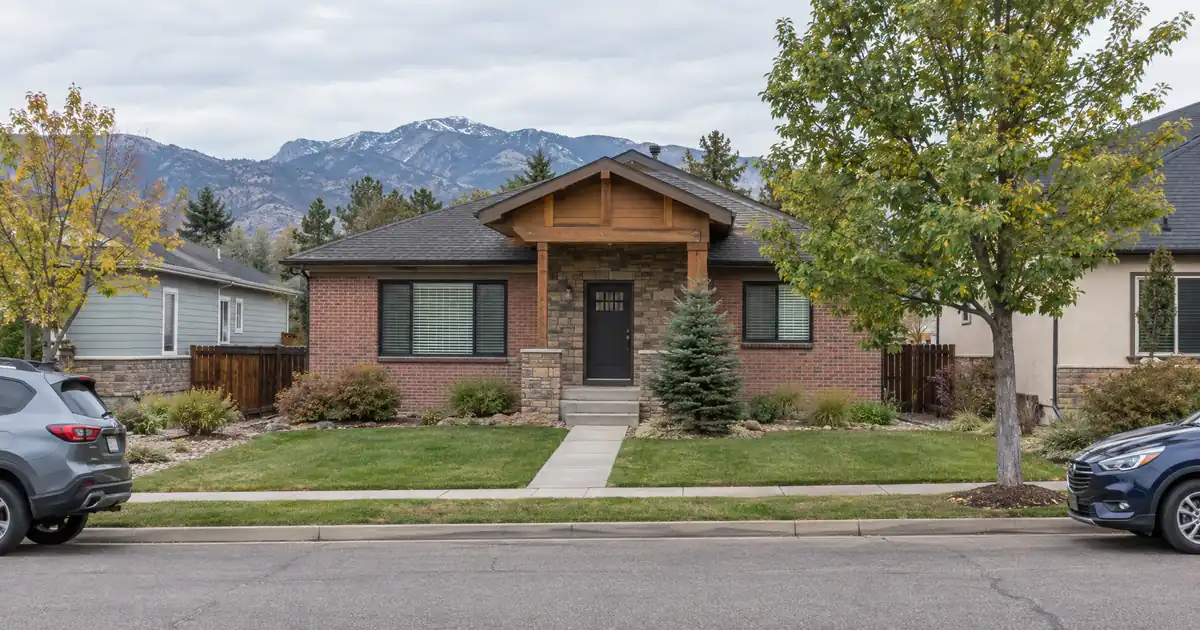
Picture two owners in Lakewood, each holding a rental worth about the citywide median. One owns a foothill single-family home near Green Mountain. The other owns an older duplex on the Colfax corridor. The math favors the duplex owner by a wide margin. A cash out refinance investment property in Lakewood, Colorado depends far less on where the market is headed than on how much rent each unit produces against a 75 percent loan-to-value ceiling. Prices here are drifting sideways to slightly down, so equity access turns on coverage, not appreciation.
DSCR Cash-Out Calculator
Run the cash-out numbers in Lakewood, CO
Rate source: Freddie Mac 30-yr average via FRED® — Federal Reserve Bank of St. Louis · effective Sep 24, 2026
Prefilled with starting assumptions — enter your property’s value, balance, taxes, and insurance for a more accurate picture.
Program parameters update from Lendmire’s centralized guideline source. Taxes and insurance are editable estimates.
As of Sep 24, 2026 · General Freddie Mac market benchmark, not a Lendmire loan offer. Property value, balance, taxes, and insurance are editable estimates. Maximum loan-to-value varies by lender, program, property type, and seasoning. Not a Loan Estimate, approval, or commitment to lend. Program availability and eligibility are subject to lender guidelines, credit approval, property review, and underwriting.
Key Takeaways:
A cash-out refinance in Lakewood, Colorado suits owners of multi-unit or older workforce rentals whose equity came from purchase discount or renovation. The loan is underwritten primarily on the property’s rental income measured against its full monthly obligation, with leverage capped at 75 percent.
- Median price sits near $570K, down 2.0 percent year over year, per Redfin.
- Single-family houses rent at a median of $2,795, per Zumper. At 75 percent leverage, coverage falls short of 1.00.
- Multi-unit properties stack rent against one loan, which is where cash-out coverage clears.
- Metro apartment vacancy reached 7.6 percent, so underwrite on in-place rents.
Lakewood Market Snapshot
A quick read on the Lakewood investor landscape — figures come from the cited sources below. Confirm current property-level numbers before underwriting.
| Metric | Detail |
|---|---|
| Typical rents | $1,754 (Selectcommercial.com) |
| Employment | 70,000+ jobs (City of Lakewood) |
| Vacancy | 7.6% (The Colorado Sun) |
Why Is Appreciation the Wrong Thing to Underwrite in Lakewood?
Lakewood prices are flat to slightly lower, so cash-out proceeds come from the purchase discount or the value added, not from market drift. Redfin reports a median of $570K for the trailing three months, down 2.0 percent year over year. Zillow shows a slightly lower home-value figure of $565,359, down 2.1 percent, which reflects a different methodology rather than a different trend.
That changes how an owner should think about a refinance. Say you bought a dated ranch in South Lakewood at a discount, then renovated and re-leased it. The appraisal can capture that work. Say instead that you bought at market and are waiting for the city to lift you. Appraisals may come in near your purchase price, and the 75 percent ceiling leaves little to pull.
Comparable-sale depth is the offsetting strength. Redfin logged 514 Lakewood home sales in April, up from 475 a year earlier, so citywide comps are plentiful. The catch is at the sub-neighborhood level. Mid-Lakewood recorded only 10 sales in a single month in Redfin’s data, which produces volatile medians and forces appraisers to reach. Investors should expect the appraisal to lean on citywide comps rather than a tight neighborhood set.
Seasoning is the other timing variable. Most cash-out programs look for about six months of ownership measured from title recording, per lender guidelines, so a recent purchase generally has to season before the equity is accessible.
What Does the 75 Percent Ceiling Do to Coverage?
At 75 percent leverage, a Lakewood single-family rental at typical rents lands below the 1.00 benchmark, while a well-priced duplex clears it comfortably. The coverage number is monthly rent divided by full monthly obligation: principal, interest, taxes, insurance, and any HOA dues. Most standard DSCR programs are built around a 1.00 benchmark, though eligibility depends on lender guidelines, credit, reserves, and property review.
Run the numbers on a modeled single-family rental priced near the citywide median, with rent set at Zumper’s house median. Including taxes and insurance on a 30-year amortization, coverage at 75 percent leverage lands in the low 0.8x range. Dropping leverage to around 60 percent pulls the number to roughly 1.0x. These are modeled assumptions, not quoted terms.
Now take a hypothetical duplex priced at $700,000 with modeled combined rent near $6,000. At the same 75 percent leverage and including taxes and insurance, coverage runs roughly 1.4x. Two rent streams against one loan is the structural advantage. For the sub-1.00 single-family case, the structures a lender might review include a sub-1.00 program, interest-only payment structuring, or a smaller cash-out. Each is subject to lender guidelines, credit approval, and property review.
DSCR files in markets like this one typically look bimodal. The multi-unit and older workforce files come in with cushion and few conditions. The higher-priced single-family files often need a reduced loan amount, or they hinge on whether the borrower can carry the six months of reserves lenders commonly look for. Investors who size leverage to the rent before ordering an appraisal tend to avoid wasted effort. Credit floors generally start near 620, with better tiers at 660, 680, and 700, and loan sizes run up to $3,000,000 on standard programs. Guidelines are set lender by lender.
For the mechanics behind these ratios, see the DSCR qualification mechanics. The DSCR vs. conventional investment loan comparison covers why owners with several financed properties often prefer this route over conventional financing.
South Lakewood and the Colfax Corridor: Where Equity Gets Built
South Lakewood and the West Colfax corridor offer the lowest entry prices in the city, which is where purchase-discount equity and value-add equity are most realistic. Both are qualitative reads. No clean neighborhood-level sale series exists, and the figures below come from small listing samples.
In the value tier, Apartments.com names Glennon Heights, Morse Park, and Lasley among the most affordable neighborhoods. RentCafe puts Morse Park rent at $1,552 against a city average of $1,790. Local guides describe post-war ranches and split-levels with the best value per square foot in a band of roughly $450,000 to $550,000. That is a lifestyle-guide source, so treat it as directional.
Along West Colfax, the City of Lakewood describes a historic corridor anchoring the 40 West Arts District. Nearby Two Creeks showed a $558K median listing price on a sample of just six listings, alongside three multi-family units for sale in one month. Small multi-unit inventory is the constraint. Redfin’s multi-family search returns a modest number of Lakewood properties, many of them across the line in Edgewater, Wheat Ridge, or Denver. Buyers of 2-4 unit properties should widen the search along the Colfax and Edgewater corridor, and expect comps that cross city lines.
That thin supply cuts both ways for cash-out. An owner who already holds a small multi-unit here has a scarce asset with rent-stacking coverage. A buyer hunting for one may wait a while.
Older, mid-priced workforce properties are also the safer coverage bet. A Denver property manager writing in Sheepdog Property Management says suburban submarkets including Lakewood are “more mixed,” with newer, higher-end single-family rentals under the most pressure from apartments, and inner-ring neighborhoods holding up best. That is one manager’s opinion, but it matches the coverage math.
The Federal Center Anchor (and Its Concentration Risk)
The Denver Federal Center gives Lakewood a government-linked tenant pool that few suburbs can match, and it also concentrates payroll risk. The Jefferson County Economic Development Corporation cites 26 federal agencies and 8,000 on-site employees, described as the largest concentration outside Washington, D.C. Other sources put the on-site count nearer 6,000 to 7,800, so the defensible range is roughly 6,000 to 8,000. The EPA’s economic profile lists 7,777 employees and notes that St. Anthony Hospital, on part of the same site, employs about 1,500. The site has its own W Line station.
The City of Lakewood counts more than 70,000 jobs citywide across federal, state and local government, education, healthcare, retail, and medical devices. Data USA shows resident employment led by professional services (11,383), healthcare (9,727), and retail (9,040). Renters make up 42 percent of Lakewood households. Student demand is small overall; Red Rocks Community College and other campuses are not what drives the market.
The Denver Gazette covered how empty the campus became on day one of a federal shutdown. That is the payroll exposure. Tenants along the Wadsworth, Federal Center, and West Colfax stretch skew toward stable employers, which supports renewals, but a lender or investor should stress-test one shutdown-style disruption rather than assume the pool is immune.
What Could Break the Pattern Over the Next 6 to 24 Months?
Metro-wide apartment oversupply is the main risk to the rental side of a Lakewood cash-out, and the indicators are easy to track. The Colorado Sun reports metro vacancy of 7.6 percent, the highest in 16 years. The Real Deal puts average metro rent down 4.8 percent to $1,754. A lender’s marketing page adds concessions at a record 9.5 percent of gross rent. Those are metro figures, not Lakewood-specific, and I found no Lakewood vacancy number. Local rents are softer too: RentCafe shows the $1,790 average down 2.69 percent year over year.
Competition from new supply is real. A 351-unit community was built beside the Wadsworth W Line station, and small landlords compete with that product on concessions. Condos and townhomes near Belmar and the W Line face the same pressure.
Four indicators are worth tracking:
1. Metro vacancy. Continued absorption without new deliveries would ease the pressure. Keyrenter Denver notes that absorption surged in the second quarter but rents remain below the prior year.
2. Concession levels. Falling concessions usually precede rent stabilization.
3. Lakewood median price. A move from negative to flat would loosen appraisal risk on cash-out files.
4. Federal payroll headlines. These bear directly on the Federal Center tenant pool.
Underwrite on in-place or conservative rents rather than asking rents. Confirm current rental rules, property taxes, and insurance with qualified local professionals before committing.
DSCR vs. conventional financing
Two common ways to finance an investment property in Lakewood, CO. They qualify you differently — here’s how investors weigh them.
Why investors choose it
- Qualifies on the property’s rental income — no personal tax returns, W-2s, or pay stubs needed to document income.
- No personal debt-to-income ceiling to clear, so existing mortgages and obligations don’t cap your borrowing the same way.
- Can be closed in an LLC, keeping the property inside a business entity.
- Built for scaling — not held to the limit on number of financed properties that conventional financing applies.
- Underwriting centers on the deal: generally qualifies when the rent covers the payment, a 1.00x coverage ratio being a common baseline (confirmed in underwriting).
- Designed specifically for investment property, including long-term and, where the program allows, short-term rentals.
Where it’s strong
- Often the lowest ongoing financing cost for a buyer who fully qualifies on personal income — a fit for a first property or a cost-first purchase.
Trade-offs for investors
- Requires full personal income documentation and must fit within a debt-to-income limit — salary, existing debts, and other mortgages all count.
- Typically held in your personal name rather than a business entity.
- Caps how many financed properties you can carry, which can become a ceiling as a portfolio grows.
- Evaluates you as a borrower as much as the property, which usually means more paperwork.
How investors usually choose: a first or single property often optimizes for the lowest financing cost; portfolio builders often optimize for leverage, vesting in an LLC, and scaling past conventional caps. The right answer depends on your goals, the property, and current guidelines — both paths run through select lenders in Lendmire’s wholesale network, with eligibility and terms confirmed in underwriting.
Green Mountain and Belmar: Lower Yield, Tighter Coverage
The foothills and downtown-style districts are the weakest cash-out candidates on coverage. A brokerage page places single-family homes around Green Mountain Village, Applewood Knolls, and Eiber from $550,000 to over $900,000, though that is marketing copy and should be read qualitatively. Green Mountain Village 1-bedroom rent shows at $1,415 on a single aggregator data point. Belmar Park showed a $570K median listing price on only seven listings, with townhomes and condos starting around $350,000 to $400,000.
Higher price against similar rent means tighter coverage at 75 percent leverage. These are lifestyle and amenity markets. Owners there can still refinance, but they should expect lower proceeds relative to value or a lower-leverage structure. Investors who came in with a purchase discount can still pull equity. Owners who paid full price, at the market top, will find the ceiling binding.
Frequently Asked Questions
How do you qualify for a cash-out refinance on an investment property in Lakewood, Colorado?
Qualification centers on the property’s rent against its full monthly obligation, typically measured against a 1.00 benchmark, plus about six months of ownership, a credit score generally starting near 620, and reserves commonly around six months. Leverage is capped at 75 percent. Final eligibility depends on lender guidelines, credit approval, and property review. For more, see the refi options.
What are the requirements for an investment property loan in Lakewood, Colorado?
Standard programs generally look at the DSCR ratio, credit tier, reserves, and appraised value, with loan amounts up to $3,000,000. Smaller balances route through select lenders in the network. Manufactured homes, log homes, and barndominiums fall outside these programs. Details vary by borrower, property, and lender, and a breakdown of the investor refinance process covers the steps.
Will a Lakewood single-family rental cover its payment on a cash-out?
At the citywide median price and typical house rents, coverage at 75 percent leverage generally lands below 1.00 once taxes and insurance are included. Lower leverage, a sub-1.00 program, or an interest-only structure are paths a lender might review. Duplexes and small multi-unit properties generally clear more easily.
Does the Denver Federal Center make Lakewood safer for landlords?
It gives the west and central W Line areas a steady, government-linked tenant pool, with roughly 6,000 to 8,000 on-site workers. It also concentrates exposure to federal payroll disruptions. Underwriting some concentration risk is prudent, and a modest reserve cushion helps.
For current guidelines and terms, see Lendmire’s DSCR loan programs page.
About Lendmire
Lendmire (NMLS# 2371349) is a mortgage brokerage focused on DSCR investor financing, helping arrange programs through wholesale and investor-lending channels in 41 markets, including Washington, D.C. DSCR loans are evaluated by the lender on property cash flow rather than personal income, subject to lender guidelines, supporting LLC closings and accommodating investors with four or more financed properties. Scotsman Guide named Lendmire a Top Mortgage Workplace in both 2025 and 2026.
For broader investor-financing rules and property-type coverage across the state, see Colorado DSCR loans.
Get Started
Ready to find the right loan for you?
In about 30 seconds you can review financing options available for your investment property. No commitment required.
Informational only. Not a Loan Estimate, approval, or commitment to lend. Program availability and eligibility are subject to lender guidelines, credit approval, property review, and underwriting.
References
1. Redfin, Lakewood housing market
2. Zumper, Lakewood rent research
5. The Colorado Sun, Denver apartment vacancy
6. Zillow
7. RentCafe
9. Sheepdog Property Management
10. Jefferson County Economic Development Corporation, Lakewood
11. EPA, Denver Federal Center economic profile
12. Data USA
13. Denver Gazette
14. The Real Deal
15. Keyrenter Denver
16. 2025
17. 2026
This article is part of Lendmire’s investment property cash-out refinance program — full qualification details, guidelines, and scenarios live on the program page.
Related reading: DSCR Cash Out Refinance Pueblo Colorado · DSCR Cash Out Refinance Brighton Colorado · DSCR Cash Out Refinance Thornton Colorado
Guides: Investment Property Cash-Out Refinance in Lakewood, CO · Investment Property Cash-Out Refinance in Colorado
Brandon Miller
Founder & CEO, Mortgage Loan Originator, Lendmire LLC
- Mortgage Loan Originator · NMLS# 1129696 · Verify on NMLS Consumer Access
- North Carolina Real Estate Broker · License# 343312 · Verify on NCREC
- North Carolina Insurance Producer · License# 19053198 · Property, Casualty, Life, Health · Verify on NAIC SBS
- Lendmire LLC · Firm NMLS# 2371349 · Verify firm licensure
Compliance and disclosures. Lendmire (NMLS# 2371349) is a licensed mortgage broker and is not a direct lender, depository institution, financial advisor, or tax professional. Content in this article is general market analysis and educational information — not financial, legal, or tax advice for any specific situation. Lendmire does not guarantee loan approval; every transaction is subject to underwriting by the funding lender. Mortgage pricing and loan program guidelines are subject to change at any time without notice and vary by borrower characteristics, property type, and state regulations. Lendmire complies with Equal Housing Opportunity. Licensure verification: NMLS Consumer Access.