
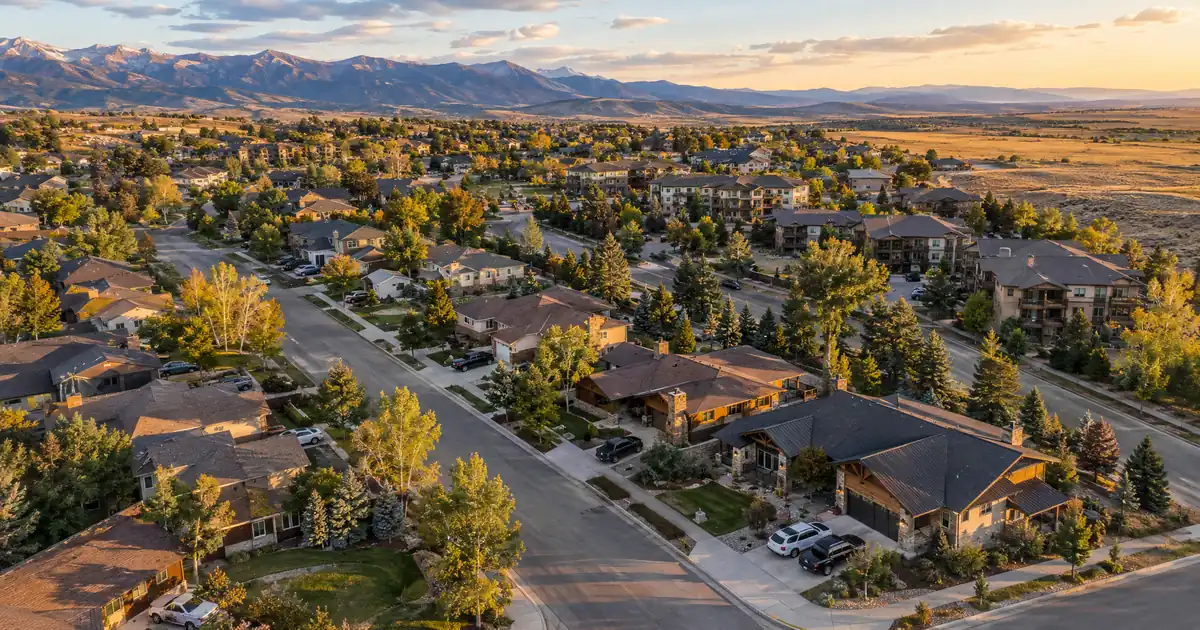
Zillow puts the average Lone Tree home value at $895,306, while Apartment List puts the citywide median rent at $1,904. That works out to gross rent near 0.21 percent of value per month. Any cash out refinance investment property plan in Lone Tree, Colorado has to start from that ratio, because the 75 percent loan-to-value ceiling and the 1.00 coverage benchmark both press hard against it. The market has real strengths, and they sit in the job base and in a narrow slice of attached housing, not in the headline home values.
DSCR Cash-Out Calculator
Run the cash-out numbers in Lone Tree, CO
Rate source: Freddie Mac 30-yr average via FRED® — Federal Reserve Bank of St. Louis · effective Sep 24, 2026
Prefilled with starting assumptions — enter your property’s value, balance, taxes, and insurance for a more accurate picture.
Program parameters update from Lendmire’s centralized guideline source. Taxes and insurance are editable estimates.
As of Sep 24, 2026 · General Freddie Mac market benchmark, not a Lendmire loan offer. Property value, balance, taxes, and insurance are editable estimates. Maximum loan-to-value varies by lender, program, property type, and seasoning. Not a Loan Estimate, approval, or commitment to lend. Program availability and eligibility are subject to lender guidelines, credit approval, property review, and underwriting.
The Quick Read:
A cash-out refinance on a Lone Tree, Colorado rental is underwritten primarily on the property’s rental income measured against its full monthly obligation, so the file has to show coverage near 1.00 at no more than 75 percent of appraised value, after about six months of ownership, subject to lender guidelines.
- Gross rent runs roughly 0.21 to 0.26 percent of value monthly, per Zillow and the rent portals.
- Attached product priced near the low $600Ks carries the strongest rent-to-value ratio in the city.
- Average value is down 3.3 percent year over year, which shrinks cash-out headroom.
- A modeled townhome lands below 1.00 at 75 percent LTV and near 1.00 around 65 percent.
- Heritage Hills and Montecito are weak fits for this structure.
What 75 Percent Does to a Townhome
At the full 75 percent cap, a Lone Tree townhome at entry-level pricing modeled with a $3,200 rent lands around 0.9x. Trimming leverage to roughly 65 percent pulls it to about 1.0x. Both figures include taxes and insurance in the monthly obligation.
Run the numbers on it this way. Zumper shows a three-bedroom, 2.5-bath townhouse listed at $3,200. DougCo Social says condos and townhomes start in the low $600Ks. Assume a $620,000 appraised value and that $3,200 rent. These are modeled assumptions, and a single listing is not a market rent. Coverage computes to about 0.9x at 75 percent LTV, roughly 1.0x near 65 percent, and low-1.1 territory near 60 percent. Always use rent divided by the full monthly obligation, not principal and interest alone.
Now the citywide version. Take the $895,306 average value and a $2,337 average rent from Zumper, then apply 75 percent LTV. Coverage falls well under 0.5x. Not close.
When a file lands below 1.00 on long-term rent, there are paths a lender may review: a lower-leverage structure, an interest-only period, or a sub-1.00 program with stronger credit and more reserves. Approval still turns on lender guidelines, credit, reserves, and property review. Note the tradeoff, though. Reduced leverage means less cash out. If the goal is maximum proceeds, this submarket may be the wrong source of them.
Program guidance for this lane typically runs as follows, subject to lender guidelines:
- Cash-out LTV up to 75 percent.
- About six months of seasoning, measured from title recording.
- A 1.00 coverage benchmark.
- Credit tiers from 620 upward.
- About six months of reserves, rising to about nine above $1,500,000.
- Loan amounts up to $3,000,000 on standard programs.
- These specifics are subject to lender guidelines and a full review of property, leverage, and credit.
Where the Equity Actually Sits
Lyric, RidgeGate, and the Lincoln Station corridor are the three places in Lone Tree where coverage has a realistic chance of clearing. They are also where the owner’s equity position decides what a cash-out can deliver.
Lyric has the lowest entry point. A Realtor.com-based summary from Mariel Ross puts Lyric’s neighborhood median at $577,515, against $1,780,000 in Heritage Hills. Lyric’s Phase 1 covers 185 acres and 430 homes, and the city notes approvals for 190 condominium units and 80 townhomes at Southwest Village. Newer attached product tends to be lower-basis, which helps coverage. More supply also means owners compete with builder inventory for renters. That cuts against rent growth, so underwrite flat.
RidgeGate is where the demand story is strongest. The City of Lone Tree describes a 3,500-acre planned development with a buildout target of 30,000 residents and 50,000 jobs (a projection, not a current count). The developer says the east side plans roughly 8,000 homes, including 480 attainable units. West-side pricing runs higher. DougCo Social lists RidgeGate West at $700K to $1.1M and East at $650K to $1M, while attached product starts in the low $600Ks. Only the low end of that range works against current rents.
Lincoln Station and the Park Meadows corridor sit around the last light-rail stop south of Denver. DougCo Social calls Lincoln Station and Club Terrace the most affordable entry points in the city. The tenant pool is plausibly retail and service workers plus commuters, though that is inference from location, not a surveyed profile. Supply here leans toward apartments, which matters in the next section.
The older north-of-Lincoln subdivisions (Eastridge, Centennial Ridge, Club Terrace) are probably the best candidates for a workforce-style single-family or townhome file. No source confirms rents there, so the lender’s rent appraisal will be the real test. Highlands Ranch and Inverness border the city with more affordable stock, and owners who want to recycle proceeds into a second property will likely find better coverage math there than inside Lone Tree. That is a judgment call, and adjacent submarkets were not researched in depth.
Skip Heritage Hills and Montecito
Heritage Hills and Montecito are poor fits for a DSCR cash-out. Heritage Hills medians reach $1,780,000 per the Mariel Ross summary, and a local agent page places luxury homes in the millions. Montecito is priced in the high six figures to low seven. Against rents that top out in the low-to-mid thousands, coverage does not clear without heavy equity and minimal leverage.
If you own in either neighborhood, the better question is whether a cash-out makes sense as a DSCR at all. A borrower with strong personal income and documentation may find conventional financing cheaper, because conventional underwriting leans on the borrower’s own income, while DSCR underwriting leans on the property. The flip point is portfolio size and documentation. Once a borrower is past four financed properties, or when traditional personal-income documentation doesn’t show rental income cleanly, DSCR becomes the practical lane.
Soft Rents, Soft Values
Both sides of a cash-out refinance are softening in Lone Tree. Zillow shows average value down 3.3 percent year over year. Apartment List shows the median rent down 1.4 percent, and Zumper shows average rent down 2 percent. Appraised value caps the proceeds, and rent caps the qualifying income.
That is the core tension. An owner who bought before recent softness may have less equity headroom than the purchase-era math suggested. Under a 75 percent ceiling, the headroom is simply 75 percent of the new appraisal minus what is owed. Picture an owner carrying a balance near 55 percent of a flat appraisal. That leaves about 20 points of value in play, before reserves and before coverage checks. If the appraisal comes in 3 percent lower, that headroom shrinks by roughly 2 points. Small slips eat a large share of a thin cushion.
This is a genuine toss-up for owners sitting near the seasoning mark: waiting six months gets the file eligible, but the appraisal could arrive lower than hoped. Underwrite with flat or lower value and rent, not a rebound. Reviewing the investor refinance breakdown before ordering anything helps frame what the proceeds are for.
The rental supply mix adds another layer. Point2Homes, drawing on Yardi data for larger buildings, counts 1,148 rentals in Lone Tree. One-bedrooms are 44 percent of them, and units with four or more bedrooms are just 2 percent. NeighborhoodScout (older data, so directional only) puts duplexes and small converted buildings near 3 percent of housing units. Small multifamily is rare here, so the 2-4 unit cash-out math that works in other Front Range suburbs mostly isn’t available. Concessions of one to two months free have shown up at new apartment communities in a dated Apartments.com snapshot. Small owners shouldn’t compete with that on one- and two-bedroom units. Larger homes face less institutional competition.
Does the Job Base Carry the Thesis?
The job base is the strongest argument for holding a Lone Tree rental, and it supports tenant retention more than rent growth. Data USA counts about 7.94k employed people in the city’s economy, which is large for a city of more than 15,000 residents per the city’s community profile. HCA HealthONE Sky Ridge reports more than 1,300 employees, and DougCo Social describes a 650,000-square-foot Schwab campus built for about 2,000 workers. The city also names Kaiser Permanente and Lockheed Martin as employers.
Hospital and corporate incomes suggest steady renewals. Because the city has few small rentals, some of those workers likely rent nearby in Highlands Ranch or along the light-rail corridor, which is inference, not a surveyed profile. Stable tenants support rent used for lender review. They don’t lift rent above what the market will bear, and every current rent source points flat to slightly down.
Here is what a broker’s desk tends to see in markets shaped like this one, where pricing is high and rents are soft. Lendmire’s deal desk finds that the cleaner files come in with a rent appraisal already in hand and a coverage number computed on the full monthly obligation. The common friction point is an owner who sized the cash-out off a prior valuation and then faced a lower appraisal. Files that present a modest, flat-rent assumption tend to hold together better than ones that lean on a listing rent.
Frequently Asked Questions
How do you qualify for a DSCR cash-out refinance in Lone Tree, Colorado?
The property’s rent has to cover its full monthly obligation, typically at or above 1.00, with loan-to-value at or below 75 percent. The property generally needs about six months of ownership from title recording, credit of 620 or higher, and roughly six months of reserves. Lender guidelines govern the final answer. In Lone Tree, the coverage test is usually the binding constraint. The guide “What Is a DSCR Loan” is worth reading before ordering an appraisal.
What are the requirements for an investment property loan in Lone Tree, Colorado?
Requirements are set by the lender and vary by borrower, property, and loan scenario. Pricing and available terms vary by lender, borrower profile, property type, and full underwriting review. Manufactured homes, log homes, and barndominiums fall outside these programs. Lone Tree’s stock is mostly single-family and attached homes, so property type is rarely the issue. Price against rent is.
DSCR vs. conventional financing
There are two common ways to finance an investment property in Lone Tree, CO, and they qualify you differently — here’s how investors weigh them.
Why investors choose it
- Qualifies on the property’s rental income — no personal tax returns, W-2s, or pay stubs needed to document income.
- No personal debt-to-income ceiling to clear, so existing mortgages and obligations don’t cap your borrowing the same way.
- Can be closed in an LLC, keeping the property inside a business entity.
- Built for scaling — not held to the limit on number of financed properties that conventional financing applies.
- Underwriting centers on the deal: generally qualifies when the rent covers the payment, a 1.00x coverage ratio being a common baseline (confirmed in underwriting).
- Designed specifically for investment property, including long-term and, where the program allows, short-term rentals.
Where it’s strong
- Often the lowest ongoing financing cost for a buyer who fully qualifies on personal income — a fit for a first property or a cost-first purchase.
Trade-offs for investors
- Requires full personal income documentation and must fit within a debt-to-income limit — salary, existing debts, and other mortgages all count.
- Typically held in your personal name rather than a business entity.
- Caps how many financed properties you can carry, which can become a ceiling as a portfolio grows.
- Evaluates you as a borrower as much as the property, which usually means more paperwork.
How investors usually choose: a first or single property often optimizes for the lowest financing cost; portfolio builders often optimize for leverage, vesting in an LLC, and scaling past conventional caps. The right answer depends on your goals, the property, and current guidelines — both paths run through select lenders in Lendmire’s wholesale network, with eligibility and terms confirmed in underwriting.
Why is cash-out harder in Lone Tree than in cheaper denver suburbs?
Because value is high against rent. Gross rent runs about 0.21 to 0.26 percent of value per month citywide, well below what a leveraged file typically needs to reach 1.00. Lower-priced attached product near 0.5 percent monthly, based on one townhouse listing, is the exception, not the norm. Owners of higher-priced homes often find the cash-out has to be sized down to reach qualifying coverage.
Does the RidgeGate buildout help a rental owner’s refinance?
It supports long-term demand, but it doesn’t guarantee appraisal gains or rent growth. The 30,000-resident, 50,000-job target is a projection. New inventory in Lyric and RidgeGate East also adds supply that competes with existing rentals, so underwrite flat values and rents instead of counting on buildout to lift the numbers.
The Bottom Line
Colorado-wide options are covered under DSCR loans in Colorado, and the mechanics of pulling equity are laid out in the cash-out refinance details. Both matter less than the Lone Tree arithmetic: run coverage on the full monthly obligation, assume flat value and rent, and size the loan to the number instead of the cap.
If you only take one thing from this piece, it’s this: in Lone Tree, the 75 percent ceiling is rarely the limit, because rent against a high basis decides the cash-out amount first.
For current guidelines and terms, see Lendmire’s DSCR loan programs page.
About Lendmire
Lendmire is a non-QM mortgage brokerage (NMLS# 2371349) that arranges DSCR investor loans in 41 markets, including Washington, D.C., through wholesale and investor-lending channels. Lenders evaluate these loans on the property’s rental income rather than personal income, subject to lender guidelines, which suits LLC-owned portfolios, self-employed investors, and operators scaling past conventional loan caps. The firm was recognized by Scotsman Guide in 2025 as a Top Mortgage Workplace and was a top-ranked workplace in 2026; see also the 2025 Scotsman Guide recognition.
Get Started
Ready to find the right loan for you?
In about 30 seconds you can review financing options available for your investment property. No commitment required.
Informational only. Not a Loan Estimate, approval, or commitment to lend. Program availability and eligibility are subject to lender guidelines, credit approval, property review, and underwriting.
References
1. Zillow Home Values: Lone Tree
3. Zumper
5. Zumper Rent Research: Lone Tree
6. Mariel Ross
7. City of Lone Tree: RidgeGate Planned Development
8. developer
9. Point2Homes
11. Apartments.com
13. City of Lone Tree: Community Profile
15. Scotsman Guide — Top Workplaces 2026
16. 2025 Scotsman Guide recognition
This article is part of Lendmire’s investment property cash-out refinance program — full qualification details, guidelines, and scenarios live on the program page.
Related reading: Luxury Rental DSCR Loans In New Jersey · Jersey Shore Vacation Rental Loans: DSCR Financing In Ocean City, Cape May And Long Beach Island · DSCR Cash-out Refinance In New Jersey: Pulling Equity From A Rental
Guides: Investment Property Cash-Out Refinance in Colorado
Brandon Miller
Founder & CEO, Mortgage Loan Originator, Lendmire LLC
- Mortgage Loan Originator · NMLS# 1129696 · Verify on NMLS Consumer Access
- North Carolina Real Estate Broker · License# 343312 · Verify on NCREC
- North Carolina Insurance Producer · License# 19053198 · Property, Casualty, Life, Health · Verify on NAIC SBS
- Lendmire LLC · Firm NMLS# 2371349 · Verify firm licensure
Required disclosures. Lendmire (NMLS# 2371349) operates as a licensed mortgage broker, not a direct lender or depository. The discussion in this article is general in nature and should not be relied upon as financial, legal, or tax advice — every investment scenario is unique and should be reviewed by a qualified professional. Any loan inquiry is subject to lender underwriting, and this article is not a commitment to lend or a guarantee of approval. Mortgage rates, loan terms, and program guidelines vary by borrower, property, and state, and may change without notice. Equal Housing Opportunity. Verify licensure at NMLS Consumer Access.