
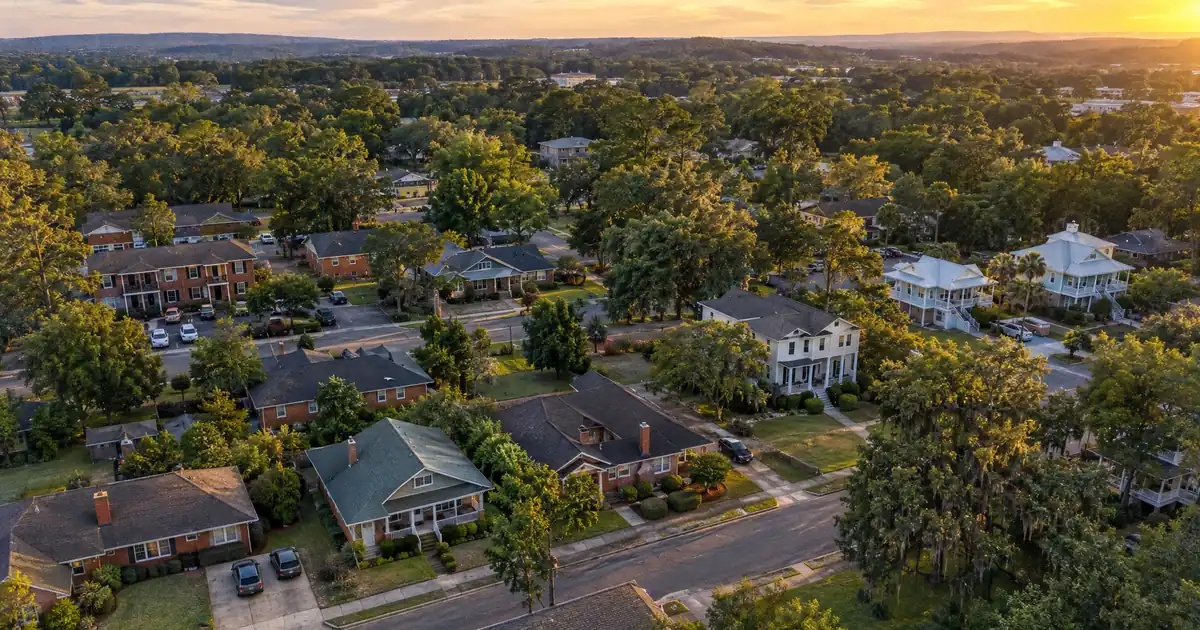
Picture an investor holding a three-bedroom rental in Eagles Landing, bought a few years back and now leased to a commuter family. The mortgage balance has come down and the rent has held. The question is how much equity the next appraisal will show, because that one number sets the cash-out refinance investment property math. In a market where sources disagree on direction, the appraisal decides everything.
This article covers equity extraction only: seasoning, the LTV ceiling, how the appraisal is likely to land, and what the rent has to cover. Investors in Mcdonough, Georgia work with Lendmire (NMLS# 2371349) to place DSCR financing through wholesale lenders reaching 41 markets, including D.C. Lendmire arranges the loan. Lenders review and approve it.
DSCR Cash-Out Calculator
Run the cash-out numbers in Mcdonough, GA
Rate source: Freddie Mac 30-yr average via FRED® — Federal Reserve Bank of St. Louis · effective Sep 24, 2026
Prefilled with starting assumptions — enter your property’s value, balance, taxes, and insurance for a more accurate picture.
Program parameters update from Lendmire’s centralized guideline source. Taxes and insurance are editable estimates.
As of Sep 24, 2026 · General Freddie Mac market benchmark, not a Lendmire loan offer. Property value, balance, taxes, and insurance are editable estimates. Maximum loan-to-value varies by lender, program, property type, and seasoning. Not a Loan Estimate, approval, or commitment to lend. Program availability and eligibility are subject to lender guidelines, credit approval, property review, and underwriting.
The Quick Read:
A DSCR cash-out refinance on an investment property in McDonough, Georgia is underwritten primarily on the property’s rental income measured against its full monthly obligation, with the new loan capped at a 75 percent LTV ceiling and a roughly six-month seasoning period counted from title recording, all subject to lender guidelines, credit review, and the appraisal.
- Redfin shows a city median sale price of $314K, down 7.4 percent year over year.
- A local manager reports median house rent near $2,095, well above blended medians.
- Piedmont Henry’s tower raises licensed capacity to 355 beds.
- Duplex and fourplex stock is thin. Single-family and townhomes carry the rental market.
Mcdonough Market Snapshot
A quick read on the Mcdonough investor landscape — figures come from the cited sources below. Confirm current property-level numbers before underwriting.
| Metric | Detail |
|---|---|
| University enrollment | ~42,000 students (Henry County School District) |
| Employment | 8,000 jobs (MetroAtlanta.Jobs blog) |
The Appraisal Is the Whole Game
Do not underwrite equity from appreciation here. Prices are flat to soft, and the data sources give different answers. The cash-out is sized off the appraised value, so comp selection can move the result more than anything the owner does.
| Source | Figure | Direction |
|---|---|---|
| Redfin, city median | $314K | Down 7.4 percent |
| Zillow home value index | $336,835 | Down 2.7 percent |
| Homes.com multi-family page | $368,445 | Up 9 percent |
Same city. Three methodologies. Redfin also puts price per square foot at $130, down 19.0 percent, with homes selling in about 62 days. A county median from an older Redfin reading sat at $340K, down 2.9 percent.
What does that mean for a file? A refinance on a house bought near a prior peak may come back with less cushion than the owner expects. Appraisal reconsideration becomes a routine step. A reconsideration packet with recent in-neighborhood sales, condition adjustments, and closed comps of similar size and age can recover value when the first report leans on stale or mismatched comps. It cannot recover value the market no longer supports.
The program ceiling is the other constraint. On this type of cash-out, the LTV cap is 75 percent, and it is a hard cap. The purchase-side 80 percent figure does not apply. Seasoning runs about six months of ownership, measured from title recording, and the settlement statement documents it. Files that assume the seasoning away get kicked back. Available proceeds depend on rent used for lender review, full PITIA, reserves, and that ceiling. They are never a guaranteed figure, and program terms are subject to lender overlays.
Coverage Math on a Modeled House
House rents in McDonough are good enough for coverage near 1.0x at full leverage and at or just above it at lower leverage. The catch is which rent you use. The published rent figures span a wide range.
- Apartments.com puts the average house rental at $2,222.
- Gatekeeper Properties, a local manager, reports a house median near $2,095 against roughly $1,422 for smaller properties. That is marketing-grade data, so check it against current comps. Zumper shows an all-types median of $1,915. Apartment List shows $1,435, down 1.3 percent year over year. Methodology differs, and this is the low end.
Run the numbers on a modeled $340,000 three-bedroom house. These are assumptions, not market data. The coverage ratio divides monthly rent by the full monthly obligation: principal, interest, taxes, and insurance. At 75 percent LTV with the $2,095 house rent, coverage lands about 1.0x. Swap in a $1,860 blended rent and it slips into the low 0.9x range. At 65 percent LTV, the same two rents land around 1.1x and 1.0x.
Sub-1.00 is not a dead end, but it is not a given either. Structures a lender may review include a sub-1.00 program, an interest-only period, lower leverage, or a larger reserve position. Each comes with different pricing or more cash in the file, and all remain subject to lender guidelines, credit approval, and property review. The standard baseline is 1.00x, since rent covers the obligation at that level. Anything lower needs compensating factors. For the mechanics, see the guide “What Is a DSCR Loan”.
The practical rule: underwrite against the lower blended rent, not the house-only average. Larger, newer three- to five-bedroom homes carry a rent premium. Older, smaller stock does not.
Where the Rent Holds Up
Three pockets matter for a refinance: Eagles Landing, the newer townhome product, and Lake Dow.
Eagles Landing is the established golf and country-club area on the McDonough side, about two miles from Piedmont Henry Hospital. Apartments.com lists 46 single-family homes for rent there, which gives appraisers and underwriters rental comps to work with. Tenant demand leans toward hospital staff and commuter households. The apartment rent data for the area is too wide to use (one-bedrooms range from $1,178 to $4,789), so lean on house comps instead.
Newer townhomes (Avalon, Towne Village, Pembrooke Park, Lakehaven, Brush Arbor, and the McDonough Town Center area) have visible rents. Apartments.com puts the average townhome rent at $1,986, with a range of $1,250 to $2,850. Homes.com shows three-bedroom townhouses at $1,813 and four-bedroom at $2,450. Comparable rents make lease documentation easy. New-construction listings also set a price anchor: Redfin shows 188 new homes at a median list of $339K. An older townhome will be appraised against that backdrop.
Lake Dow sits at the higher price points. Redfin reports an average house price of $413K, down 14.7 percent year over year on an undated page, with homes selling in about 108 days. No sourced neighborhood rent exists. Higher price with no matching rent premium usually means thinner coverage, so expect this pocket to need lower leverage. (It also showed the sharpest price drop of anything in the research.)
Flat Rents, Big Renter Pool
Rent growth is not going to close a coverage gap. RentCafe’s data for 50-plus-unit buildings shows average rent moving from $1,676 to $1,687, about 0.67 percent. Two-bedrooms average $1,713 and three-bedrooms $2,093. About 50 percent of households rent, which is a deep tenant pool but also a deep supply pool.
The supply side is visible. The Rosemoor is a completed 222-home rental townhome community near Foster Drive. Institutional build-to-rent supply competes with individual owners for the same renters. No source ties that supply to flat rents directly, but the two facts sit side by side. A refinance file should use in-place leases or current market rent, not a projection.
Demand Anchors That Support Holding the Asset
The tenant base is workforce and healthcare, spread across more than one employer type. That diversity matters when a lender asks about rent durability.
Data USA shows 15.9k employed residents, up 5.73 percent over the prior year. The top resident sectors are Retail Trade (2,715), Transportation and Warehousing (2,316), and Health Care and Social Assistance (1,796). Census Bureau QuickFacts puts the population near 30,947 and mean commute time at 32.5 minutes. The area is car-dependent, so renters are I-75 commuters.
Hospital expansion adds a layer. Piedmont Henry Hospital sits near the Stockbridge and McDonough line, so treat it as a nearby anchor and not an in-city one. Georgia Trend documents a $215 million tower adding 95 inpatient rooms and raising licensed capacity to 355 beds. The same article reports Home Depot hiring 600 associates for a Locust Grove warehouse and Ken’s Foods creating 70 jobs in McDonough. Piedmont lists a Level III Trauma Center and a Level 3 NICU at the campus. Clinical and support hiring tends to favor two- and three-bedroom rentals within commuting range. Henry County Schools, a district of nearly 42,000 students across 53 schools, is headquartered in McDonough and is a steady local employer.
Small Multifamily: Thin Comps, Thin Inventory
Duplex and fourplex stock in McDonough proper is scarce. Redfin showed one multi-family unit for sale in a recent month, and a Compass listing that surfaced first appeared to be land and not a built duplex. The realistic play is single-family or townhome. Stacking units generally means buying nearby (Stockbridge or Conyers surface in multi-family searches) or building.
The appraisal angle matters more than the inventory angle. Thin duplex comps make cash-out appraisals harder, because the appraiser reaches for sales outside the immediate area and the adjustments get larger. That is the file friction to plan for.
What the File Needs Before It Goes In
Cash-out files on Georgia rentals tend to fail on preventable gaps, not on the coverage number. The cleaner files from a documentation standpoint usually have the signed lease and proof of the most recent rent deposits, a settlement statement that shows the title recording date, an insurance binder that is current when the lender reviews it, and reserves documentation that matches the requirement. Markets like this one, with mixed price data and a large renter base, also tend to produce appraisals with wide comp ranges, so a reconsideration packet assembled in advance saves a round trip.
1. Confirm seasoning. Pull the recorded deed and settlement statement and count about six months from recording.
2. Gather lease evidence. Current lease, payment history, and any rent-roll summary if the property is part of a portfolio.
3. Document reserves. About six months of PITIA is the typical guideline, more on larger balances. Statements should show the funds and their source.
4. If held in an LLC, collect the entity documents early, subject to lender program eligibility.
5. Pre-build the comp set. Recent sales in the same subdivision or neighborhood, sized and dated so a reconsideration can be filed from it.
6. Model leverage honestly. If coverage pencils below 1.00x at 75 percent, run lower LTV before the lender does.
Investors can review my scenario or call 828-256-2183 to test a specific property. Borrowers comparing paths can read the guide “Where DSCR and Conventional Diverge”. Georgia-specific program detail sits on Lendmire’s Georgia DSCR loan programs page.
What the Proceeds Do Next
Cash-out is a capital source, not a goal. The equity recycle pathway works when the proceeds fund a down payment or reserves on the next rental, and the refinanced property still covers itself. Borrowing against a flat-value, flat-rent house to buy a second house in the same market compounds exposure. The stronger case, honestly, might be using proceeds to diversify geography, though investors who know McDonough’s townhome comps well could argue for staying put. It depends on how much cushion the first property has after the refinance.
Frequently Asked Questions
How do you qualify for a DSCR loan in McDonough, Georgia?
Qualification centers on the property’s rent against its full monthly obligation, with a typical 1.00x baseline. Lenders also review credit (tiers generally start at a 620 floor), reserves of about six months, and the appraisal. Personal income documentation is generally not the focus, and exact eligibility depends on lender guidelines.
DSCR vs. conventional financing
Two common ways to finance an investment property in Mcdonough, GA. They qualify you differently — here’s how investors weigh them.
Why investors choose it
- Qualifies on the property’s rental income — no personal tax returns, W-2s, or pay stubs needed to document income.
- No personal debt-to-income ceiling to clear, so existing mortgages and obligations don’t cap your borrowing the same way.
- Can be closed in an LLC, keeping the property inside a business entity.
- Built for scaling — not held to the limit on number of financed properties that conventional financing applies.
- Underwriting centers on the deal: generally qualifies when the rent covers the payment, a 1.00x coverage ratio being a common baseline (confirmed in underwriting).
- Designed specifically for investment property, including long-term and, where the program allows, short-term rentals.
Where it’s strong
- Often the lowest ongoing financing cost for a buyer who fully qualifies on personal income — a fit for a first property or a cost-first purchase.
Trade-offs for investors
- Requires full personal income documentation and must fit within a debt-to-income limit — salary, existing debts, and other mortgages all count.
- Typically held in your personal name rather than a business entity.
- Caps how many financed properties you can carry, which can become a ceiling as a portfolio grows.
- Evaluates you as a borrower as much as the property, which usually means more paperwork.
How investors usually choose: a first or single property often optimizes for the lowest financing cost; portfolio builders often optimize for leverage, vesting in an LLC, and scaling past conventional caps. The right answer depends on your goals, the property, and current guidelines — both paths run through select lenders in Lendmire’s wholesale network, with eligibility and terms confirmed in underwriting.
What are the requirements for an investment property loan in McDonough, Georgia?
Expect about six months of seasoning on a cash-out, a 75 percent LTV ceiling, reserves of about six months of PITIA, and a rent figure supported by a lease or appraiser’s rent schedule. Loan sizes run up to $3,000,000 on standard programs. Manufactured homes, log homes, and barndominiums fall outside these programs.
Does falling or flat pricing rule out a cash-out refinance in McDonough?
Not automatically, but it shrinks the cushion. The loan is sized on the appraised value, and sources show the city median anywhere from down 7.4 percent to up 9 percent depending on methodology. Lower leverage or a strong reconsideration packet may keep the math workable.
Can Lendmire help structure DSCR financing for small multifamily investment properties in McDonough?
Yes, subject to lender guidelines. Lendmire places DSCR investor loans, and standard programs go up to $3,000,000. Duplex and fourplex inventory in McDonough is thin, so many of these files involve nearby markets.
Which McDonough rental types are easiest to refinance?
Single-family rentals with visible comps, especially in Eagles Landing, and townhomes with documented rents. Both have published rental data and active listings. Older small houses at the low end of the $1,422 to $2,095 range carry tighter coverage.
Against the Neighbors
For a single-family or townhome cash-out, McDonough’s documented rents and comps make the math workable at moderate leverage. For a duplex, Stockbridge and Conyers offer more comps and more stock, so the math favors them right now.
About Lendmire
A DSCR-focused mortgage broker, Lendmire (NMLS# 2371349) places investor financing across 41 markets, 40 states plus Washington, D.C. Eligibility is generally reviewed by the lender on property cash flow rather than traditional personal-income documentation, subject to lender guidelines. Lendmire was recognized by Scotsman Guide as a 2026 Top Workplace and recognized by Scotsman Guide in 2025 as a Top Mortgage Workplace.
Get Started
Ready to find the right loan for you?
In about 30 seconds you can review financing options available for your investment property. No commitment required.
Informational only. Not a Loan Estimate, approval, or commitment to lend. Program availability and eligibility are subject to lender guidelines, credit approval, property review, and underwriting.
References
1. Redfin — McDonough Housing Market
2. gatekeeperproperties.com — Mcdonough Property Management
3. georgiatrend.com — Mcdonough Henry County More Than Meets the Eye
7. Homes.com multi-family page
10. Zumper
11. Apartment List
12. ApartmentHomeLiving — Mcdonough GA Eagles Landing
13. Apartments.com puts the average townhome rent at $1,986
14. Homes.com
15. Redfin shows 188 new homes at a median list of $339K
16. Redfin reports an average house price of $413K
17. RentCafe’s data
18. The Rosemoor
19. Data USA
21. Piedmont lists
22. recognized by Scotsman Guide as a 2026 Top Workplace
23. recognized by Scotsman Guide in 2025
This article is part of Lendmire’s investment property cash-out refinance program — full qualification details, guidelines, and scenarios live on the program page.
Guides: Investment Property Cash-Out Refinance in Georgia
Brandon Miller
Founder & CEO, Mortgage Loan Originator, Lendmire LLC
- Mortgage Loan Originator · NMLS# 1129696 · Verify on NMLS Consumer Access
- North Carolina Real Estate Broker · License# 343312 · Verify on NCREC
- North Carolina Insurance Producer · License# 19053198 · Property, Casualty, Life, Health · Verify on NAIC SBS
- Lendmire LLC · Firm NMLS# 2371349 · Verify firm licensure
Compliance and disclosures. Lendmire (NMLS# 2371349) is a licensed mortgage broker and is not a direct lender, depository institution, financial advisor, or tax professional. Content in this article is general market analysis and educational information — not financial, legal, or tax advice for any specific situation. Lendmire does not guarantee loan approval; every transaction is subject to underwriting by the funding lender. Mortgage pricing and loan program guidelines are subject to change at any time without notice and vary by borrower characteristics, property type, and state regulations. Lendmire complies with Equal Housing Opportunity. Licensure verification: NMLS Consumer Access.