
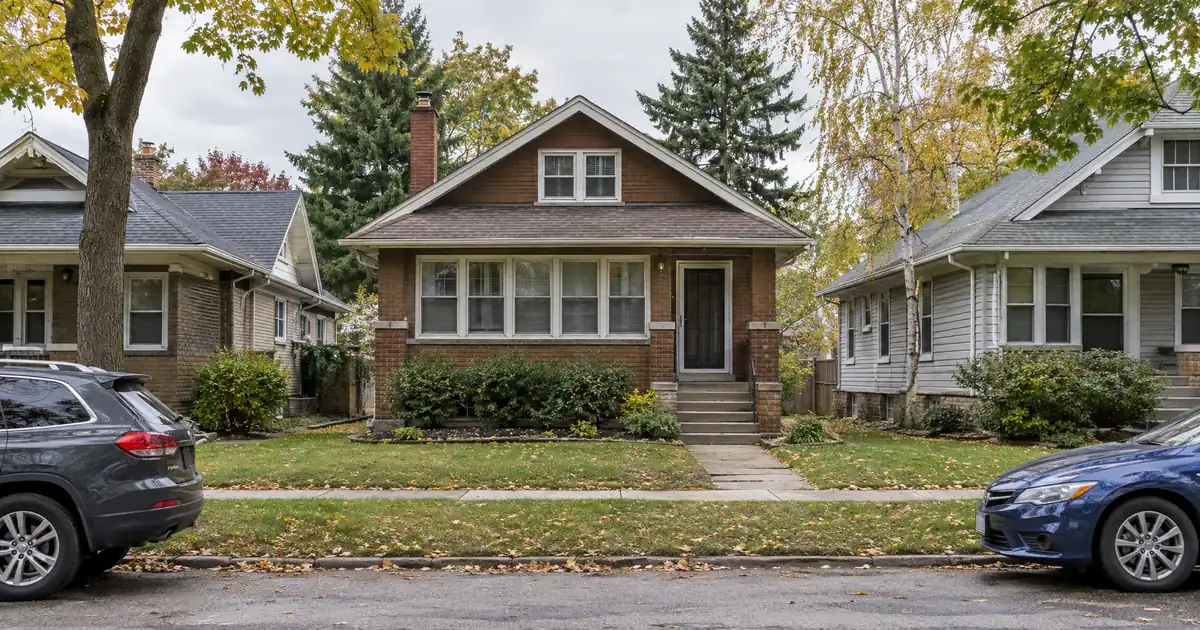
Most investors who go looking for cash-out proceeds discover the obstacle late. The equity looks healthy on a home-value app, but the lender’s math starts with the rent, and the rent has to cover the full monthly obligation on the new, larger balance. Add a seasoning clock and an appraiser who may not see what the owner sees, and the “equity” can shrink fast.
That friction defines the cash out refinance investment property New Berlin Wisconsin question. Lendmire (NMLS# 2371349) is a DSCR-focused mortgage broker. New Berlin, Wisconsin investors can have DSCR scenarios reviewed through lender programs that Lendmire helps place across 41 markets, including Washington, D.C. This article skips purchase mechanics and looks at what the numbers here say about pulling equity out of a property you already own.
DSCR Cash-Out Calculator
Run the cash-out numbers in New Berlin, WI
Rate source: Freddie Mac 30-yr average via FRED® — Federal Reserve Bank of St. Louis · effective Sep 24, 2026
Prefilled with starting assumptions — enter your property’s value, balance, taxes, and insurance for a more accurate picture.
Program parameters update from Lendmire’s centralized guideline source. Taxes and insurance are editable estimates.
As of Sep 24, 2026 · General Freddie Mac market benchmark, not a Lendmire loan offer. Property value, balance, taxes, and insurance are editable estimates. Maximum loan-to-value varies by lender, program, property type, and seasoning. Not a Loan Estimate, approval, or commitment to lend. Program availability and eligibility are subject to lender guidelines, credit approval, property review, and underwriting.
The Short Version:
A cash-out refinance on a New Berlin, Wisconsin rental is underwritten primarily on the property’s rental income measured against its full monthly obligation, including taxes and insurance. The file must also clear a seasoning period of roughly six months from title recording, a 75% loan-to-value ceiling, and reserve requirements, all subject to lender guidelines.
- Zillow puts the average home value at $432,885, a high starting basis.
- Average apartment rents run $1,633 to $1,790 across sources, thin against that basis.
- Roughly 690 proposed apartment units along Moorland could cap rent growth on comparable 2-3 bedroom rentals.
- Multi-unit or lower-basis properties generally fit coverage math better than large single-family homes.
Why Is the Coverage Number the Bottleneck in New Berlin?
Single-family rentals here start from a high price basis and a modest rent base, so coverage tightens fast as leverage rises. The city’s strengths are jobs and low for-sale supply, not yield. That matters because a cash-out loan resizes the debt to a higher balance, and the rent has to carry it.
Zillow’s home value index shows an average of $432,885, up 4.1% over the past year. Rents sit well below what that price would need for comfortable coverage. RentCafe reports an average of $1,633, with 2-bedrooms at $1,685 and 3-bedrooms at $2,109. Zillow Rental Manager shows a $1,750 average across property types, down $45 from the prior year, and labels the rental market “COOL.”
Two caveats on those figures. RentCafe’s dataset covers buildings with 50 or more units, so it reflects apartment complexes, not the duplex or single-family rentals most small investors hold. And rent growth across sources runs from slightly negative to slightly positive, so the honest read is flat.
A quick way to see the tension: $1,750 against $432,885 is about 0.40% of value per month. That is thin for DSCR at high leverage. It’s my arithmetic, not a sourced yield, but it frames everything that follows.
If you’re a W-2 borrower with one rental and strong personal income, it’s worth pricing conventional financing first. Lendmire’s DSCR-versus-conventional breakdown covers the flip points. With rent-to-price this thin, DSCR earns its place mainly for entity-held or multi-property investors, or for files where traditional personal-income documentation doesn’t show the income cleanly.
Reading the Price Data
Pricing sources for New Berlin don’t agree, and the spread matters because the appraised value sets your 75% ceiling. This article uses Zillow’s $432,885 average home value as the canonical figure. Other sources measure different things and land lower or higher.
Redfin reported a median sale price near $386K, up 1.6% year over year, with homes taking 46 days on average versus 37 the year before. That’s a median of closed sales from an older data pull, so it will differ from an average value index. The City of New Berlin reports that ZIP 53151 ranked No. 9 nationally in Realtor.com’s Hottest ZIP Codes report, with a median listing price of $445,000 and homes selling an average of 1.12% above asking. Movoto shows a median listing price of $474K, but that’s list price, not what buyers pay.
So appreciation here is modest and mixed, not a clean trend line. Demand is tight at the top end, while days on market lengthened in one dataset. A seller-services site, Ridley, reports a lower median with a year-over-year decline, which I treat as directional only.
Skeptic’s read: don’t underwrite a cash-out assuming the appraiser lands on the highest number you can find. Build the file on the lower reading, and treat anything above it as upside.
What the Coverage Math Looks Like (Modeled, Not Sourced)
At the maximum 75% cash-out leverage, single-family rents in this price range typically produce coverage well below 1.00. Dropping leverage, or moving to a lower-basis property, is what brings the number up. The figures below are modeled, not market facts.
The inputs: the Zillow average value as the property’s appraised value, rents taken from the sources above, and a full monthly obligation that includes principal and interest on a 30-year amortization plus Wisconsin-average taxes and insurance. Rounded down, per conservative practice.
| Modeled scenario | LTV | Coverage (incl. Taxes and insurance |
|---|---|---|
| $1,750 rent, $432,885 value | 75% | Roughly 0.6x |
| $2,109 rent (3BR), same value | 75% | Roughly 0.7x |
| $2,999 house rent (small sample) | 75% | About 1.0x at best |
| $2,999 house rent, same value | 60% | About 1.2x |
| $2,109 rent (3BR), same value | 60% | Roughly 0.85x |
That $2,999 figure comes from Zumper’s house-rent average, a small sample I wouldn’t build an underwrite on. Zumper’s apartment average is $1,790.
Most standard DSCR programs are built around a 1.00x benchmark, because rent covers the payment at that level. Some lenders review lower ratios, but those files usually bring stronger compensating factors, lower leverage, different pricing, or more cash in. If a New Berlin single-family lands below 1.00, the paths a lender may review include a sub-1.00 program, an interest-only structure, or a smaller cash-out request. Each is subject to lender guidelines, credit approval, and property review.
There’s a better question than “which structure gets me through?” Ask whether the property should be refinanced at all. If the only way to clear the number is maximum leverage plus an exception structure, the asset may not suit a cash-out strategy.
DSCR files in markets like this one typically look like a high-basis, low-yield single-family where the borrower’s first instinct is a 75% cash-out, followed by a coverage number that forces a rethink. The files that move forward tend to be smaller requests, lower-basis properties, or multi-unit holdings where the rent stack carries more of the obligation. Reserves also draw attention: lenders typically look for around six months of PITIA on hand, so a cash-out that strips liquidity from the borrower can work against the file.
For how the ratio is built, see the guide “What Is a DSCR Loan”. Program details are guidance, not commitments, and they shift by lender and scenario.
Six months. That’s the clock.
Seasoning for a cash-out typically runs about six months of ownership, measured from title recording. A property bought yesterday and renovated hard won’t qualify on its new value until that window passes. Investors who buy, rehab, and plan to pull equity out to fund the next deal should build the calendar around that clock, and treat the post-rehab appraisal as a real risk, not a formality.
The appraisal is the other gate. With the Zillow index reading up 4.1%, Redfin up 1.6%, and one promotional source showing a decline, the appraised value on any given house could land on either side of what the owner expects. A property purchased near the top of a cooler stretch may show less equity than a rolling average suggests. The 75% ceiling applies to the appraised value, not the price you paid and not the number in your head.
The tradeoff runs both ways. If you’ve held long enough that your basis sits well below today’s values, the cash-out math improves, because equity is large relative to the loan you need. If you bought recently into the higher-priced end, a cash-out may produce little or nothing once the 75% cap and the coverage test both apply. In that case a straight investor-property refinance or simply waiting may be the better move. For the mechanics of pulling equity with a DSCR cash-out, the pillar page walks through the structure.
The Moorland Corridor: Supply You Can’t Ignore
Proposed apartment supply along Moorland Road is the largest unknown in New Berlin’s rent outlook. Two projects alone add up to roughly 690 units, which is large against a renter base of a few thousand households. If even part of it gets built, it will compete for the same 2-3 bedroom tenants.
The Daily Reporter covered a 361-unit market-rate project called The Conservancy, with about 19,600 square feet of retail, on a 34-acre parcel the developer bought for $11 million. The developer’s own project page describes it as just beginning to take shape, so no units are open yet. A separate proposal at Moorland and College, described on a community site, includes 328 apartments in eleven buildings plus fourteen townhome duplex units. That same page says Moorland Road is scheduled to widen from two lanes to four. I couldn’t confirm approval or construction status on the second project, so treat it as a proposal, not a pipeline.
What it means for a cash-out: lenders and appraisers may view added supply as a cap on rent growth for comparable units. The flat-to-slightly-up rent trend in today’s data may not hold. Underwrite at or below current rents, and don’t count on appreciation-driven rent bumps to rescue a marginal ratio.
Honestly, this one’s a genuine toss-up. More apartments could soften small-landlord rents on the east and central side, or they could pull in more residents who want a house next. The math favors underwriting conservatively either way.
Newer market-rate product isn’t the DSCR-friendly answer, either. Older small properties with lower basis carry the math better than new construction priced to recover land and build costs.
Who Actually Rents Here
New Berlin’s rental demand comes from jobs, not campuses or hospitals within city limits. The city is a net employment center with a large industrial base, and tenants are commuters across Milwaukee and Waukesha. The rental stock itself is small.
ZIP Codes.com cites 1,143 business establishments employing about 27,503 people, roughly two jobs for every three residents by my arithmetic. The bulk of that sits in ZIP 53151, which the same source puts at 958 establishments and about 24,810 jobs. Apartmentfinder cites the New Berlin Industrial Park at 1,126 acres, and the city’s population stood at 40,451 in the last census, up from 38,193 in 2000.
No verified top-employer list with headcounts exists in the research, and I’m not going to name individual corporate employers without one. The City’s financial reports page hosts audit reports whose principal-employer tables would fill that gap. An investor underwriting seriously should pull them.
The metro adds context. According to Visit Milwaukee, Advocate Aurora Health Care employs 32,000 in the metro, Froedtert Health 14,000, Ascension Wisconsin 10,750, and Rockwell Automation 4,000. Those are metro-wide headcounts, not New Berlin’s. The fair framing is that New Berlin tenants are regional healthcare, manufacturing, and corporate workers with commuter access via Interstate 43 and Highway 59.
On renter share: 76% of households own their homes and 24% rent. Point2Homes counts 3,962 renter-occupied units against 13,323 owner-occupied, and says 2-bedrooms are 59% of rentals. So the core rental product is the 2-bedroom, and the pool is thin. Thin pools can mean less competition among landlords, or they can mean a few new complexes reshape everything. Right now, it’s both risks at once.
Lower-Rent Pockets and the Submarket Question
Sourced neighborhood-level price data for New Berlin is essentially unavailable, so any claim about neighborhood price tiers deserves skepticism. What the research supports is a split between the industrial-park employment corridor in ZIP 53151 and the residential subdivisions, plus a short list of lower-rent pockets.
Zumper’s listing-based averages name Spring Hills at $1,250 per month, Regal Manors at $1,272, and Weather Creek at $1,325 as the most affordable neighborhoods. Treat those as directional, not as comps. They tell you where entry-level rent sits, not what a 2-3 bedroom rents for or what the properties cost. A lower rent in a lower-basis pocket can still carry better coverage than a higher rent on an expensive house. But without sourced purchase prices, you can’t confirm that here. Run actual listings.
The eastern neighborhoods get Lake Michigan water service. That’s an infrastructure note, not a price signal. Don’t read it as one.
DSCR vs. conventional financing
There are two common ways to finance an investment property in New Berlin, WI, and they qualify you differently — here’s how investors weigh them.
Why investors choose it
- Qualifies on the property’s rental income — no personal tax returns, W-2s, or pay stubs needed to document income.
- No personal debt-to-income ceiling to clear, so existing mortgages and obligations don’t cap your borrowing the same way.
- Can be closed in an LLC, keeping the property inside a business entity.
- Built for scaling — not held to the limit on number of financed properties that conventional financing applies.
- Underwriting centers on the deal: generally qualifies when the rent covers the payment, a 1.00x coverage ratio being a common baseline (confirmed in underwriting).
- Designed specifically for investment property, including long-term and, where the program allows, short-term rentals.
Where it’s strong
- Often the lowest ongoing financing cost for a buyer who fully qualifies on personal income — a fit for a first property or a cost-first purchase.
Trade-offs for investors
- Requires full personal income documentation and must fit within a debt-to-income limit — salary, existing debts, and other mortgages all count.
- Typically held in your personal name rather than a business entity.
- Caps how many financed properties you can carry, which can become a ceiling as a portfolio grows.
- Evaluates you as a borrower as much as the property, which usually means more paperwork.
How investors usually choose: a first or single property often optimizes for the lowest financing cost; portfolio builders often optimize for leverage, vesting in an LLC, and scaling past conventional caps. The right answer depends on your goals, the property, and current guidelines — both paths run through select lenders in Lendmire’s wholesale network, with eligibility and terms confirmed in underwriting.
Some investors will argue the eastern and central corridor is the place to hold because of commuter access. Others will argue it’s where new apartment supply lands first. Both readings are defensible.
Matching the Investor to the Structure
The right structure depends on the borrower and what the proceeds will do. Cash-out proceeds work best when deployed where coverage clears at current pricing. They work worst when they fund a purchase that can’t clear its own number.
If you hold several financed rentals, or hold in an LLC (subject to lender program eligibility), DSCR may be the only practical lane. If you own a single house with strong personal income, conventional may cost less and cash-flow cleanly. The break-even tips around the third or fourth financed property, or earlier if your returns don’t cleanly support rental income.
Consider an investor holding a long-owned New Berlin duplex with considerable equity. If coverage clears 1.00x at a conservative LTV, pulling cash to buy another duplex in the same submarket is a coherent plan. Now picture the same investor using proceeds for an out-of-state property where the rent-to-price ratio is weaker than New Berlin’s. That second plan deserves a stress test before signing.
Typical eligibility guidance for these programs runs as follows, always subject to lender guidelines and borrower profile: credit tiers starting at a 620 floor and stepping through 660, 680, and 700; a minimum 1.00 coverage benchmark on most files; and loan sizes up to $3,000,000 on standard programs, with smaller balances routed through select lenders. Manufactured homes, log homes, and barndominiums fall outside these programs.
Before committing to anything, verify current local rental rules, taxes, and insurance with qualified local professionals.
To run a specific property, connect with Lendmire or call 828-256-2183. For the statewide view, see DSCR loan options for Wisconsin investors.
Frequently Asked Questions
How do you qualify for a DSCR loan in New Berlin?
Qualification centers on the property’s rent covering its full monthly obligation, typically measured against a 1.00x benchmark, plus credit, reserves, and property review. Credit tiers generally start at a 620 floor. Because single-family rents here run thin against high values, many New Berlin files qualify only at lower leverage or on lower-basis or multi-unit properties, subject to lender guidelines.
What are the requirements for an investment property cash-out refinance in New Berlin, Wisconsin?
Typical guidance includes about six months of ownership measured from title recording, a 75% maximum loan-to-value on cash-out, reserves around six months of PITIA, and a coverage ratio that clears the lender’s minimum. Loan amounts run up to $3,000,000 on standard programs. Appraised value, not purchase price, sets the ceiling, and outcomes depend on the borrower, property, and lender.
What can limit DSCR cash-out proceeds in New Berlin?
Lendmire places DSCR investor loans. In New Berlin, the practical limit is usually coverage: at the 75% LTV ceiling, typical rents may not cover the larger balance. Reserves, appraisal results, and seasoning also shape what a lender will allow.
Does new apartment construction in New Berlin affect a cash-out refinance?
It can, mostly through rent assumptions. Proposals along Moorland Road add up to roughly 690 units, though status on one project is unconfirmed. Appraisers and lenders may view added supply as a cap on rent growth, so underwriting at or below today’s rents is the safer course.
Is New Berlin better for single-family or small multifamily DSCR cash-outs?
Small multifamily and lower-basis properties generally fit better, based on the rent-to-price math. The city’s owner-occupied share is 76%, and 2-bedrooms make up most rentals. I found no sourced data on duplex or fourplex inventory or prices, so verify supply before building a strategy around it.
Where the Asymmetry Sits
The market’s mispricing isn’t in the expensive single-family homes that drive the city’s headline numbers. It’s in lower-basis 2-bedroom rental product near the employment corridor, where rents tied to a 27,503-job base can cover a modest balance more comfortably than a high-priced house can cover a large one. I found no sourced duplex inventory to confirm that supply exists at scale, so it remains a thesis to test against live listings, not a finding.
For current guidelines and terms, see Lendmire’s DSCR loan programs page.
About Lendmire
A DSCR-focused mortgage broker, Lendmire (NMLS# 2371349) places investor financing across 41 markets, meaning 40 states plus Washington, D.C. Lenders generally review DSCR eligibility on property cash flow rather than traditional personal-income documentation, subject to lender guidelines. The firm was recognized by Scotsman Guide as a 2026 Top Workplace and was a top-ranked workplace in 2025.
Get Started
Ready to find the right loan for you?
In about 30 seconds you can review financing options available for your investment property. No commitment required.
Informational only. Not a Loan Estimate, approval, or commitment to lend. Program availability and eligibility are subject to lender guidelines, credit approval, property review, and underwriting.
References
1. Zillow Home Value Index, New Berlin
2. RentCafe, New Berlin rent trends
3. Zumper, New Berlin rent research
4. Zillow Rental Manager, New Berlin
5. Redfin, New Berlin housing market
7. Movoto
8. Daily Reporter, The Conservancy proposal
9. wimmercommunities.com — The Conservancy
10. nbinfo.org — Community site
12. Zip-Codes.com — Zip Code Zip Code
13. Apartmentfinder
14. 40,451
15. newberlinwi.gov — Financial Reports
16. Visit Milwaukee, work in Milwaukee
17. Point2Homes
18. recognized by Scotsman Guide as a 2026 Top Workplace
19. Scotsman Guide — Top Workplaces 2025
This article is part of Lendmire’s investment property cash-out refinance program — full qualification details, guidelines, and scenarios live on the program page.
Related reading: Super Jumbo DSCR Loans In Wisconsin: Complete Guide · DSCR Portfolio Loans In Wisconsin: Several Rentals, One Note · Cash Out Refinance Investment Property in Waukesha, Wisconsin: The GE HealthCare Equity Play
Guides: Investment Property Cash-Out Refinance in Wisconsin
Brandon Miller
Founder & CEO, Mortgage Loan Originator, Lendmire LLC
- Mortgage Loan Originator · NMLS# 1129696 · Verify on NMLS Consumer Access
- North Carolina Real Estate Broker · License# 343312 · Verify on NCREC
- North Carolina Insurance Producer · License# 19053198 · Property, Casualty, Life, Health · Verify on NAIC SBS
- Lendmire LLC · Firm NMLS# 2371349 · Verify firm licensure
Compliance and disclosures. Lendmire (NMLS# 2371349) is a licensed mortgage broker and is not a direct lender, depository institution, financial advisor, or tax professional. Content in this article is general market analysis and educational information — not financial, legal, or tax advice for any specific situation. Lendmire does not guarantee loan approval; every transaction is subject to underwriting by the funding lender. Mortgage pricing and loan program guidelines are subject to change at any time without notice and vary by borrower characteristics, property type, and state regulations. Lendmire complies with Equal Housing Opportunity. Licensure verification: NMLS Consumer Access.