
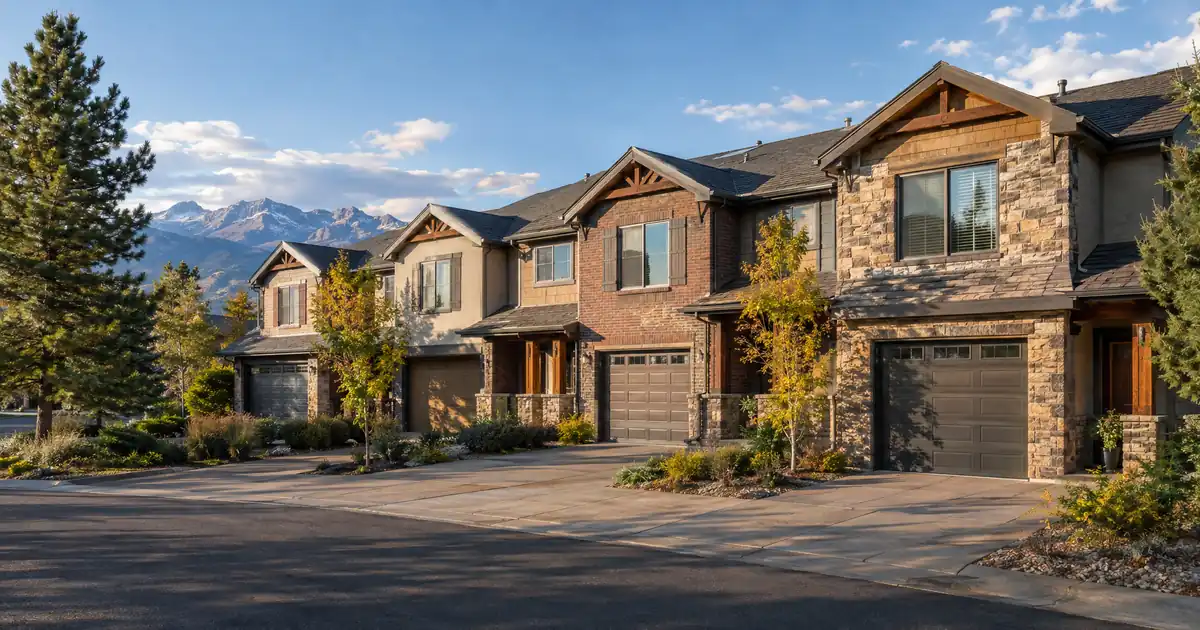
Picture an investor holding a mid-century ranch in Northglenn Original, bought a few years back near the top of the local price cycle and rented out ever since. The tenant pays on time and the property cash flows modestly. Now the investor wants to pull equity out for a second purchase. The cash out refinance investment property question in Northglenn, Colorado is rarely “is there equity?” It is “how much of it will the rent actually support?” The answer depends on building type more than on almost any other variable in this market.
DSCR Cash-Out Calculator
Run the cash-out numbers in Northglenn, CO
Rate source: Freddie Mac 30-yr average via FRED® — Federal Reserve Bank of St. Louis · effective Sep 24, 2026
Prefilled with starting assumptions — enter your property’s value, balance, taxes, and insurance for a more accurate picture.
Program parameters update from Lendmire’s centralized guideline source. Taxes and insurance are editable estimates.
As of Sep 24, 2026 · General Freddie Mac market benchmark, not a Lendmire loan offer. Property value, balance, taxes, and insurance are editable estimates. Maximum loan-to-value varies by lender, program, property type, and seasoning. Not a Loan Estimate, approval, or commitment to lend. Program availability and eligibility are subject to lender guidelines, credit approval, property review, and underwriting.
The Quick Read:
Cash-out refinancing on a Northglenn, Colorado rental is underwritten primarily on the property’s rental income measured against its full monthly obligation, which makes building type decisive: with median rent near $1,800 per Zumper, duplexes and small multi-unit buildings carry far more coverage per dollar of value than detached houses.
- Rent-to-value on detached homes runs thin, around 0.39 percent a month at the citywide level.
- Cash-out LTV tops out at 75 percent, with about six months of ownership required.
- Recent price trends are flat to slightly negative, so appraisals can’t be assumed upward.
- Duplexes and triplexes offer the strongest coverage-to-value profile in the sourced data.
Northglenn Market Snapshot
A quick read on the Northglenn investor landscape — figures come from the cited sources below. Confirm current property-level numbers before underwriting.
| Metric | Detail |
|---|---|
| Home prices | $462,100 median value (Data USA, Northglenn) |
| Typical rents | $1,933 (City-Data, Northglenn) |
The Appreciation Story Is Flat. Underwrite Accordingly.
Northglenn’s equity picture is a rent-driven story, not a price-driven one. Data USA puts the median property value at $462,100, with a homeownership rate of 60.6 percent. On trend, Homes.com reports a trailing 12-month median sale price of $460,000, down 4 percent from the prior stretch. Zillow’s home value index lands in the same place: an average value of $467,873, down 3.9 percent over the past year. Two independent sources, same direction. Modest decline.
For a cash-out borrower, that matters in a specific way. Proceeds are driven by appraised value, and an appraiser working in a flat-to-softening market weighs recent closed comps, not the investor’s purchase price or hopes. An investor who bought near the peak may find the usable equity thinner than the mental math suggests.
Seasonality compounds it. Movoto shows a spring snapshot with a $475,000 median sale price and 21 days on market. Its overview page shows a late-summer median list price of $471K, down 3 percent year over year, with homes sitting a median of 55 days. Days on market more than doubled between those snapshots. The stronger play is timing the appraisal for when comps are fresh and active, not when inventory is sitting. (Nobody controls the calendar entirely, but a refinance that can slide a few weeks sometimes should.)
Rents are doing something different. Zumper reports rents up 8 percent over the past year, against home values drifting down. Rents moving up while values move down is exactly the divergence that favors a debt-coverage-based refinance over a value-based one. The caveat is that Zumper’s figure reflects recent listings only, so read it as a snapshot rather than a trend line.
Why Single-Family Strains the Coverage Number
Detached houses are the weakest DSCR cash-out candidates in Northglenn. Zumper’s $1,800 median rent divided by the $462,100 median value is roughly 0.39 percent a month. That is a thin gross rent-to-value ratio, and it is the author’s own arithmetic, not a sourced figure.
City-Data sharpens the point. Its mean value for detached houses is $600,540. These are Census-derived means that likely blend owner estimates and some condos, so treat the exact figure as approximate. Direction still matters. Run the numbers on a modeled detached home at that value and a rent near the $1,800 median. Debt coverage comes out around 0.5x once the full monthly obligation is counted, taxes and insurance included, at a 75 percent cash-out ceiling. These are modeled assumptions, not market data.
That is well below the 1.00 benchmark that standard DSCR programs are commonly built around. Some lenders review lower or no-ratio scenarios, but those usually come with stronger compensating factors, reduced leverage, different pricing or more cash in the deal. Options a lender might review for a sub-1.00 single-family file include a sub-1.00 program, a lower LTV to shrink the debt side, or an interest-only structure. Eligibility on any of these is subject to lender guidelines, credit approval and property review. Not a path to count on.
The more realistic single-family move is to cash out less than the ceiling allows. If the existing payoff already sits at, say, 60 percent of appraised value, the useful cash-out layer is the remaining slice of the 75 percent cap, and the rent has to carry the new balance on its own.
The Duplex and Fourplex Case
Small multi-unit buildings are where the sourced data points. City-Data’s mean values by structure type show detached houses at $600,540, two-unit structures at $402,576 and three-to-four-unit structures at $337,114. A building with multiple rent streams carries a lower mean value than a single detached home. Rent-to-value stacks in the investor’s favor.
The caveat is real: these are means, not medians, and they blend owner-estimated values. The three-to-four-unit figure being lower than the two-unit figure is odd enough to suggest composition effects, such as older buildings or smaller units. The data supports a direction, not a guarantee.
Here is a modeled duplex. Assume two units each renting near the citywide median of about $1,800, a value near that two-unit mean and a 75 percent LTV. Coverage including taxes and insurance comes out in the neighborhood of 1.4x. That is a rounded-down, modeled number. It would clear the common 1.00 baseline with room to spare, which is the room an investor needs to cash out at the ceiling rather than below it.
Individual listings give the real-world texture. A Homes.com multi-family listing describes a duplex with two units, each two bedrooms, one bath and a single-car garage, both tenant-occupied. Another notes the smaller of two homes on one property last rented for $1,800 a month. Those are single listings, not averages. Still, a duplex with in-place tenants hands the appraiser and the lender actual lease income to document, which is a cleaner file than a market-rent estimate on a vacant house.
Comp depth is the hidden constraint. Homes.com shows 369 homes sold over the last 12 months with 67 active listings. Roughly 30 sales a month is workable for single-family. Multi-unit comps are almost certainly thinner (that is inference, since no multi-unit sales count turned up). Before committing to a refinance, ask the lender how many closed multi-unit comparables an appraiser can realistically find.
And five-plus buildings? City-Data lists a mean of $458,361 for them. Those are generally commercial-financed and may not fit residential DSCR programs at all. Hedge accordingly.
Three Pockets, Three Different Jobs
Northglenn doesn’t have a traditional downtown. Kenna Real Estate’s area guide notes the Marketplace is not the historical center around which the original community developed, and that the Civic Campus, Webster Lake, 104th and I-25 and 120th Avenue each play different roles. That fragmentation helps cash-out investors, because the pockets behave differently.
Northglenn Original. The classic mid-century ranches and tri-levels sit here, with sale prices running roughly $400,000 to $525,000 per Spiker Realty, a brokerage guide, so treat the range as indicative. This is the lowest entry band of the three areas profiled, and the older housing stock is where refinance equity tends to hide. The median construction year citywide is 1974 per Point2Homes, which also reports 14,570 occupied units with 39.4 percent tenant-occupied. The takeaway: older buildings in this pocket give investors a renovation lever, and the renter pool is deep enough to matter.
Webster Lake and E.B. Rains Park. Homes around the park trade between $450,000 and $600,000. At that price against a roughly $1,800 median rent, the detached math is the strained version described earlier. This pocket is a better fit for investors holding appreciated property who want to cash out modestly. Skip it for aggressive extraction on single-family.
Fox Run. Slightly newer builds on the city’s edge, from $500,000 to $650,000. Newer product, less deferred maintenance, thinnest rent-to-value of the three. It is a hold-and-refinance-modestly pocket, not a cash-flow engine.
No neighborhood-level rent data turned up, so none of these pockets can be ranked on rent. Price bands and housing character are what the research supports.
Then there is the east side. The Northglenn/112th station is the only RTD rail station located within Northglenn, and the city’s adopted station-area plan aims for a walkable mixed-use community and diversified housing. It is a 26-minute ride to Union Station. Honest read: weekday ridership averaged just 585, against 1,599 at the neighboring Eastlake/124th station in Thornton, per Wikipedia’s station entry. The station matters for planned redevelopment, not proven ridership demand yet. Treat the transit story as upside, not base case.
What the 75 Percent Cap and Seasoning Do to Proceeds
The mechanics are simple, and the consequences are not. Typical program guidance for a DSCR cash-out refinance on an investment property looks like this:
- Leverage: a 75 percent LTV ceiling on cash-out, lower than the 80 percent purchase ceiling.
- Seasoning: about six months of ownership, measured from title recording.
- Coverage: a 1.00 minimum is the common baseline, with rent measured against full monthly obligation including taxes and insurance.
- Credit: tiers at 620, 660, 680 and 700 with a 620 floor. Better scores generally unlock better leverage.
- Reserves: about six months of the monthly obligation, rising to about nine months above $1,500,000.
- Loan size: up to $3,000,000 on standard programs. Smaller balances route through select lenders in the network.
All of that reflects select wholesale-network guidelines and varies by borrower, property and loan scenario. Review details are subject to lender overlays, and none of it is a commitment to lend. The cash-out qualification details page covers the full parameter set.
The proceeds math runs on percentages. Take a hypothetical duplex that appraises near the two-unit mean, with a current payoff at 55 percent of that value. The 75 percent ceiling leaves 20 points of value as the theoretical cash-out layer. But that layer exists only if the rent can carry the larger balance at 1.00 or better. In Northglenn’s multi-unit pockets it often can. On a detached home it often can’t, and the lender’s coverage test, not the LTV cap, becomes the binding constraint. That is the distinction most borrowers miss: the cap is the ceiling, but coverage is usually the floor that bites first. Equity available is never a guaranteed cash figure.
DSCR files in markets like this one typically look like a split between two kinds of borrower. One has an older single-family rental with healthy equity but thin coverage. The other holds a small multi-unit building with modest equity but strong coverage. The multi-unit file is the one that tends to clear the coverage test at higher leverage. In a flat-price market, the single-family file often ends up cashing out far less than the borrower expected, and the conversation shifts to whether the lender has a reduced-leverage path or whether the investor should sit tight. For a broader look at how the product compares, the side-by-side comparison lays out DSCR against conventional underwriting. Lendmire’s DSCR walkthrough explains the coverage calculation itself.
Older Stock Cuts Both Ways
A 1974 median build year is a double-edged number. It means deferred maintenance can drag appraised value below the investor’s expectation, and it means a renovation can lift both rent and value. Two local property managers, Grace Property Management and Colorado Realty and Property Management, both push the same line: buy updated or budget to update. Both have a commercial interest, so use their comments qualitatively. Colorado Realty also notes it manages duplexes, triplexes and small multi-unit properties, which at least confirms that small-building rentals exist at scale here.
Practical upshot: renovate before the refinance appraisal if the rent bump is real, and don’t plan on a full cash-out until the scope and budget are known. This one’s a genuine toss-up for some borrowers. A light renovation can lift both the rent and the appraisal, but it can also eat the very cash the refinance was meant to free up.
New Supply and the Retail Caveat
Small landlords compete with newer product. Arden Karl’s Farm, a Southern Land Company development, has 385 townhomes and studio-to-three-bedroom apartment homes. It opened to residents in recent years. Listing data across nearby apartment complexes shows concessions on several, including a free-months offer at one Northglenn 55-plus property. The practical read: underwrite to in-place market rents, not asking rents, because a concession-heavy competitor caps what an older duplex can charge. The surrounding Karl’s Farm master plan is a 64-acre community on 120th Avenue per Miller United. It is a comp and competition zone, not a small-building acquisition zone.
On the demand side, the city says the Northglenn Marketplace at I-25 and 104th is expected to be more than 90 percent leased once announced tenants open, filling about 183,000 square feet. HCA HealthONE Mountain Ridge, a 157-bed Level II trauma facility in nearby Thornton, sits less than 3 miles away. No reliable employee count surfaced for the hospital, so none is cited. Both are qualitative signals of service-sector and healthcare renter demand within commuting distance. Northglenn is under 13 miles from downtown Denver, and demand here is best described as Denver-metro commuter, not tied to a named local employer.
Don’t over-read the revitalization angle. Denver7 reported on residents’ concerns about empty storefronts at the Marketplace and the old Safeway site on East 120th Avenue, and the city notes most of the Marketplace went through foreclosure before its later purchase. Commercial redevelopment is still in progress. Upside, not underwriting. Population has been flat as well: 38,131 at the last census count and 38,287 in the latest estimate per Wikipedia citing the Census, so rental demand growth isn’t coming from population surges. Investors should also verify current local rental rules, taxes and insurance with qualified local professionals before running final numbers.
For the broader state picture, see Colorado DSCR financing, and for the refinance product family, Lendmire’s refinance programs outline the options beyond cash-out.
DSCR vs. conventional financing
There are two common ways to finance an investment property in Northglenn, CO, and they qualify you differently — here’s how investors weigh them.
Why investors choose it
- Qualifies on the property’s rental income — no personal tax returns, W-2s, or pay stubs needed to document income.
- No personal debt-to-income ceiling to clear, so existing mortgages and obligations don’t cap your borrowing the same way.
- Can be closed in an LLC, keeping the property inside a business entity.
- Built for scaling — not held to the limit on number of financed properties that conventional financing applies.
- Underwriting centers on the deal: generally qualifies when the rent covers the payment, a 1.00x coverage ratio being a common baseline (confirmed in underwriting).
- Designed specifically for investment property, including long-term and, where the program allows, short-term rentals.
Where it’s strong
- Often the lowest ongoing financing cost for a buyer who fully qualifies on personal income — a fit for a first property or a cost-first purchase.
Trade-offs for investors
- Requires full personal income documentation and must fit within a debt-to-income limit — salary, existing debts, and other mortgages all count.
- Typically held in your personal name rather than a business entity.
- Caps how many financed properties you can carry, which can become a ceiling as a portfolio grows.
- Evaluates you as a borrower as much as the property, which usually means more paperwork.
How investors usually choose: a first or single property often optimizes for the lowest financing cost; portfolio builders often optimize for leverage, vesting in an LLC, and scaling past conventional caps. The right answer depends on your goals, the property, and current guidelines — both paths run through select lenders in Lendmire’s wholesale network, with eligibility and terms confirmed in underwriting.
Frequently Asked Questions
How do you qualify for a DSCR cash-out refinance in Northglenn?
Qualification is built around the property’s rental income measured against its full monthly obligation, with 1.00 as the common baseline. Typical guidance adds about six months of ownership from title recording, a credit floor of 620 and roughly six months of reserves. A 75 percent LTV ceiling applies to cash-out. Final eligibility depends on lender guidelines, credit approval and property review.
What are the requirements for an investment property loan refinance in Northglenn, Colorado?
Expect a rental property that fits eligible types, lease or market-rent documentation, an appraisal and reserves. Manufactured homes, log homes and barndominiums fall outside these DSCR programs. Loan sizes run up to $3,000,000 on standard programs. Each lender in the network applies its own overlays, so the scenario should be reviewed before an appraisal is ordered.
Does a duplex really refinance better than a single-family rental in Northglenn?
On the sourced numbers, usually yes. City-Data’s mean value for two-unit structures is $402,576 against $600,540 for detached houses, while each unit rents near the $1,800 median. That produces materially stronger coverage per dollar of value. Treat those as means with estimation noise, and expect thinner comp support for multi-unit appraisals.
Will falling home prices hurt a Northglenn cash-out refinance?
They can. Homes.com shows the trailing median sale price down 4 percent, and Zillow shows values down 3.9 percent. A flat-to-falling trend means appraisals may land at or below a prior purchase price. Underwrite on today’s comps and treat any future appreciation as bonus, not base case.
Can Lendmire help structure a DSCR cash-out refinance scenario for a Northglenn rental property?
Yes. Lendmire is a non-QM mortgage broker arranging DSCR investor loans. Cash-out scenarios are generally capped at 75 percent LTV and evaluated on rental coverage rather than personal income paperwork, subject to lender guidelines. LLC-titled borrowers are possible subject to program eligibility.
Northglenn Against Thornton
Thornton, the next suburb over, has the busier rail stop (1,599 average weekday riders against Northglenn’s 585) and the hospital. This research found no multi-unit pricing there, though. Northglenn is the market where the structure-type math is actually visible, and right now that favors a Northglenn duplex refinance over a Thornton single-family one.
For current guidelines and terms, see Lendmire’s DSCR loan programs page.
About Lendmire
Lendmire (NMLS# 2371349), a non-QM mortgage broker serving investors in 41 markets including Washington, D.C., helps structure DSCR scenarios commonly evaluated around a property’s rental income rather than personal income paperwork, subject to lender guidelines. Lendmire is a 2025 Scotsman Guide Top Mortgage Workplace and a top-ranked workplace in 2026. It places loans through wholesale investor lenders and is not a direct lender. Reach the team at 828-256-2183.
Get Started
Ready to find the right loan for you?
In about 30 seconds you can review financing options available for your investment property. No commitment required.
Informational only. Not a Loan Estimate, approval, or commitment to lend. Program availability and eligibility are subject to lender guidelines, credit approval, property review, and underwriting.
References
1. Zumper, Northglenn rent research
4. Homes.com, Northglenn guide
5. Zillow Home Values, Northglenn
6. Movoto
8. Homes.com multi-family listing
9. Homes.com — Northglenn CO Sold
10. kennarealestate.com — Northglenn Area Guide
11. Spiker Realty, Northglenn guide
12. Point2Homes
15. Colorado Realty and Property Management
17. Miller United
18. City of Northglenn, Marketplace Redevelopment
19. HCA HealthONE Mountain Ridge
20. Denver7 reported
21. Wikipedia citing the Census
22. a 2025 Scotsman Guide Top Mortgage Workplace
23. Scotsman Guide — Top Workplaces 2026
This article is part of Lendmire’s investment property cash-out refinance program — full qualification details, guidelines, and scenarios live on the program page.
Related reading: Luxury Rental DSCR Loans In New Jersey · Jersey Shore Vacation Rental Loans: DSCR Financing In Ocean City, Cape May And Long Beach Island · DSCR Cash-out Refinance In New Jersey: Pulling Equity From A Rental
Guides: Investment Property Cash-Out Refinance in Colorado
Brandon Miller
Founder & CEO, Mortgage Loan Originator, Lendmire LLC
- Mortgage Loan Originator · NMLS# 1129696 · Verify on NMLS Consumer Access
- North Carolina Real Estate Broker · License# 343312 · Verify on NCREC
- North Carolina Insurance Producer · License# 19053198 · Property, Casualty, Life, Health · Verify on NAIC SBS
- Lendmire LLC · Firm NMLS# 2371349 · Verify firm licensure
Important disclosures. Lendmire (NMLS# 2371349) is a licensed mortgage brokerage. Lendmire is not a direct lender, depository institution, or financial advisor. All loan inquiries are subject to lender underwriting; this article does not constitute a commitment to lend. Rates, terms, and program guidelines are subject to change without notice and vary by borrower profile, property type, and state. Information in this article is general in nature and is not financial, legal, or tax advice. Equal Housing Opportunity. NMLS Consumer Access: nmlsconsumeraccess.org.