
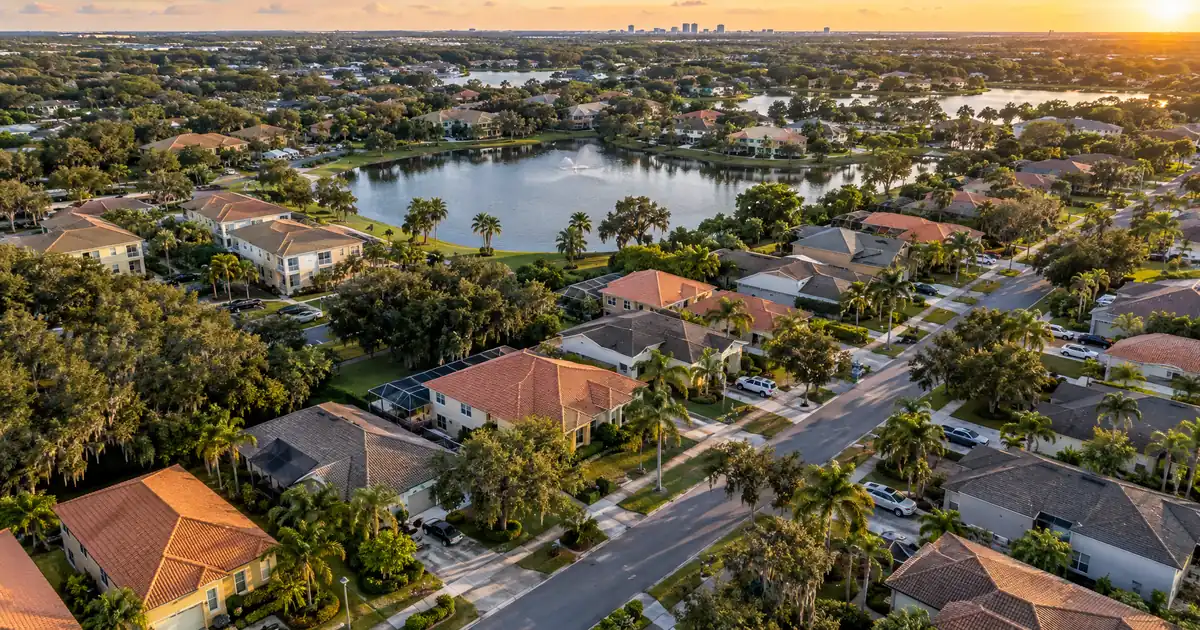
Picture two Orlando investors with the same room under a 75% LTV cap. One owns a house in Lake Nona, where a broker summary of MLS data puts the submarket median near $480,000. The other owns a duplex in the urban core. On modeled full-obligation math, the duplex owner is the one likely to clear a 1.0x coverage test, while the house owner is likely to hit the coverage wall before the equity cap. That ordering defines cash out refinance investment property strategy in Orlando right now: equity is rarely the constraint, rent is. Final terms depend on lender guidelines, property type, leverage, and the borrower’s complete credit picture.
The Quick Read: A DSCR cash-out refinance in Orlando, Florida moves from seasoned ownership to a rent schedule from the appraiser, then to a coverage test of rent against full monthly obligation, and finally to a leverage cap that limits how much equity comes out, with the lender making every final eligibility call.
DSCR Cash-Out Calculator
Run the cash-out numbers in Orlando, FL
Rate source: Freddie Mac 30-yr average via FRED® — Federal Reserve Bank of St. Louis · effective Sep 24, 2026
Prefilled with starting assumptions — enter your property’s value, balance, taxes, and insurance for a more accurate picture.
Program parameters update from Lendmire’s centralized guideline source. Taxes and insurance are editable estimates.
As of Sep 24, 2026 · General Freddie Mac market benchmark, not a Lendmire loan offer. Property value, balance, taxes, and insurance are editable estimates. Maximum loan-to-value varies by lender, program, property type, and seasoning. Not a Loan Estimate, approval, or commitment to lend. Program availability and eligibility are subject to lender guidelines, credit approval, property review, and underwriting.
- Median-priced Orlando houses model below 1.0x at 75% LTV once taxes and insurance are included.
- Small multifamily near the urban core models materially stronger than single-family at the same leverage.
- Rents are soft: Zillow puts the average at $1,900, down $89 from a year ago.
- The 75% LTV cap and roughly 6 months of seasoning matter less than coverage does.
- Flat prices mean proceeds track purchase basis, not market drift. These specifics are subject to lender guidelines and a full review of property, leverage, and credit.
This piece skips purchase mechanics. It assumes the property is already owned and asks what the equity can do. A DSCR loan measures monthly rent against the full monthly obligation: principal, interest, taxes, insurance and any HOA dues. Lendmire’s DSCR walkthrough covers the basics. The brokerage’s role is to arrange these files through wholesale lending channels. Review details stay subject to lender overlays. Florida DSCR financing has its own state-level considerations worth reading alongside this.
Where the Coverage Ratio Breaks
Median-priced Orlando houses model below 1.00x at 75% LTV once taxes and insurance enter the calculation. Rent-to-price sits near 0.5% a month, and that number drives the single-family cash-out story here. Terms vary by lender guidelines, property type, leverage, credit profile, and full file review.
The Orlando Regional REALTOR® Association’s median price sits at $385,000, with active inventory near 12,010, the highest spring count in years. Zillow’s city home value runs lower at $376,216, down 2.8% year over year, reflecting a different methodology. This article uses the $385,000 figure throughout.
Now the rent side. Zillow’s average across all property types is $1,900, and it labels the market temperature COOL. Run the numbers on a house at that median price and that average rent, at 75% LTV, using full PITIA with Florida-average taxes and insurance: coverage lands around 0.75x. Cutting leverage to 60% still leaves it under 1.0x. That’s a modeled result, not a sourced one, and it’s why appraised rent, not equity, decides these files. Exact terms depend on the lender’s guidelines, property type, leverage, and a full review of the borrower’s file.
Not ideal. But it’s informative. An investor holding a metro-median house with a fresh appraisal shouldn’t assume the equity is spendable.
Seasoning, the 75% Cap and What Flat Prices Do
Cash-out on a rental typically needs about 6 months of ownership measured from title recording, tops out at 75% LTV, and asks for roughly 6 months of PITIA in reserves, all subject to lender guidelines and borrower profile. In Orlando, flat values mean proceeds depend on purchase basis and any value-add, not on market drift.
The Pozek write-up reports the Orlando city median up only 1.2% year over year, and it notes builder concessions averaging $15,000 to $35,000. Concessions matter to an equity-extraction thesis because they let new construction compete with resale stock on effective price. The appreciation cushion that made cash-out refinances easy earlier in the cycle isn’t guaranteed to repeat.
Consider two owners. One holds a house with a loan balance near 45% of appraised value, which leaves 30 points of room under the cap. The other sits at 70% and has 5 points. The first owner has a real decision, and coverage will determine how much of that room is usable. The second owner has almost nothing to extract regardless of rent. Same city, same loan type, entirely different outcomes.
Stale rent schedules add a second risk. A lease signed at peak pricing may exceed what an appraiser supports today. Realtor.com’s median asking rent, as reported by True North, was $2,075 with a 0.95% year-over-year decline, and Northmarq forecasts asking rents rising only about 1.2% by year-end. Underwrite to the appraiser’s number, not the lease. Investors weighing refinance types can compare options on the refinance side, and the cash-out qualification details lay out the mechanics.
The Duplex Advantage
Small multifamily near the urban core stacks two rent streams against one loan, and that lifts coverage well above the single-family benchmark. The stock is thin, but for cash-out purposes a duplex is the strongest structure Orlando’s data supports.
The table below uses modeled assumptions at 75% LTV and full PITIA including taxes and insurance. Only the first price and rent come from sourced data. The others are illustrative inputs, rounded down. Every figure here varies by lender and program — guidelines, property type, leverage, and credit profile all apply.
| Scenario | Price | Rent | Coverage |
|---|---|---|---|
| Metro-median house | $385,000 | $1,900 | ~0.75x |
| Kissimmee house | ~$350,000 (assumed) | $2,100 | ~0.9x |
| Core duplex (modeled) | $500,000 (assumed) | $4,000 combined (assumed) | ~1.25x |
Shave 10% off that modeled duplex rent and coverage still sits above 1.1x. The single-family cases have no such cushion.
Where does this stock cluster? Listings for small multifamily near medical and transit corridors show up in Colonialtown North, Mills 50 and Delaney Park. One Homes.com listing is pitched to medical professionals and students near AdventHealth facilities and a SunRail station. Those are anecdotal listings, not closed comps, so treat the tenant positioning as qualitative. Apartment data gives some texture: ApartmentList shows two-bedroom apartments in Colonialtown North averaging $2,505. That’s apartments, not house rents, and it shows the neighborhood commands premium pricing.
Expect competition for the few duplexes that trade, and expect appraisers to scrutinize rent schedules on renovated units.
Lake Nona and Winter Park (Great Tenants, Thin Yields)
These submarkets have deep tenant demand and weak coverage. Lake Nona sits near $480,000 and Winter Park near $540,000 per the same broker summary, with Dr. Phillips and Windermere above $600,000. At those prices even strong rents rarely produce a passing number on single-family.
Lake Nona’s demand story is real. Medical City hosts the UCF College of Medicine, a VA medical center and Nemours Children’s Hospital. The catch is new supply. True North names Lake Nona, Creative Village and the I-4 corridor as areas of heavy new construction, with newer properties competing on move-in incentives. Baldwin Park tells a similar story: two-bedroom apartments average $2,462 per True North citing RentCafe and Yardi Matrix, but house prices there are too high for a comfortable single-family DSCR file.
Here’s a genuine toss-up. An investor sitting on strong Winter Park equity could argue for a cash-out anyway, since the proceeds might buy a better-yielding asset elsewhere. But if the coverage test fails on the source property, the structure fights the investor. For most files in these zip codes, appreciation and lower leverage are the stronger tools, not a maximum cash-out.
East Side, Rosemont and Osceola: Where Coverage Gets Closer
Lower-priced submarkets produce the best rent-to-price ratios in the research, though no source ranks them and the numbers still run tight. Directionally, workforce housing near the airport and Curry Ford Road beats the premium submarkets on yield.
Azalea Park, East Orlando, Pine Hills and South Semoran are older, lower-priced areas serving hospitality, airport and service employment. The research has no sourced price or rent figures for them. Comp each property directly rather than trusting a neighborhood average. Rosemont shows the other side of the ledger: True North puts two-bedroom apartment rents at $1,325, the low end of Orlando’s roughly $1,140 monthly spread between its priciest and more affordable neighborhoods. Its RoseArts District, approved for up to 2,500 apartments phased over several years, will add supply nearby.
Kissimmee sits just outside Orlando city limits, in Osceola County. Homes.com puts the median house rent at $2,100, against broker-reported prices of $335,000 to $360,000. Modeled at 75% LTV with full PITIA, a house near $350,000 lands around 0.9x. Dropping leverage toward 65% pushes it near 1.0x. That’s better than Orlando proper, but the improvement is modest. The two sources measure different things (listing rent versus broker median price), so verify with actual lease comps.
Three Demand Engines, One Soft Rent Line
Orlando’s tenant base stacks tourism wages, defense-tech and medical employment, and students. Demand is not the problem. Supply and pricing are.
The Orlando Economic Partnership reports the region’s population reached 2,957,672, adding 37,690 residents in a year for 1.3% growth, with about 65% of growth since 2020 coming from international migration. Visit Orlando counts a record 76.7 million visitors, which sustains a large hospitality workforce. The University of Central Florida enrolls 70,674 students, and Valencia College reports 52,343 degree-seeking students in annual enrollment.
On employment, the Orlando Economic Partnership’s Top 50 Employers list is older, so treat the figures as approximate: Walt Disney World at 80,000, AdventHealth at 40,000, Universal Orlando at 32,084 and Orlando Health at 28,806. Modeling, simulation and training adds a defense-tech layer. The Naval Air Warfare Center Training Systems Division employs over 1,200 civilians in the area.
These anchors put a floor under occupancy. They don’t produce rent spikes.
How Much Vacancy Risk Is Baked In?
Apartment vacancy runs roughly 8.4% to 10% depending on the source, well above the pre-2022 norm of 5% to 6%. That competes directly with single-family and small multifamily for tenants and caps rent growth.
Cushman & Wakefield reports 8.4% vacancy at the close of the latest quarter, down 60 basis points year over year, with 4,578 units delivered so far this year. Northmarq projects vacancy nearly flat at 8.9%. True North, a property manager, puts it at approximately 9.5% to 10% (True North). No official government figure exists for the metro, so treat the range as the honest answer.
Working DSCR brokers see a recurring pattern in soft-rent Florida markets like this one: the deals that stall are rarely short on equity. They stall because the appraiser’s rent schedule lands below the lease, and coverage slips a few hundredths under 1.00x at the last step. Pulling nearby new-build rent and concession data before the appraisal is ordered tends to prevent that surprise.
What If the Number Lands Under 1.00?
A sub-1.00 file isn’t automatically dead, but it changes the conversation. Some lenders review sub-1.00 programs, interest-only structures or reduced leverage, with lower LTV, stronger credit and larger reserves as typical trade-offs. Exact eligibility depends on lender guidelines, credit approval and property review.
The stronger question is whether to use those structures at all. A sub-1.00 cash-out can make sense if the property has a real value-add path or the proceeds fund a higher-yielding acquisition. If it’s simply the only way a median-priced Orlando house pencils, that’s a signal to reconsider which asset to refinance, not which loan to pick.
Investor profile flips the recommendation, too. A W-2 investor with clean traditional personal-income documentation and one or two rentals may find conventional cash-out financing, which underwrites on personal income and can work even when property coverage is weak, the better fit. DSCR becomes the practical path for entity-owned portfolios, self-employed borrowers, or investors near conventional financing limits. LLC-titled properties are common in these files, subject to lender program eligibility. Investors who want a coverage read on a specific property can reach Lendmire at 828-256-2183.
DSCR vs. conventional financing
Two common ways to finance an investment property in Orlando, FL. They qualify you differently — here’s how investors weigh them.
Why investors choose it
- Qualifies on the property’s rental income — no personal tax returns, W-2s, or pay stubs needed to document income.
- No personal debt-to-income ceiling to clear, so existing mortgages and obligations don’t cap your borrowing the same way.
- Can be closed in an LLC, keeping the property inside a business entity.
- Built for scaling — not held to the limit on number of financed properties that conventional financing applies.
- Underwriting centers on the deal: generally qualifies when the rent covers the payment, a 1.00x coverage ratio being a common baseline (confirmed in underwriting).
- Designed specifically for investment property, including long-term and, where the program allows, short-term rentals.
Where it’s strong
- Often the lowest ongoing financing cost for a buyer who fully qualifies on personal income — a fit for a first property or a cost-first purchase.
Trade-offs for investors
- Requires full personal income documentation and must fit within a debt-to-income limit — salary, existing debts, and other mortgages all count.
- Typically held in your personal name rather than a business entity.
- Caps how many financed properties you can carry, which can become a ceiling as a portfolio grows.
- Evaluates you as a borrower as much as the property, which usually means more paperwork.
How investors usually choose: a first or single property often optimizes for the lowest financing cost; portfolio builders often optimize for leverage, vesting in an LLC, and scaling past conventional caps. The right answer depends on your goals, the property, and current guidelines — both paths run through select lenders in Lendmire’s wholesale network, with eligibility and terms confirmed in underwriting.
The Next 6-24 Months
The supply wave is tapering, which is the strongest argument for patience. Northmarq reports roughly 40% fewer units under construction than a year ago, and net absorption of approximately 8,000 units over the trailing twelve months. If deliveries keep falling and household growth keeps absorbing them, vacancy should drift toward Northmarq’s 8.9% projection, and rent declines that narrowed over recent quarters may flatten further.
A qualified call: over the next 6 to 24 months, expect modest rent stabilization rather than a rebound. Cash-out refinances that pencil today will mostly be multi-unit or low-basis properties, and single-family owners in premium submarkets will likely still fall short of 1.0x unless appraised rents improve meaningfully. Should new-build concessions fade faster than forecast, the older workforce stock is where coverage improves first.
Orlando’s rental story over that stretch looks like a slow grind upward from a soft floor, and investors who size their cash-out to appraised rent rather than peak asking rent will be the ones with room to act when it firms.
Frequently Asked Questions
How do you qualify for a DSCR loan in Orlando, Florida?
Qualification centers on the property’s rent measured against its full monthly obligation, with 1.00x a common baseline. Credit tiers typically start at a 620 floor, and reserves of about 6 months of PITIA are typical. All of this varies by lender, borrower and property.
What are the seasoning and LTV requirements for an investment property cash-out refinance in Orlando, Florida?
Most programs look for about 6 months of ownership measured from title recording, and the cash-out LTV ceiling is 75%. Actual proceeds depend on appraised value, rent used for lender review, reserves and lender review, so the cap is a ceiling, not a guaranteed figure.
Will soft Orlando rents hurt my cash-out coverage?
They can, particularly if the appraiser’s rent schedule lands below your current lease. Zillow shows average rent down $89 year over year, and Northmarq forecasts only about 1.2% asking-rent growth. Build the file on conservative rent, not peak asking rent.
Does a Kissimmee rental work better than an Orlando one for cash-out?
Modestly, on modeled math. Kissimmee’s median house rent of $2,100 against broker-reported prices of $335,000 to $360,000 gives a slightly better rent-to-price ratio than Orlando’s roughly 0.5%. The improvement is small, and Kissimmee sits in Osceola County, so check comps for the exact property.
For current guidelines and terms, see Lendmire’s DSCR loan programs page.
About Lendmire
Lendmire is a non-QM mortgage brokerage (NMLS# 2371349) arranging DSCR investor loans in 41 markets, including Washington, D.C., through wholesale and investor-lending channels. DSCR loans are evaluated by the lender on rental income rather than personal income, subject to lender guidelines. That makes them a fit for LLC-owned portfolios, self-employed investors and operators scaling beyond conventional loan caps. Lendmire was recognized by Scotsman Guide as a 2026 Scotsman Guide Top Mortgage Workplace and recognized by Scotsman Guide in 2025. More company news appears in Lendmire’s industry announcements.
Get Started
Ready to find the right loan for you?
In about 30 seconds you can review financing options available for your investment property. No commitment required.
Informational only. Not a Loan Estimate, approval, or commitment to lend. Program availability and eligibility are subject to lender guidelines, credit approval, property review, and underwriting.
References
3. Zillow Home Values, Orlando
4. True North Managed, market updates
5. Northmarq, transaction activity
8. UCF College of Medicine, Lake Nona
10. Homes.com
11. Orlando Economic Partnership, population growth
12. Visit Orlando, visitation release
13. University of Central Florida, facts
15. Orlando Economic Partnership, Top 50 Employers
16. Orlando Economic Partnership, NAWCTSD
17. Cushman & Wakefield, Orlando MarketBeat
18. True North
19. a 2026 Scotsman Guide Top Mortgage Workplace
20. recognized by Scotsman Guide in 2025
This article is part of Lendmire’s investment property cash-out refinance program — full qualification details, guidelines, and scenarios live on the program page.
Related reading: DSCR Cash Out Refinance Orlando Florida: How Investors Access Equity Without Income Docs · DSCR Loan Orlando FL Short-Term Rental Investors · Refinance Rental Property Orlando FL Without Income Docs
Guides: Investment Property Cash-Out Refinance in Orlando, FL · Investment Property Cash-Out Refinance in Florida
Brandon Miller
Founder & CEO, Mortgage Loan Originator, Lendmire LLC
- Mortgage Loan Originator · NMLS# 1129696 · Verify on NMLS Consumer Access
- North Carolina Real Estate Broker · License# 343312 · Verify on NCREC
- North Carolina Insurance Producer · License# 19053198 · Property, Casualty, Life, Health · Verify on NAIC SBS
- Lendmire LLC · Firm NMLS# 2371349 · Verify firm licensure
Compliance and disclosures. Lendmire (NMLS# 2371349) is a licensed mortgage broker and is not a direct lender, depository institution, financial advisor, or tax professional. Content in this article is general market analysis and educational information — not financial, legal, or tax advice for any specific situation. Lendmire does not guarantee loan approval; every transaction is subject to underwriting by the funding lender. Mortgage pricing and loan program guidelines are subject to change at any time without notice and vary by borrower characteristics, property type, and state regulations. Lendmire complies with Equal Housing Opportunity. Licensure verification: NMLS Consumer Access.