
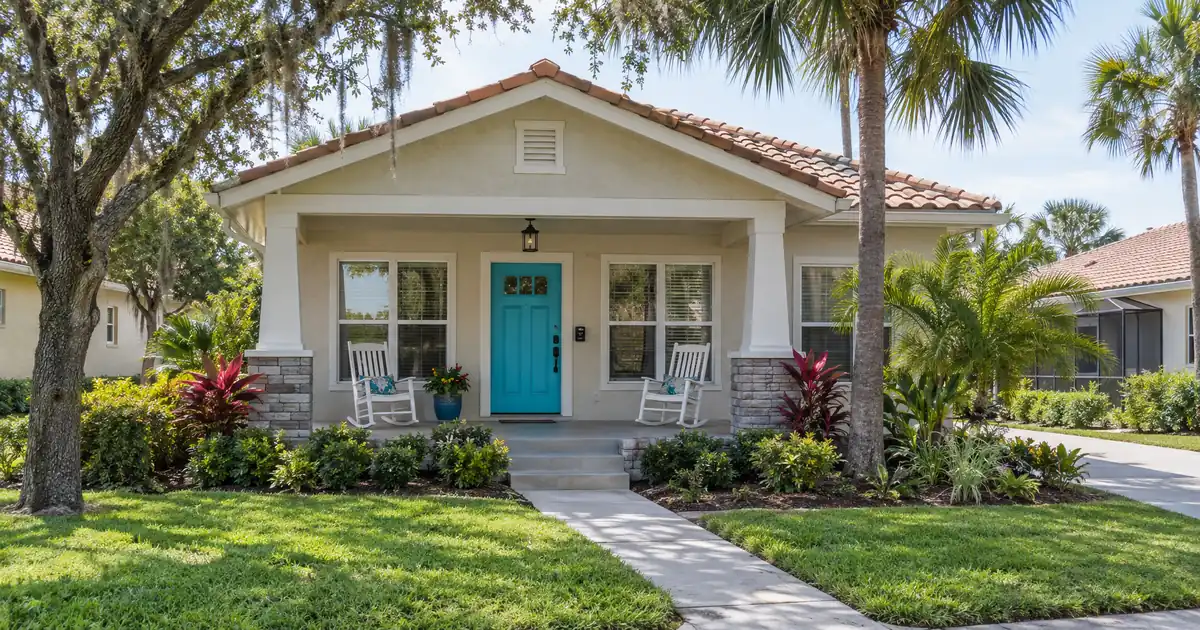
The Quick Read: A DSCR loan is reviewed on the rental property’s income rather than the borrower’s personal income, and short-term rentals get their own income track because nightly bookings don’t fit the standard long-term rent form. Across Lendmire’s wholesale network, STR purchases typically reach 75% LTV and refinances around 70%, with a 640+ score and about 12 months of hosting history expected. Orlando is the case study here because its jurisdictions differ so much. The loan is rarely the hard part. Legal STR use at the specific parcel is.
Key Takeaways
- Qualification runs primarily on property-level income covering the payment, subject to lender guidelines.
- A purchase usually relies on a third-party revenue projection. A refinance relies on actual booking history.
- Many lenders haircut projected STR revenue, so the number that counts is lower than the gross.
- Clearing 1.00x is not the same as positive cash flow.
- A loan can be arranged on a property that isn’t legally operable as an STR. Check that before you offer.
What Is a DSCR Loan on a Short-Term Rental?
A DSCR loan divides the property’s rental income by its monthly housing obligation: principal, interest, taxes, insurance, and any HOA dues (PITIA). The result is the coverage number. Lendmire’s complete DSCR loans guide covers the basics for long-term rentals.
Short-Term Rental Calculator
Run the STR numbers in your market
Rate source: Freddie Mac 30-yr average via FRED® — Federal Reserve Bank of St. Louis · effective Oct 1, 2026
Prefilled with starting assumptions — enter your nightly rate, occupancy, taxes, and insurance for a more accurate picture.
Short-term rental income is documented with a 12-month history or a market data report. Program parameters update from Lendmire’s centralized guideline source.
As of Oct 1, 2026 · General Freddie Mac market benchmark, not a Lendmire loan offer. Nightly rate, occupancy, taxes, and insurance are editable estimates. Qualifying income for short-term rentals varies by program — some use appraisal market rent, others use documented STR history or projections — and is confirmed in underwriting. Not a Loan Estimate, approval, or commitment to lend. Program availability and eligibility are subject to lender guidelines, credit approval, property review, and underwriting.
Short-term rentals add a wrinkle. The appraisal form used to document long-term rent was built for monthly leases. Used on a nightly or seasonal property, it can produce a misleading figure. So most programs treat STR income as a separate track, using a revenue projection or booking history instead.
DSCR loans are designed for non-owner-occupied investment properties. Because they are business-purpose investor loans, they are reviewed differently from a standard owner-occupied mortgage.
How Does Underwriting Treat STR Income, Step by Step?
Underwriting follows the same sequence on most files. Where programs differ is in the details of steps two and three.
1. Classify the deal. Is it a purchase with no operating history, or a refinance of a running STR? That choice decides what evidence counts.
2. Gather income evidence. On a purchase, programs typically use a third-party revenue projection, commonly from a data platform like AirDNA that models income from comparable properties. On a refinance, they want about 12 months of real operating history: platform statements, payout records, or management reports.
3. Apply the haircut. Many programs don’t credit 100% of projected revenue. They discount it to allow for vacancy, seasonality, and projection error. The size of the discount varies by lender, which is one reason program choice matters.
4. Divide by PITIA. Qualifying income over the full housing payment gives the ratio. HOA and resort dues belong inside PITIA, not outside it.
5. Reconcile. If the appraisal and the income report disagree, the underwriter resolves them into one usable figure. It is not a simple average of the two.
6. Check the property. Type, condition, and legal operability all get reviewed.
7. Appraise and underwrite. The appraisal sets value, which drives leverage, and the file goes to the lender for a decision.
Lendmire’s team sees the same pattern across comparable files: the deals that stall rarely fail on the ratio itself. They stall because the income evidence doesn’t match the deal type. A buyer shows up with a host’s gross-bookings screenshot, and the program wanted a third-party projection. Matching evidence to the right track before the file goes out saves a lot of rework.
What Leverage, Credit, and Coverage Do STR Programs Expect?
Across the network, STR purchases typically go up to 75% LTV on the strongest files, while refinances and cash-out sit around 70%. Leverage on standard long-term rentals runs higher, which is why STR buyers often bring more equity to the table. Subject to lender guidelines, a 640 credit score is the usual STR floor, and about 12 months of landlord or host experience is generally expected.
Coverage is a 1.00 floor on both purchase and refinance for STR programs. That is where select programs start, not a universal rule. Stronger ratios tend to open better pricing and leverage. Coverage below 1.00 is available through select lenders in the network, with leverage and terms adjusted.
Loan sizes run up to $3,000,000 on standard programs, and smaller balances route through select lenders. Reserves vary by lender, leverage, loan size, and transaction type. About six months of PITIA is common, and larger loans usually step up.
| Factor | STR purchase | STR refinance / cash-out |
|---|---|---|
| Max LTV | Up to 75% | Up to 70% |
| Min credit score | 640 | 640 |
| Coverage floor | 1.00 | 1.00 |
| Experience | About 12 months hosting | About 12 months hosting |
A bigger down payment lowers the payment and can lift the ratio. It never erases leverage caps, credit floors, reserve rules, or property eligibility. The strongest files clear both tests: enough equity and enough rental coverage.
Which Structures and Variations Exist?
Most STR files use the 30-year fixed as the spine. Select lenders in the network also offer extended terms and interest-only periods, which can lift coverage by lowering the payment. ARM structures exist for investors who want them. Interest-only improves the number, but the payment steps up later, so judge it on the full term and not just the opening period.
Entity ownership works too. Many STR investors hold through an LLC, subject to lender program eligibility, and the borrower’s personal income documentation isn’t the qualifying basis.
Some lenders have no STR track at all. They fall back on the long-term market rent from the appraisal. That gives a more conservative income figure and usually a smaller loan. Seasonal and vacation markets may see tighter leverage or ratio expectations to offset income swings.
Where Does the General Rule Break?
Several edge cases change the answer.
Lower-of logic on long-term rentals. For a long-term rental, underwriting typically caps rent at the lower of the appraiser’s market rent and the signed lease. An above-market lease doesn’t raise the number. STR income uses a different track, so don’t assume the same logic transfers.
A refinance needs history. A new STR owner can’t refinance on a projection. Until there are about 12 months of bookings, a long-term-rent basis is what’s available.
Property types. Manufactured homes, log homes, and barndominiums are not offered through the network’s DSCR programs. Condos and 2-4 unit properties may carry added review, and some programs limit them on STR refinances.
Positive cash flow is a separate question. DSCR compares rent to PITIA only. Repairs, vacancy, management, utilities, and capex sit outside the calculation. A property can clear 1.00x and still lose money after operating costs. STR operating costs run heavier than long-term rentals, so model them before you commit.
Legality sits outside the loan entirely. This is where Orlando teaches the most.
Why Does Orlando Show the Legality Problem So Clearly?
“Orlando” isn’t one market. The resort-home corridor spans several governing jurisdictions, and a large share of it sits in Osceola or Polk County rather than inside the City of Orlando. A jurisdiction map of the Orlando and Kissimmee area shows how the rules shift from one boundary to the next. Whole-home nightly rental generally depends on overlay districts, planned developments, or qualifying tourist zones, and some subdivisions carry deed restrictions that prohibit it.
Being near the theme parks doesn’t make a parcel STR-legal. And a state license doesn’t override local zoning or private restrictions. Florida’s regulator defines a vacation rental under its statutory definition of a transient lodging establishment, which generally covers a unit rented more than three times a year for short-term stays rather than long-term tenancies. Its license application packet distinguishes dwelling licenses from condominium licenses.
DSCR vs. conventional financing
There are two common ways to finance an investment property in this market, and they qualify you differently — here’s how investors weigh them.
Why investors choose it
- Qualifies on the property’s rental income — no personal tax returns, W-2s, or pay stubs needed to document income.
- No personal debt-to-income ceiling to clear, so existing mortgages and obligations don’t cap your borrowing the same way.
- Can be closed in an LLC, keeping the property inside a business entity.
- Built for scaling — not held to the limit on number of financed properties that conventional financing applies.
- Underwriting centers on the deal: generally qualifies when the rent covers the payment, a 1.00x coverage ratio being a common baseline (confirmed in underwriting).
- Designed specifically for investment property, including long-term and, where the program allows, short-term rentals.
Where it’s strong
- Often the lowest ongoing financing cost for a buyer who fully qualifies on personal income — a fit for a first property or a cost-first purchase.
Trade-offs for investors
- Requires full personal income documentation and must fit within a debt-to-income limit — salary, existing debts, and other mortgages all count.
- Typically held in your personal name rather than a business entity.
- Caps how many financed properties you can carry, which can become a ceiling as a portfolio grows.
- Evaluates you as a borrower as much as the property, which usually means more paperwork.
How investors usually choose: a first or single property often optimizes for the lowest financing cost; portfolio builders often optimize for leverage, vesting in an LLC, and scaling past conventional caps. The right answer depends on your goals, the property, and current guidelines — both paths run through select lenders in Lendmire’s wholesale network, with eligibility and terms confirmed in underwriting.
Short-term rental rules can vary by city, county, HOA, and property type, so investors should confirm local rules before relying on projected rental income. That check belongs before the offer, not after the appraisal. A projection report prices the income. It doesn’t confirm the income is allowed.
What Does the Investor Decision Look Like in Practice?
Picture an investor eyeing a resort-community home with a strong projection. The income report looks healthy. After the haircut and with HOA dues inside PITIA, the ratio lands in low-1.2x territory. At 75% LTV on a purchase, that file fits the typical STR box, assuming a 640+ score, hosting experience, and reserves. Every figure here varies by lender and program — guidelines, property type, leverage, and credit profile all apply.
Now change one input. The HOA fee runs higher than assumed, and the ratio slips toward 1.05x. The file may still work, but there’s little cushion. Any haircut increase pushes it under 1.00x. That’s when sub-1.00 structures, available through select lenders with adjusted leverage and terms, enter the conversation. The better question is whether the parcel belongs in the search at all.
A sensible order of operations looks like this:
- Confirm the parcel is legally operable as an STR, including HOA and deed rules.
- Pull the income evidence that matches the deal type: projection for purchase, history for refinance.
- Run coverage with every HOA and resort fee inside PITIA.
- Stress the number against a larger haircut.
- Then choose leverage and structure.
If your experience is thin, Lendmire’s guide to first-time vacation rental DSCR loans covers how the experience expectation plays out. Self-employed investors may find Lendmire’s overview of self-employed STR loan options more useful.
Tax treatment can depend on how the funds are used and how the property is held; investors should keep clear records and speak with a qualified tax professional before relying on any deduction.
Key Terms Defined
DSCR (debt service coverage ratio): Qualifying rental income divided by the property’s monthly housing payment.
PITIA: Principal, interest, taxes, insurance, and any HOA dues, the full monthly obligation used in the ratio.
1007 rent schedule: An appraisal form that estimates long-term monthly market rent for a single-family home.
1025 form: The appraisal form that covers rent for 2-4 unit properties.
AirDNA-style projection: A third-party estimate of short-term rental revenue built from comparable properties.
Haircut: A discount applied to projected income so the qualifying figure is more conservative.
Seasoning: The time an owner has held a property, or a loan has been in place, before certain refinance options open.
Frequently Asked Questions
Can I use projected Airbnb income to qualify on a purchase?
Yes, on programs with an STR track. Purchase files typically rely on a third-party revenue projection instead of operating history. Many lenders discount the projection before dividing by PITIA. Subject to lender guidelines, STR purchases generally reach up to 75% LTV with a 640+ score and a 1.00 coverage floor.
Can I refinance an STR I just bought?
Not on a projection. Refinances generally require about 12 months of actual booking history, with leverage up to around 70% for STR collateral. Until the history exists, the options are limited to a long-term-rent basis or waiting.
Does a Florida vacation rental license make a property eligible?
No. The license covers state-level registration. Zoning, overlay districts, HOA rules, and deed restrictions still apply, and a lender can’t fix a property that isn’t legal to operate as an STR. Confirm local rules before relying on projected income.
What if the ratio comes in under 1.00x?
Expect lower leverage and tighter terms than a file that clears the 1.00 floor. Qualification stays subject to lender guidelines, credit approval, and property review.
Do HOA and resort fees count against coverage?
Yes. They sit inside PITIA, so higher dues lower the ratio directly. Fees vary widely between resort communities, so get the actual figure before running the number.
If you are buying or refinancing a rental property and want to see how the numbers work, Lendmire, a DSCR-focused mortgage broker arranging financing through select lenders across 41 markets including Washington, D.C., can help you compare DSCR loan options based on the property income, credit profile, leverage, and investor goals. Reach the team at 828-256-2183 or request a quote. Not a commitment to lend.
About Lendmire
Lendmire (NMLS# 2371349) is a mortgage brokerage built around DSCR investor lending, with programs available in 41 markets, including Washington, D.C. DSCR lenders commonly evaluate rental-income coverage instead of personal income paperwork — a practical fit for LLC-owned and multi-property investors. Terms vary by lender, property, leverage, and program. Scotsman Guide named Lendmire a Top Mortgage Workplace in both 2025 and 2026.
Investors focused on short-term rentals can review DSCR loans for Airbnb and short-term rentals.
Get Started
Ready to find the right loan for you?
In about 30 seconds you can review financing options available for your investment property. No commitment required.
Informational only. Not a Loan Estimate, approval, or commitment to lend. Program availability and eligibility are subject to lender guidelines, credit approval, property review, and underwriting.
References
1. STR Law Map – Orlando/Kissimmee
2. Florida DBPR – vacation rental FAQ
3. Florida DBPR – vacation rental license application packet
This article is part of Lendmire’s short-term rental loan program — full qualification details, guidelines, and scenarios live on the program page.
Related reading: Luxury Rental DSCR Loans In New Jersey · Jersey Shore Vacation Rental Loans: DSCR Financing In Ocean City, Cape May And Long Beach Island · DSCR Cash-out Refinance In New Jersey: Pulling Equity From A Rental
Guides: Short-Term Rental Loans in Orlando, FL · Short-Term Rental Loans in Florida
Brandon Miller
Founder & CEO, Mortgage Loan Originator, Lendmire LLC
- Mortgage Loan Originator · NMLS# 1129696 · Verify on NMLS Consumer Access
- North Carolina Real Estate Broker · License# 343312 · Verify on NCREC
- North Carolina Insurance Producer · License# 19053198 · Property, Casualty, Life, Health · Verify on NAIC SBS
- Lendmire LLC · Firm NMLS# 2371349 · Verify firm licensure
Compliance and disclosures. Lendmire (NMLS# 2371349) is a licensed mortgage broker and is not a direct lender, depository institution, financial advisor, or tax professional. Content in this article is general market analysis and educational information — not financial, legal, or tax advice for any specific situation. Lendmire does not guarantee loan approval; every transaction is subject to underwriting by the funding lender. Mortgage pricing and loan program guidelines are subject to change at any time without notice and vary by borrower characteristics, property type, and state regulations. Lendmire complies with Equal Housing Opportunity. Licensure verification: NMLS Consumer Access.