
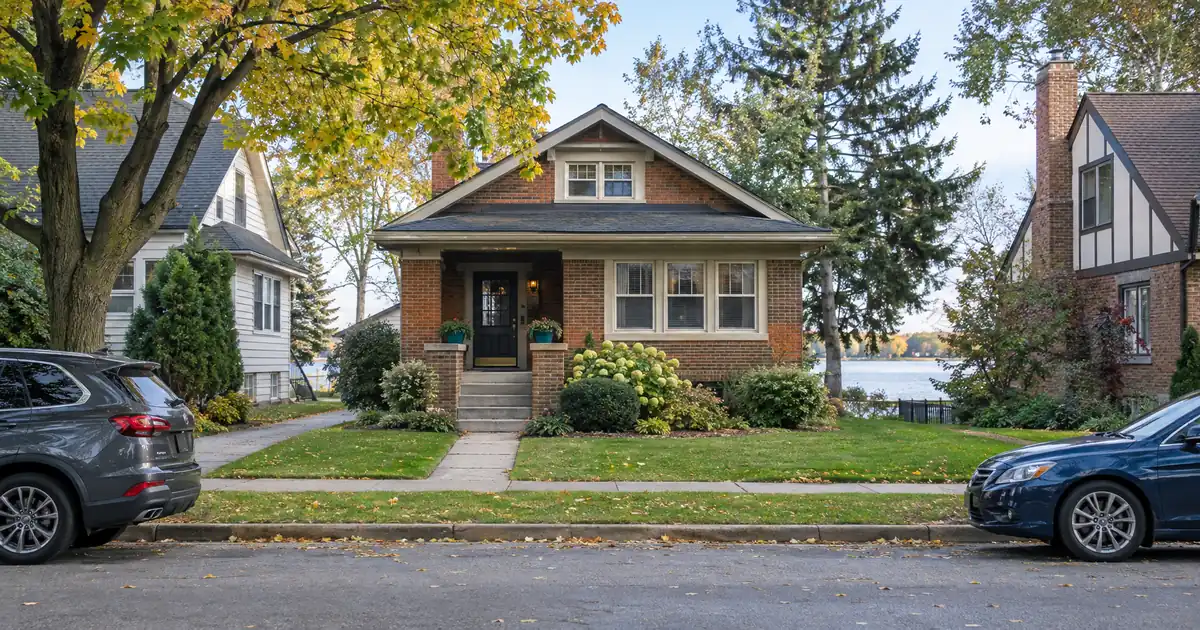
Two Pewaukee investors can own very different assets and face the same coverage problem. One holds a lake-adjacent single-family home near the city’s $460K median sale price, with house rents averaging about $2,050 a month. The other holds a small attached unit bought well below that median. The math favors the attached unit, and it isn’t close. The house has more equity, but the condo has a better rent-to-value ratio, and that ratio decides how much a DSCR cash-out can pull.
Lendmire (NMLS# 2371349) is a DSCR-focused mortgage broker. Pewaukee, Wisconsin investors can have DSCR scenarios reviewed through lender programs that Lendmire helps place across 41 markets, including Washington, D.C. This article covers equity extraction only: what Pewaukee rents and values do to the coverage test, what seasoning and the 75% LTV ceiling mean for proceeds, and where the files stall. These specifics are subject to lender guidelines and a full review of property, leverage, and credit.
DSCR Cash-Out Calculator
Run the cash-out numbers in Pewaukee, WI
Rate source: Freddie Mac 30-yr average via FRED® — Federal Reserve Bank of St. Louis · effective Sep 24, 2026
Prefilled with starting assumptions — enter your property’s value, balance, taxes, and insurance for a more accurate picture.
Program parameters update from Lendmire’s centralized guideline source. Taxes and insurance are editable estimates.
As of Sep 24, 2026 · General Freddie Mac market benchmark, not a Lendmire loan offer. Property value, balance, taxes, and insurance are editable estimates. Maximum loan-to-value varies by lender, program, property type, and seasoning. Not a Loan Estimate, approval, or commitment to lend. Program availability and eligibility are subject to lender guidelines, credit approval, property review, and underwriting.
The Quick Read: A cash-out refinance on a Pewaukee, Wisconsin rental is underwritten primarily on the property’s rental income measured against its full monthly obligation, so the deal works through title seasoning, lease and rent evidence, an appraisal built on matching comps, and a loan sized by the lower of coverage or the 75% LTV ceiling. Terms vary by lender guidelines, property type, leverage, credit profile, and full file review.
- Redfin shows a $460K median sale price, down 0.65% year over year.
- Modeled single-family coverage lands well under 1.00x at 75% LTV, including taxes and insurance.
- Attached units near a $270,000 sale comp pencil better, but condo dues can erase the edge.
- Seasoning runs about 6 months from title recording. Reserves run about 6 months of PITIA. Waukesha County Technical College and ProHealth Care anchor demand in a market that is 25% renters.
- Exact terms depend on the lender’s guidelines, property type, leverage, and a full review of the borrower’s file.
Why the Lakefront Isn’t the Cash-Out Play
Lakefront Pewaukee is a prestige product, not a coverage product. A local brokerage lists lakefront estates above $1,000,000, on a lake of 2,400 acres with seven miles of shoreline. No rent source exists at those prices, and a long-term tenant rent would have to be very large to cover a loan against a seven-figure value. Skip it for cash-out math.
The next tier is better but still thin. The same brokerage puts single-level bungalows and ranches at roughly $300,000 to $600,000 and multi-level Cape Cods at $600,000 to $900,000. Rents on houses don’t scale with those prices. That is the whole story of this market in one sentence: values run ahead of rents.
Pewaukee’s size also limits the data. The city is about 16,437 people by an aggregator’s estimate, and two municipalities share the name: the City of Pewaukee and the Village of Pewaukee on the lake. Most price and rent sources blend them. Neighborhood-level rent data doesn’t exist in any source worth citing, so submarket reads below are directional.
The Coverage Math (Modeled, Not Sourced)
At the 75% LTV ceiling, typical Pewaukee product models under 1.00x, and the program minimum is 1.00. The table below uses modeled assumptions: rent divided by full PITIA on a 30-year term, including taxes and insurance, rounded down. The rents are sourced averages or modeled figures. The coverage numbers are not market data. Every figure here varies by lender and program — guidelines, property type, leverage, and credit profile all apply.
| Product | Price basis | Rent assumed | Coverage at 75% LTV |
|---|---|---|---|
| Single-family house | $460K median | $2,050 average | Roughly 0.65x-0.7x |
| Small attached unit | $270,000 comp | $1,400 modeled | Roughly 0.7x-0.8x |
Both are below benchmark, and that matters. Picture an investor holding a single-family rental bought near the median. At 75% LTV the rent covers well under 70 cents of every dollar of obligation. Dropping to roughly half the leverage still leaves the house under 1.00x. Getting the house to 1.00x takes leverage in the neighborhood of 40%, which leaves little cash to extract. Final terms depend on lender guidelines, property type, leverage, and the borrower’s complete credit picture.
The attached unit behaves differently. Current listings show a 1-bed, 600 sq ft apartment at $1,250 and two-bedroom units from $1,209 to $1,875. Run the numbers on a 1-bed condo like the one that sold in January for $270,000 with a modeled $1,400 rent. At roughly 50% LTV, coverage approaches 1.00x before HOA dues. Add dues and it slips back. This is one sale and a handful of listings, so it is a modeled read, not a market statistic.
Here’s the catch. Cash-out proceeds in Pewaukee are capped by the coverage test, not by equity. An owner can have plenty of equity and still find the usable number small. Lenders in the network may review sub-1.00 structures, such as a below-1.00 program, interest-only restructuring, or lower leverage with stronger reserves. Whether any of those fits depends on lender guidelines, credit, and property review. The guide “What Is a DSCR Loan” is worth reading before sizing a request.
Seasoning, Basis, and What Appreciation Delivers
Pewaukee isn’t handing investors forced appreciation. Redfin shows the median down 0.65% year over year, with homes averaging 63 days on market versus 50 the year before. Resideline shows a 12-month median of $445,450 with the middle half of sales between $335,000 and $703,000, a wide spread that reflects very different kinds of housing under one market name.
Three sources, three medians. This article uses Redfin’s $460K throughout. The gap between sources tells you something: one market name covers several kinds of housing. A $335,000 asset and a $700,000-plus asset behave very differently on coverage. So appraisal comps have to match the subject’s product type, not the town average.
Seasoning is the mechanical piece. Cash-out generally requires about 6 months of ownership, measured from title recording, and the settlement statement documents it. The 75% LTV ceiling applies to cash-out. The 80% purchase figure does not carry over. For an owner who bought low and added value, the basis does the work. For an owner who bought at market and waited for drift, there is not much to extract. The stronger play here is a lower-basis, lower-leverage cash-out, not a high-LTV pull. Investors who prefer appreciation-led holds could argue that’s fine. The proceeds are just smaller than the headline equity suggests.
For the full parameter set, see the cash-out qualification details. Refinancing options outside the cash-out box are a separate conversation.
Who Rents Here (and How Deep the Pool Is)
The tenant pool is real but shallow. RentCafe counts 2,779 renter-occupied households (25%) against 8,350 owner-occupied (75%). It reports 71% of rentals between $1,501 and $2,000, with average rent moving only from $1,774 to $1,771. Flat rents suggest investors should not lean on rent growth in their projections, since a DSCR loan is reviewed primarily on property-level rental income covering the payment, subject to lender guidelines. Its data covers only 50-plus-unit buildings, so small-landlord rents sit outside it. Zumper shows average rent at $1,505, down 4% year over year.
Demand drivers are workforce-based. Waukesha County Technical College’s main campus is in Pewaukee on 110 acres, and the college projected total headcount rising from 18,024 to 18,650 in one year. That figure counts all enrollment types. A narrower credit-based count is much lower, so don’t read it as full-time students living nearby. ProHealth Care employs 4,300 people and runs the UW Cancer Center in Pewaukee. The Milwaukee 7 regional site lists Generac, Milwaukee Tool, GE HealthCare, and Kohl’s among Waukesha County employers. No Pewaukee-specific headcounts exist for those.
Data USA puts the largest local industries at manufacturing (986 people), health care and social assistance (667), and retail trade (454), with a 20.9-minute average commute. That is a steady, workforce-driven profile, not a boom profile.
Where does that point on the map?
- Village of Pewaukee (downtown and Old Main Street): the only walkable core. One sourced apartment listing sits at $1,150 for a 1-bed, a single listing and not a median.
- WCTC campus area: workforce-training and staff demand, with no sourced price data.
- Grandview Boulevard and I-94 corridor: the hotel and office-park cluster, plus townhome and apartment pockets, per city-data.
- North Pewaukee along Highway 16: commuter renters heading toward Waukesha and Brookfield.
The corridor and condo-townhome pockets are likely the best coverage candidates. That is an inference. Confirm each unit against actual lease evidence.
Where Files Break
Documentation friction hits Pewaukee cash-outs in predictable places. Operator experience in comparable suburban markets points to the same few. Lendmire’s deal desk tends to see the cleaner files arrive with a signed lease, proof of rent receipts, and an entity packet already assembled. The common stall in thin-comp markets is the appraisal, where a handful of dissimilar sales produces a value below the owner’s expectation. A reconsideration packet with product-matched, recent in-area sales and condition adjustments is a routine step here, not an emergency.
Other friction points:
1. Condo or HOA questionnaire completeness. On attached units, an incomplete questionnaire or unclear dues schedule can pend the file. Dues feed straight into the coverage number.
2. Thin comps. Monthly sales volume is small. Houzeo counted 10 in its latest month, so expect appraisers to reach for wider comp windows.
3. Reserves documentation. About 6 months of PITIA, about 9 above $1,500,000. Asset statements need to show seasoning of funds and clear ownership.
4. Entity documents. LLC-titled loans are possible subject to lender program eligibility, but operating agreements and good-standing certificates need to match the title.
5. Jurisdiction. The city-versus-village split means records, tax bills, and municipal contacts differ. Confirm which one the subject sits in before the file goes in.
6. Property type. Lake cottages are common. Log-construction homes fall outside the network’s DSCR programs, so identify construction type early.
Verify current local rental rules, taxes, and insurance with qualified local professionals before sizing the loan. That reminder goes once, here.
What the Proceeds Do Next
Cash-out only matters if it buys something. In Pewaukee, the next acquisition is likely not another house at market price, because the rent-to-value ratio will reproduce the same coverage problem. The numbers point to lower-basis attached product, small multifamily where it can be found, or a different submarket where rents sit closer to value. Supply of duplexes and fourplexes in Pewaukee appears thin, so the search often leaves the city. Waukesha is the nearest larger market, at about 64,825 people per city-data.
DSCR vs. conventional financing
There are two common ways to finance an investment property in Pewaukee, WI, and they qualify you differently — here’s how investors weigh them.
Why investors choose it
- Qualifies on the property’s rental income — no personal tax returns, W-2s, or pay stubs needed to document income.
- No personal debt-to-income ceiling to clear, so existing mortgages and obligations don’t cap your borrowing the same way.
- Can be closed in an LLC, keeping the property inside a business entity.
- Built for scaling — not held to the limit on number of financed properties that conventional financing applies.
- Underwriting centers on the deal: generally qualifies when the rent covers the payment, a 1.00x coverage ratio being a common baseline (confirmed in underwriting).
- Designed specifically for investment property, including long-term and, where the program allows, short-term rentals.
Where it’s strong
- Often the lowest ongoing financing cost for a buyer who fully qualifies on personal income — a fit for a first property or a cost-first purchase.
Trade-offs for investors
- Requires full personal income documentation and must fit within a debt-to-income limit — salary, existing debts, and other mortgages all count.
- Typically held in your personal name rather than a business entity.
- Caps how many financed properties you can carry, which can become a ceiling as a portfolio grows.
- Evaluates you as a borrower as much as the property, which usually means more paperwork.
How investors usually choose: a first or single property often optimizes for the lowest financing cost; portfolio builders often optimize for leverage, vesting in an LLC, and scaling past conventional caps. The right answer depends on your goals, the property, and current guidelines — both paths run through select lenders in Lendmire’s wholesale network, with eligibility and terms confirmed in underwriting.
This is a genuine toss-up for some owners. Holding the lake-adjacent house, taking a small low-leverage cash-out, and keeping the asset for appreciation is a defensible call. So is selling and redeploying. The coverage math favors neither until the file is run on actual rent and a real appraisal. The comparison of DSCR and conventional financing helps owners whose personal income would carry a standard loan better than the property does. For statewide program context, see DSCR loans in Wisconsin. To run a specific scenario, pull a DSCR quote or call 828-256-2183.
Frequently Asked Questions
How do you qualify for a DSCR cash-out refinance in Pewaukee, Wisconsin?
Qualification centers on rent versus full PITIA, with a 1.00 minimum DSCR on standard programs. Lenders also review credit (tiers start at a 620 floor), about 6 months of seasoning from title recording, reserves, and the 75% LTV ceiling. Pewaukee’s thin rent-to-value means the coverage test usually limits proceeds before LTV does. All terms are subject to lender guidelines.
What are the requirements for an investment property loan in Pewaukee, Wisconsin?
Expect a credit review with tiers at 620, 660, 680, and 700, plus reserves of about 6 months PITIA and a property-level rent review. Standard programs go up to $3,000,000, and smaller balances route through select lenders. Manufactured homes, log homes, and barndominiums are not reviewable through these programs, which matters for lake cottages.
Will Pewaukee’s thin rent-to-value kill a cash-out?
Not always, but it shrinks proceeds. Modeled coverage on a median-priced house sits under 1.00x even at moderate leverage, so lower LTV, a sub-1.00 program, or an interest-only structure may be what a lender reviews. Attached units tend to pencil better, though HOA dues can offset that.
Does it matter whether a Pewaukee property is in the city or the village?
Yes, for records and logistics. The City of Pewaukee and the Village of Pewaukee are separate municipalities that share a name, and most market data blends them. Confirm the municipality early so title, tax, and appraisal comps line up.
What down-payment ranges may DSCR lenders review for Pewaukee investment-property purchases?
Most files review roughly 20% to 25% down on a purchase, depending on credit, coverage, and property type. Lendmire is a non-QM DSCR mortgage broker (NMLS# 2371349) that arranges DSCR investor loans across 41 markets, with qualification built around the property’s rental income rather than personal income, subject to program terms.
For current guidelines and terms, see Lendmire’s DSCR loan programs page.
The Call for the Next 6 to 24 Months
Pewaukee looks flat to slightly soft over the next two years. Prices are drifting down slightly, days on market are lengthening, rents are flat to lower, and the workforce anchors (WCTC, ProHealth Care, and the Waukesha County manufacturers) provide stability without adding growth. Expect cash-out here to reward owners with low bases and modest leverage, while owners who bought near the median at high LTV find the coverage test, not their equity, setting the ceiling.
About Lendmire
Lendmire is a non-QM mortgage brokerage (NMLS# 2371349) arranging DSCR investor loans in 41 markets, including Washington, D.C. DSCR eligibility is generally reviewed around property-level rental income rather than personal income, subject to lender and program guidelines, which suits self-employed investors and LLC-owned portfolios. Lendmire has been named a 2026 Scotsman Guide Top Mortgage Workplace and a top-ranked workplace in 2025. See recent Lendmire news and press releases for more.
Get Started
Ready to find the right loan for you?
In about 30 seconds you can review financing options available for your investment property. No commitment required.
Informational only. Not a Loan Estimate, approval, or commitment to lend. Program availability and eligibility are subject to lender guidelines, credit approval, property review, and underwriting.
References
2. Zumper — Rent Research Pewaukee WI
3. Waukesha County Technical College
4. benefit-realty.com — City Profiles Pewaukee Real Estate
5. ForRent.com — Pewaukee Extras House
6. City-Data — Pewaukee Wisconsin
7. Zillow — Pewaukee WI Condos for Rent
8. resideline.com — Pewaukee WI Housing Market
9. RentCafe
10. wctc.edu — Waukesha County Technical College Sees Enrollment Jump for Fall 2023 Semester
11. ProHealth Care
13. Data USA
14. a 2026 Scotsman Guide Top Mortgage Workplace
15. Scotsman Guide — Top Workplaces 2025
This article is part of Lendmire’s investment property cash-out refinance program — full qualification details, guidelines, and scenarios live on the program page.
Related reading: DSCR Cash Out Refinance in Pewaukee, Wisconsin: Lakefront Equity Versus Townhome Coverage · DSCR Cash Out Refinance in Mequon, Wisconsin: Why Duplexes Beat Lakefront Estates · Cash Out Refinance on a Lake Geneva Investment Property
Guides: Investment Property Cash-Out Refinance in Wisconsin
Brandon Miller
Founder & CEO, Mortgage Loan Originator, Lendmire LLC
- Mortgage Loan Originator · NMLS# 1129696 · Verify on NMLS Consumer Access
- North Carolina Real Estate Broker · License# 343312 · Verify on NCREC
- North Carolina Insurance Producer · License# 19053198 · Property, Casualty, Life, Health · Verify on NAIC SBS
- Lendmire LLC · Firm NMLS# 2371349 · Verify firm licensure
Important disclosures. Lendmire (NMLS# 2371349) is a licensed mortgage brokerage. Lendmire is not a direct lender, depository institution, or financial advisor. All loan inquiries are subject to lender underwriting; this article does not constitute a commitment to lend. Rates, terms, and program guidelines are subject to change without notice and vary by borrower profile, property type, and state. Information in this article is general in nature and is not financial, legal, or tax advice. Equal Housing Opportunity. NMLS Consumer Access: nmlsconsumeraccess.org.