
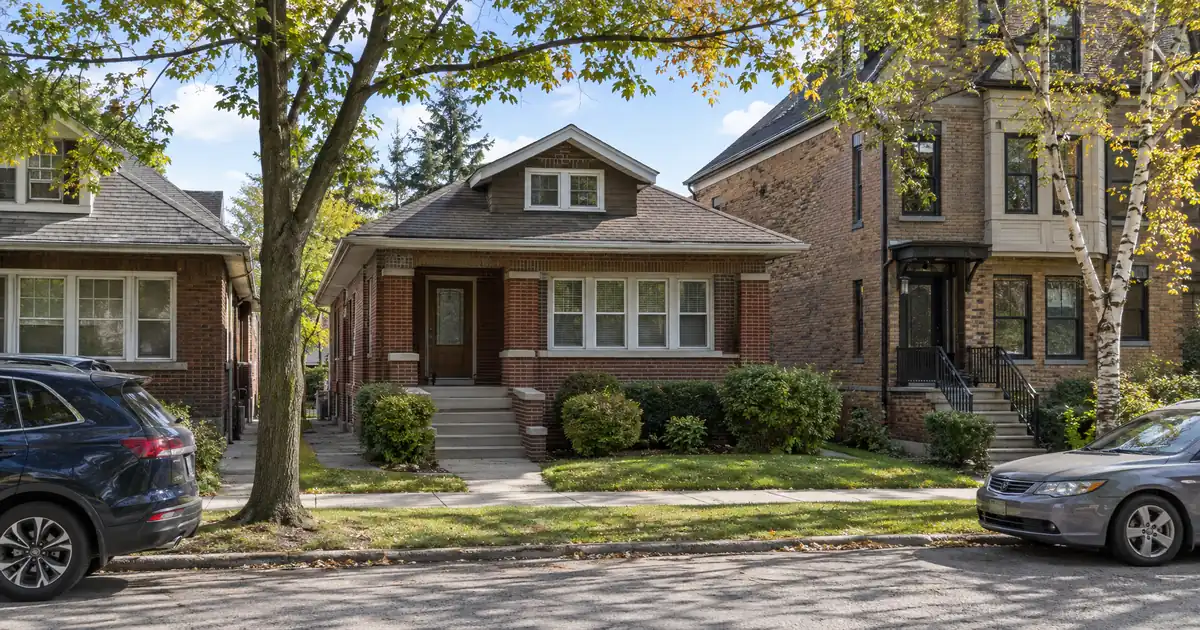
Two things are pulling in opposite directions in Muskego right now. Values are still climbing: Redfin puts the median sale price at $538K, up 3.0 percent year over year, even as only 12 homes sold in that month versus 26 a year earlier. Meanwhile, rents look flat to soft, and new apartment supply along the Janesville Road corridor is competing for the same renters. Over the next 6 to 18 months, that gap between rising equity and stalled rent will decide who can pull cash out of a Muskego rental and who can’t.
This article is about investors who already own. If you bought a Muskego property, held it through seasoning, and are wondering what the equity can do next, the answer depends less on how much value you’ve built and more on what the rent can carry.
DSCR Cash-Out Calculator
Run the cash-out numbers in Muskego, WI
Rate source: Freddie Mac 30-yr average via FRED® — Federal Reserve Bank of St. Louis · effective Sep 24, 2026
Prefilled with starting assumptions — enter your property’s value, balance, taxes, and insurance for a more accurate picture.
Program parameters update from Lendmire’s centralized guideline source. Taxes and insurance are editable estimates.
As of Sep 24, 2026 · General Freddie Mac market benchmark, not a Lendmire loan offer. Property value, balance, taxes, and insurance are editable estimates. Maximum loan-to-value varies by lender, program, property type, and seasoning. Not a Loan Estimate, approval, or commitment to lend. Program availability and eligibility are subject to lender guidelines, credit approval, property review, and underwriting.
The Quick Read:
A DSCR cash-out refinance on a Muskego, Wisconsin rental is underwritten primarily on the property’s rental income measured against its full monthly obligation, so the file works only when documented rent, after taxes and insurance, supports the new loan at a leverage level the lender allows, with seasoning satisfied and reserves in place.
- Modeled coverage on a typical Muskego house rental lands below 1.0x at 75 percent LTV.
- Median sale price sits near $538K per Redfin, up 3.0 percent year over year.
- Roughly 85 percent of housing is owner-occupied per RentCafe, so rent comps run thin.
- Cash-out typically requires about 6 months of ownership and tops out at 75 percent LTV.
- Attached units and small condo-structured stock usually work better than lake-area houses.
Why Muskego Equity Is Real but the Rent Is Thin
Muskego’s equity story is solid. Its cash-flow story is a stretch. Investors who mix the two up get stuck.
Homes.com shows a trailing 12-month median sale price of $525,000, up 6 percent from the prior 12 months, while its February median sits at $519,950. Redfin’s $538K uses a different method and month, so treat the market as a $520K to $538K band rather than a single number. Either way, that’s roughly 60 percent above the statewide average home value of $328,778 that Zillow reports for Wisconsin.
Then there’s the rent side. Zumper shows house rents near $2,400, though its own report warns the sample is limited. Apartment averages across sources run from about $1,395 to $1,769. Against a $525,000 value, house rent works out to a thin monthly yield. Muskego is a lake-oriented bedroom suburb of Milwaukee, and the price of admission reflects that. It’s not a workforce-rental market.
The city’s own positioning explains why. Its comprehensive plan frames Muskego as the premier lake-oriented community on the eastern I-43 corridor, with residents prioritizing retail and services over jobs. That’s a great place to own. It’s a harder place to make a rent-to-debt ratio clear 1.00.
What the Coverage Math Looks Like
On a typical single-family rental here, the number falls below 1.00 at the maximum cash-out leverage and only reaches the baseline at much lower LTV. Exact terms depend on the lender’s guidelines, property type, leverage, and a full review of the borrower’s file.
Run the numbers this way, using modeled assumptions rather than sourced market facts: a $525,000 value (the Homes.com trailing figure), $2,400 monthly rent, a 30-year loan, and taxes and insurance at Wisconsin averages folded into the full monthly obligation. Coverage below is rent divided by that full obligation, rounded down.
| Cash-out LTV | Modeled coverage |
|---|---|
| 75 percent | about 0.7x |
| 60 percent | about 0.8x |
| 50 percent | about 0.9x |
| 40 percent | roughly 1.0x |
Most standard programs are built around a 1.00x benchmark because rent covers the obligation at that level. Some lenders review sub-1.00 files, but those usually come with stronger compensating factors, lower leverage, different pricing, or more cash retained. Eligibility depends on lender guidelines, credit profile, reserves, and property review.
So what does that mean for a Muskego owner? It means the 75 percent ceiling is mostly theoretical on a single-family house at these rents. The proceeds you can realistically extract are set by the coverage number, not by how much equity you’ve built. If your house has appreciated well but the rent hasn’t followed, the refinance may be a modest one, or it may be the wrong tool entirely.
This is a genuine toss-up for some owners. A sub-1.00 structure, interest-only restructuring, or a lower-leverage pull could each be reviewed by a lender, but none of them is a given. If you’re reaching for sub-1.00 on every property you own here, that’s a signal about the market, not the loan product.
The Stock That Actually Pencils
Attached and condo-structured product generally produces better rent-to-value than lake-area houses. Muskego just has less of it than you’d hope.
Start with what’s not likely to work: Big Muskego and Little Muskego Lake homes. That’s premium, owner-occupied inventory, and the yield doesn’t support a cash-out at any meaningful leverage. It’s a wonderful house to live in. Skip it as a DSCR play.
Small multifamily here is mostly condo-structured rather than whole-building rentals. Per the City of Muskego’s planned-development code, Parkridge Condominiums has 48 units in six structures, and Bay Breeze on Little Muskego Lake totals 78 dwelling units, most of them in 11 four-unit and five six-unit condominium buildings. The city’s current-developments page also lists Cobblestone Meadows, a 16-unit condominium development off Janesville Road.
The catch is what that structure does to underwriting. Buying one unit in a condo project means one rent per loan and a condo-project review layered onto the file. You won’t stack income across a single deed the way you would with a Milwaukee-area fourplex. That’s an inference from the ownership structure, not a lender ruling, so confirm before assuming multi-unit math applies.
Rent benchmarks for attached product are useful here. Rentable reports an average condo rent near $2,150. Those are single-property benchmarks. They tell you attached units can rent for meaningfully less than houses, so underwrite attached product on its own comps and don’t scale house rents down.
Who Rents in Muskego, and Why It’s a Small Pool
Renters are a small slice of the market, and the ones who are here tend to be commuters. RentCafe shows about 15 percent of housing is rented and 85 percent owned. Of the rental stock, 71 percent sits in complexes under 50 units, 17 percent in buildings of 50 or more, and 12 percent is single-family rentals.
The demand anchors are modest and regional. Census Bureau QuickFacts puts the population at 25,406 with a median household income of $112,221 and a mean commute of 22.9 minutes. The city names industrial employers including Northern Gear, M2M Machining, and the GE Global Warehouse on its economic development page, though no headcounts were published. The Muskego-Norway School District is the clearest local employer.
Healthcare demand comes from outside the city. Muskego has no hospital of its own, and Healthgrades lists nearby facilities including Froedtert Community Hospital in New Berlin, Ascension SE Wisconsin Hospital in Franklin, and ProHealth Waukesha Memorial. Healthcare workers make a durable tenant pool, but they’re commuting in. The thesis is a commuter-suburb renter profile, not local job growth.
And the supply side is shifting. The current-developments page lists the Will Rose Apartments, approved as two buildings of 51 and 39 units on the Janesville Road corridor. New, amenitized apartments compete for the same renters, which fits the soft-rent read. There’s no absorption or vacancy data to call this oversupply, so keep rent assumptions conservative instead.
Seasoning, the 75 Percent Ceiling, and What You Can Pull
For cash-out, the program guidance typically centers on about 6 months of ownership measured from title recording, with a 75 percent LTV ceiling, a 1.00 coverage benchmark, credit tiers starting at a 620 floor, and reserves of about 6 months of the full monthly obligation. Exact terms vary by borrower, property, and lender. Details are subject to lender guidelines and change, so confirm current parameters before you plan around them.
The seasoning clock matters more than most investors expect. Value gains from a renovation or a rising market don’t shorten it. If you bought recently and the title recorded less than about 6 months ago, you’re waiting regardless of how much the appraisal might show.
Equity available depends on rent used for lender review, the full monthly obligation, reserves, and that 75 percent cap. It isn’t a guaranteed cash figure. For a Muskego house, coverage will likely be the binding constraint before the LTV cap is. For attached product with a cleaner rent-to-value ratio, the LTV cap may bind first. You can run the numbers with Lendmire against your actual rent and value before deciding which limit applies.
A practitioner note: files from suburban, owner-heavy markets like this one tend to run into the same friction point. The appraisal supports the value, but the rent comps are thin, and the lease or market-rent schedule ends up carrying more of the file. Lendmire’s deal desk generally sees cleaner files when the borrower documents a signed lease, a rent history, and reserve balances up front, because thin comp data leaves the lender leaning on what the borrower can prove.
Where the Proceeds Go Matters More Than the Pull
The cash-out argument is straightforward if the proceeds fund a deal that covers itself, and shaky if they fund one that doesn’t.
Picture an investor with a single-family rental near the lakes who pulls equity at modest leverage, aiming to buy in a nearby submarket. Research flagged Franklin, New Berlin, West Allis, Waukesha, and Big Bend as adjacent areas worth investigating for better rent-to-price, though no data was gathered on them. Treat that as a starting list, not a conclusion.
Consider the other path: an owner keeps the Muskego house, pulls a smaller amount, and reinvests in attached product in the same city. That keeps everything local, but the yield ceiling stays low. Which is better depends on what you’re optimizing for. If appreciation is your thesis and Muskego’s price momentum continues, holding makes sense. If cash-flow coverage is the goal, the equity probably works harder elsewhere.
DSCR vs. conventional financing
Two common ways to finance an investment property in Muskego, WI. They qualify you differently — here’s how investors weigh them.
Why investors choose it
- Qualifies on the property’s rental income — no personal tax returns, W-2s, or pay stubs needed to document income.
- No personal debt-to-income ceiling to clear, so existing mortgages and obligations don’t cap your borrowing the same way.
- Can be closed in an LLC, keeping the property inside a business entity.
- Built for scaling — not held to the limit on number of financed properties that conventional financing applies.
- Underwriting centers on the deal: generally qualifies when the rent covers the payment, a 1.00x coverage ratio being a common baseline (confirmed in underwriting).
- Designed specifically for investment property, including long-term and, where the program allows, short-term rentals.
Where it’s strong
- Often the lowest ongoing financing cost for a buyer who fully qualifies on personal income — a fit for a first property or a cost-first purchase.
Trade-offs for investors
- Requires full personal income documentation and must fit within a debt-to-income limit — salary, existing debts, and other mortgages all count.
- Typically held in your personal name rather than a business entity.
- Caps how many financed properties you can carry, which can become a ceiling as a portfolio grows.
- Evaluates you as a borrower as much as the property, which usually means more paperwork.
How investors usually choose: a first or single property often optimizes for the lowest financing cost; portfolio builders often optimize for leverage, vesting in an LLC, and scaling past conventional caps. The right answer depends on your goals, the property, and current guidelines — both paths run through select lenders in Lendmire’s wholesale network, with eligibility and terms confirmed in underwriting.
Here’s where conventional financing might beat DSCR. If you own one or two rentals personally and have strong traditional employment income, a conventional cash-out may carry lower cost and won’t hinge on 0.7x-type coverage at all. The side-by-side comparison covers where that flip point sits. DSCR earns its place when you’re at the financed-property cap, hold properties in an LLC (subject to lender program eligibility), or are self-employed with traditional personal-income documentation that understate income. Muskego’s price level makes that comparison sharper than usual.
For background on “What Is a DSCR Loan”, see the guide “What Is a DSCR Loan”. For loan-type detail, see the refi options and the broader refinance details. State-level program context lives on the page for DSCR loans in Wisconsin. Verify current local rental rules, taxes, and insurance with qualified local professionals before committing.
The Real Choice for a Muskego Owner
Muskego owners with equity face a binary that the market itself creates.
Option one: pull a smaller amount against a house that’s appreciating. You keep the lake-town price momentum and accept that coverage limits the pull to lower leverage. The tradeoff is that the proceeds are modest, and the rent has to hold as new corridor apartments open.
Option two: refinance out of the premium, then redeploy into better rent-to-price product nearby. You get more cash working at healthier coverage, but you either sell or hold two markets, and you give up exposure to a suburb where values have kept climbing on tight inventory.
Neither is wrong. The first bets on Muskego’s price resilience; the second bets that yield beats a lake address.
Frequently Asked Questions
How do you qualify for a DSCR cash-out refinance in Muskego, Wisconsin?
Qualification centers on the property’s documented rent relative to its full monthly obligation, typically measured against a 1.00 benchmark. You’ll generally also need about 6 months of seasoning, a credit score at or above a 620 floor, and reserves of roughly 6 months. Cash-out leverage tops out at 75 percent, and everything is subject to lender guidelines and property review.
What are the requirements for an investment property loan in Muskego, Wisconsin?
Expect the lender to review credit, reserves, an appraisal, and a lease or market-rent schedule. Muskego’s thin rental comp pool makes rent documentation more important than usual. Manufactured homes, log homes, and barndominiums fall outside these programs. Terms vary by borrower and scenario.
Does a 75 percent LTV cash-out work on a Muskego single-family rental?
Usually not at typical house rents. Modeled coverage including taxes and insurance runs near 0.7x at that leverage against a $525,000 value and $2,400 rent. Lower leverage brings the number toward 1.0x, and a lender may review sub-1.00 structures with compensating factors, subject to guidelines.
Are condos or small multifamily better for cash-out in Muskego?
Attached product tends to carry a friendlier rent-to-value ratio, but much of Muskego’s small multifamily is condo-structured. That means one rent per loan and a condo-project review, not stacked unit income on one deed. Underwrite on attached-unit rent comps, and confirm structure with a lender first.
How do DSCR lenders review rental income instead of traditional tax-return income in Wisconsin?
The lender generally reviews property cash flow, meaning rent against the full monthly obligation, rather than traditional personal-income documentation. A 1.00 coverage benchmark is common, subject to lender guidelines. Call 828-256-2183 to talk through a specific Muskego file.
For current guidelines and terms, see Lendmire’s DSCR loan programs page.
About Lendmire
A DSCR-focused mortgage broker, Lendmire (NMLS# 2371349) places investor financing across 41 markets, meaning 40 states plus Washington, D.C. DSCR eligibility is generally reviewed by the lender on property cash flow instead of traditional personal-income documentation, subject to lender guidelines. Scotsman Guide named Lendmire a 2026 Scotsman Guide Top Workplace and a top-ranked workplace in 2025 among mortgage companies.
Get Started
Ready to find the right loan for you?
In about 30 seconds you can review financing options available for your investment property. No commitment required.
Informational only. Not a Loan Estimate, approval, or commitment to lend. Program availability and eligibility are subject to lender guidelines, credit approval, property review, and underwriting.
References
1. Redfin: Muskego housing market
2. RentCafe: Muskego rental market
3. Zillow: Wisconsin home values
4. Zumper: Muskego rent research
5. City of Muskego: current developments
6. Rentable
7. Census Reporter: Muskego profile
8. muskego.wi.gov — Departments Economic Development
9. Muskego-Norway School District
10. Healthgrades: hospitals near Muskego
11. a 2026 Scotsman Guide Top Workplace
12. Scotsman Guide — Top Workplaces 2025
This article is part of Lendmire’s investment property cash-out refinance program — full qualification details, guidelines, and scenarios live on the program page.
Related reading: Cash Out Refinance Investment Property Muskego Wisconsin · Cash Out Refinance Investment Property West Bend Wisconsin · DSCR Cash Out Refinance Pewaukee Wisconsin
Guides: Investment Property Cash-Out Refinance in Wisconsin
Brandon Miller
Founder & CEO, Mortgage Loan Originator, Lendmire LLC
- Mortgage Loan Originator · NMLS# 1129696 · Verify on NMLS Consumer Access
- North Carolina Real Estate Broker · License# 343312 · Verify on NCREC
- North Carolina Insurance Producer · License# 19053198 · Property, Casualty, Life, Health · Verify on NAIC SBS
- Lendmire LLC · Firm NMLS# 2371349 · Verify firm licensure
Legal disclosures. Lendmire (NMLS# 2371349) is a state-licensed mortgage brokerage that arranges financing through wholesale lender relationships. Lendmire is not a direct lender, depository institution, or registered financial advisor. The discussion above is general informational content about real estate financing — it is not financial, legal, or tax advice, and readers should consult licensed professionals for guidance on their individual circumstances. Loan inquiries are subject to lender underwriting; this article does not represent a commitment to lend. Loan terms, rates, and qualification standards vary by borrower, property, and state, and are subject to change at any time. Equal Housing Opportunity. NMLS Consumer Access: nmlsconsumeraccess.org.