
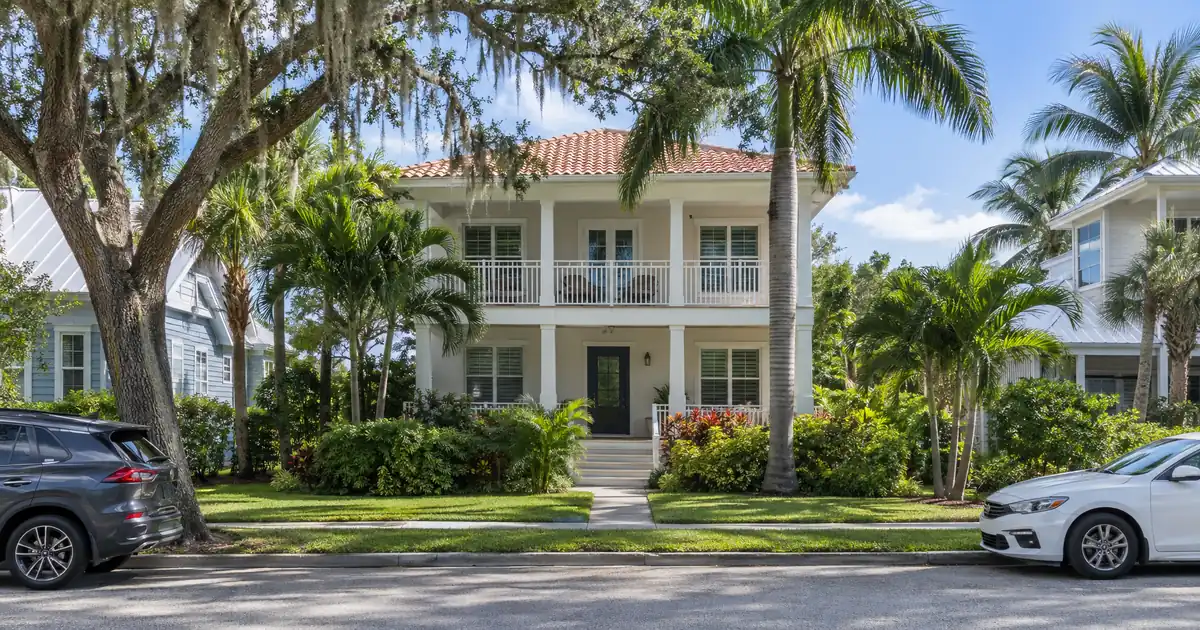
A condo in one of Singer Island’s oceanfront towers hits the DSCR math like this. Say an investor owns a unit valued near the island’s Redfin median sale price of $912,500, leased for 12 months at a modeled $6,245 a month, which is Redfin’s island median rent. Pull equity at a conservative condo leverage limit and the coverage number lands around 1.1x on full payment including taxes and insurance. Then condo dues arrive (they vary building to building) and the ratio slides toward 1.00 or below. The equity is real. The yield isn’t. That gap defines the whole strategy here.
Lendmire (NMLS# 2371349) is a DSCR-focused mortgage broker. For real estate investors in Singer Island, Florida, Lendmire helps structure and place DSCR financing through wholesale lenders operating in 41 markets, including D.C.
DSCR Cash-Out Calculator
Run the cash-out numbers in Singer Island, FL
Rate source: Freddie Mac 30-yr average via FRED® — Federal Reserve Bank of St. Louis · effective Sep 24, 2026
Prefilled with starting assumptions — enter your property’s value, balance, taxes, and insurance for a more accurate picture.
Program parameters update from Lendmire’s centralized guideline source. Taxes and insurance are editable estimates.
As of Sep 24, 2026 · General Freddie Mac market benchmark, not a Lendmire loan offer. Property value, balance, taxes, and insurance are editable estimates. Maximum loan-to-value varies by lender, program, property type, and seasoning. Not a Loan Estimate, approval, or commitment to lend. Program availability and eligibility are subject to lender guidelines, credit approval, property review, and underwriting.
The Short Version:
A cash-out refinance on a Singer Island investment property is underwritten primarily on the property’s rental income measured against its full monthly obligation, with the lender sizing proceeds from rent used for lender review, subject to reserves and a leverage ceiling set by property type.
- Island median sale price sits near $912,500, with softening liquidity.
- Condo cash-out typically caps lower than the 75% ceiling, often cited near 65% for non-warrantable buildings.
- Mainland Kelsey City and Northwood Harbor rents run near $2,400.
- Small multifamily is the yield lane, and it sits on the mainland, not the island.
- Ownership seasoning is about 6 months from title recording; reserves run about 6 months of PITIA.
The Island Condo Is the Equity Source, Not the Yield Source
Singer Island is a vertical market, and the equity most investors hold here sits in condo towers. Redfin’s island listing snapshot showed 202 condos, 2 townhouses, and 1 multi-family unit for sale in a recent month. Small multifamily is close to nonexistent on the island.
The pricing picture depends on which source you read, and they disagree. Zillow puts the average island home value at $868,925, flat year over year. Redfin’s median sale price of $912,500 is down 24.0% year over year, with homes averaging 202 days on market versus 65 the prior year. Movoto shows a $999,000 median and 115 days on market versus 90. Medians swing with the sales mix, so treat the 24% drop as noisy. The direction is still clear: flat to soft, with slower absorption.
That matters for a cash-out more than most investors expect. A Sotheby’s-affiliated island team reports 129 condo sales year-to-date, versus 126 a year earlier and 183 two years earlier, with about 78% of purchases made in cash. Few financed sales means few financed comps. An appraiser working with a thin comp set tends to value conservatively, and that caps the equity a refinance can release. Plan around a lower appraised value than the peak you remember, not the number you hope for.
The rent side deserves the same skepticism. Redfin’s $6,245 island median rent reflects a small, luxury-skewed sample. Run against the $912,500 median price, it produces a gross yield near 8%, which looks generous until you remember it’s one sample of a few leases. Underwrite each condo on its own lease or an appraiser’s rent schedule, never on a submarket median.
Where Coverage Actually Lives
The mainland is where DSCR math works. It sits in Riviera Beach, whose 2020 Census population was 37,604 and which includes most of Singer Island in its eastern section. Redfin’s submarket medians show Kelsey City at $2,422 and Northwood Harbor at $2,350, with North Palm Beach Village near $2,400. These are the closest thing to a workforce-rent benchmark the data supports, though they aren’t bedroom-specific.
Here’s the catch for single-family. Against Redfin’s city median sale price of $505K, a $2,400 rent produces a gross yield near 5.7%. Modeled at 75% LTV with full taxes and insurance in the payment, coverage lands under 0.8x. Single-family workforce rentals here don’t clear 1.00 at maximum cash-out leverage. Skip that plan unless the property is held at low leverage. Final terms depend on lender guidelines, property type, leverage, and the borrower’s complete credit picture.
Small multifamily changes the picture. NeighborhoodScout puts duplexes and small apartment buildings at 12.71% of city housing, against 41.23% single-family detached and 31.62% large apartment complexes. About one unit in eight is small multifamily, so comps exist, and they’re almost certainly on the mainland. Supply is thin, though. Homes.com showed 7 multi-family listings priced from $424,000 to $850,000, averaging 61 days listed. One quadplex listing there cited market rents of $2,600 for a 3BR, $1,800 for a 2BR, and $1,400 for an efficiency, with separate electric and water meters per unit. Those are listing-agent claims about below-market in-place rents, not verified leases.
Run the numbers on a modeled fourplex. Assume a $650,000 price (inside that listed range), gross rents of $7,600 across four units built from those claimed figures, then a 20% haircut for in-place leases below market. Financed at 75% LTV, the coverage number comes out around 1.4x including taxes and insurance. Even that haircut assumes the leases can be supported, and Florida multiunit insurance can move the ratio. This is a modeled example, not a market quote.
Condo Versus Fourplex, Side by Side
| Factor | Island condo | Mainland fourplex |
|---|---|---|
| Role in strategy | Equity source | Yield destination |
| Typical LTV limit | Lower, often ~65% | Up to 75% cash-out |
| Rent basis | Individual lease | Unit-level lease schedule |
| Modeled coverage | ~1.0-1.1x pre-dues | ~1.4x, haircut rents |
| Comp depth | Thin financed sales | Handful of listings |
What’s the Catch on Island Leverage?
The ceiling for a cash-out refinance on an investment property is 75% LTV, but condos rarely get the full amount. Non-warrantable buildings typically face a lower cap, often cited near 65%, and lender guidelines vary by building. Since most of the island is condos, expect to be on the lower end. Confirm the building’s status before you assume any proceeds figure.
Other parameters run on typical guidelines, subject to lender approval. Ownership seasoning is about 6 months, measured from title recording. Minimum coverage is a 1.00 benchmark on rent used for lender review versus full PITIA, and some lenders review lower scenarios with stronger compensating factors, lower leverage, or different pricing. Credit tiers step up at 620 (the floor), 660, 680, and 700. Reserves run about 6 months of PITIA, rising to about 9 months above $1,500,000. Loan amounts go up to $3,000,000 on standard programs. How DSCR coverage is calculated is straightforward: rent used for lender review divided by principal, interest, taxes, insurance, and dues. Held in an LLC, the same structure is available subject to lender program eligibility.
If a condo lands below 1.00 on long-term rent alone, the paths a lender may review include a sub-1.00 program, interest-only structuring, or reduced leverage. Qualification stays subject to lender guidelines, credit approval, and property review. The better question is whether a below-1.00 island condo should be refinanced at all. If the property’s appeal is appreciation, and appreciation is flat here, forcing the refinance to work is a signal to reexamine the plan, not the loan.
Working DSCR brokers see a recurring pattern in luxury condo markets with thin financed-sale activity: the rent side of the file looks fine and the appraisal is where it stalls. Files that go smoothly usually start with a building-level dues check and a rent schedule that reflects an actual lease. Files that struggle assume the listing price is the appraised value. In markets where most buyers pay cash, the comp set is the constraint.
Condo inventory in Riviera Beach appears to run leaner than the wider county, which is mildly supportive of value. Claims of an outsized yield premium for beachfront buildings are best left out of the analysis, since they likely reflect seasonal rents and don’t translate to a 12-month-lease case. Underwrite to a documented lease and the building’s actual dues instead.
Why the Mainland Tenant Base Holds Up
Tenant demand here rests on working employment, not tourism. The Port of Palm Beach sits in Riviera Beach and reports more than 3,800 regional jobs and more than $14 billion in commodities moved. The Business Development Board of Palm Beach County lists Lockheed Martin/Sikorsky at about 1,052 employees and Cheney Brothers at about 1,050, both based in Riviera Beach, per employer-reported figures. Those are the kind of anchors that support 12-month leases in Kelsey City and Northwood Harbor.
Healthcare and education add depth within commuting range. Palm Beach Health Network operates St. Mary’s Medical Center, a Level 1 Trauma Center with more than 400 beds, on the mainland. Palm Beach Atlantic University enrolls 4,147 students, and Palm Beach State College enrolls tens of thousands. None of it is on the island. All of it feeds the mainland rental pool, which is why the redeploy leg targets the mainland.
Not every rent number agrees. Zumper shows a $3,000 average, up 7% year over year. Redfin’s citywide median is $1,925. Repit models a $2,617 average rent against a $421,736 average home value, and says no Riviera Beach ZIP codes meet the 1% rule. Rents in this market run from about $1,500 to $4,500 depending on the source and property mix. Base the DSCR file on actual leases or an appraiser’s schedule, not any of these headlines.
The Cash-Out-and-Redeploy Sequence
The strategy holds together like this. An investor owns an island condo with equity, having bought years ago. After the roughly 6-month seasoning window, they run a DSCR cash-out on the condo at a modest leverage level that keeps coverage near or above 1.00. The proceeds fund a mainland fourplex purchase where unit-level rents produce stronger coverage. The result: a thin-yield asset becomes a cash-flowing one without selling.
This one’s a genuine toss-up for some owners. If the condo has real appreciation upside and low carrying costs, holding it unrefinanced might beat pulling equity into a market with thin comps. If the condo is dragging on dues and the owner wants monthly income, redeployment wins. The answer depends on the owner’s tolerance for thin data on the mainland side.
Investor profile decides the loan lane. A W-2 borrower with one or two properties held personally may find conventional financing cheaper and simpler, and the guide “Where DSCR and Conventional Diverge” is worth reading first. DSCR becomes the practical lane for LLC-held portfolios, self-employed investors, and anyone past the conventional financed-property cap. Investors comparing options across the state can start with DSCR loan options for Florida investors.
What to Watch Over the Next 6-24 Months
Four indicators tell you whether the island cash-out window is widening or closing.
Days on market and financed-sale share. If island days on market keep climbing past 200 and cash buyers stay near 78%, appraisals stay conservative. A rise in financed sales would give appraisers better comps.
Pending supply on the mainland. The Real Deal reports a workforce housing pipeline funded in part by the Riviera Beach CRA: a 149-unit project, a 175-unit project, and a proposed $556 million Marina Village. If those deliver on schedule, new supply could soften rent growth in downtown Riviera Beach. That could help entry pricing for small multifamily, or it could compress rents. It cuts both ways.
The Singer Island Gateway proposal. WLRN reports it is still in the approval process and includes a workforce housing component. Approval changes the island’s supply story; rejection preserves it.
Rent data convergence. The current spread from roughly $1,500 to $4,500 makes DSCR sizing noisy. If aggregators converge, underwriting gets easier.
The thing that could break the pattern is the equity itself. If island values keep softening, the proceeds shrink and the redeploy math weakens. Stress-test the cash-out against a lower appraisal before committing. Investors who want to see modeled coverage at different leverage points can see how the math pencils, or call 828-256-2183.
Verify current local rental rules, taxes, insurance, and condo-association rental restrictions with qualified local professionals before committing to any property.
Frequently Asked Questions
How do you qualify for a DSCR cash-out refinance on a Singer Island condo?
Coverage typically needs to reach the 1.00 benchmark on rent used for program review versus full PITIA, including condo dues. The lender also reviews credit (620 floor, tiers up to 700), reserves near 6 months of PITIA, and ownership seasoning of about 6 months. Non-warrantable buildings usually face a lower leverage cap than the 75% ceiling. Eligibility is subject to lender guidelines and property review.
DSCR vs. conventional financing
Two common ways to finance an investment property in Singer Island, FL. They qualify you differently — here’s how investors weigh them.
Why investors choose it
- Qualifies on the property’s rental income — no personal tax returns, W-2s, or pay stubs needed to document income.
- No personal debt-to-income ceiling to clear, so existing mortgages and obligations don’t cap your borrowing the same way.
- Can be closed in an LLC, keeping the property inside a business entity.
- Built for scaling — not held to the limit on number of financed properties that conventional financing applies.
- Underwriting centers on the deal: generally qualifies when the rent covers the payment, a 1.00x coverage ratio being a common baseline (confirmed in underwriting).
- Designed specifically for investment property, including long-term and, where the program allows, short-term rentals.
Where it’s strong
- Often the lowest ongoing financing cost for a buyer who fully qualifies on personal income — a fit for a first property or a cost-first purchase.
Trade-offs for investors
- Requires full personal income documentation and must fit within a debt-to-income limit — salary, existing debts, and other mortgages all count.
- Typically held in your personal name rather than a business entity.
- Caps how many financed properties you can carry, which can become a ceiling as a portfolio grows.
- Evaluates you as a borrower as much as the property, which usually means more paperwork.
How investors usually choose: a first or single property often optimizes for the lowest financing cost; portfolio builders often optimize for leverage, vesting in an LLC, and scaling past conventional caps. The right answer depends on your goals, the property, and current guidelines — both paths run through select lenders in Lendmire’s wholesale network, with eligibility and terms confirmed in underwriting.
What are the requirements for an investment property loan in Singer Island, Florida?
Requirements vary by loan type, but for a DSCR structure they center on the property’s rent, credit tier, reserves, and leverage limit. Cash-out is capped at 75% LTV, and loan amounts run up to $3,000,000 on standard programs. Condos, especially non-warrantable ones, often carry tighter limits. Manufactured homes, log homes, and barndominiums fall outside these programs.
Why does the mainland matter for a Singer Island cash-out?
Because the island is almost entirely condos, and condo rents rarely cover full payment at high leverage. The mainland has small multifamily, about 12.71% of Riviera Beach housing, where unit-level rents stack into stronger coverage. That’s why investors often pull equity from island condos and deploy it in mainland duplexes and fourplexes.
How does DSCR eligibility review differ from a bank’s approach in Singer Island?
A bank reviews traditional personal-income documentation, while DSCR eligibility is generally reviewed on the property’s cash flow, subject to lender guidelines. Lendmire places DSCR investor loans, and for cash-out files the key feature is that rent used for the lender’s review against full PITIA drives sizing. That helps LLC-held and self-employed investors whose returns don’t show rental income cleanly.
Will an island condo appraise high enough to release much equity?
Not necessarily. Sales volume is below its earlier peak, days on market are long, and most buyers pay cash, so financed comps are scarce. Appraisers may value conservatively, and the 65% condo cap on non-warrantable buildings compounds it. Model proceeds against a lower value, not the listing price.
One Question Before You Pull Anything
Does the condo you own today earn its place as equity collateral for the next deal, or is it the asset you’d rather keep whole while the mainland does the yield work?
About Lendmire
A DSCR-focused mortgage broker, Lendmire (NMLS# 2371349) places investor financing across 41 markets, spanning 40 states plus Washington, D.C., with DSCR eligibility generally reviewed by the lender on property cash flow rather than traditional personal-income documentation, subject to lender guidelines. The firm has been recognized by Scotsman Guide as a 2026 Top Workplace and recognized by Scotsman Guide in 2025 as a Top Mortgage Workplace.
Get Started
Ready to find the right loan for you?
In about 30 seconds you can review financing options available for your investment property. No commitment required.
Informational only. Not a Loan Estimate, approval, or commitment to lend. Program availability and eligibility are subject to lender guidelines, credit approval, property review, and underwriting.
References
1. Redfin: Singer Island housing market
2. Redfin — Singer Island Luxury Condos
3. Zillow: Singer Island home values
4. Movoto: Singer Island market trends
5. singerislandcondos.com — Singer Island Real Estate Market Update September 2026
6. Redfin: Riviera Beach rental market
7. Redfin — Riviera Beach Housing Market
8. NeighborhoodScout: Riviera Beach
9. Homes.com
10. atlisre.com — Riviera Beach Real Estate Market Report 2026
11. Florida Ports Council: Port of Palm Beach
12. Business Development Board of Palm Beach County: Top Employers
14. Palm Beach Atlantic University
15. Zumper
16. Repit
17. The Real Deal: Riviera Beach workforce housing
18. WLRN
19. recognized by Scotsman Guide as a 2026 Top Workplace
20. recognized by Scotsman Guide in 2025
This article is part of Lendmire’s investment property cash-out refinance program — full qualification details, guidelines, and scenarios live on the program page.
Related reading: DSCR Cash Out Refinance in Singer Island, Florida: The 2026 Refi Guide to Ocean Drive Condos · DSCR Cash Out Refinance in Aventura, Florida: The 2026 DSCR Financing Guide to Biscayne Boulevard · DSCR Cash Out Refinance in Siesta Key, Florida: How the Rent Math Clears at 75% LTV Here
Guides: Investment Property Cash-Out Refinance in Florida
Brandon Miller
Founder & CEO, Mortgage Loan Originator, Lendmire LLC
- Mortgage Loan Originator · NMLS# 1129696 · Verify on NMLS Consumer Access
- North Carolina Real Estate Broker · License# 343312 · Verify on NCREC
- North Carolina Insurance Producer · License# 19053198 · Property, Casualty, Life, Health · Verify on NAIC SBS
- Lendmire LLC · Firm NMLS# 2371349 · Verify firm licensure
Disclosure information. Lendmire is a state-licensed mortgage brokerage under NMLS# 2371349. Lendmire is not a depository institution, direct lender, or financial advisor — all loans referenced are placed through wholesale lender partners and are subject to each lender's underwriting standards. This article is provided for general informational purposes and is not a commitment to lend, nor does it constitute financial, legal, or tax advice. Loan programs, terms, rates, and qualification standards change without notice and depend on borrower profile, property type, and the state in which the subject property is located. Equal Housing Opportunity provider. NMLS Consumer Access: nmlsconsumeraccess.org.