
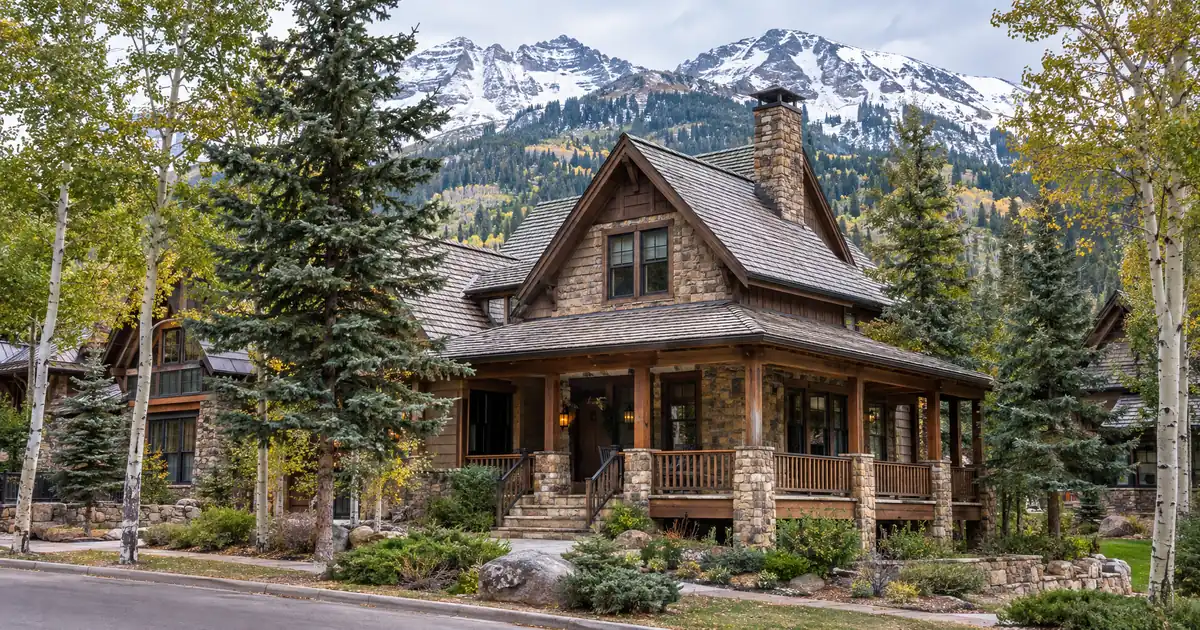
On a cash out refinance investment property file in Vail, Colorado, the 75 percent LTV cap is rarely the number that stops the deal. Rent is. Zillow puts the average Vail home value at $1,762,792, while Apartments.com shows two-bedroom rents near $2,220. That gap decides how much cash can come out.
The Quick Read: A Vail, Colorado cash-out refinance suits an investor who already owns workforce-oriented rental stock and has real equity, because the loan is underwritten primarily on the property’s rental income measured against its full monthly obligation, and in a town where the average home value is $1,762,792 that rent test, not the equity, sets the ceiling.
DSCR Cash-Out Calculator
Run the cash-out numbers in Vail, CO
Rate source: Freddie Mac 30-yr average via FRED® — Federal Reserve Bank of St. Louis · effective Sep 24, 2026
Prefilled with starting assumptions — enter your property’s value, balance, taxes, and insurance for a more accurate picture.
Program parameters update from Lendmire’s centralized guideline source. Taxes and insurance are editable estimates.
As of Sep 24, 2026 · General Freddie Mac market benchmark, not a Lendmire loan offer. Property value, balance, taxes, and insurance are editable estimates. Maximum loan-to-value varies by lender, program, property type, and seasoning. Not a Loan Estimate, approval, or commitment to lend. Program availability and eligibility are subject to lender guidelines, credit approval, property review, and underwriting.
- Cash-out tops out at 75 percent LTV, with about 6 months of ownership measured from title recording.
- Two-bedroom rents cluster near $2,200 to $3,500 across listing sources.
- Only one-third of Vail housing units house year-round households, so in-town rent comps are thin.
- West Vail and valley workforce stock pencil better than Vail Village or Lionshead.
- Reserves run about 6 months PITIA, about 9 months above $1,500,000.
Vail, Colorado is one of the 41 markets — 40 states plus Washington, D.C. — where Lendmire places DSCR loans for investment-property borrowers. Lendmire (NMLS# 2371349) is a DSCR-focused mortgage broker. It arranges these loans through wholesale channels, and the lender reviews eligibility. This article covers the equity-out side only: you own the property, it has appreciated, and you want capital for the next deal. For the general definition, see the guide “What Is a DSCR Loan”.
Vail Market Snapshot
A quick read on the Vail investor landscape — figures come from the cited sources below. Confirm current property-level numbers before underwriting.
| Metric | Detail |
|---|---|
| Home prices | $1.3M median price (2025 Eagle County Regional) |
| Typical rents | $1,800 median (Eagle County Regional Housing) |
| Recent appreciation | +4.4% yoy (Zillow Home Values) |
Why Rent, Not Equity, Sets the Cash-Out Number
Cash-out proceeds are limited by whichever constraint binds first: the 75 percent LTV ceiling, the 1.00 coverage benchmark on rent used for lender review against full PITIA, and reserves. In Vail, coverage binds first almost every time. Equity is plentiful. Rent is not.
The value data is messy because the sources mix condos with single-family homes. Movoto reports a median sale price of $3,050,000 with 102 days on market. Summit Colorado Realty shows a median of $1,323,000, with 5.1 months of supply. A Mountain Views Team brokerage compilation lists 163 residential listings and a median near $2,995,000. Condos and townhomes sit well below the single-family medians. Read those figures as a range, not a median.
Appreciation is the draw. Zillow shows values up 4.4 percent over the past year. The draft Eagle County housing assessment says non-resort prices grew 15.2 percent a year over a recent multi-year window, and the median stayed above $1 million even outside resort areas. This is an appreciation-led valley, not a cash-flow-led one. Equity supports the refinance. Rent has to carry it.
Where Cash-Out Files Actually Pencil
The workable Vail inventory is workforce-oriented stock in West Vail, East Vail, and Eagle-Vail, plus the valley towns of Edwards and Avon. West Vail is the strongest in-town candidate. It is the most workforce-oriented area, with tenants who work for Vail Resorts, Vail Health, the town, and the school district. The agent blog data is directional only, but it puts East and West Vail between $950 and $1,200 per square foot.
The demand anchors are real. Vail Resorts is the dominant employer, and its jobs page advertises a $20 per hour starting wage. Vail Health is one of the town’s largest employers and offers staff housing programs. Data USA shows Accommodation and Food Services at 485 residents, Arts, Entertainment, and Recreation at 334, and Educational Services at 317. Long-term demand shows up in the county housing gap too: the Vail Valley Partnership cites a shortfall of 4,500 units. Occupancy risk is low. Coverage is the issue.
Eagle-Vail, between Vail and Avon, has 1,400-plus homes and a mix of year-round residents and second homeowners, per Wikipedia. Edwards is where Colorado Mountain College runs its Vail Valley campus, which enrolled 2,490 students in a recent year per Wikipedia’s Edwards entry. The same entry shows a 4.0 percent rental vacancy in the last census count, an older figure but a reasonable guide for a vacancy assumption. Edwards, Avon, and Eagle-Vail are where a lot of Vail’s workers actually live.
Skip the Village and Lionshead
Vail Village and Lionshead carry prices up to $1,700 per square foot in the same agent-blog data. The tenant profile is luxury second-home owners and seasonal staff, and inventory is condo-heavy. For a long-term-rental cash-out, the rent-to-value ratio is the worst in the valley. Coverage below 0.5x is common. Not a fit for this product.
A Modeled Cash-Out: The Math at Three Price Points
These inputs are modeled assumptions, not market data. Coverage is rent divided by full PITIA, including taxes and insurance, using a 30-year loan at an assumed high-6s rate. Leverage is 75 percent.
Picture an investor holding a West Vail townhome valued at $700,000 (assumed) and renting at $3,500 (assumed, near the top of the sourced two-bedroom range). Coverage lands around 0.85x. Below the 1.00 benchmark.
Drop the value to $600,000 with the same rent and coverage sits near 1.0x. That is the rough breakeven. At a two-bedroom rent near $2,200, the value would need to sit below roughly $380,000 to reach the same point, which is not a typical in-town Vail price.
Now run a value near the $1,323,000 brokerage median with $3,500 in rent. Coverage comes in below 0.5x. That property does not cash out at 75 percent on long-term rent, regardless of how much equity it carries.
When a file lands under 1.00, lenders may review other structures. Those include a sub-1.00 program, an interest-only structure, or lower leverage, each with its own pricing and reserve terms. Whether any of them fits depends on lender guidelines, credit (620 is the floor, with tiers at 660, 680, and 700), reserves, and property review. Lower leverage also means less cash out. Pushing coverage up usually shrinks the proceeds.
Eagle County’s regional needs analysis is why the county-level rent data matters here. It reports a median rent of $1,800 and an average of $1,924, against a 2023 median home price above $1.3 million. Workforce rents run in the low thousands while prices run above a million. Only lower-priced stock, or a rent-by-the-room setup, gets close to coverage. Honestly, this is a market where the better cash-out often sits in Edwards or Eagle-Vail rather than in town. You give up the Vail address, and coverage improves.
The Appraisal Problem: Rent Comps That Live Elsewhere
Working DSCR brokers see a recurring pattern in resort markets: the equity is obvious and the rent evidence is thin. The appraiser’s market-rent schedule (Form 1007) or the signed lease drives rent used for lender review, not listing averages. With so few year-round households in town, comps often come from Edwards, Avon, or Eagle-Vail. That can cap the rent figure and, with it, the cash out.
Listing averages mislead here. Zillow’s rental page shows a stale range that runs from $3,030 to $20,000 because luxury and seasonal listings skew the data. Do not underwrite to that. Underwrite to signed leases at workforce rents. Appraisal reconsideration works if the packet includes recent lease-backed rentals in comparable valley neighborhoods, not aspirational listings.
Deed Restrictions Change the File
Confirm restriction status before anything else. The town’s Vail InDEED program buys down deed restrictions, with a goal of 1,000 net new restrictions and 175 homes restricted at the time of the town’s about page. Restricted units have no appreciation cap and no income cap, but per the HUD USER case study at least one household member must be a qualified resident working 30-plus hours a week in an Eagle County business. The owner can be that resident or rent to one. The restriction runs with the property.
That narrows the tenant pool and can affect value and comps. A restricted unit and a free-market unit on the same street are different collateral. Pull the recorded documents early and hand them to the lender with the file.
Subsidized supply is growing too. Eagle County Housing lists a 102-unit CMC-linked development with rent tiers at 60 and 80 percent of area median income. That confirms workforce demand. It also competes with private rentals at the low end in Edwards.
What a Clean File Looks Like
The cleanest file from a documentation standpoint has complete leases, entity documents, title, and property details ready for program review. For a Vail cash-out, that means:
1. Six-month seasoning proof. The recorded deed or settlement statement showing the ownership date. Cash-out is generally available after about 6 months from title recording.
2. Leases and rent evidence. Signed leases at workforce rents, plus any deed-restriction documents that limit occupancy.
3. Entity documents. If title sits in an LLC, operating agreement and formation documents, subject to lender program eligibility.
4. Reserves documentation. About 6 months PITIA in verified funds, and about 9 months above $1,500,000. Larger Vail balances trip that second threshold easily. Standard programs go up to $3,000,000.
5. Comp package for the appraisal. Lease-backed valley rentals, ready in case the first rent schedule comes in light.
The 75 percent ceiling is fixed for cash-out. Never plan around the 80 percent purchase figure. How the proceeds are structured is covered in the equity-extraction mechanics. For a side-by-side with bank underwriting, see the guide “Where DSCR and Conventional Diverge”. Colorado-specific programs are on the page for DSCR loan options for Colorado investors. Verify current local rental rules, taxes, and insurance with qualified local professionals before you size the file. Program terms are subject to lender guidelines and are not a commitment to lend.
Two Ways to Use the Equity
Vail owners with big equity and modest rent face a real fork. One path is to refinance the Vail property itself at a lower leverage that clears coverage, taking a smaller check but keeping the asset. The other is to sell or hold the Vail asset unlevered and buy workforce-priced stock in Edwards or Eagle-Vail, where the same rent covers the debt with room to spare. Neither is free. The first gives up proceeds, and the second gives up the address in a town where the price-to-rent gap is among the widest in the state.
Frequently Asked Questions
How do you qualify for a DSCR cash-out refinance in Vail, Colorado?
The property’s rent must cover its full monthly obligation (principal, interest, taxes, insurance, and any dues), with 1.00x as the common benchmark. You also need about 6 months of ownership from title recording, a credit score of at least 620, and reserves of about 6 months PITIA. Leverage is capped at 75 percent. All of it is subject to lender guidelines.
DSCR vs. conventional financing
Two common ways to finance an investment property in Vail, CO. They qualify you differently — here’s how investors weigh them.
Why investors choose it
- Qualifies on the property’s rental income — no personal tax returns, W-2s, or pay stubs needed to document income.
- No personal debt-to-income ceiling to clear, so existing mortgages and obligations don’t cap your borrowing the same way.
- Can be closed in an LLC, keeping the property inside a business entity.
- Built for scaling — not held to the limit on number of financed properties that conventional financing applies.
- Underwriting centers on the deal: generally qualifies when the rent covers the payment, a 1.00x coverage ratio being a common baseline (confirmed in underwriting).
- Designed specifically for investment property, including long-term and, where the program allows, short-term rentals.
Where it’s strong
- Often the lowest ongoing financing cost for a buyer who fully qualifies on personal income — a fit for a first property or a cost-first purchase.
Trade-offs for investors
- Requires full personal income documentation and must fit within a debt-to-income limit — salary, existing debts, and other mortgages all count.
- Typically held in your personal name rather than a business entity.
- Caps how many financed properties you can carry, which can become a ceiling as a portfolio grows.
- Evaluates you as a borrower as much as the property, which usually means more paperwork.
How investors usually choose: a first or single property often optimizes for the lowest financing cost; portfolio builders often optimize for leverage, vesting in an LLC, and scaling past conventional caps. The right answer depends on your goals, the property, and current guidelines — both paths run through select lenders in Lendmire’s wholesale network, with eligibility and terms confirmed in underwriting.
What are the requirements for an investment property loan in Vail, Colorado?
Requirements center on the rental income, credit tier (620, 660, 680, or 700), reserves, and the property itself. Loan amounts go up to $3,000,000 on standard programs. Manufactured homes, log homes, and barndominiums fall outside these programs. Deed-restricted Vail units also need their occupancy terms documented for eligibility review.
Why do Vail cash-out files often come in with limited proceeds?
Because value is high and rent is low. A median-priced Vail property produces coverage below 0.5x in the modeled math, so leverage has to drop before the file clears. West Vail, Edwards, and Eagle-Vail stock closer to workforce pricing generally does better.
Does a deed-restricted Vail home change the refinance?
Yes. The restriction limits occupancy to households with a qualified resident who works in Eagle County, and it runs with the property. Comps and rental evidence should reflect that, and the recorded restriction belongs in the file from the start.
What documents matter most for a Vail DSCR cash-out review?
Signed leases, the recorded deed for seasoning, entity documents, and reserves statements. Lendmire arranges DSCR loans and rental income is the primary basis for review. To start, get a rental-income loan quote or call 828-256-2183.
For current guidelines and terms, see Lendmire’s DSCR loan programs page.
About Lendmire
Lendmire is a non-QM mortgage brokerage (NMLS# 2371349) arranging DSCR investor loans in 41 markets, including Washington, D.C., through wholesale and investor-lending channels. DSCR loans are evaluated by the lender on rental income rather than personal income, subject to lender guidelines — a fit for LLC-owned portfolios, self-employed investors, and operators scaling beyond conventional loan caps. Lendmire was recognized by Scotsman Guide as a 2026 Top Workplace and is also a 2025 Scotsman Guide Top Workplace.
Get Started
Ready to find the right loan for you?
In about 30 seconds you can review financing options available for your investment property. No commitment required.
Informational only. Not a Loan Estimate, approval, or commitment to lend. Program availability and eligibility are subject to lender guidelines, credit approval, property review, and underwriting.
References
3. ApartmentFinder — Colorado Vail Apartments
4. static1.squarespace.com — 2025 Eagle County Regional Housing Needs Assessment
5. mccmeetingspublic.blob.core.usgovcloudapi.net — Minturnco Meet
6. Movoto
7. Summit Colorado Realty market report
9. beaenvail.com — Vail Real Estate Market
10. Vail Resorts
11. jobs.vailresortscareers.com — Jobs page
12. Vail Health
14. Vail Valley Partnership, workforce housing
15. Wikipedia
19. vail.gov — Vailindeed About
20. HUD USER case study on deed restrictions
22. Scotsman Guide as a 2026 Top Workplace
23. a 2025 Scotsman Guide Top Workplace
This article is part of Lendmire’s investment property cash-out refinance program — full qualification details, guidelines, and scenarios live on the program page.
Related reading: DSCR Cash Out Refinance Vail Colorado · DSCR Cash Out Refinance Snowmass Colorado · Cash Out Refinance Investment Property Keystone Colorado
Guides: Investment Property Cash-Out Refinance in Vail, CO · Investment Property Cash-Out Refinance in Colorado
Brandon Miller
Founder & CEO, Mortgage Loan Originator, Lendmire LLC
- Mortgage Loan Originator · NMLS# 1129696 · Verify on NMLS Consumer Access
- North Carolina Real Estate Broker · License# 343312 · Verify on NCREC
- North Carolina Insurance Producer · License# 19053198 · Property, Casualty, Life, Health · Verify on NAIC SBS
- Lendmire LLC · Firm NMLS# 2371349 · Verify firm licensure
Compliance and disclosures. Lendmire (NMLS# 2371349) is a licensed mortgage broker and is not a direct lender, depository institution, financial advisor, or tax professional. Content in this article is general market analysis and educational information — not financial, legal, or tax advice for any specific situation. Lendmire does not guarantee loan approval; every transaction is subject to underwriting by the funding lender. Mortgage pricing and loan program guidelines are subject to change at any time without notice and vary by borrower characteristics, property type, and state regulations. Lendmire complies with Equal Housing Opportunity. Licensure verification: NMLS Consumer Access.