
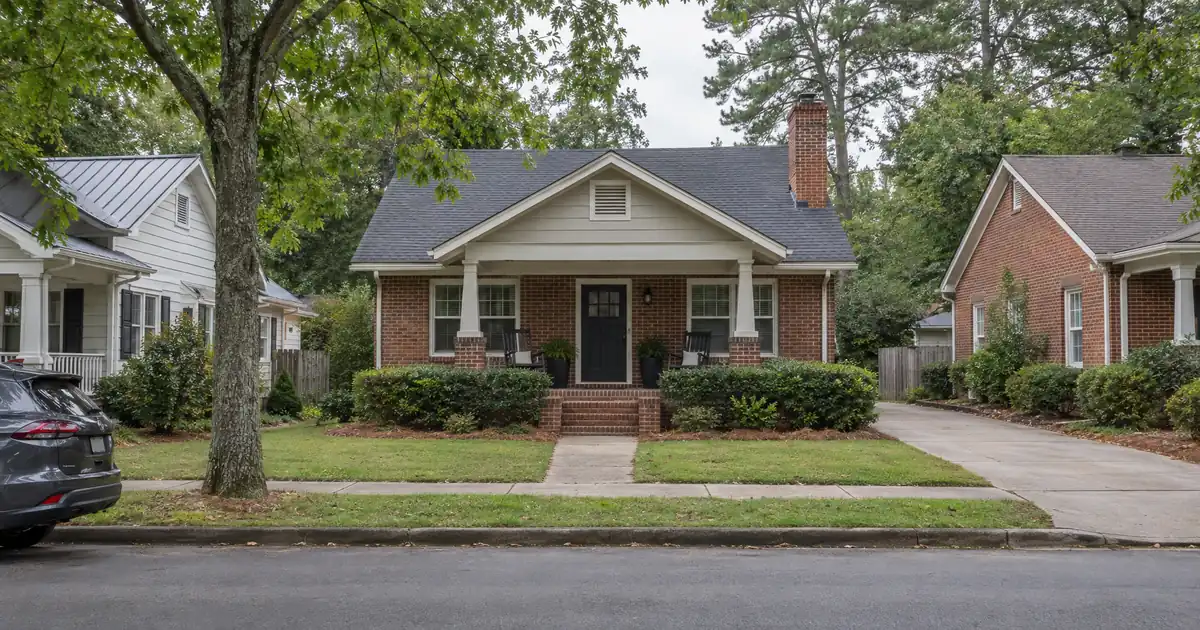
An out-of-state investor scrolling Birmingham-area listings sees Vestavia Hills and stops. The median sale price sits near $600,000 per Redfin, up 2.2 percent year over year, and homes turn in about 35 days on average. Then the investor pulls up rents and the picture changes. Census-derived sources put median gross rent around $1,515, and listings data lands near $1,549. Prices look like a premium market and rents look like a workforce market. Anyone planning to pull equity out of a Vestavia Hills rental needs to understand that gap before choosing a structure.
DSCR Cash-Out Calculator
Run the cash-out numbers in Vestavia Hills, AL
Rate source: Freddie Mac 30-yr average via FRED® — Federal Reserve Bank of St. Louis · effective Sep 24, 2026
Prefilled with starting assumptions — enter your property’s value, balance, taxes, and insurance for a more accurate picture.
Program parameters update from Lendmire’s centralized guideline source. Taxes and insurance are editable estimates.
As of Sep 24, 2026 · General Freddie Mac market benchmark, not a Lendmire loan offer. Property value, balance, taxes, and insurance are editable estimates. Maximum loan-to-value varies by lender, program, property type, and seasoning. Not a Loan Estimate, approval, or commitment to lend. Program availability and eligibility are subject to lender guidelines, credit approval, property review, and underwriting.
Key Takeaways:
A Vestavia Hills cash-out refinance fits the investor who already owns equity here and wants to redeploy it, because DSCR financing is underwritten primarily on the property’s rental income measured against its full monthly obligation, and this city’s rents are thin against its prices.
- Median price near $600,000 against rents around $1,515 to $1,549 keeps single-family coverage well below 1.00.
- Cash-out LTV tops out at 75 percent, with about six months of seasoning from title recording.
- Single-family detached homes are 70 percent of housing units per NeighborhoodScout, so duplexes and fourplexes are scarce.
- Cahaba Heights rent comps now compete with a 274-unit apartment community.
Vestavia Hills Market Snapshot
A quick read on the Vestavia Hills investor landscape — figures come from the cited sources below. Confirm current property-level numbers before underwriting.
| Metric | Detail |
|---|---|
| Typical rents | $1,255 avg asking (Kirkland Company) |
| University enrollment | 21,500+ students (Business Alabama) |
| Population | 1.19m MSA population (Kirkland Company) |
| Employment | 28,000 employees (Business Alabama) |
| Vacancy | 6.1% projection (REBusinessOnline) |
The Rent-to-Value Problem, Stated Plainly
The average Vestavia Hills house does not cover its own debt service on rent alone. The ratio of rent to price runs about 0.26 percent monthly against the Redfin median, and roughly 0.31 percent against Zillow’s lower value estimate. Investors accustomed to Birmingham-metro workforce housing will find this is a different animal.
Here is the mechanic. Debt service coverage is monthly rent divided by the full monthly obligation: principal, interest, taxes, insurance, and any HOA dues. Run a modeled case with a median-priced house at $600,000, a rent near $1,550, 75 percent LTV, and a 30-year term at an assumed 7.03 percent interest rate. Including taxes and insurance, coverage lands well below 0.50. These are modeled assumptions, not market facts.
Even at meaningfully lower leverage, a median-priced house stays under 1.00 on long-term rent. The 1.00 benchmark is common because rent covers the payment at that level. Some lenders will review lower ratios, but usually with lower leverage, stronger credit, more reserves, or different pricing. Interest-only structures and sub-1.00 programs are options a lender would review. Approval depends on lender guidelines, credit, and property review.
That is not a reason to walk away. It is a reason to be specific about what the cash-out is for.
Who This Structure Fits (and Who Should Use Conventional)
DSCR cash-out fits the investor whose returns come from appreciation and who needs the proceeds for the next deal. It also fits the LLC operator, the self-employed borrower whose traditional personal-income documentation understates income, and anyone past the conventional financed-property cap.
Conventional may be the better call for a different investor. The median household income here is $134,369, per Wikipedia’s summary of ACS data, and 65.3 percent of residents hold a bachelor’s degree or higher. A W-2 professional with one or two rentals and clean personal income can often use conventional cash-out on a thin-yield Vestavia house and skip the coverage test entirely. How the two loan types differ comes down to which side of the file is stronger: the borrower or the property. Here, for many owners, it is the borrower.
| Factor | DSCR Cash-Out | Conventional Cash-Out |
|---|---|---|
| Reviewed on | Property rent vs. full obligation | Personal income and DTI |
| Thin-yield Vestavia house | Coverage is the constraint | Coverage is irrelevant |
| Entity ownership | Common, subject to program terms | Usually personal name |
| Portfolio scaling | Not capped by count | Runs out around four properties |
Seasoning, LTV, and the Equity Timeline
Two program mechanics matter most for equity extraction.
Cash-out LTV is capped at 75 percent. That is lower than the 80 percent ceiling on purchases, and it is a hard limit. Seasoning is typically about six months of ownership, measured from title recording. An investor who bought a Vestavia house within the last few months cannot refinance on appraised value yet, regardless of how the comps look.
Beyond that, program eligibility generally involves a minimum credit score in the 620 range, with better tiers at 660, 680, and 700. It also involves reserves of about six months of PITIA, stepping up on larger balances. Loan amounts run up to $3,000,000 on standard programs, subject to lender guidelines. The proceeds figure is not a fixed number. It depends on appraised value, rent used for lender review, the coverage test, reserves, and the 75 percent ceiling. The guide “The Refi Options” walks through the sequence.
Appreciation is what makes the exercise worthwhile here. Redfin shows median price per square foot at $224, up 6.7 percent year over year, and 199 homes sold in the most recent month tracked versus 185 a year earlier. Zillow shows values up 3.2 percent. That is roughly 2 to 7 percent depending on the measure, with enough sales volume to give an appraiser real comps. The gain comes from price, not rent.
Cahaba Heights: The Entry-Priced Candidate
Cahaba Heights (ZIP 35243) is the most plausible DSCR cash-out area in the city. The Vestavia Hills Chamber of Commerce calls it the “antique shopper’s paradise,” a walkable village district. The Williams Group, a local brokerage, puts starting prices for smaller or older homes around $350,000. That is a single brokerage’s starting-price figure, not a median, so treat it as directional.
Older ranches on half-acre lots, some with finished basements, are the likely rental stock. A modeled owner with a lower-basis house here gets better coverage than one holding a median-priced home. The gap between 0.50 and the 1.00 benchmark narrows, though it likely does not close at 75 percent leverage.
The catch is supply. Lument reports that a 274-unit community, Inkwell on Grandview, opened in Cahaba Heights. A single-family landlord competing with new apartments should expect concessions to show up in the rent comps. Appraisers and lenders weigh comps, so an inflated rent assumption gets corrected fast.
Skip the Gated Luxury Sector
Liberty Park (ZIP 35242) is a planned district built around office buildings off I-459 and Liberty Parkway. The Chamber also notes new neighborhoods, apartments, and recreational fields. The Williams Group places prices up to $2 million and beyond in the gated Old Overton sector.
High basis with ordinary rents means coverage runs thin. That is an inference from the rent-to-value pattern, not a sourced neighborhood rent figure, because no source publishes rents at that level. A DSCR cash-out on a luxury-tier house asks the rent to carry a very large balance. Unless the borrower is planning a lower-leverage structure with substantial reserves, this is a conventional-lane property.
Rocky Ridge, Altadena, and the US-31 corridor round out the picture. The Chamber describes Rocky Ridge as a neighborhood business district among upscale residential developments, and US-31 as the mid-century core with the Municipal Complex and City Center. Neither area has sourced rent or price data, so both stay qualitative. Investors should ask a local appraiser for comps before building a model around either.
Vacancy: Two Reports, Two Stories
The vacancy data conflicts, and that is worth understanding rather than smoothing over.
The Kirkland Company puts Birmingham metro apartment vacancy at 13.7 percent, the highest in more than 25 years. It names Hoover/Vestavia Hills as a submarket where new supply has prevented meaningful tightening. Asking rents were down 0.8 percent year over year, with an average asking rent of $1,255. TenantBase puts metro multifamily vacancy near 14.9 percent with rent growth near 1.97 percent, and only 289 units under construction.
Marcus & Millichap, as reported by REBusinessOnline, takes a different view. It describes Homewood, Vestavia Hills, and Hoover as among the metro’s most stable suburbs, citing limited new construction and steady occupancy, with metro vacancy projected near 6.1 percent.
The reconciliation, in my read of the sources: risk sits in new luxury product with lease-up concessions, not in older stabilized suburban rentals. The shrinking construction pipeline suggests supply pressure may be peaking, which helps a hold-and-refinance thesis. Still, rent growth is unlikely to rescue thin coverage anytime soon.
Working DSCR brokers see a recurring pattern in affluent, school-and-commute suburbs where price outruns rent: the appraisal comes in fine, the rent schedule does not. Files that pencil tend to pair a modest loan-to-value with a lower-basis property, and they use stabilized, older rent comps rather than anything from a lease-up community.
Demand for the underlying tenant base looks steadier than the supply headlines suggest. The city sits just south of Birmingham, and the metro has 1.19 million residents. UAB is one of the largest employers in Alabama, and Business Alabama reports it draws nearly 2 million patient visits a year. Regions Financial is headquartered locally, and Children’s of Alabama anchors pediatric care. Professionals in these fields commute to the city, which supports lease-length stability more than nightly volatility.
What Proceeds Are For
Cash-out logic depends on where the money goes. Pulling equity to buy a lower-basis rental elsewhere in the Birmingham metro can work well, since coverage ratios tend to be stronger where prices sit closer to rents. The Williams Group notes the metro median near $350,000, well below Vestavia’s. Redeploying Vestavia equity into that tier turns an appreciation asset into cash-flow assets.
DSCR vs. conventional financing
Two common ways to finance an investment property in Vestavia Hills, AL. They qualify you differently — here’s how investors weigh them.
Why investors choose it
- Qualifies on the property’s rental income — no personal tax returns, W-2s, or pay stubs needed to document income.
- No personal debt-to-income ceiling to clear, so existing mortgages and obligations don’t cap your borrowing the same way.
- Can be closed in an LLC, keeping the property inside a business entity.
- Built for scaling — not held to the limit on number of financed properties that conventional financing applies.
- Underwriting centers on the deal: generally qualifies when the rent covers the payment, a 1.00x coverage ratio being a common baseline (confirmed in underwriting).
- Designed specifically for investment property, including long-term and, where the program allows, short-term rentals.
Where it’s strong
- Often the lowest ongoing financing cost for a buyer who fully qualifies on personal income — a fit for a first property or a cost-first purchase.
Trade-offs for investors
- Requires full personal income documentation and must fit within a debt-to-income limit — salary, existing debts, and other mortgages all count.
- Typically held in your personal name rather than a business entity.
- Caps how many financed properties you can carry, which can become a ceiling as a portfolio grows.
- Evaluates you as a borrower as much as the property, which usually means more paperwork.
How investors usually choose: a first or single property often optimizes for the lowest financing cost; portfolio builders often optimize for leverage, vesting in an LLC, and scaling past conventional caps. The right answer depends on your goals, the property, and current guidelines — both paths run through select lenders in Lendmire’s wholesale network, with eligibility and terms confirmed in underwriting.
Pulling equity to shore up a thin-coverage Vestavia holding is a different decision. Extracting the maximum while coverage sits below 1.00 means a sub-1.00 program or interest-only structure. Those are options a lender would review, with tradeoffs in leverage, credit, and pricing.
This is a genuine toss-up for many owners: keep the low-yield, high-appreciation house and finance around it, or sell into the strong market and reinvest. The right answer depends on the investor’s tax position and hold horizon, and a local CPA should weigh in.
Scarce Small Multifamily
Skip the assumption that a Vestavia duplex is easy to find. NeighborhoodScout puts small buildings (duplexes, converted homes) at 5.9 percent of units, against 20.1 percent for large apartment complexes. Comps for a 2-to-4-unit property will be sparse.
Scarcity cuts both ways. A rare fourplex may cover its obligation far better than any single-family house, but a thin comp pool makes appraisals harder to predict. Townhomes and condos also show up in subdivision lists, and eligibility depends on lender review of the project. Manufactured homes, log homes, and barndominiums fall outside these DSCR programs entirely.
Renter demographics help with sizing. Point2Homes counts 1,845 rentals in the city, with two-bedroom units making up 52 percent. It is a Yardi-derived figure, so use it as directional only.
Investors who want a quote can reach Lendmire at 828-256-2183. The state hub covers Alabama DSCR investor loans more broadly. Verify current local rental rules, taxes, and insurance with qualified local professionals before committing. Program details are subject to lender overlays.
What an Appraiser Would Tell You
Vestavia Hills is a market where the house is worth more than the rent says it should be. Appraisers here will support values with sales comps and won’t lean on income. A local broker would tell an owner to treat the equity as the asset and the rent as a bonus, and to keep the leverage low enough that the rent never has to be the hero.
Frequently Asked Questions
How do you qualify for a DSCR loan in Vestavia Hills?
Qualification centers on the property’s rent versus its full monthly obligation, with 1.00 as the common benchmark. Credit, reserves, and property review also matter. In Vestavia Hills, the main hurdle is that median-priced houses rent well below what their obligation implies, so coverage is the deciding variable. Eligibility is subject to lender guidelines.
What are the requirements for an investment property loan in Vestavia Hills, Alabama?
Typical guidance includes a credit floor around 620, reserves near six months of PITIA, and about six months of seasoning before cash-out. Cash-out LTV is capped at 75 percent. Loan amounts run up to $3,000,000 on standard programs, and specifics vary by lender and file.
Does the new apartment supply in Cahaba Heights affect rent comps?
Yes. A 274-unit community opened in Cahaba Heights, and Kirkland reports that new supply in Hoover/Vestavia Hills has kept the market from tightening. Concessions on new units can pull down rent comps for nearby houses. Older, stabilized rentals are the better comparison set.
Does Vestavia Hills being in two counties matter for a refinance?
Yes, it can. The city spans parts of both Jefferson and Shelby Counties, so the property’s location determines which county’s records and rules apply. Confirm the county with a title company and a local professional before underwriting.
About Lendmire
Lendmire is a non-QM mortgage brokerage (NMLS# 2371349) arranging DSCR investor loans in 41 markets, including Washington, D.C., through wholesale and investor-lending channels. DSCR loans are evaluated by the lender on rental income rather than personal income, subject to lender guidelines. That suits LLC-owned portfolios, self-employed investors, and operators scaling beyond conventional loan caps. Recognized as a 2026 Scotsman Guide Top Mortgage Workplace and a top-ranked workplace in 2025.
Get Started
Ready to find the right loan for you?
In about 30 seconds you can review financing options available for your investment property. No commitment required.
Informational only. Not a Loan Estimate, approval, or commitment to lend. Program availability and eligibility are subject to lender guidelines, credit approval, property review, and underwriting.
References
1. Redfin – Vestavia Hills Housing Market
2. NeighborhoodScout – Vestavia Hills
3. Kirkland Company – Birmingham Multifamily Report
4. Business Alabama – Jefferson County Economic Engines
5. REBusinessOnline – Birmingham Apartment Market
6. Wikipedia – Vestavia Hills, Alabama
7. Vestavia Hills Chamber of Commerce – Districts
8. Lument – Birmingham Multifamily
10. University of Alabama at Birmingham
11. a 2026 Scotsman Guide Top Mortgage Workplace
12. Scotsman Guide — Top Workplaces 2025
This article is part of Lendmire’s investment property cash-out refinance program — full qualification details, guidelines, and scenarios live on the program page.
Related reading: DSCR Cash Out Refinance Vestavia Hills Alabama · DSCR Cash Out Refinance North Richland Hills Texas · Cash Out Refinance Investment Property in Kill Devil Hills
Guides: Investment Property Cash-Out Refinance in Alabama
Brandon Miller
Founder & CEO, Mortgage Loan Originator, Lendmire LLC
- Mortgage Loan Originator · NMLS# 1129696 · Verify on NMLS Consumer Access
- North Carolina Real Estate Broker · License# 343312 · Verify on NCREC
- North Carolina Insurance Producer · License# 19053198 · Property, Casualty, Life, Health · Verify on NAIC SBS
- Lendmire LLC · Firm NMLS# 2371349 · Verify firm licensure
Legal disclosures. Lendmire (NMLS# 2371349) is a state-licensed mortgage brokerage that arranges financing through wholesale lender relationships. Lendmire is not a direct lender, depository institution, or registered financial advisor. The discussion above is general informational content about real estate financing — it is not financial, legal, or tax advice, and readers should consult licensed professionals for guidance on their individual circumstances. Loan inquiries are subject to lender underwriting; this article does not represent a commitment to lend. Loan terms, rates, and qualification standards vary by borrower, property, and state, and are subject to change at any time. Equal Housing Opportunity. NMLS Consumer Access: nmlsconsumeraccess.org.