
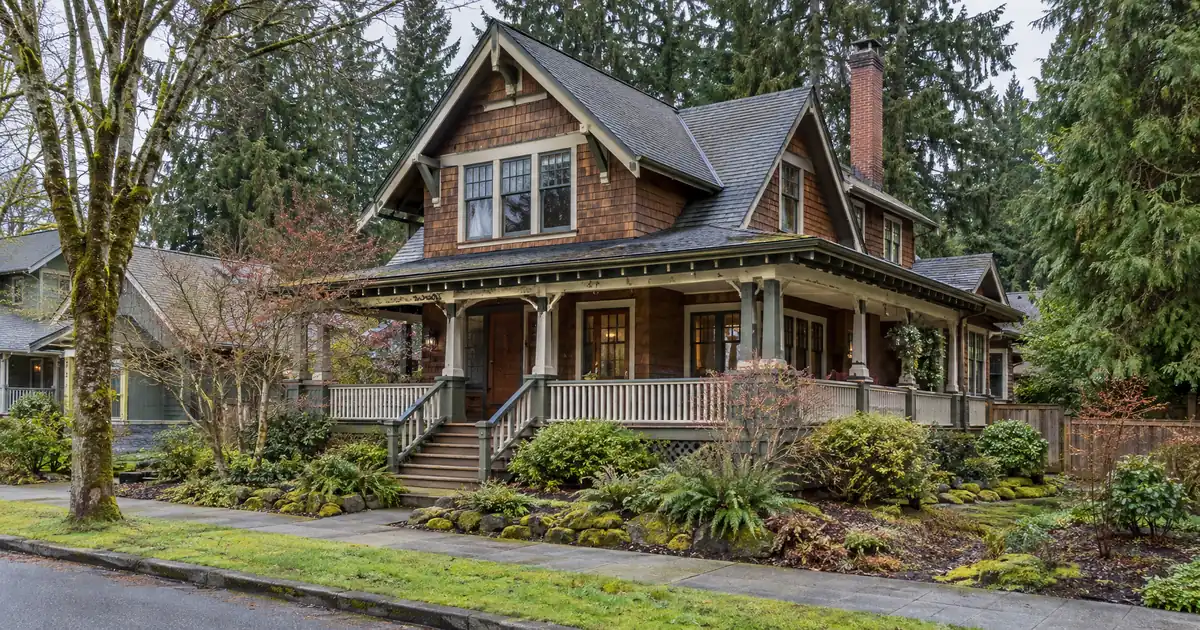
Four Corners, where SR 169 meets SR 516, is the one spot in Maple Valley where an investor can realistically hold something other than a detached house. The northwest corner mixes large retailers, apartments, and a strip mall, per Wikipedia’s Maple Valley entry. Everywhere else the city is overwhelmingly owner-occupied. RentCafe counts 1,450 renter households, about 16 percent of the total. For anyone planning a cash out refinance on an investment property here, that scarcity is the whole story. Rentals are few, comps are thin, and the coverage math on a single-family house is tougher than the price tag suggests.
DSCR Cash-Out Calculator
Run the cash-out numbers in Maple Valley, WA
Rate source: Freddie Mac 30-yr average via FRED® — Federal Reserve Bank of St. Louis · effective Sep 24, 2026
Prefilled with starting assumptions — enter your property’s value, balance, taxes, and insurance for a more accurate picture.
Program parameters update from Lendmire’s centralized guideline source. Taxes and insurance are editable estimates.
As of Sep 24, 2026 · General Freddie Mac market benchmark, not a Lendmire loan offer. Property value, balance, taxes, and insurance are editable estimates. Maximum loan-to-value varies by lender, program, property type, and seasoning. Not a Loan Estimate, approval, or commitment to lend. Program availability and eligibility are subject to lender guidelines, credit approval, property review, and underwriting.
The Short Version:
A Maple Valley, Washington cash-out refinance on an investment property fits owners of single-family rentals who can accept reduced leverage, because the loan is underwritten primarily on the property’s rental income measured against its full monthly obligation, and the suburb’s thin rent-to-value ratio, not the LTV ceiling, usually sets the proceeds.
- Typical home value is $759,950, down 6.1 percent year over year, per Zillow.
- Closed sales show a $725,000 median across 253 closings, per Resideline.
- Sampled house rents run $3,000 to $4,200 by bedroom count, per Homes.com, from only four listings.
- Modeled coverage on single-family rentals gets near 1.0 only at around 65 percent LTV or lower.
- Renters are 16 percent of households, so appraisal rent comps are scarce.
Four Corners: The Only Place Small Multifamily Shows Up
Four Corners is the most plausible location for townhomes, small multifamily, and workforce renters who work the surrounding retail. It is also where an investor sitting on a duplex or small stack of units has the best shot at stronger coverage than a detached house can produce. The catch is inventory. Real small-multifamily stock here is scarce, and anyone holding it owns something the market barely offers.
The demand side is commuter-driven. Census Bureau QuickFacts shows a mean commute of 37 minutes, against 29.2 for the Seattle metro. Residents work in Seattle, Bellevue, Kent, and Renton, and they pay for a suburban address with a long drive. The city had 28,013 people at the last census and sits near 28,500 by the latest estimate, so this is a small, stable bedroom community with one dominant local employer, the Tahoma School District. Wikipedia’s entry on the Tahoma School District lists 508 teachers. The rent base leans on the SR 169 commute and regional employers such as the nearby MultiCare Covington Medical Center, about 3.8 miles away.
Why the Math Is Tight at 75 Percent
Single-family rentals in Maple Valley rarely clear 1.0 coverage at the maximum cash-out LTV. The constraint is rent against full PITIA, not the LTV cap. That means sizing is usually set by the coverage ratio, and the owner takes less cash than the 75 percent ceiling implies.
Start with the ratio itself. Homes.com puts price-to-rent at 15.6 and shows a median single-family rent of $3,995. Those are thin samples, so treat them as directional. A $3,000 rent on a $725,000 value works out to about 0.41 percent of value per month, which is my modeled arithmetic, not a sourced figure. That’s low for any investor loan.
Now run the numbers on a modeled $725,000 house, using the Resideline median as the value assumption. The coverage figures below are modeled inputs, computed on full PITIA (principal, interest, Washington-average taxes and insurance), rounded down.
| Rent assumption | LTV | Modeled coverage |
|---|---|---|
| $3,000 (3BR) | 75% | about 0.65 |
| $4,050 (4BR) | 75% | around 0.9 |
| $4,200 (5BR) | 75% | around 0.9 |
| $4,050 (4BR) | 65% | near 1.0 |
| $4,050 (4BR) | 60% | low 1.1s |
Read that table carefully. A 3BR at $3,000 needs leverage below roughly 50 percent before it approaches 1.0. A 4BR or 5BR at the sampled rents gets there only around 60 to 65 percent LTV. The standard benchmark on most programs is 1.00 minimum coverage, where rent used for lender review matches PITIA. Some lenders review sub-1.00 files, but those typically mean lower leverage, stronger credit, deeper reserves, or different pricing, and qualification stays subject to lender guidelines and property review.
When the number lands under 1.0 at the LTV you wanted, the structures worth a conversation are a sub-1.00 program where available, an interest-only period to reshape the carry, or a smaller cash-out that clears the ratio. A lender would review each one, and none is assured. The DSCR qualification mechanics explain the ratio in detail. A 620 to 660 FICO range typically limits leverage further, while scores toward 680 and 700 generally open more room, subject to program terms.
The Rent Figures Don’t Agree (And Your Lender’s Won’t Either)
Published rent averages for Maple Valley disagree by roughly $300 a month, so nobody should model proceeds off a portal number. The appraiser’s rent schedule is what the file actually uses.
RentCafe shows an average rent of $2,220, up 3.13 percent year over year, with 1BR at $2,041 and 2BR at $2,234. Apartments.com, using CoStar data, put its average lower, at $1,914, and showed rents falling. That’s a different methodology and time window, so treat it as contrast, not correction. RentCafe also states that its data covers only buildings with 50 or more units. A city this size has few of those, so the averages describe large complexes, not the house you own.
That matters for a cash-out. Appraisal comps for a single-family rental will come from single-family rental listings, which is why the $3,000 to $4,200 range above is the useful benchmark. A DSCR underwriter may land on a market-rent figure lower than the one an owner assumes, and a lower rent means a smaller loan. Get a rent schedule before modeling proceeds, not after.
One more wrinkle: the step between a 2BR and a 3BR apartment here runs only a few hundred dollars a month, which is an inference from RentCafe’s bedroom-size data, not a sourced claim. Small units earn rent close to larger ones, so a duplex or a house with a separate income unit can outperform one large rental on coverage. No local rent data exists for ADUs or duplexes, so anyone relying on that thesis needs to price it with a property-specific schedule.
Lake Wilderness and the Larger-Lot Question
Lake Wilderness is older housing near the lake mixed with newer subdivisions, and it’s where larger lots make the strongest candidates for a house-plus-ADU income stack. Anchoring the area are Lake Wilderness Park and a lodge built in 1950 and now city-operated. The city also owns a 50-acre Lake Wilderness frontage parcel called the Legacy Site on SR 169, pitched as an emerging downtown. The page is dated, so check current plans before counting on it as a demand driver.
For cash-out purposes, here’s the honest read. Larger-lot and acreage homes out toward Hobart and Ravensdale are priced on land value as much as the structure, which means a high value with a rent that doesn’t follow. Those are appreciation plays, not cash-flow plays. Skip them if the goal is maximizing proceeds under a coverage test. The better candidates are conventional subdivision homes that rent at the 4BR to 5BR end of the sample, where the rent-to-value gap is smallest.
Falling Values, Seasoning, and What the Appraisal Will Say
Values are down, and that cuts directly into cash-out equity. Zillow’s typical value of $759,950 is down 6.1 percent over the past year. Movoto shows a $692,000 median sold price with 20 days on market, versus 12 a year earlier. Resideline’s $725,000 median sits between them. The sources conflict because they use different methods and windows, so pick one and model it consistently instead of averaging them.
The owner who bought near a recent peak has the most to worry about. Seasoning runs about six months from title recording, and the 75 percent LTV ceiling applies to an appraised value that may come in below the last sale. Much of the city was built from the 1990s onward in master-planned subdivisions, so appraisers get uniform, like-for-like comps, which helps, but expect a conservative number.
Working DSCR brokers see a recurring pattern in commuter suburbs like this one: the borrower models proceeds off a peak-era value and a portal rent average, then the appraisal brings back a lower value and a lower market rent at the same time. The file that holds up is the one sized with both numbers already trimmed, with reserves of about six months PITIA set aside and the target cash-out reduced before the appraisal instead of after.
Where the Proceeds Go
Loan sizes run up to $3,000,000 on standard programs, so balance isn’t the limit on a Maple Valley house. Coverage is. LLC-titled properties are workable subject to lender program eligibility, and the guide “The Refi Options” walks through seasoning and LTV mechanics. For a broader look at the refinance menu, the available investment property refinance options are worth reviewing, and the tradeoffs between conventional and DSCR loans are worth weighing if traditional employment income would carry a bigger loan than the rent can. Investors should confirm current local rental rules, taxes, and insurance with qualified local professionals before sizing anything.
To test a real property, request a scenario quote or call 828-256-2183.
Frequently Asked Questions
How do you qualify for a DSCR loan in Maple Valley?
Qualification centers on the property’s rent against its full monthly obligation, with 1.00 coverage as the common benchmark. Credit tiers generally run 620, 660, 680, and 700, and reserves of about six months PITIA are typical. In Maple Valley the binding piece is usually coverage on a single-family rent, so expect reduced LTV. Final eligibility depends on lender guidelines, credit, and property review.
DSCR vs. conventional financing
Two common ways to finance an investment property in Maple Valley, WA. They qualify you differently — here’s how investors weigh them.
Why investors choose it
- Qualifies on the property’s rental income — no personal tax returns, W-2s, or pay stubs needed to document income.
- No personal debt-to-income ceiling to clear, so existing mortgages and obligations don’t cap your borrowing the same way.
- Can be closed in an LLC, keeping the property inside a business entity.
- Built for scaling — not held to the limit on number of financed properties that conventional financing applies.
- Underwriting centers on the deal: generally qualifies when the rent covers the payment, a 1.00x coverage ratio being a common baseline (confirmed in underwriting).
- Designed specifically for investment property, including long-term and, where the program allows, short-term rentals.
Where it’s strong
- Often the lowest ongoing financing cost for a buyer who fully qualifies on personal income — a fit for a first property or a cost-first purchase.
Trade-offs for investors
- Requires full personal income documentation and must fit within a debt-to-income limit — salary, existing debts, and other mortgages all count.
- Typically held in your personal name rather than a business entity.
- Caps how many financed properties you can carry, which can become a ceiling as a portfolio grows.
- Evaluates you as a borrower as much as the property, which usually means more paperwork.
How investors usually choose: a first or single property often optimizes for the lowest financing cost; portfolio builders often optimize for leverage, vesting in an LLC, and scaling past conventional caps. The right answer depends on your goals, the property, and current guidelines — both paths run through select lenders in Lendmire’s wholesale network, with eligibility and terms confirmed in underwriting.
What are the requirements for an investment property loan in Maple Valley, Washington?
For a cash-out, expect about six months of ownership from title recording, an LTV ceiling of 75 percent, a 1.00 minimum coverage ratio, and a credit floor of 620. Loan amounts run up to $3,000,000 on standard programs. Manufactured homes, log homes, and barndominiums fall outside these programs. All of it is program-dependent and subject to lender guidelines.
How much equity can a Maple Valley rental realistically pull out?
Less than the LTV ceiling implies. With values down 6.1 percent over the past year, recent buyers may have little equity to pull. Beyond that, modeled coverage on single-family rents only approaches 1.0 at roughly 65 percent LTV or lower, so the ratio typically caps proceeds before the 75 percent limit does.
Does a duplex or ADU change the math in Maple Valley?
It can help, because a second income unit adds rent without adding a second purchase price. No verified local rent data exists for duplexes or ADUs, though, so the gain has to be proven with a property-specific rent schedule. Small multifamily stock clusters near Four Corners, and it is scarce.
Can Lendmire help arrange DSCR financing for investment properties in Maple Valley?
For current guidelines and terms, see Lendmire’s DSCR loan programs page.
The Choice Maple Valley Owners Face
An owner with a house near Lake Wilderness can take a smaller cash-out now at lower leverage, clear the coverage test, and redeploy the money somewhere rents pay better, accepting a modest draw on equity in a market where values are sliding. Or the owner can hold through the dip and wait for values and rents to recover, keeping the Tahoma-district commuter tenant and giving up the capital in the meantime.
For broader investor-financing rules and property-type coverage across the state, see Washington DSCR loans.
About Lendmire
As a non-QM mortgage broker (NMLS# 2371349), Lendmire facilitates DSCR investor loans across 41 markets, including Washington, D.C. Eligibility is generally reviewed around a property’s rental income rather than personal income documentation, subject to lender guidelines, serving LLC-structured portfolios and self-employed borrowers who don’t fit conventional boxes. Lendmire is a two-time Scotsman Guide Top Mortgage Workplace, recognized as a 2025 Scotsman Guide Top Workplace and a 2026 Scotsman Guide Top Workplace.
Get Started
Ready to find the right loan for you?
In about 30 seconds you can review financing options available for your investment property. No commitment required.
Informational only. Not a Loan Estimate, approval, or commitment to lend. Program availability and eligibility are subject to lender guidelines, credit approval, property review, and underwriting.
References
1. Wikipedia’s Maple Valley entry
2. RentCafe
3. Zillow
4. Resideline
5. Homes.com
8. Legacy Site
9. Movoto
10. a 2025 Scotsman Guide Top Workplace
11. a 2026 Scotsman Guide Top Workplace
This article is part of Lendmire’s investment property cash-out refinance program — full qualification details, guidelines, and scenarios live on the program page.
Related reading: Luxury Rental DSCR Loans In New Jersey · Jersey Shore Vacation Rental Loans: DSCR Financing In Ocean City, Cape May And Long Beach Island · DSCR Cash-out Refinance In New Jersey: Pulling Equity From A Rental
Guides: Investment Property Cash-Out Refinance in Washington
Brandon Miller
Founder & CEO, Mortgage Loan Originator, Lendmire LLC
- Mortgage Loan Originator · NMLS# 1129696 · Verify on NMLS Consumer Access
- North Carolina Real Estate Broker · License# 343312 · Verify on NCREC
- North Carolina Insurance Producer · License# 19053198 · Property, Casualty, Life, Health · Verify on NAIC SBS
- Lendmire LLC · Firm NMLS# 2371349 · Verify firm licensure
Required disclosures. Lendmire (NMLS# 2371349) operates as a licensed mortgage broker, not a direct lender or depository. The discussion in this article is general in nature and should not be relied upon as financial, legal, or tax advice — every investment scenario is unique and should be reviewed by a qualified professional. Any loan inquiry is subject to lender underwriting, and this article is not a commitment to lend or a guarantee of approval. Mortgage rates, loan terms, and program guidelines vary by borrower, property, and state, and may change without notice. Equal Housing Opportunity. Verify licensure at NMLS Consumer Access.