
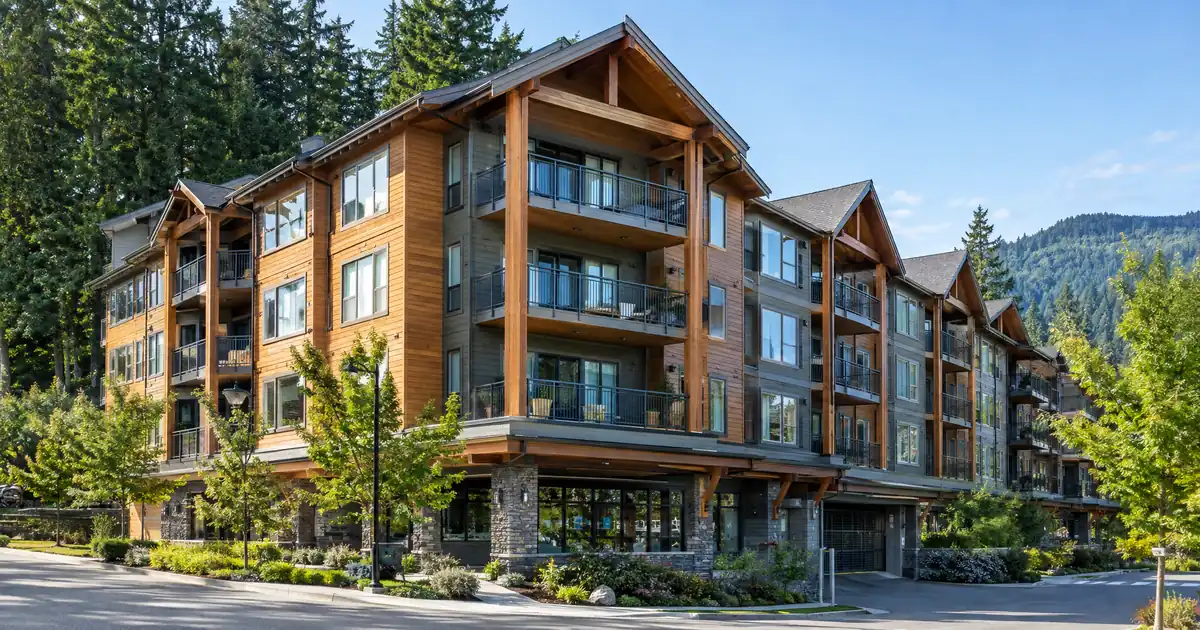
Zillow puts the average Issaquah home value at $1,137,397, down 2.2 percent over the past year. Redfin’s rental page shows average rent of $2,747. By Lendmire Research’s arithmetic, a typical house here rents for about a quarter of one percent of its value each month, far below the 0.7 to 1 percent investors usually look for. That gap explains why cash-out refinancing in Issaquah is a coverage problem before it is an equity problem.
DSCR Cash-Out Calculator
Run the cash-out numbers in Issaquah, WA
Rate source: Freddie Mac 30-yr average via FRED® — Federal Reserve Bank of St. Louis · effective Oct 1, 2026
Prefilled with starting assumptions — enter your property’s value, balance, taxes, and insurance for a more accurate picture.
Program parameters update from Lendmire’s centralized guideline source. Taxes and insurance are editable estimates.
As of Oct 1, 2026 · General Freddie Mac market benchmark, not a Lendmire loan offer. Property value, balance, taxes, and insurance are editable estimates. Maximum loan-to-value varies by lender, program, property type, and seasoning. Not a Loan Estimate, approval, or commitment to lend. Program availability and eligibility are subject to lender guidelines, credit approval, property review, and underwriting.
Key Takeaways:
A cash-out refinance on an Issaquah, Washington rental is underwritten primarily on the property’s rental income measured against its full monthly obligation. With Highlands townhomes renting around $3,400 per Homes.com against entry prices in the $700Ks per RexMont, coverage usually sets the loan size, not the 75 percent LTV ceiling.
- Highlands townhome lease comps cluster between $3,350 and $3,850 per month.
- Modeled coverage on a $700K-plus townhome falls below 1.00 at 75 percent LTV.
- Single-family homes at $1.0 million to $1.4 million need far lower LTV to clear 1.00.
- Zillow shows values slipping, so appraisals may trail recent peak comps.
- Seasoning runs about 6 months from title recording; reserves run about 6 months of PITIA.
Issaquah Highlands: Where the Cash-Out Math Is Least Bad
Issaquah Highlands is the one submarket where price and rent get close enough for a cash-out refinance to pencil. Townhomes there start in the $700Ks, and lease comps run $3,350 to $3,850. That produces the best rent-to-price ratio in the city, roughly 0.5 percent monthly.
The sourcing for that conclusion is layered. Rent.com’s townhouse listings show a 3-bed/3-bath at $3,400, a 3-bed/2-bath at $3,850, and a 2-bed/2-bath at $3,350. Redfin’s Highlands townhome rentals list a 3-bed/2.5-bath at $3,500. Redfin’s neighborhood median rent for the Highlands is $3,795, against $2,928 in Klahanie, though that snapshot is about a year old and directional only. Zumper puts Highlands average rent at $3,332 and shows a 12 percent annual jump. It also warns the sample is limited. Underwrite on lease comps, not on that trend line.
The demand story is employment-driven. Swedish Issaquah sits inside the Highlands along NE Blakely Dr. Per Providence Swedish, the campus has more than 120 inpatient beds, and the Washington State Department of Health listing shows 24-hour outpatient emergency care, inpatient care, and a primary care clinic. No source gave a headcount, and the link between clinical staff and Highlands tenants is Lendmire Research’s inference. Still, a hospital inside the lowest-priced product pocket is a rare setup for a suburban city this expensive.
Condos are the cheaper cousin. Homes.com’s property-type ladder shows condo rent at $2,630, against $3,400 for townhouses and $4,000 for single-family homes. Condo and townhome HOA dues count against coverage, so pull the dues before assuming the ladder transfers to your unit.
The Coverage Math, Worked Both Ways
At a 75 percent LTV, a $700K-plus Highlands townhome renting around $3,400 models below 1.00. Coverage clears the standard 1.00 benchmark only when leverage drops to roughly the mid-50s percent, including taxes and insurance.
Run the numbers this way. The inputs are modeled assumptions, not cited market data. Assume an appraised value near $750,000, rent of $3,400 (the Homes.com townhouse median), a 30-year term, and full PITIA with taxes and insurance at statewide-average assumptions. At the 75 percent LTV ceiling the coverage number lands around 0.75. Drop to the mid-50s percent and it sits near 1.00. Rent divided by full monthly obligation is the whole formula (see Lendmire’s DSCR guide for the mechanics).
Here’s the catch. Taxes and insurance don’t shrink when the loan does, so the coverage cushion improves more slowly than intuition suggests. Honestly, the choice between a lower LTV and a sub-1.00 structure is a genuine toss-up on a file like this. A lower LTV means less cash out, but a cleaner coverage number and a simpler lender review. A sub-1.00 program or an interest-only structure preserves more proceeds, but it usually brings stronger credit expectations, more reserves, or tighter pricing. Whether any of those paths is available depends on lender guidelines, credit approval, and property review.
Program basics shape this too. A property typically needs about six months of ownership from title recording before it is eligible for cash-out. Credit tiers generally step through 620, 660, 680, and 700, with 620 as the floor. Reserves run about six months of PITIA, rising to about nine months above $1,500,000. Those are guidelines that vary by borrower, property, and lender, and the equity-extraction mechanics page covers how they interact.
The reserve line deserves attention in this market. Six months of full obligation on a property with rent in the mid-$3,000s is real cash that has to sit in an account. Plan for it before counting proceeds.
Single-Family at $1 Million-Plus (An Appreciation Play, Not a Cash-Flow Play)
Established single-family homes in Issaquah are poor candidates for a coverage-driven cash-out. Per RexMont, Squak Mountain and Olde Town trade around $1.0 million to $1.4 million. Homes.com puts single-family rent at $4,000.
Run the numbers on a $1.2 million single-family home renting at $4,000, again as modeled inputs on a 30-year term including taxes and insurance. At 75 percent LTV, coverage is in the mid-0.5s. At 50 percent it is still around 0.75. Reaching 1.00 would take leverage in the low 30s percent. Skip it if your goal is meaningful proceeds.
The same logic stretches further at the top. RexMont places Cougar and Tiger Mountain view homes at $2 million and above. The loan guide allows balances up to $3,000,000 on standard programs, and reserves climb above $1,500,000. Eligibility on paper is not the issue. Coverage is. A view home at that price needs rent far beyond anything in the research brief.
For an owner already holding one of these houses, the equity play is real but small. The better question is whether the capital is more useful pulled out at a low LTV and redeployed elsewhere, which is covered below.
What’s Holding Up the Rent Side?
Issaquah’s tenant demand rests on corporate and healthcare employment, not on a campus. No college was verified in the city, so there is no student-rental base. What the city has is headquarters payroll and a hospital.
The City of Issaquah states that Costco leads the way as a business headquarters for management and operations. A Maker Stations summary of Costco’s filing puts roughly 7,000 corporate employees at the Issaquah headquarters. Per Wikipedia, the city is also home to Microsoft operations, Siemens’ ultrasound group, and SanMar. Wikipedia’s Microsoft campus entry notes an Issaquah office alongside the Bellevue one, and a main Redmond campus above 50,000 employees. Census Bureau QuickFacts shows a population of 39,591, essentially flat against the 40,051 counted at the last decennial census. Median household income is $154,669 per Cubit’s ACS-based demographics page.
Read that as stability, not growth. A flat population and a high-income renter pool mean rents hold, but they do not rocket. The point that Costco’s payroll is less tied to tech-layoff cycles is Lendmire Research’s inference, not a sourced finding.
Geography helps retention in a softer way. The city sits in a valley cut by Interstate 90, with the Sammamish Plateau to the north and the Issaquah Alps to the south, inside the Mountains to Sound Greenway. Commute access to the Eastside and trail access at the city edge support lease renewals. Hard to quantify, though.
Appraisal Risk in a Cooling Market
Cash-out appraisals in Issaquah may land below the peak comps an owner remembers. Zillow shows values down 2.2 percent year over year. Redfin’s North Issaquah page shows homes selling after 33 days on market, compared with 6 days a year earlier.
That same Redfin page puts North Issaquah’s median sale price at $625K, down 31.3 percent. Only 15 homes sold in the month, so the sample is small and likely skewed toward condos. Don’t extrapolate it citywide. The citywide picture is flatter. Zillow’s average value is $1,137,397, while Resideline’s closed-sales median is lower at $950,000 across 324 sales, with the middle half closing between $560,000 and $1,491,450. The gap is mix, not disagreement: Resideline’s data includes condos and townhomes at the bottom of that range, while Zillow’s index is weighted toward higher-value homes.
Supply is adding pressure. A local brokerage (Popach & Co.) describes the market as shifting from seller-favored toward balanced, though its specific listing and supply counts are not relied on here. A property manager’s page (SJA Property Management) points to inventory rising meaningfully compared with a year earlier. Both are broker or manager sources, so treat them as directional.
The practical takeaway: Issaquah is appreciation-led with thin cash flow, and a cash-out refinance should not assume further appreciation. Size the loan on a conservative value, because the appraisal sets the 75 percent cap, and a softer appraisal tightens it.
Lendmire (NMLS# 2371349), a DSCR-focused mortgage broker, sees a recurring pattern on files from markets structurally like this one: high-priced, low-yield suburbs with a stable employer base. The friction point is rarely the credit file. It is the gap between the borrower’s expected cash-out figure and what coverage and the appraisal allow. Files that start with a lease comp set, a realistic value, and a reserve plan tend to move through lender review with fewer surprises than those anchored on last cycle’s sale price.
Small Multifamily: The Unverified Shortcut?
Duplex and fourplex math is attractive on paper, but Issaquah data does not confirm it. No source in the research gave Issaquah duplex or fourplex prices or rent rolls.
Apartment List puts the citywide median rent at $2,758, down 0.1 percent year over year, with one-bedrooms at $2,379-plus and two-bedrooms at $2,990-plus. Stack two units and the gross could reach roughly $4,800 to $6,000, but that is Lendmire Research’s arithmetic, not a sourced rent roll. Flat annual rent also means growth won’t rescue thin coverage.
Vacancy context is regional. Kidder Mathews reports Western U.S. multifamily vacancy at 6.9 percent, with a forecast of 6.7 percent as construction slows. That says little about Issaquah specifically. It does suggest the supply pipeline is tightening, which supports rent stability, but no citywide vacancy figure was found.
If small multifamily inventory surfaces, it could change the coverage picture. Until a real price and rent roll exist, treat the multi-unit advantage as unproven. Verify current local rental rules, taxes, and insurance with qualified local professionals before underwriting any property type here.
Redeploying the Proceeds
The strongest use of Issaquah equity is often elsewhere. Cash pulled from a low-yield Highlands townhome can fund a higher-yield purchase, subject to qualifying on the next property.
That is the logic behind cash-out refinancing for investors holding appreciated assets in expensive markets. Equity that earns about 0.5 percent of value monthly in rent can become a down payment on a property that earns more. The tradeoff is that the cash-out loan adds debt to a property that already runs thin on coverage. Lower LTV keeps that tradeoff manageable. Washington State DSCR investor loans cover the broader state for investors looking at where the redeployed capital might go. For a side-by-side with agency financing, see the conventional-vs-DSCR tradeoffs.
LLC-titled holdings are common in portfolios like this, and financing to an LLC is available per lender program requirements. To run a specific property, see how the DSCR math pencils or call 828-256-2183.
Frequently Asked Questions
Can an Issaquah Highlands townhome cash out at the full 75 percent LTV?
The ceiling is 75 percent, but coverage usually binds first. On a modeled townhome near $750,000 renting around $3,400, coverage at 75 percent LTV is well below 1.00. Clearing the baseline typically means a lower LTV, or a sub-1.00 structure reviewed by the lender. Outcomes depend on lender guidelines, credit approval, and property review.
DSCR vs. conventional financing
There are two common ways to finance an investment property in Issaquah, WA, and they qualify you differently — here’s how investors weigh them.
Why investors choose it
- Qualifies on the property’s rental income — no personal tax returns, W-2s, or pay stubs needed to document income.
- No personal debt-to-income ceiling to clear, so existing mortgages and obligations don’t cap your borrowing the same way.
- Can be closed in an LLC, keeping the property inside a business entity.
- Built for scaling — not held to the limit on number of financed properties that conventional financing applies.
- Underwriting centers on the deal: generally qualifies when the rent covers the payment, a 1.00x coverage ratio being a common baseline (confirmed in underwriting).
- Designed specifically for investment property, including long-term and, where the program allows, short-term rentals.
Where it’s strong
- Often the lowest ongoing financing cost for a buyer who fully qualifies on personal income — a fit for a first property or a cost-first purchase.
Trade-offs for investors
- Requires full personal income documentation and must fit within a debt-to-income limit — salary, existing debts, and other mortgages all count.
- Typically held in your personal name rather than a business entity.
- Caps how many financed properties you can carry, which can become a ceiling as a portfolio grows.
- Evaluates you as a borrower as much as the property, which usually means more paperwork.
How investors usually choose: a first or single property often optimizes for the lowest financing cost; portfolio builders often optimize for leverage, vesting in an LLC, and scaling past conventional caps. The right answer depends on your goals, the property, and current guidelines — both paths run through select lenders in Lendmire’s wholesale network, with eligibility and terms confirmed in underwriting.
How long do I have to own an Issaquah rental before pulling cash out?
About six months, measured from title recording. After that, the appraisal matters more than the calendar. With Zillow showing values down 2.2 percent and Redfin showing longer days on market, an owner planning around peak comps may be disappointed.
Does Costco’s headquarters make Issaquah rents safe?
It supports demand, but it does not guarantee rents. Roughly 7,000 corporate staff, plus Microsoft, hospital, and other employers, give the city a high-income tenant pool. Rents still look flat, with Apartment List showing the citywide median down 0.1 percent year over year.
Is a $1 million-plus single-family rental realistic for cash-out?
Realistic for the loan program, difficult for the coverage number. At $4,000 rent on a $1.2 million home, modeled coverage is in the mid-0.5s at 75 percent LTV and still below 1.00 at 50 percent. Proceeds would be small unless the owner accepts a sub-1.00 structure.
What reserves should I plan for on an Issaquah cash-out?
Typically about six months of PITIA, rising to about nine months above $1,500,000. Higher-priced Issaquah properties carry large obligations, so reserves can consume a meaningful share of the proceeds. Exact requirements vary by program.
For current guidelines and terms, see Lendmire’s DSCR loan programs page.
The Next 24 Months
Watch four indicators: days on market, months of supply, Highlands lease comps against the $3,350 to $3,850 band, and whether appraisals start landing near the $1,137,397 Zillow average. If values keep drifting while rents stay flat, the cash-out window narrows for anyone relying on peak comps. If inventory absorbs and the Highlands lease band holds, coverage improves without any change in price. The investors who seasoned their Highlands holdings, built a lease comp file, and sized cash-out to coverage rather than to the 75 percent cap will be the ones with capital to deploy while everyone else is still waiting on a rebound.
About Lendmire
Lendmire, NMLS# 2371349, is a DSCR and non-QM mortgage brokerage with investor loan programs across 41 markets, including Washington, D.C. Eligibility is commonly reviewed by the lender on property-level rent rather than personal income documentation, subject to lender guidelines, and the brokerage helps arrange financing for LLC-owned portfolios beyond conventional financed-property limits. It has been recognized by Scotsman Guide as a 2026 Top Workplace and is a 2025 Scotsman Guide Top Mortgage Workplace.
Get Started
Ready to find the right loan for you?
In about 30 seconds you can review financing options available for your investment property. No commitment required.
Informational only. Not a Loan Estimate, approval, or commitment to lend. Program availability and eligibility are subject to lender guidelines, credit approval, property review, and underwriting.
References
1. Zillow
5. Rent.com’s townhouse listings
6. Redfin’s Highlands townhome rentals
7. Zumper
10. Washington State Department of Health listing
11. City of Issaquah
12. Maker Stations
13. Wikipedia
14. Wikipedia’s Microsoft campus entry
16. Cubit’s ACS-based demographics page
17. Resideline’s
18. Popach & Co.
20. Apartment List
21. Kidder Mathews
22. recognized by Scotsman Guide as a 2026 Top Workplace
23. a 2025 Scotsman Guide Top Mortgage Workplace
This article is part of Lendmire’s investment property cash-out refinance program — full qualification details, guidelines, and scenarios live on the program page.
Related reading: Luxury Rental DSCR Loans In New Jersey · Jersey Shore Vacation Rental Loans: DSCR Financing In Ocean City, Cape May And Long Beach Island · DSCR Cash-out Refinance In New Jersey: Pulling Equity From A Rental
Guides: Investment Property Cash-Out Refinance in Washington
Brandon Miller
Founder & CEO, Mortgage Loan Originator, Lendmire LLC
- Mortgage Loan Originator · NMLS# 1129696 · Verify on NMLS Consumer Access
- North Carolina Real Estate Broker · License# 343312 · Verify on NCREC
- North Carolina Insurance Producer · License# 19053198 · Property, Casualty, Life, Health · Verify on NAIC SBS
- Lendmire LLC · Firm NMLS# 2371349 · Verify firm licensure
Disclosures. The information presented in this article is general market commentary, not financial, legal, or tax advice. Lendmire is a mortgage brokerage (NMLS# 2371349) — not a direct lender or depository institution — and loan placement is subject to lender underwriting. Nothing in this content represents a commitment to lend. Loan terms, pricing, and program availability vary based on borrower qualifications, property characteristics, and state of subject property, and are subject to change at any time. Lendmire complies with Equal Housing Opportunity requirements. Consumer access: nmlsconsumeraccess.org.