
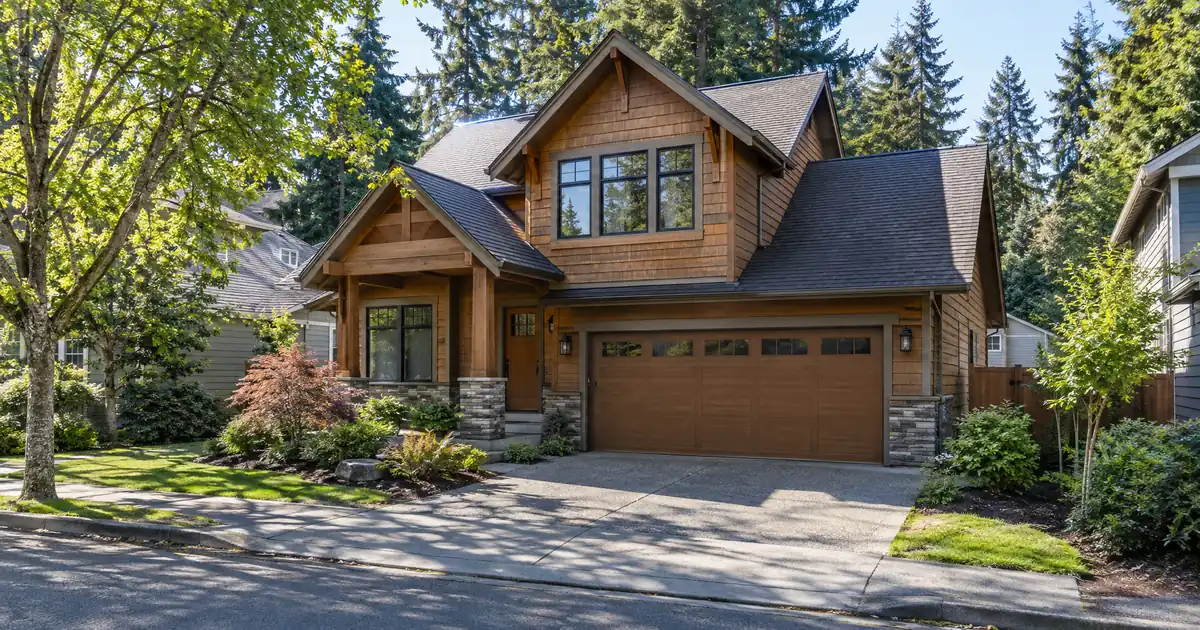
Most investors underwrite Mercer Island off the wrong number. The citywide median of $2,596,500 says little about rental coverage, because almost nothing at that price rents like it. The figure that matters sits in Town Center, where Redfin shows a median sale price of $680K, up 6.2% year over year. That is the one tier where an equity pull can still pencil, and even there the coverage math forces a conservative loan-to-value.
This article is about the investor who already owns. The purchase is done, the seasoning clock is running, and the question is how much capital can come out and where it should go next. Lendmire, a DSCR-focused mortgage broker, arranges these cash-out files through wholesale investor lenders, and Mercer Island is one of the harder places in Washington to get them right.
DSCR Cash-Out Calculator
Run the cash-out numbers in Mercer Island, WA
Rate source: Freddie Mac 30-yr average via FRED® — Federal Reserve Bank of St. Louis · effective Sep 24, 2026
Prefilled with starting assumptions — enter your property’s value, balance, taxes, and insurance for a more accurate picture.
Program parameters update from Lendmire’s centralized guideline source. Taxes and insurance are editable estimates.
As of Sep 24, 2026 · General Freddie Mac market benchmark, not a Lendmire loan offer. Property value, balance, taxes, and insurance are editable estimates. Maximum loan-to-value varies by lender, program, property type, and seasoning. Not a Loan Estimate, approval, or commitment to lend. Program availability and eligibility are subject to lender guidelines, credit approval, property review, and underwriting.
Key Takeaways:
A cash-out refinance on a Mercer Island, Washington rental is underwritten primarily on the property’s rental income measured against its full monthly obligation. The process runs from appraisal and rent schedule to a lender coverage review, then proceeds are sized against the program’s loan-to-value ceiling, with reserves documented alongside.
- Town Center’s $680K median is the only sub-$1M tier with workable rent-to-value.
- Modeled coverage on a Town Center two-bedroom reaches 1.0x only near 50% LTV, taxes and insurance included. Sound Transit lists a 10-minute ride to Downtown Bellevue from the island’s new station.
- Comp depth is the swing factor: Downtown recorded one sale in the latest month, down from five.
- Cash-out is capped at 75% LTV, but coverage, not the cap, usually sets the real ceiling here.
Mercer Island Market Snapshot
A quick read on the Mercer Island investor landscape — figures come from the cited sources below. Confirm current property-level numbers before underwriting.
| Metric | Detail |
|---|---|
| Home prices | $680K median (Redfin) |
| Typical rents | Average rent $2,691 (Point2Homes average rent) |
| Employment | 7,524 employees (Zip-Codes.com) |
The Median Sale Price Misleads
Citywide pricing on Mercer Island tells you about scarcity, not cash flow. Movoto reports a $2,596,500 median sale price, homes averaging 22 days on market (up from 18 a year earlier) and 104 homes sold, up from 96. NWMLS data republished by Matthew Konsmo shows 54 homes for sale at the end of the latest month. That is a low-volume island market, not a liquid one.
Appreciation is also diverging by submarket. Downtown is up 6.2%, while Mercerwood sits at a $2.3M median, down 0.25% year over year. The expensive single-family areas are flat and lean on scarcity for value.
That divergence matters for an equity pull. A cash-out should be sized to what an appraiser supports today, not to a growth story. The investors who get hurt on equity extraction are the ones who underwrote the next 10% of appreciation into the loan.
Town Center: Where the Coverage Math Lives
Town Center is the only clear multi-unit stacking submarket on the island, and it is where the DSCR numbers have a chance. It is the mixed-use core south of I-90, with five-story apartment and condo buildings, retail, the Sunday farmers market and the light rail station nearby. The Urbanist reports only 549 homes added in Town Center since 2010, so supply has barely moved even as rail arrived.
Rail is the demand catalyst. Sound Transit places the station in the middle of I-90 beside Town Center, with a 10-minute ride to Downtown Bellevue. The City of Mercer Island lists 10 minutes to the International District and 21 minutes to the University of Washington. For a tenant working in Seattle or Bellevue, that is a real convenience. But no sourced data yet shows what rail has done to rents, so treat it as a plausible tailwind, not a proven one.
Now the rent side. RentCafe reports a two-bedroom average of $3,164 in buildings of 50+ units, with the overall average rent up only 0.57% year over year. That data comes from large apartment buildings, not condo comps, so it is a proxy for what a Town Center two-bedroom might rent for. Against the $680K median, that rent works out to roughly 0.47% of price per month (Lendmire Research arithmetic on the two sources above, not a published figure).
Here is the catch. 0.47% is the best rent-to-value on the island and still a tight number once taxes, insurance and any HOA dues sit in the denominator.
How Much Can You Pull? Coverage Sets the Ceiling
The 75% LTV cap is the headline limit on a cash-out, but on Mercer Island the coverage ratio binds first. Run the numbers on a Town Center two-bedroom valued near the $680K median. Assume the $3,164 proxy rent and a 30-year amortization, with property tax and insurance estimated from Washington averages. Coverage here means rent divided by the full monthly obligation: principal, interest, taxes and insurance. HOA dues would push it lower. Every figure here varies by lender and program — guidelines, property type, leverage, and credit profile all apply.
| Cash-out LTV | Modeled coverage | Read |
|---|---|---|
| 75% (program ceiling) | High-0.7s | Well under 1.00x |
| 60% | About 0.9x | Still under 1.00x |
| 50% | About 1.0x | Near the 1.00x baseline |
These are modeled assumptions, not quotes, and they exclude HOA. Rounded down, the pattern is clear: at the full 75% the rent doesn’t cover the obligation, and 1.0x arrives only at around half the value. Most standard DSCR programs are built around a 1.00x baseline, though some lenders review lower ratios with compensating factors such as lower leverage, stronger credit or more reserves.
Coverage below 1.00x doesn’t automatically end the conversation. A sub-1.00 program, an interest-only structure or a lower LTV could each be reviewed by a lender, with the outcome subject to credit approval, property review and program guidelines. But the honest question is whether the deal should lean on those tools. If the property only works at a sub-1.00 structure and a thin appreciation story, the equity pull is probably smaller than the investor hoped.
Consider an investor who bought a Town Center condo years ago and now owes about 40% of today’s appraised value. A 50% LTV cash-out clears coverage but frees only about ten points of value. An investor whose existing balance is already near 50% has nothing left to pull at that coverage level. Equity available is always the lesser of what the 75% cap allows and what the rent can carry, minus the payoff. Final terms depend on lender guidelines, property type, leverage, and the borrower’s complete credit picture.
For the mechanics behind the loan-to-value cap and seasoning, the equity-extraction mechanics page covers the program side, and the guide “What Is a DSCR Loan” explains the ratio itself.
Skip the Waterfront (for Cash Flow)
Single-family rental coverage on Mercer Island is thin to nonexistent. Point2Homes counts 10,609 housing units, 66.7% of them detached single-family homes, with a median construction year of 1973. Attached housing is only 0.3% of stock. So single-family homes are most of what exists, and they are priced for owners, not landlords.
Put the same $3,164 rent against the $2.3M Mercerwood median and the ratio drops to roughly 0.14% of price per month (again, Lendmire Research arithmetic). Single-family rents would have to be a multiple of apartment rents to approach 1.0x, and nothing in the research suggests they are. Waterfront near Luther Burbank Park, with three-quarters of a mile of lake frontage, is a luxury ownership market. Treat it as such.
The North End neighborhoods (East Seattle, Roanoke, Lucas Hill and Mercerdale), First Hill and the Island Crest and south-end areas share the single-family profile. No reliable neighborhood-level prices or rents turned up for them. They may suit an owner with large reserves who wants the property for appreciation and tolerates negative cash flow. For a coverage-driven DSCR file, they usually don’t pencil. A refinance there tends to need a very large equity cushion or a deliberately small loan.
This one is a genuine toss-up for some borrowers. An investor with a low basis and substantial equity might choose a low-LTV DSCR cash-out on a single-family hold, especially if the plan is to redeploy proceeds into better-yielding assets elsewhere. But if the goal is cash flow from the Mercer Island asset itself, the math points back to Town Center.
Thin Comps, Real Appraisal Risk
Appraisal is the quiet risk in every cash-out here. Redfin shows one Downtown sale in the latest month, down from five a year earlier. Mercerwood logged just five sales, down 26.4% year over year. With so few closings, an appraiser may have to reach across neighborhoods or back in time for comparables.
Working DSCR brokers see a recurring pattern in thin, high-priced island markets: the appraisal and the rent schedule decide the file, not the borrower’s strength. Value comes in a few points below expectation, or the market rent on the appraisal form lands below asking, and the sized loan shrinks to fit. Investors who plan for a conservative appraisal and a conservative rent schedule rarely get surprised. Those who plan around the top of their own estimate often do.
Budget for it. If the cash-out only works at the highest plausible value, it doesn’t really work.
Who Rents Here? Mostly People Who Work Elsewhere
Mercer Island has no university, hospital or large corporate campus. Zip-Codes.com cites 830 establishments employing about 7,524 people, and an older 425business report named Farmers Insurance Group as the largest island employer at about 600 people. That list is dated, so use it for scale only. The island is a high-income residential community, with Point2Homes reporting a $219,069 median household income across roughly 25,300 residents.
Real tenant demand comes from off-island: Seattle and Bellevue employers, including the large technology campuses and health systems. No official headcounts surfaced in the research, so those are best described qualitatively. The island’s own role is the commute node. About a third of households rent (RentCafe counts 3,322 renter households), and two-bedrooms are the largest share of rentals at 38% per Point2Homes.
That profile points to long-term commuter tenants, probably professionals, and flat rather than tight rents. Underwrite at current rents with no growth assumption. The lender’s rent schedule may come in below asking, so the coverage ratio you run today should be the conservative one.
Where the Proceeds Should Go
The cash-out thesis depends on what the money does next. Pulling equity to acquire another rental where coverage clears 1.0x at standard leverage is a clean argument. Pulling it to fund a lifestyle expense or a speculative deal elsewhere is a different decision and deserves a stress test first.
DSCR vs. conventional financing
There are two common ways to finance an investment property in Mercer Island, WA, and they qualify you differently — here’s how investors weigh them.
Why investors choose it
- Qualifies on the property’s rental income — no personal tax returns, W-2s, or pay stubs needed to document income.
- No personal debt-to-income ceiling to clear, so existing mortgages and obligations don’t cap your borrowing the same way.
- Can be closed in an LLC, keeping the property inside a business entity.
- Built for scaling — not held to the limit on number of financed properties that conventional financing applies.
- Underwriting centers on the deal: generally qualifies when the rent covers the payment, a 1.00x coverage ratio being a common baseline (confirmed in underwriting).
- Designed specifically for investment property, including long-term and, where the program allows, short-term rentals.
Where it’s strong
- Often the lowest ongoing financing cost for a buyer who fully qualifies on personal income — a fit for a first property or a cost-first purchase.
Trade-offs for investors
- Requires full personal income documentation and must fit within a debt-to-income limit — salary, existing debts, and other mortgages all count.
- Typically held in your personal name rather than a business entity.
- Caps how many financed properties you can carry, which can become a ceiling as a portfolio grows.
- Evaluates you as a borrower as much as the property, which usually means more paperwork.
How investors usually choose: a first or single property often optimizes for the lowest financing cost; portfolio builders often optimize for leverage, vesting in an LLC, and scaling past conventional caps. The right answer depends on your goals, the property, and current guidelines — both paths run through select lenders in Lendmire’s wholesale network, with eligibility and terms confirmed in underwriting.
There is also a flip point on structure. An investor with three or fewer financed properties, strong traditional employment income and a clean tax return may find conventional financing cheaper on a Town Center condo. DSCR becomes the practical lane when the borrower is self-employed, holds title in an LLC (subject to lender program eligibility), or is stacking several financed properties. The key differences between the two lanes decide it for most borrowers.
For standard programs, the guidance generally runs: about six months of ownership before a cash-out, loan amounts up to $3,000,000, a credit floor of 620 with better tiers at 660, 680 and 700, and about six months of PITIA in reserves (about nine months above $1,500,000). On a high-priced island, that last clause comes up often. Those are typical ranges, not commitments, and exact eligibility depends on the lender, the property and the file. A separate breakdown of investor refinance options walks through the choices in more depth, and DSCR loans in Washington covers the state program overview. Verify current local rental rules, taxes and insurance with qualified local professionals before committing.
Frequently Asked Questions
How do you qualify for a DSCR cash-out refinance on a Mercer Island rental?
Qualification centers on the property’s rent compared with its full monthly obligation, a minimum 1.00x baseline on most programs, plus about six months of ownership and a credit score of at least 620. On Mercer Island, price levels mean coverage usually requires a lower LTV than the 75% cap. Reserves and the appraisal also shape the outcome, all subject to lender guidelines.
What are the requirements for an investment property loan in Mercer Island, Washington?
Typical requirements include a credit score in the 620 to 700 range, documented reserves, a rent schedule from the appraisal and an eligible property type. Manufactured homes, log homes and barndominiums fall outside these programs. Exact thresholds vary by lender and loan scenario, so treat the figures as guidance rather than guarantees.
How much equity can you realistically pull from a Town Center condo?
It depends on the current payoff, the appraised value and the coverage ratio. At the modeled assumptions above, coverage reaches about 1.0x near 50% LTV, so the extractable equity is often less than the 75% cap implies. An investor with a low existing balance has more room than one who refinanced recently at a high balance.
Does light rail change how an appraiser values a Mercer Island rental?
Not directly, and not yet in sourced data. The station opened recently, and no published research ties it to rents or values. Appraisers rely on closed comparables, and with so few island sales, that is a real constraint. Rail may support demand over time, but a cash-out should be sized to today’s appraisal.
The Right Order of Operations
Start with the coverage number, not the equity number. Model the full obligation at several LTV levels, test it against a conservative rent schedule, and only then ask how much capital the structure can release. If the figure is smaller than hoped, the right response is usually a smaller pull or a better-yielding property, not a more aggressive structure. To run a specific scenario, investors can talk through the numbers with the brokerage at 828-256-2183.
The investors who size their Mercer Island cash-out to conservative appraisals and Town Center coverage today will hold the capital when the next opportunity shows up.
For current guidelines and terms, see Lendmire’s DSCR loan programs page.
About Lendmire
Lendmire (NMLS# 2371349), a non-QM mortgage broker serving investors in 41 markets including Washington, D.C., helps structure DSCR scenarios evaluated mainly on a property’s rental income rather than personal income paperwork, subject to lender guidelines. The firm was recognized by Scotsman Guide as a 2026 Top Workplace and is also a 2025 Scotsman Guide Top Mortgage Workplace. Lendmire places loans through wholesale investor lenders and is not a direct lender.
Get Started
Ready to find the right loan for you?
In about 30 seconds you can review financing options available for your investment property. No commitment required.
Informational only. Not a Loan Estimate, approval, or commitment to lend. Program availability and eligibility are subject to lender guidelines, credit approval, property review, and underwriting.
References
1. Movoto: Mercer Island Market Trends
2. Redfin: Downtown Mercer Island
3. Sound Transit: Mercer Island Station
4. Point2Homes
5. Zip-Codes.com: Mercer Island
7. Mercerwood
8. The Urbanist: Mercer Island’s Sluggish Housing Buildout
9. City of Mercer Island: Light Rail
10. RentCafe: Mercer Island Average Rent
11. Point2Homes: Mercer Island Demographics
12. mercerisland.gov — Luther Burbank Park
13. 425business
14. recognized by Scotsman Guide as a 2026 Top Workplace
15. a 2025 Scotsman Guide Top Mortgage Workplace
This article is part of Lendmire’s investment property cash-out refinance program — full qualification details, guidelines, and scenarios live on the program page.
Related reading: Luxury Rental DSCR Loans In New Jersey · Jersey Shore Vacation Rental Loans: DSCR Financing In Ocean City, Cape May And Long Beach Island · DSCR Cash-out Refinance In New Jersey: Pulling Equity From A Rental
Guides: Investment Property Cash-Out Refinance in Washington
Brandon Miller
Founder & CEO, Mortgage Loan Originator, Lendmire LLC
- Mortgage Loan Originator · NMLS# 1129696 · Verify on NMLS Consumer Access
- North Carolina Real Estate Broker · License# 343312 · Verify on NCREC
- North Carolina Insurance Producer · License# 19053198 · Property, Casualty, Life, Health · Verify on NAIC SBS
- Lendmire LLC · Firm NMLS# 2371349 · Verify firm licensure
Required disclosures. Lendmire (NMLS# 2371349) operates as a licensed mortgage broker, not a direct lender or depository. The discussion in this article is general in nature and should not be relied upon as financial, legal, or tax advice — every investment scenario is unique and should be reviewed by a qualified professional. Any loan inquiry is subject to lender underwriting, and this article is not a commitment to lend or a guarantee of approval. Mortgage rates, loan terms, and program guidelines vary by borrower, property, and state, and may change without notice. Equal Housing Opportunity. Verify licensure at NMLS Consumer Access.