
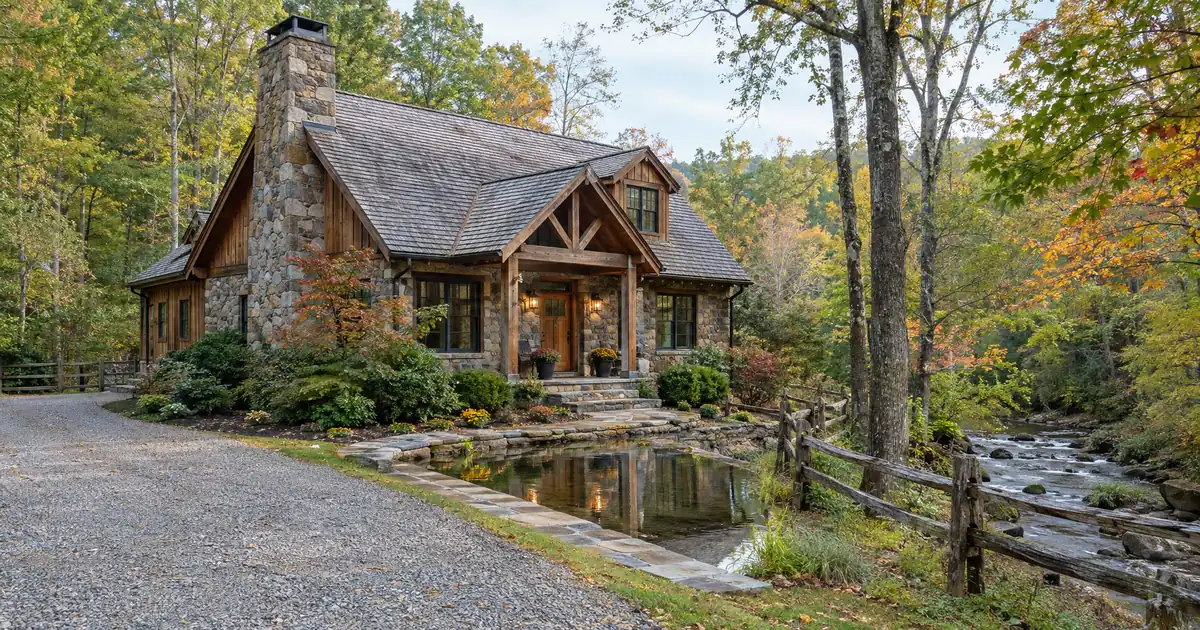
The Quick Read: Cash-out refinance requirements on a rural home currently financed with a USDA loan are really the requirements for leaving USDA. The USDA program has no cash-out refinance, so equity in cash means paying the USDA loan off with a different loan. Most often that is a conventional cash-out loan. It reaches 80% of the home’s value on a one-unit primary residence, needs a USDA loan at least 12 months old, and requires a full file review. Every figure is subject to lender guidelines and is not a commitment to lend.
Key Takeaways
- USDA refinances exist for a lower rate or payment. They do not release equity.
- To get cash, the USDA loan has to be retired by a conventional, FHA or VA cash-out loan.
- Conventional cash-out needs a seasoned USDA loan, time on title, full underwriting and an appraisal.
- Acreage and outbuildings can complicate a rural appraisal. Residential use is the test, not lot size.
- Leaving USDA ends its fees but can add mortgage insurance and larger closing costs.
Why Can’t a USDA Loan Take Cash Out?
USDA rules do not allow it, in any of its refinance types. The federal rule for the guaranteed program offers three options: streamlined, non-streamlined and streamlined-assist. Under that rule (7 CFR Part 3555), no cash out is permitted beyond what the rule itself provides. USDA Rural Development’s own loan origination FAQ says borrowers cannot get cash back, except for eligible expenses they already paid out of pocket.
Cash-out refinance estimate
The starting figures are an example value with a balance and a cash request in proportion. Replace them with yours.
Editable benchmark: 7.24% as of October 29, 2026 · Freddie Mac 30-year average via FRED®. A conventional market reference, not a cash-out refinance quote.
Illustrative starting assumptions: a $350,000 home value, a $193,000 current balance, the agency cap on a one-unit principal residence, a thirty-year term at the current Freddie Mac benchmark, and property taxes and insurance estimated at typical national rates. Every field is editable.
Illustrative estimate only — not a Loan Estimate, approval, quote, or commitment to lend. The rate field carries the weekly Freddie Mac thirty-year conventional benchmark, a market reference and not a cash-out refinance quote; a cash-out loan is priced by the lender at lock. The cash available is the loan the program cap allows less the balances paid off, before closing costs, which are not included. The HELOC line is the program’s combined loan-to-value ceiling applied to the same value and balance. Taxes and insurance are editable estimates. Licensed in sixteen states for consumer mortgages.
The streamlined-assist option is the one most people stumble on. It skips the credit report and the loan-to-value and debt-to-income calculations. That is why it feels easy. It is a rate-or-payment tool, and it never touches your equity.
Many homeowners hear “streamline” and assume it also means “cash.” It doesn’t. The FHA Streamline and the VA IRRRL are also out. Each one only refinances an existing FHA or VA loan, so neither can pay off a USDA loan.
What Are Your Real Routes?
You have four. Which one fits depends on how much equity you have, your credit and whether you are a veteran.
| Route | Cash out? | Mortgage insurance | Best fit |
|---|---|---|---|
| Stay in USDA | No | USDA fees continue | Only need a lower payment |
| Conventional cash-out | Yes | Depends on new LTV | Solid credit, real equity |
| FHA or VA cash-out | Yes | FHA premiums; VA funding fee | Tighter credit or eligible veterans |
| Second lien (equity loan or line) | Yes | Keeps USDA loan | Want to keep the first mortgage |
Across the wholesale programs we place files with, conventional is the destination most USDA borrowers end up with. FHA cash-out suits borrowers whose credit or ratios fall short on conventional. VA cash-out depends on your entitlement. Lendmire’s cash-out refinance programs page lays out how those programs compare.
A second lien is a different animal. It leaves the USDA first mortgage alone and adds a separate payment. One catch: if you ever want a USDA refinance later, USDA requires that second lien to be paid off or subordinated.
What Does a Conventional Cash-Out Require?
A conventional cash-out is a full-documentation loan, not a streamline. These are the main tests.
- Leverage. The cap is 80% LTV on a one-unit primary residence. It drops to 75% on two- to four-unit primary residences, second homes and investment property, so occupancy sets the leverage.
- Loan age. The first mortgage being paid off must be at least 12 months old, measured from its note date to the new note date. Fannie Mae’s cash-out eligibility update sets that rule.
- Time on title. Borrowers generally need six months on title. Delayed financing, inheritance and legal-award exceptions exist. Delayed financing is built for cash buyers, so it doesn’t fit a USDA-financed purchase.
- Credit and ratios. The wholesale conventional programs start at a 620 decision score. The automated finding governs most files, with a total ratio ceiling of 50%.
- Reserves. Fannie Mae’s Eligibility Matrix applies minimum reserves to automated casefiles with a debt-to-income ratio above 45%.
- Pricing. Cash-out loans carry a pricing adjustment tied to LTV and credit score, so they cost more than a no-cash-out refinance at the same leverage.
One more lane is worth knowing. A wholesale program reaches 89.99% LTV with no mortgage insurance. It needs a 680 score and a 50% ratio on a thirty-year fixed loan, a primary residence and a conforming balance. It has its own six months of seasoning, and it isn’t written in Texas. Outside that lane, mortgage insurance is required above 80% LTV. On a cash-out it rarely comes into play, because the standard cap is already 80%. Final terms depend on the lender’s guidelines, the property type, and the borrower’s complete credit picture.
In Texas, a cash-out on a homestead is capped at 80% of the home’s value by the state constitution.
How Does a Rural Property Change the Appraisal?
Rural homes get more scrutiny than suburban ones. The question isn’t how many acres you own. It is whether the property is residential in nature.
Fannie Mae’s property eligibility rules say it does not purchase or securitize mortgages on agricultural properties, such as farms or ranches. Most homes financed through USDA are ordinary residences. But barns, large outbuildings and working-farm activity can lead an appraiser to question highest and best use. A home with a pasture and a shed is a different file from a home with a commercial livestock operation.
Comparable sales are the other friction point. In thin rural markets, an appraiser may need to reach farther for comps. That can stretch the appraisal and sometimes lower the value. Since the 80% cap applies to appraised value, a conservative number cuts directly into the cash you can take.
Don’t count on an appraisal waiver either. Automated value acceptance is possible on some files, but rural properties often need a full appraisal. Manufactured homes follow separate rules at USDA and at Fannie Mae, so ask early if yours is one.
If the cash would fund repairs, Lendmire’s article Best Cash-Out Refinance Program to Pay for Home Repairs on a Rural Property covers that angle.
How Does the Process Work Step by Step?
1. Name your goal. If you only want a lower payment, a USDA streamlined-assist refinance may do it. If you want cash, the USDA loan has to be paid off.
2. Check the clocks. Confirm the USDA loan is at least 12 months old by note date and that you meet the title-time requirement.
3. Order the appraisal. Conventional cash-out runs on value, unlike USDA streamlined-assist.
4. Go through full underwriting. Expect verification of credit, income, assets and debt, plus reserves where the ratios call for them.
5. Clear liens. The new first mortgage retires the USDA balance. Any second lien gets paid or restructured.
6. Compare the paperwork. Check the Loan Estimate against the Closing Disclosure. Look at cash to close and at costs rolled into the balance. Every dollar financed reduces your net cash.
Proceeds are whatever remains after the payoffs and costs.
What Does a Worked Example Look Like?
Picture a rural home that appraises at a value we’ll call 100%. Say the USDA balance sits at 55% of that value, and the borrower is on a one-unit primary residence with strong credit.
At the 80% cap, the new loan can reach 80% of value. Pay off the 55% balance and you have about 25% of value left. Closing costs come out of that, whether paid in cash or rolled in. What remains is your net cash.
Now change one input. If the appraisal comes in 10% below the borrower’s estimate, the 80% cap shrinks with it. Cash can fall by more than 10%, because the cap applies to a smaller number while the USDA payoff stays fixed. That is why a rural appraisal can swing the whole decision.
Should You Stay in USDA or Leave?
Stay if your goal is a lower payment and you don’t need cash. Streamlined-assist keeps you in the program with a lighter file, and it asks for no defaults in the prior 12 months.
Leave if you need real equity and your numbers clear the conventional tests. Weigh what you give up. USDA charges an upfront guarantee fee and an annual fee, and those end when you leave. But the new loan is larger, the term likely restarts and conventional mortgage insurance may apply. A “no-cost” refinance doesn’t remove those costs. They’re built into the rate or the balance.
This one is a real toss-up for borrowers with moderate equity. If the net cash after costs is small, a second lien may beat a full refinance, since it leaves the existing first mortgage untouched. Run both before you pick.
Where Does the General Rule Break?
- Hobby farms. Acreage alone doesn’t disqualify a home. Agricultural use can.
- Ineligible-area changes. If USDA’s map changed around your home, that only matters for USDA-to-USDA refinances. A conventional lender doesn’t care about the map.
- Prior second liens. Paying off a non-purchase second lien can turn a limited cash-out into a cash-out, with the different caps and pricing that follow.
- Free-and-clear land. A new mortgage on property previously owned outright counts as a cash-out.
- Veterans. VA cash-out can pay off liens of any type and provide cash. Eligibility depends on your entitlement.
- Recent purchase. If you bought with USDA recently, the 12-month loan-age clock and the title clock both apply.
Key Terms Defined
Cash-out refinance: A new, larger mortgage that pays off the old one and gives you the difference in cash.
Rate-and-term refinance: A new loan that changes the rate or term and pays off the old loan, with only incidental cash back.
Streamlined-assist: A USDA refinance with reduced paperwork that cannot release equity.
Seasoning: The minimum age of the loan being paid off, or the time you’ve been on title.
LTV (loan-to-value): The loan balance divided by the home’s appraised value.
Second lien: A separate loan secured by the same home, behind the first mortgage.
Frequently Asked Questions
Does USDA offer a cash-out refinance?
No. USDA allows reimbursement of eligible costs you already paid, and nothing from equity. If you want cash, the USDA loan must be paid off with a conventional, FHA or VA loan.
How long do I need to have my USDA loan before a cash-out?
For a conventional cash-out, the USDA loan generally must be at least 12 months old, counted from note date to note date. You also generally need six months on title, with exceptions for cases like inheritance. Your lender confirms the current wording on your file.
Can I use an FHA Streamline or VA IRRRL to replace my USDA loan?
No. Each only refinances an existing loan of its own kind, FHA to FHA or VA to VA. A USDA borrower who wants FHA or VA financing would need a standard refinance, and that can include a cash-out.
Does owning acreage stop me from getting a conventional cash-out?
Not by itself. Residential use is what counts. Working-farm activity or large outbuildings can raise agricultural questions, so the appraiser’s read of your property matters more than the acre count.
Will leaving USDA lower my monthly costs?
It can end USDA’s annual fee, but the new loan is larger and conventional mortgage insurance may apply. Mortgage insurance is required above 80% LTV unless the wholesale no-MI lane fits, and cash-out is generally capped at 80% anyway. Compare the Loan Estimate line by line before deciding.
Next Step
If you are weighing a cash-out refinance against keeping the loan you have, Lendmire can help you compare the programs and the equity each one reaches. Program figures are subject to lender guidelines and full file review. Nothing here is a commitment to lend.
For your own numbers, request a scenario review with Lendmire.
For current guidelines and terms, see Lendmire’s refinance programs page.
About Lendmire
As a mortgage broker (NMLS# 2371349), Lendmire helps homeowners and home buyers in 16 states with FHA, VA, conventional and jumbo purchase and refinance loans arranged through wholesale lenders. Lendmire is never the lender; program terms are set by the lender and the agency guidelines. Scotsman Guide named Lendmire a Top Mortgage Workplace in both 2025 and 2026.
Get Started
Ready to find the right loan for you?
See your offer in seconds. No credit pull, no obligation.
Informational only. Not a Loan Estimate, approval, or commitment to lend. Program availability and eligibility are subject to lender guidelines, credit approval, property review, and underwriting.
References
2. USDA Rural Development, Single Family Housing Loan Origination FAQ
3. Fannie Mae Capital Markets, cash-out refinance eligibility update
4. Fannie Mae Eligibility Matrix
5. Fannie Mae Selling Guide B2-3-01, General Property Eligibility
This article is part of Lendmire’s cash-out refinance program — full qualification details, guidelines, and scenarios live on the program page.
Related reading: Cash-Out Refinance Lenders to Fund Home Improvements With Home Equity · Cash-Out Refinance Lenders on a Historic Home · Best Cash-Out Refinance Program on a Home Gifted to You
Brandon Miller
Founder & CEO, Mortgage Loan Originator, Lendmire LLC
- Mortgage Loan Originator · NMLS# 1129696 · Verify on NMLS Consumer Access
- North Carolina Real Estate Broker · License# 343312 · Verify on NCREC
- North Carolina Insurance Producer · License# 19053198 · Property, Casualty, Life, Health · Verify on NAIC SBS
- Lendmire LLC · Firm NMLS# 2371349 · Verify firm licensure
Compliance and disclosures. Lendmire (NMLS# 2371349) is a licensed mortgage broker and is not a direct lender, depository institution, financial advisor, or tax professional. Content in this article is general market analysis and educational information — not financial, legal, or tax advice for any specific situation. Lendmire does not guarantee loan approval; every transaction is subject to underwriting by the funding lender. Mortgage pricing and loan program guidelines are subject to change at any time without notice and vary by borrower characteristics, property type, and state regulations. Lendmire complies with Equal Housing Opportunity. Licensure verification: NMLS Consumer Access.