
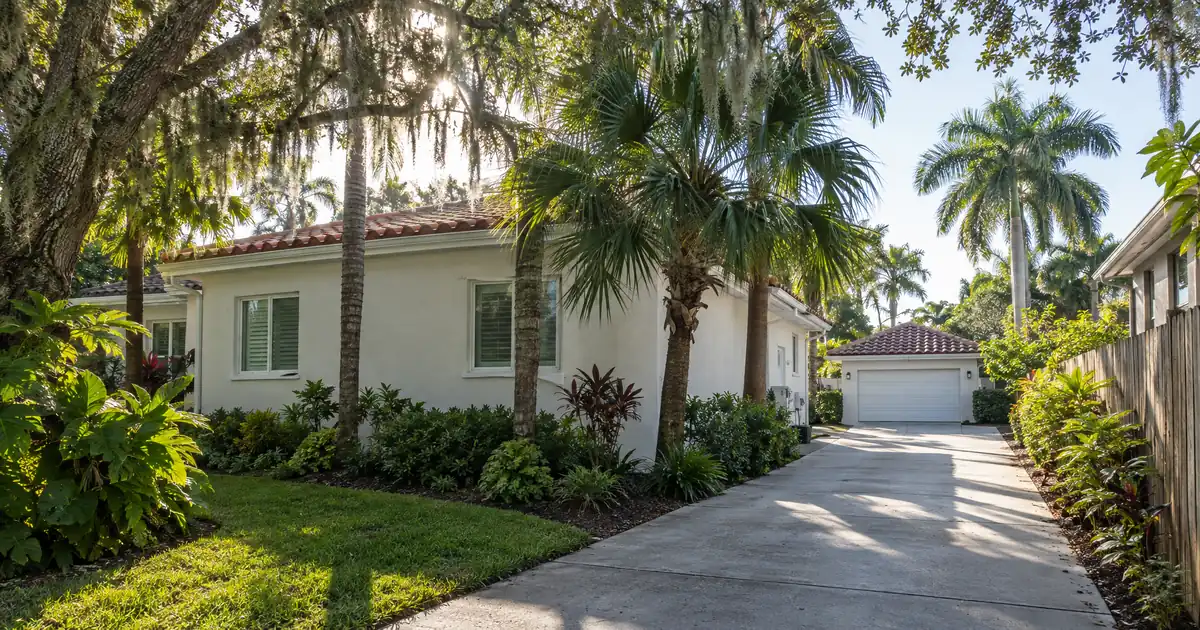
Picture two owners in Sunny Isles Beach who both want to pull equity out. One holds a one-bedroom in an older, lower-priced mid-rise on the west side, rented on a standing lease. The other holds a unit in an oceanfront Collins Avenue tower and is counting on a luxury price to carry the file. The math favors the first owner. Rent-to-value is thin on tower stock, and the file on the tower unit lives or dies on building eligibility, appraisal comps and HOA dues. The older, cheaper unit tends to produce a cleaner coverage ratio, and it is the collateral this market can actually refinance.
This piece covers equity extraction only, for an investor who already owns the property. It doesn’t cover purchase mechanics.
DSCR Cash-Out Calculator
Run the cash-out numbers in Sunny Isles Beach, FL
Rate source: Freddie Mac 30-yr average via FRED® — Federal Reserve Bank of St. Louis · effective Sep 24, 2026
Prefilled with starting assumptions — enter your property’s value, balance, taxes, and insurance for a more accurate picture.
Program parameters update from Lendmire’s centralized guideline source. Taxes and insurance are editable estimates.
As of Sep 24, 2026 · General Freddie Mac market benchmark, not a Lendmire loan offer. Property value, balance, taxes, and insurance are editable estimates. Maximum loan-to-value varies by lender, program, property type, and seasoning. Not a Loan Estimate, approval, or commitment to lend. Program availability and eligibility are subject to lender guidelines, credit approval, property review, and underwriting.
At a Glance: A cash-out refinance on a Sunny Isles Beach, Florida rental is underwritten primarily on the property’s rental income measured against its full monthly obligation, HOA dues included, and for a condo unit the building must first clear the lender’s eligibility review before any equity is considered.
- Median sale price is about $538K over three months, or $498 per square foot, per Redfin.
- Condo supply runs near 22 months, per CVR Realty’s market analysis.
- Average rent is $2,858, down 4.14 percent year over year, per RentCafe.
- Redfin shows only 3 multi-family listings against 1,324 condos, so this is a condo file.
Where the Equity Actually Sits
Equity in Sunny Isles Beach is a purchase-basis and seasoning story, not an appreciation story. Prices are flat to soft, and the borrower should plan the cash-out on what was paid and how long it has been owned, not on a value gain.
The numbers point that way. Redfin’s median sale price of about $538K over the last three months comes with 159 days on market versus 147 a year earlier. Redfin’s headline of a 40 percent year-over-year median drop is a sales-mix effect, because fewer luxury units sold. Its price per square foot moved only about 1.4 percent. Zillow puts the average home value at $645,647, down 3.5 percent over the past year, per Zillow’s home value index. Data USA lists a median property value of $549,100. Movoto shows a median list price of $679K, down 8 percent, per Movoto.
Read together, nobody is getting a refinance appraisal that adds a pile of equity. The recorded purchase price and the six months of ownership seasoning, measured from title recording, do the work. Files that assume a value bump are the ones that come back short.
The market is also unusual on the demand side. The city’s own financial reporting describes luxury residential as one of its main economic engines, per the city’s annual financial report. Median household income is about $59,124 per ACS-based data. Tenants here earn service-economy wages under a luxury-priced housing stock, and that gap decides which units carry a rent-to-debt ratio.
Warrantability Is the First Gate
Building-level eligibility comes before the numbers. A condo unit can have a signed lease, a clean borrower and strong seasoning, and the file still stalls because the building fails the lender’s condo review.
High investor concentration is common in Sunny Isles Beach towers, and heavy investor ownership plus maintenance or reserve problems is what typically pushes a building into non-warrantable territory. The condo certification and HOA questionnaire are the documents that decide it. The friction is completeness: unanswered questionnaire lines, missing budget or reserve pages, and stale insurance certificates on the master policy. Order the questionnaire the day the file opens, not after the appraisal is back.
The verified program parameters for cash-out on investment property sit in these ranges, subject to lender guidelines and varying by borrower, property and loan scenario:
- Loan-to-value on cash-out tops out at 75 percent, and condo programs can run lower depending on the lender.
- Seasoning is about six months of ownership from title recording.
- The baseline coverage ratio is 1.00, rent against full PITIA.
- Credit tiers step through 620, 660, 680 and 700, with 620 as the floor.
- Reserves run about six months PITIA, about nine months above $1,500,000.
- Loan amounts go up to $3,000,000 on standard programs.
Equity available is not a guaranteed figure. It depends on rent used for lender review, the monthly obligation, reserves and that 75 percent ceiling. Some lenders review below-1.00 scenarios at reduced leverage, but those usually need stronger compensating factors and different terms.
Unlike balance-sheet lenders that treat investor files as portfolio-risk exercises, a broker placing files across a wholesale network can route a condo file to the lender whose condo review fits the building. That matters here more than almost anywhere in Florida. For the mechanics behind the ratio, see the guide “What Is a DSCR Loan”.
The Appraisal Problem: 22 Months of Supply
Expect appraisers in this market to have plenty of comps and little urgency. CVR Realty’s analysis reports 21.9 months of condo supply, 1,115 active listings and an average of 201 days on market. A separate broker blog cites roughly 22 months of supply across 435 listings. The listing counts differ, so treat them as unverified, but both sources agree on about 22 months.
Then there is building dispersion. The same broker blog puts the neighborhood average at $1,173 per square foot for the first quarter, with a range from under $600 in distressed pre-2000 buildings to over $2,200 at the Estates at Acqualina, per Luxlife Miami. It is a promotional source, so use it as one broker’s view. The practical point holds: comps from a different building misstate value badly.
A cash-out appraisal has to lean on same-building sales. In an older tower with thin recent activity, that can cut the value and the proceeds. Appraisal reconsideration is a routine step on these files. A packet with recent same-building closings, unit condition and any recent capital work in the building recovers value more often than a plain request does. Build it before the appraisal lands, not after.
Which Rent Number Goes in the File
Use a signed lease or a current rent comp. Never use a market average. The published sources are too far apart to underwrite from:
| Source | Figure | Note |
|---|---|---|
| RentCafe | $2,858 average, 2BR $3,149 | 50+ unit buildings only |
| RentHop | 2BR $3,950 | Median rents roughly flat |
| Homes.com | $4,200 median condo | Listings-based |
| Zumper | $5,000 average | Luxury-skewed |
RentCafe’s one-bedroom average is $2,412 and its three-bedroom is $4,120. The softer sources show flat to falling rents. The luxury-weighted ones show increases. Underwrite to the lower, broad-based read. A coverage ratio that only works at $5,000 rent is not a basis a lender will accept, and it shouldn’t be one an investor plans around.
The neighborhood bands are just as scattered. Zumper lists Kings Point at $2,000, Sunny Isles Shores at $3,500 and Golden Shores at $3,500. Redfin’s rental table shows lower figures for the same areas: $2,625 for Sunny Isles Shores and $2,875 for Golden Shores. That is a gap of roughly $600 to $900 a month. Some of those cells rest on small samples. Neither source belongs in the qualifying-rent line.
Submarkets That Can Carry a Cash-Out
Kings Point and the west-side mid-rises. This is the strongest fit. Zumper shows rents at $2,000, down 13 percent, with unit size unspecified. The pocket has the most long-term-rental collateral in the city. It is also where warrantability and dues risk concentrate, since older buildings carry the reserve pressure discussed below.
Sunny Isles Shores and Golden Shores. These are the main places small residential product turns up. Flyhomes’ listing data suggests duplex inventory clusters around Sunny Isles Shores and Kings Point, but treat that as directional only. Golden Shores is a single-family enclave of more than 200 homes, with listings on one brokerage page ranging from $1,699,000 to $9,000,000. At those prices there is no evidence of workforce rent-to-value strength. A cash-out there is a leverage-and-liquidity decision, not a coverage play.
Oceanfront Collins Avenue towers. The luxury corridor (Trump Royale, Jade, Porsche Design, Acqualina) saw a median luxury condo sale near $1.35M, up 6.2 percent, per a local brokerage report. Rent-to-value at that price is likely thin, so cash-out capacity is likely constrained. That is an inference, not a sourced ratio. Expect these files to depend on sub-1.00 structures or heavy documentation.
Eastern Shores, Winston Towers and Williams Island appear as popular areas on Redfin, but no price or rent data supports a call on them.
The Dues Problem
HOA dues sit in the denominator, and in older Sunny Isles Beach towers the dues line moves. That is the quiet killer on condo files here.
One broker guide reports monthly dues commonly rising 20 to 40 percent to fund reserve contributions after Florida’s post-Surfside condo reforms. It reports 50 to 100 percent increases or special assessments in older pre-1990s beachfront towers, per Broker One’s buyer guide. An agent source says the most affected buildings were constructed between 1975 and 1995, per LuxuryDade. These are broker sources, not city data, and the percentages are indicative only.
Run the numbers on a modeled case. Say you hold an older one-bedroom rented at a modeled $2,412 (the RentCafe one-bedroom average, used as an assumption, not a comp). With dues, taxes and insurance in the full monthly obligation, coverage sits near the 1.00 line. Add a modeled 30 percent dues increase and the ratio slips below 1.00. The unit that passed coverage before the reserve increase can fail after it.
The fix is to model the ratio with a dues increase before submitting. If it lands under 1.00, the structures a lender may review include a sub-1.00 program at reduced leverage or an interest-only structure. Qualification stays subject to lender guidelines, credit approval and property review. Pull the current budget and any pending special assessment notices from the association before the appraisal is ordered.
Working DSCR brokers see a recurring pattern in condo-tower markets: the borrower models the file on the current dues figure, the association votes a reserve increase during review, and the coverage number changes under the file. The clean files carry a current budget, a reserve study summary and a written statement on pending assessments from the start.
New Supply Is All Ultra-Luxury
The pipeline is ultra-luxury, and it is replacing older stock rather than adding workforce units. Florida YIMBY reports a Collins Avenue tower approved at 62 stories and 145 units. A second report covers the St. Regis Residences, two 62-story towers with 170 and 150 residences. That is roughly 465 units, none of them priced for the mid-income tenant. The Miami Beach Club, a two-story 108-unit building, is being replaced.
The read for a cash-out investor: older, cheaper long-term-rental stock is shrinking, not growing, which supports the rent-to-value case on warrantable mid-rise units. The city is also running a vision project for the west side of Collins Avenue. Commissioners have leaned toward keeping residential blocks low-scale, so upzoning a small-multifamily thesis is not assured. Verify current local rules, taxes and insurance with qualified local professionals.
DSCR vs. conventional financing
Two common ways to finance an investment property in Sunny Isles Beach, FL. They qualify you differently — here’s how investors weigh them.
Why investors choose it
- Qualifies on the property’s rental income — no personal tax returns, W-2s, or pay stubs needed to document income.
- No personal debt-to-income ceiling to clear, so existing mortgages and obligations don’t cap your borrowing the same way.
- Can be closed in an LLC, keeping the property inside a business entity.
- Built for scaling — not held to the limit on number of financed properties that conventional financing applies.
- Underwriting centers on the deal: generally qualifies when the rent covers the payment, a 1.00x coverage ratio being a common baseline (confirmed in underwriting).
- Designed specifically for investment property, including long-term and, where the program allows, short-term rentals.
Where it’s strong
- Often the lowest ongoing financing cost for a buyer who fully qualifies on personal income — a fit for a first property or a cost-first purchase.
Trade-offs for investors
- Requires full personal income documentation and must fit within a debt-to-income limit — salary, existing debts, and other mortgages all count.
- Typically held in your personal name rather than a business entity.
- Caps how many financed properties you can carry, which can become a ceiling as a portfolio grows.
- Evaluates you as a borrower as much as the property, which usually means more paperwork.
How investors usually choose: a first or single property often optimizes for the lowest financing cost; portfolio builders often optimize for leverage, vesting in an LLC, and scaling past conventional caps. The right answer depends on your goals, the property, and current guidelines — both paths run through select lenders in Lendmire’s wholesale network, with eligibility and terms confirmed in underwriting.
Multi-unit product is scarce. Redfin lists 3 multi-family homes at a $2.8M median listing price, per Redfin’s multi-family page. A median that high implies weak rent-to-value, and no rent data exists for those assets. Confirm any 2–4 unit deal on its own numbers.
Where the Proceeds Go
Cash-out proceeds in this market usually work best deployed outside the tower. Pulling equity from a warrantable mid-rise condo and buying where rent-to-value is stronger is the pattern that makes sense, given the price gap between the two. The tower owner who needs the proceeds for another Florida acquisition should check the reserve requirement first, because cash-out proceeds may count toward reserves depending on the program.
Sequence the file cleanly. Order the condo questionnaire early. Collect the lease and proof of rent receipts. Pull the entity documents if the unit is held in an LLC, which is reviewed subject to lender program eligibility. Get a current master insurance certificate. Then order the appraisal. Investors can request a quote at Lendmire’s quote page or call 828-256-2183. The refinance side and the cash-out refinance details cover the wider process. The guide “Where DSCR and Conventional Diverge” is worth a read for owners weighing a bank refinance instead.
Frequently Asked Questions
How do you qualify for a DSCR cash-out refinance in Sunny Isles Beach?
The property’s rent has to cover its full monthly obligation, HOA dues included, with 1.00 as the common baseline. The borrower typically needs a credit score of at least 620, about six months of ownership from title recording and reserves of about six months PITIA. For a condo, the building must also clear the lender’s eligibility review. Everything is subject to lender guidelines and credit approval.
What are the requirements for an investment property loan on a Sunny Isles Beach condo?
Expect a condo questionnaire, current budget and reserve information, a master insurance certificate, a lease or rent comp and entity documents if an LLC holds title. Cash-out leverage is capped at 75 percent, and some condo programs run lower. Because so many buildings have heavy investor ownership, warrantability is the item most likely to delay a file.
How much equity can come out of a Sunny Isles Beach condo?
It depends on the appraisal, the rent used for lender review, the monthly obligation and the 75 percent ceiling, so no cash figure is guaranteed. With condo supply near 22 months and prices flat to soft, appraisals can land near the purchase basis. Same-building comps drive the value, and a thin older tower can cut proceeds sharply.
Which rent figure should go into the file?
A signed lease or a current comp, not a published average. RentCafe shows $2,858 average rent, while Zumper shows $5,000 skewed by luxury listings. Underwriting to the lower, broad-based figure keeps the coverage ratio defensible.
How does rental income affect DSCR refinance eligibility in Sunny Isles Beach?
For current guidelines and terms, see Lendmire’s DSCR loan programs page.
About Lendmire
Lendmire, NMLS# 2371349, is a mortgage brokerage focused on investor financing, arranging DSCR loans in 40 states plus Washington, D.C. — 41 markets total. Qualification is based on the property’s income rather than personal income documentation, subject to lender guidelines, making it a fit for LLC-held rentals and scaling portfolios.
For broader investor-financing rules and property-type coverage across the state, see Florida DSCR loans.
Get Started
Ready to find the right loan for you?
In about 30 seconds you can review financing options available for your investment property. No commitment required.
Informational only. Not a Loan Estimate, approval, or commitment to lend. Program availability and eligibility are subject to lender guidelines, credit approval, property review, and underwriting.
References
1. Redfin, Sunny Isles Beach housing market
2. CVR Realty condo market analysis
3. RentCafe, average rent in Sunny Isles Beach
5. Data USA, Sunny Isles Beach
6. Movoto
7. City of Sunny Isles Beach annual financial report
10. miamibeachrealestateblog.us — Sunny Isles Beach Luxury Condo Market Report
12. LuxuryDade
13. Florida YIMBY, Collins Avenue tower approval
15. Redfin’s multi-family page
This article is part of Lendmire’s investment property cash-out refinance program — full qualification details, guidelines, and scenarios live on the program page.
Related reading: DSCR Cash Out Refinance Sunny Isles Beach Florida · Cash Out Refinance Investment Property Hallandale Beach Florida · DSCR Cash Out Refinance in Siesta Key, Florida: How Investors Pull Equity from Beachfront Median Prices
Guides: Investment Property Cash-Out Refinance in Florida
Brandon Miller
Founder & CEO, Mortgage Loan Originator, Lendmire LLC
- Mortgage Loan Originator · NMLS# 1129696 · Verify on NMLS Consumer Access
- North Carolina Real Estate Broker · License# 343312 · Verify on NCREC
- North Carolina Insurance Producer · License# 19053198 · Property, Casualty, Life, Health · Verify on NAIC SBS
- Lendmire LLC · Firm NMLS# 2371349 · Verify firm licensure
Important disclosures. Lendmire (NMLS# 2371349) is a licensed mortgage brokerage. Lendmire is not a direct lender, depository institution, or financial advisor. All loan inquiries are subject to lender underwriting; this article does not constitute a commitment to lend. Rates, terms, and program guidelines are subject to change without notice and vary by borrower profile, property type, and state. Information in this article is general in nature and is not financial, legal, or tax advice. Equal Housing Opportunity. NMLS Consumer Access: nmlsconsumeraccess.org.