
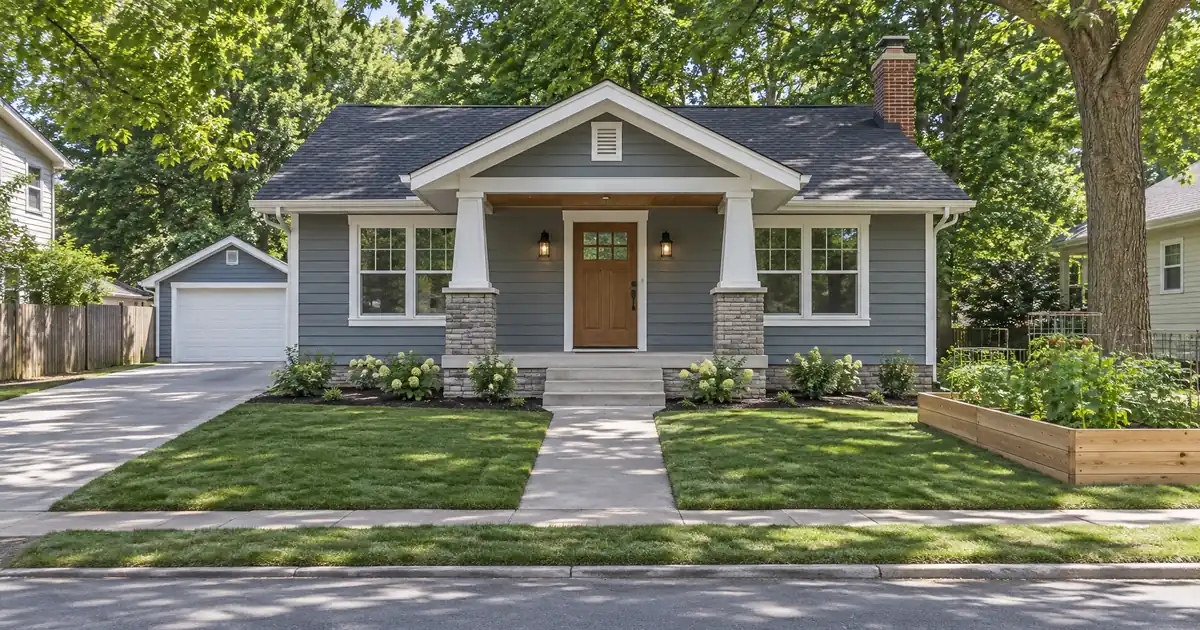
The Quick Read: A paid-off rental that needs a roof usually fits a DSCR cash-out refinance when the roof is not yet failing and the rent can carry a new loan on a long-term basis. Hard money fits when the roof is bad enough to block a refinance and the owner has a clear exit.
- A free-and-clear rental that returns cash is still a cash-out refinance, with its own appraisal.
- DSCR cash-out qualifies primarily on property-level rental income covering the payment, subject to lender guidelines.
- Hard money is asset-based, interest-only, and short-term, with a maturity date the owner must plan for.
- A worn roof can pull the appraisal down or draw conditions, which can decide the sequence.
- Many investors refinance out of hard money into long-term DSCR financing once the property is stabilized.
Two loans can pay for the same roof. They solve different problems. The cash-out loan is permanent debt sized on rent coverage and equity. The hard money loan is a short bridge sized on property value and the plan. The honest answer depends on the roof’s condition, how much equity the house holds, and how long the owner plans to keep it.
Side-by-Side
The hard money column below reflects published industry norms and Lendmire’s hard money program parameters. Both products are placed through Lendmire’s wholesale network, and terms vary by lender, property, and experience.
| Factor | DSCR Cash-Out Refinance | Hard Money |
|---|---|---|
| Review basis | Rent coverage plus equity, credit, reserves | Property value, scope, and exit plan |
| Documentation | Lease, appraisal with rent schedule, reserves | Scope of work, budget, exit plan |
| Property types | 1-4 unit rentals; some types excluded | Non-owner-occupied 1-4 units |
| Entity vesting | LLC vesting common, subject to program terms | Entity or individual borrower |
| Term structure | Long-term, 30-year fixed is the spine | 6-18 months, interest-only |
| Reserves | Commonly around 6 months of PITIA | Lender-specific; liquidity matters for draws |
| Credit | 620 floor in parts of the network; most want about 660 | 620 minimum, more conditions below 660 |
| Exit | Permanent debt, no maturity cliff | Sale or refinance at maturity |
Timing is not shown in the table, because it depends on the file. Hard money is built for urgency. A cash-out refinance involves an appraisal, title work, and underwriting, so it moves with more process. If water is coming through the ceiling, that difference matters.
When a DSCR Cash-Out Refinance Is the Better Fit
A DSCR cash-out is the better fit when the house is paid off, the roof is aging but not failing, and the owner plans to hold. Cash-out tops out around 75% LTV on a standard rental across most of the network. A free-and-clear property has the most room under that cap. Short-term-rental collateral is tighter, with cash-out at 70%. Terms vary by lender guidelines, property type, leverage, credit profile, and full file review.
The loan is long-term debt. There is no maturity date to chase and no second round of closing costs. One loan can fund the roof and leave extra capital for the next purchase.
The test is rent against the new, larger payment. DSCR divides monthly rent by PITIA: principal, interest, taxes, insurance, and any HOA dues. Pulling more cash lowers the ratio. About 1.00 is where select programs start, and stronger ratios open better pricing and leverage. A separate select-lender path takes coverage below 1.00, with leverage and terms adjusted. Clearing 1.00 is not the same as positive cash flow. Repairs, vacancy, management, and capex sit outside the calculation.
Credit and reserves count too. Most programs want around 660, and 700+ unlocks the strongest leverage tiers. Reserves vary by lender, leverage, and loan size, commonly around 6 months of PITIA. Loan sizes run up to $3,000,000 on standard programs (smaller balances available through select lenders). Programs change, and every file is underwritten individually. Lendmire’s complete DSCR loans guide covers how those pieces fit together.
What the appraisal does to a roof
The lender orders its own appraisal. For rent, the appraiser typically completes a rent schedule. Fannie Mae’s learning center names the common tools: Form 1007 for single-family rent and Form 1025 for small income properties. DSCR loans are not agency products. Those forms are simply the usual appraisal tools.
An appraiser can reduce value or condition the report for a worn or leaking roof. Whether a given lender requires repair before closing is lender-specific. Cash comes back only if the value clears the payoff plus costs at the LTV cap. A bad roof can shrink the proceeds or turn the loan into a payoff-only deal. Seasoning, title, and credit are checked on top of that. On cash-out, about 6 months of seasoning is the common expectation.
When Hard Money Is the Better Fit
Hard money is the better fit when the roof is failing now, when it could block a standard appraisal, or when the owner plans a short hold and a sale. It is asset-based. The lender looks at value, the scope of work, and the exit.
Lendmire’s hard money parameters are specific. Bridge purchases go up to 80% of purchase price. Cash-out and rate-and-term refinances go up to 65% of value. Fix-and-flip leverage is sized on project cost and capped at 75% of after-repair value. Rehab money can fund up to 100% of the rehab budget, released in draws against completed work. Terms run 6-18 months, interest-only, with no prepayment penalty. Loans reach up to $5,000,000, and smaller balances vary by lender. These figures vary by lender, property, and experience, and nothing here is a commitment to lend.
Collateral is non-owner-occupied residential, 1-4 units. Credit starts at a 620 minimum, with added conditions below 660. Underwriting stays asset-based.
For a paid-off owner, hard money has real costs. It creates a maturity date and a second closing. A hard money cash-out also lands at a lower leverage level than the DSCR route. Draws arrive as work is completed, so the owner needs working capital to bridge the gaps. Hard money is not built for a long hold, and it is a poor fit if the exit is vague.
The exit is the point. Many investors refinance out of hard money into long-term DSCR financing once the property is stabilized, and Lendmire brokers that path.
Choose by Situation
| Situation | Leans toward |
|---|---|
| Roof aging, no active leak, long hold | DSCR cash-out |
| Active leak that could fail an appraisal | Hard money first, refinance after |
| Equity is high, rent is strong | DSCR cash-out |
| Short hold, plan to sell | Hard money |
| Thin rent coverage after a larger payment | Smaller cash-out or hard money bridge |
Think it through as a sequence. Fix a failing roof with a bridge, then refinance once the property appraises clean. Or refinance first while the roof still passes and use the proceeds for the work. The second path avoids a maturity date and a second closing. It only works if the appraisal does not flag the roof.
Where the Roof and the Loan Meet
Roofing is repair or improvement work on a non-owner-occupied rental. That makes both products business-purpose loans, reviewed differently from a standard owner-occupied mortgage. The paperwork matters. CFPB examination guidance lists credit extended primarily for business purposes as exempt from Regulation Z. A checked business-purpose box with no documentation of how the funds will be used may be insufficient evidence. Keep the roofing contract and invoices with the file.
Common Mistakes on This Exact Scenario
- Assuming paid-off means no appraisal. Cash coming back makes it a cash-out loan with a new appraisal.
- Treating hard money as cash. It is lien-secured debt that must be repaid.
- Ignoring the coverage drop. A bigger loan means a lower ratio. Run it before applying.
- Skipping working capital on a draw loan. Draws release after work is completed.
- Entering hard money with no exit. The loan carries a maturity date, so the plan for repayment has to exist before closing. The DSCR refinance is the usual exit.
- Equating a 1.00 ratio with profit. Roofs, vacancy, and repairs sit outside the formula.
The Verdict
Pick the cash-out refinance when the roof is still insurable and appraisable, equity is deep, and the plan is to hold. It is cheaper to carry over time as a structure, and it leaves no maturity deadline. Pick hard money when the roof will not wait, or when it blocks the appraisal, and an exit into long-term debt is clear. Neither is the right answer for every owner. If you are rehabbing or refinancing an investment property on a short timeline and want to see how the numbers work, Lendmire can help you compare hard money options based on the project, the exit plan, leverage, and your goals. Short-term rental rules can vary by city, county, HOA, and property type, so confirm local rules before relying on projected rental income.
Frequently Asked Questions
Does a paid-off rental count as a cash-out refinance?
Yes. Any refinance that returns cash to the owner is cash-out, even with no existing lien. It carries a new appraisal and the cash-out LTV limit, around 75% on most standard rentals in the network.
Can cash-out proceeds pay for the roof?
Yes, subject to lender guidelines. Proceeds are the owner’s to use, and many investors fund repairs this way. The appraisal still has to support the loan with the roof in its current condition.
What if the roof is too far gone for a refinance?
A lender may reduce value or require repairs before closing. That is the case where a hard money bridge can make sense. Fund the roof, then refinance into long-term debt once the property appraises cleanly.
How much can hard money cover on a refinance?
Cash-out and rate-and-term hard money refinances go up to 65% of value. Rehab funds up to 100% of the rehab budget in draws. These figures vary by lender, property, and experience.
Do I need an LLC for either loan?
Not necessarily. Entity vesting is common on investor loans, subject to program terms. The loan must be business-purpose and the property non-owner-occupied.
About Lendmire
A DSCR-focused mortgage broker, Lendmire (NMLS# 2371349) places investor financing across 41 markets — 40 states plus Washington, D.C. — with DSCR eligibility generally reviewed by the lender on property cash flow instead of tax returns, subject to lender guidelines. Scotsman Guide named Lendmire a Top Mortgage Workplace in 2025 and 2026.
Get Started
Ready to find the right loan for you?
See your offer in seconds. No credit pull, no obligation.
Informational only. Not a Loan Estimate, approval, or commitment to lend. Program availability and eligibility are subject to lender guidelines, credit approval, property review, and underwriting.
References
1. Fannie Mae Learning Center: appraisers and property underwriting
2. CFPB Truth in Lending examination guidance
This article is part of Lendmire’s hard money loan program — full qualification details, guidelines, and scenarios live on the program page.
Related reading: How Early DSCR Cash-Out Seasoning Works on a Paid-Off Rental · Can You Get a DSCR Cash-Out Refinance on a Rental Held as a Life Estate? · Can a DSCR Cash-Out Refinance on an Inherited Rental Cover Estate Bills?
Brandon Miller
Founder & CEO, Mortgage Loan Originator, Lendmire LLC
- Mortgage Loan Originator · NMLS# 1129696 · Verify on NMLS Consumer Access
- North Carolina Real Estate Broker · License# 343312 · Verify on NCREC
- North Carolina Insurance Producer · License# 19053198 · Property, Casualty, Life, Health · Verify on NAIC SBS
- Lendmire LLC · Firm NMLS# 2371349 · Verify firm licensure
Disclosure information. Lendmire is a state-licensed mortgage brokerage under NMLS# 2371349. Lendmire is not a depository institution, direct lender, or financial advisor — all loans referenced are placed through wholesale lender partners and are subject to each lender's underwriting standards. This article is provided for general informational purposes and is not a commitment to lend, nor does it constitute financial, legal, or tax advice. Loan programs, terms, rates, and qualification standards change without notice and depend on borrower profile, property type, and the state in which the subject property is located. Equal Housing Opportunity provider. NMLS Consumer Access: nmlsconsumeraccess.org.