
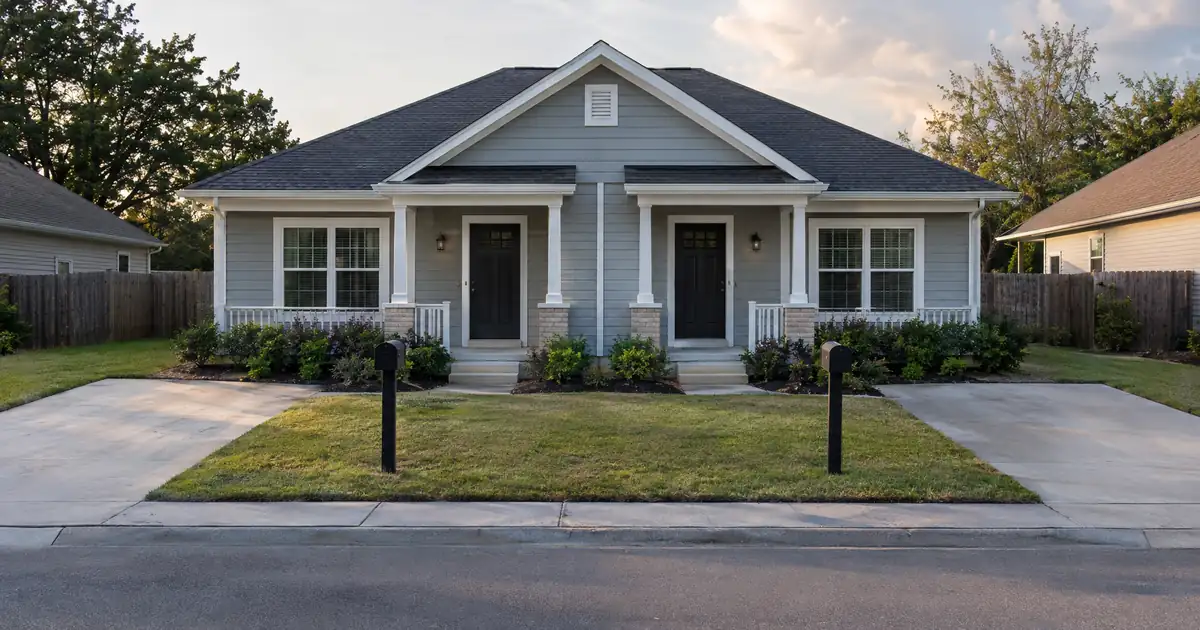
The Quick Read: A conventional cash-out refinance on a duplex, triplex or fourplex you live in tops out at 75% loan-to-value, compared with 80% on a one-unit home. You must occupy one of the units. The mortgage you are paying off must be at least 12 months old, and a borrower must have been on title for 6 months. Rent from the other units can help you qualify, but rent from your own unit cannot. Every figure is subject to lender guidelines and full file review.
- Leverage: 75% of appraised value for a 2-4 unit principal residence.
- Occupancy: every borrower on the loan lives in the home.
- Seasoning: existing first mortgage at least 12 months old (note date to note date); 6 months on title.
- Credit and ratios: wholesale programs start at a 620 decision score, with a 50% total ratio ceiling on most automated files.
- Cash you actually receive: the loan minus the payoff, closing costs and any liens paid off.
What Counts as a Cash-Out Refinance?
A cash-out refinance replaces your current first mortgage with a new, larger one and hands you the difference. A refinance also counts as cash-out when it takes more cash than the limited cash-out rules allow. Those rules permit paying off the existing first mortgage, closing costs and a purchase-money second lien, with only incidental cash back.
The distinction matters on a live-in multi-unit home because the leverage gap is large. A limited cash-out (rate-and-term) refinance on a 2-4 unit principal residence can reach 95% under the agency matrices. Cash-out stays at 75%. Lendmire arranges these loans through wholesale lenders, and Lendmire’s cash-out refinance programs page covers the broader lineup. This article stays on the live-in 2-4 unit case.
How Much Can You Borrow on a 2-4 Unit Home You Live In?
The ceiling is 75% of appraised value. Fannie Mae’s Eligibility Matrix shows 80% for one-unit cash-out and 75% for two- to four-unit cash-out. Freddie Mac’s Guide Section 4203.1 lists the same 75% for a 2- to 4-unit primary residence.
Here is the number that trips people up. Purchase leverage on a 2-4 unit principal residence goes to 95%, and headlines about higher multi-unit leverage rarely mention that cash-out is a separate row. Across the wholesale programs we place files with, the 75% cap holds no matter what the purchase side does.
The cap applies to the whole debt picture. If a junior lien stays in place, it counts toward the combined loan-to-value, so the new first mortgage plus the second must fit inside 75% of value.
Occupancy decides the leverage tier. The same cash-out on a one-unit home reaches 80%, while second homes and investment property sit at 75%, like your multi-unit home.
| Property | Cash-out LTV cap |
|---|---|
| 1-unit principal residence | 80% |
| 2-4 unit principal residence | 75% |
| Second home | 75% |
| Investment property | 75% |
The Tests, Step by Step
Step 1: Confirm the transaction type. If you want more than incidental cash back, you are in cash-out territory, and the 75% cap applies.
Step 2: Check the two clocks. The Fannie Mae Selling Guide B2-1.3-03 sets two separate waits. The first mortgage you are paying off must be at least 12 months old, measured from its note date to the new note date. And at least one borrower must have been on title for 6 months before the new loan funds. Passing one does not satisfy the other. A home you have owned for years can still be blocked if you refinanced eight months ago.
Step 3: Prove occupancy. Every borrower on a primary-residence cash-out must occupy the property. Freddie Mac’s Guide addresses this in its occupancy section. Living in one unit is the whole test; the others can be rented.
Step 4: Check the listing history. A property that was listed for sale must be off the market on or before the day the loan funds.
Step 5: Order the appraisal. A 2-4 unit appraisal uses the small residential income property form (Form 1025), because the property can produce rent. There is no shortcut here. The appraised value is the denominator for every leverage test, so a low value shrinks the loan directly.
Step 6: Document the rent. More on that below.
Step 7: Run credit, ratios and reserves. Underwriting runs through the agencies’ automated systems, and the finding governs most files.
Credit Score, Ratios and Reserves
Wholesale conventional programs start at a 620 decision score. Pricing and available terms vary by lender, borrower profile, property type, and full underwriting review. The automated finding governs most files, with a total ratio ceiling of 50%. Manually underwritten loans run to 36% or 45%, depending on the reserve and score factors in the Eligibility Matrix.
Reserves are where multi-unit cash-out surprises people. Fannie Mae’s reserve guide sets six months of reserves for a 2-4 unit principal residence, and also six months on a cash-out when the ratio is above 45% on an automated file. A one-unit principal residence has no reserve minimum. Reserves are liquid assets left after closing, so cash you pull out of the house does not count toward them. Confirm the current requirement with your loan officer before relying on the six-month figure.
There is also a wholesale lane that reaches 89.99% LTV with no mortgage insurance at a 680 score and a 50% ratio on a thirty-year fixed. It applies to a primary residence at a conforming balance and carries its own six months of seasoning. That lane is for one-unit homes, not a live-in 2-4 unit. Texas homestead cash-outs are capped at the agency figure by the state constitution, and that lane is not written there. The exact numbers vary by lender and program and follow a full review of property, leverage, and credit.
Does Rent From the Other Units Count?
Yes, with limits. Fannie Mae’s rental income guidance generally bars rent from your own unit but allows it from the other units of a 2-4 unit principal residence. Freddie Mac’s 2- to 4-unit product page says rent from the other units can be added to income when calculating housing expense and the debt-to-income ratio.
Two practical points:
- Documentation follows rental history. That is usually Schedule E from your tax return. If the units are newly rented, a current signed lease plus the appraiser’s market-rent opinion on Form 1025 is the typical route.
- Gross monthly rent is reported even when you do not use it. The loan delivery data includes it for every 2-4 unit principal residence.
Rent helps your ratio. It does not raise the 75% cap, and it does not reduce reserves.
A rent rule that applies elsewhere does not apply here. Fannie Mae’s accessory dwelling unit rent rule covers only a one-unit principal residence on a purchase or limited cash-out. It does not reach a 2-4 unit cash-out.
What Cash Will You Actually Receive?
Less than the gap between your payoff and 75% of value. Work it in percentages. Say a fourplex appraises at a value you treat as 100%, and your current mortgage is 40% of it. The cap leaves 35% of value as the theoretical maximum cash. Then subtract closing costs, prepaid items such as taxes and insurance escrows, and any other lien you pay off. What remains is the check.
Mortgage insurance does not usually enter this picture, since a cash-out at 75% sits below the 80% line where it begins. The tradeoff to weigh is different: you are swapping a loan you already have for a larger one. The Consumer Financial Protection Bureau’s home equity guide notes that a cash-out refinance may lengthen your payoff time and raise your monthly payment because the loan is larger, and that the interest rate and other terms change as well. No product turns 100% of your equity into cash.
Where the General Rule Breaks
Delayed financing. A cash buyer can take cash out before the 6-month title clock runs. The purchase must be arm’s-length, documented by a settlement statement showing no mortgage financing, and the borrower must meet general eligibility.
Other title exceptions. Inheritance and legal awards, such as a divorce settlement, are the other exceptions the wholesale programs recognize. The Selling Guide also lets time held in an LLC the borrower controls count in some cases. Each depends on documentation, so confirm the specifics with your loan officer.
Co-owner buyout. The 12-month note-age rule does not apply when you buy out a co-owner under a legal agreement. Freddie Mac treats this as a separate special-purpose cash-out, and the two agencies do not handle it identically. If a buyout is your reason for refinancing, ask which treatment applies before you assume a leverage number.
Manufactured housing. Far more restricted. Fannie Mae’s matrix shows 65% for a one-unit cash-out and no 2-4 unit cash-out option.
Manual underwriting and super-conforming loans. These can carry different limits than automated findings. Freddie Mac’s Guide notes this under its leverage section.
Moving out mid-process. The occupancy test is a condition of the loan. Plan the refinance around your actual living situation, not an intention to move later.
Cash-Out or Something Else?
Not every equity need requires a cash-out. If you only want a better term or to remove a second lien, the limited cash-out route reaches 95% on a one-unit home, and the matrix shows 95% for 2-4 units, with mortgage insurance above 80%. If your existing loan is FHA or VA, government streamlines exist with their own rules. A home equity loan or line adds a second payment rather than replacing your first mortgage; the CFPB guide compares the products. And the high-LTV refinance option is a no-cash-out product for on-time Fannie Mae borrowers, not a cash-out alternative.
| Route | What it does | Best fit |
|---|---|---|
| Conventional cash-out | New first mortgage, cash at closing | Larger equity need, keeping one loan |
| Limited cash-out | Pays off loan and costs only | Term change, no real cash needed |
| Home equity loan or line | Adds a second payment | Keeping a loan you already like |
Lendmire’s piece FHA vs Conventional Cash-Out When You Live in a 2-4 Unit Primary Home covers the government-backed alternative in more depth.
Common Mistakes
- Reading 95% as the cash-out number. It is the purchase and limited cash-out number.
- Assuming one waiting period. There are two: title and loan age.
- Counting your own unit’s rent. It generally does not count.
- Forgetting reserves. Six months can be the difference between a clean file and a delay.
- Using proceeds for debt without thinking. The CFPB cautions that paying non-mortgage debts with mortgage debt can raise foreclosure risk. Paying off other bills was a common reason borrowers gave for a cash-out in the agency’s survey data.
Tax treatment can depend on your situation; borrowers should speak with a qualified tax professional before relying on any deduction or credit.
Key Terms Defined
Loan-to-value (LTV): the new loan balance divided by the appraised value of the home.
Combined LTV: the same ratio, counting any second lien that stays in place along with the new first mortgage.
Seasoning: the minimum age of your ownership or of the loan being paid off before a cash-out is allowed.
Reserves: liquid savings you hold after closing, measured in months of housing payments.
Limited cash-out refinance: a refinance that pays off the old loan and costs with only incidental cash back.
Decision score: the credit score the lender’s underwriting system uses to price and approve the file.
Frequently Asked Questions
Can I do a conventional cash-out if I only live in one unit of a fourplex?
Yes, if you occupy one unit as your primary residence and every borrower on the loan lives there. The other three units can be rented. The leverage cap is 75% of appraised value, and the standard seasoning and reserve tests still apply, subject to lender guidelines.
Do I need to have owned the building for a full year?
Not necessarily. At least one borrower needs 6 months on title, and the mortgage being paid off must be at least 12 months old. A cash buyer may qualify sooner under the delayed financing exception. An inherited property or a legal award, such as a divorce settlement, may also qualify for an exception with documentation.
Will the rent from the other units help me qualify?
Yes, it can. Rent from the other units may be counted toward your income and ratios when documented, usually through Schedule E or a signed lease with the appraiser’s rent opinion. Your own unit’s rent generally cannot be counted.
Is a cash-out the same as a HELOC?
No. A cash-out replaces your first mortgage with a new, larger one. A home equity loan or line keeps your first mortgage and adds a second payment. Which one fits depends on how much you like your current loan and how much cash you need.
What if my appraisal comes in low?
The loan shrinks with it, since 75% applies to the appraised value, not your estimate. A low value can cut the cash you receive or leave nothing to take out after the payoff and costs. Some borrowers switch to a limited cash-out or pause the refinance.
If you are weighing a cash-out refinance against keeping the loan you have, Lendmire can help you compare the programs and the equity each one reaches. Reach the team at 828-256-2183, subject to lender guidelines and full file review.
For your own numbers, request a scenario review with Lendmire.
About Lendmire
Lendmire (NMLS# 2371349) is a mortgage broker licensed for consumer lending in 16 states. Lendmire arranges FHA, VA, conventional and jumbo purchase and refinance loans through wholesale lenders; every file is underwritten by the lender under the applicable program guidelines. Scotsman Guide named Lendmire a Top Mortgage Workplace in both 2025 and 2026.
For the program’s current guidelines, see conventional loan programs.
Get Started
Ready to find the right loan for you?
In about 30 seconds you can review financing options available for your home or investment property. No commitment required.
Informational only. Not a Loan Estimate, approval, or commitment to lend. Program availability and eligibility are subject to lender guidelines, credit approval, property review, and underwriting.
References
1. Fannie Mae Eligibility Matrix
2. Freddie Mac Guide Section 4203.1
3. Fannie Mae Selling Guide B2-1.3-03, Cash-Out Refinance Transactions
4. Freddie Mac, Mortgages for 2- to 4-Unit Properties
5. CFPB Older Americans Housing Guide, Using Home Equity
This article is part of Lendmire’s Conventional Loans series — every loan program’s qualification details, guidelines, and scenarios live on the loan options page.
Related reading: Can You Get a Conventional Cash-Out Refinance on a Vacation Home? · Conventional Cash-Out Refinance Reserves When You Live in a Duplex · How to Get a Conventional Cash-Out on an Inherited Home
Brandon Miller
Founder & CEO, Mortgage Loan Originator, Lendmire LLC
- Mortgage Loan Originator · NMLS# 1129696 · Verify on NMLS Consumer Access
- North Carolina Real Estate Broker · License# 343312 · Verify on NCREC
- North Carolina Insurance Producer · License# 19053198 · Property, Casualty, Life, Health · Verify on NAIC SBS
- Lendmire LLC · Firm NMLS# 2371349 · Verify firm licensure
Important disclosures. Lendmire (NMLS# 2371349) is a licensed mortgage brokerage. Lendmire is not a direct lender, depository institution, or financial advisor. All loan inquiries are subject to lender underwriting; this article does not constitute a commitment to lend. Rates, terms, and program guidelines are subject to change without notice and vary by borrower profile, property type, and state. Information in this article is general in nature and is not financial, legal, or tax advice. Equal Housing Opportunity. NMLS Consumer Access: nmlsconsumeraccess.org.