
The Quick Read: Neither option is better across the board, because a draw-funded hard money loan buys and rehabs a property that is not yet rentable, while a DSCR loan finances a property that already rents, so the better choice follows the property’s condition, your rehab size, and how well you can verify work from another state. DSCR stands for debt service coverage ratio, which compares a property’s rent to its monthly loan obligation.
- Hard money is short-term, asset-based financing for acquisition and rehab, with rehab money released in draws against completed work.
- A DSCR loan has no draws, so the property generally needs to be rentable at closing.
- “Cheaper” and “faster draws” are different questions. Pricing lives in the calculator, and draw turnaround depends on the lender’s process and your paperwork.
- From out of state, the draw inspection and your local team matter more than the lender’s marketing claims.
- Many investors use both in sequence: hard money for the rehab, then long-term rental financing once the property is stabilized.
Here is the honest answer. Hard money is for the investor who is buying a property that cannot yet be rented, has a clear rehab plan, and can supervise the work through trustworthy people on the ground. DSCR is for the investor who is buying or holding a property that already earns rent, wants a longer runway, and would rather not manage a construction budget at all. The choice is rarely about price. It is about what state the property is in today.
What this loan actually costs to carry.
Hard money is sized against the project and priced by time. Enter the deal and see how much the program will lend, the cash required at closing, the carry while you hold it, and what is left at the exit.
Leverage tiers on the current program: 85% with fewer than 2, 90% with 2 or more, 93% with 5 or more completed projects — every tier capped at 75% of after-repair value. Loan amounts up to $5,000,000, larger by exception; terms of 6 to 18 months, interest-only, no prepayment penalty. The rehab portion funds in draws against completed work, not at closing.
Program parameters shown update from Lendmire’s centralized guideline source. Rate, points, and months are editable assumptions, not quoted terms.
Cost cap sets the loan · positive spread
Illustrative estimate only — not a quote, Loan Estimate, approval, or commitment to lend. Rate, points, and months are editable assumptions. Hard money is business-purpose financing for real estate investors, not a consumer mortgage. Leverage on the current program tops out at 93% of project cost for investors with a documented track record, capped at 75% of after-repair value, with rehab funding up to 100% of the documented budget released in draws; actual terms vary by lender, borrower experience, property, and exit. Lendmire is a mortgage broker, not a lender.
Side-by-Side
The table below uses Lendmire’s wholesale-network figures for both products. Every figure varies by lender, property, and experience, and nothing here is a commitment to lend.
| Factor | Draw-Funded Hard Money | DSCR Loan |
|---|---|---|
| Review basis | Property, plan, and exit | Rent versus the monthly obligation |
| Best property condition | Distressed or not yet rentable | Stabilized or rentable |
| Documentation | Contract, scope, budget, value | Entity papers, lease or market rent |
| Property types | Non-owner-occupied, 1-4 units | Rental properties; some types not offered |
| Rehab funding | Up to 100% of rehab budget, in draws | No draws |
| Purchase leverage | 85%-93% of project cost by experience, capped at 75% of after-repair value | Typically 75%-80% LTV on a purchase |
| Term | 6-18 months, interest-only | 30-year fixed spine; other structures via select lenders |
| Reserves | Varies by lender and file | Commonly around 6 months of PITIA |
| Remote oversight | Inspections and draw package | Appraisal and rent schedule |
Two terms in that table need a plain definition. After-repair value is what the property is expected to be worth once the work is done. PITIA is principal, interest, taxes, insurance, and association dues, which together make up the monthly obligation a DSCR loan measures rent against.
The top hard money leverage tier, 93% of project cost, is reserved for experienced investors with five or more completed projects. Fewer than two completed projects usually lands at the 85% tier. Bridge purchases with no rehab reach up to 80% of purchase price. Hard money cash-out and rate-and-term refinances run up to 65% of value. On the DSCR side, select high-leverage programs reach 85% LTV on a purchase with roughly a 700+ score, and cash-out tops out around 75% LTV.
Entity vesting works on both sides. Lending to an LLC is available, subject to lender program eligibility, so ask before you form the entity.
How a Draw Actually Works (and Where the Time Goes)
A draw is a release of rehab money after a phase of work is done. The lender holds back the rehab portion at closing. Across the programs we place files with, up to 100% of the rehab budget can fund this way. That is a rehab-budget figure, not a purchase LTV. The rest of the loan funds the purchase.
The cycle looks the same almost everywhere:
1. The contractor finishes a phase.
2. You submit a draw request with invoices, photos, and an updated budget.
3. An inspector, or a photo and video review, confirms the work is in place.
4. The lender releases funds and the cycle repeats.
On many programs you pay the contractor first and get reimbursed after the inspection passes. That means you need working cash between draws. Fewer, larger draws can mean fewer inspection events, but they widen that cash gap. Ask each lender whether it reimburses or advances.
Draw turnaround is not mainly a marketing claim. It comes down to three things:
- How complete your draw package is.
- How soon an inspector can reach the site.
- How the lender queues its approvals.
You control the first one. The other two you can only test by asking for specifics. No regulator sets draw rules. As Yieldstack’s explainer on fix-and-flip draw schedules puts it, inspection frequency and holdback terms are negotiated lender terms, so get them in your term sheet in writing.
Lien waivers deserve their own line. A lien waiver is a signed release from a contractor or supplier confirming they were paid. BuildSafe Escrow’s draw verification page explains that without them, an unpaid subcontractor can file a lien against the property. It also describes the controls a careful lender uses: a schedule of values tied to the budget, plus a third-party inspector who confirms billed work is physically in place, backed by dated photos. Those same controls protect you when you cannot walk the site.
When Hard Money Is the Better Fit
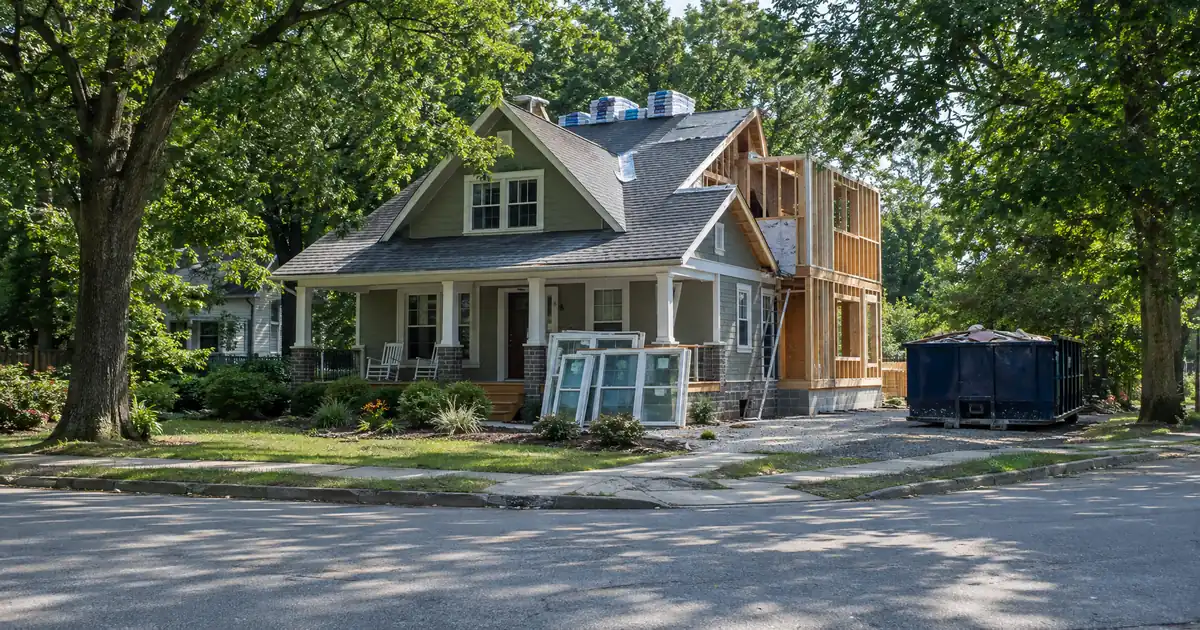
Hard money wins when the property cannot be rented as it stands. A vacant house with a failed kitchen, no working systems, or a stripped interior does not fit a DSCR loan, which expects the property to be rentable at closing. Hard money is built for that gap.
It also fits when you need acquisition and rehab money in one structure. The purchase and up to 100% of the rehab budget sit in one loan, with a built-in exit at the end of the term. Terms run 6 to 18 months, interest-only, with no prepayment penalty. There are no multi-year options on the current program.
It suits an investor with a reliable local team too. If you already have a general contractor you trust, a project manager, and someone who will visit weekly, the draw process is manageable. Credit requirements are workable as well. The program minimum is a 620 score, with additional conditions below 660. First-time investors can qualify, but at the lower leverage tiers.
Finally, it fits investors who understand the working-capital requirement. If reimbursement follows inspection, you need cash for each phase. A rehab that stalls because you ran out of float costs more than one with a slightly slower lender.
The hard money collateral is non-owner-occupied residential property of one to four units. Ground-up construction goes to ten units. Loan amounts run up to $5,000,000, larger by exception. Again, all of this varies by lender, property, and experience.
When a DSCR Loan Is the Better Fit
A DSCR loan wins when the property already works as a rental. It qualifies primarily on property-level rental income covering the payment, subject to lender guidelines. There are no draws, no inspections of work in progress, and no construction budget to police from afar.
That matters a great deal if you are out of state. Fewer moving parts means fewer places for things to go wrong.
DSCR leverage is also relatively generous. Most files land at 75%-80% LTV on a purchase, with select high-leverage programs reaching 85% LTV at roughly a 700+ score. Loan sizes run up to $3,000,000 on standard programs (smaller balances available through select lenders). Most programs want around a 660 score, though a 620 floor exists in parts of the network.
Coverage is where the rent-to-payment test lives. A 1.00 ratio is where many select programs start, while a separate select-lender path takes coverage below 1.00 with leverage and terms adjusted. Stronger ratios generally open better leverage and terms.
Reserves commonly run around 6 months of PITIA. Conservative rate-and-term files at modest leverage under $1,500,000 can see reserves waived, and larger loans typically step up to about 9 months. These vary by lender, leverage, loan size, and transaction type.
One caution. Clearing a 1.00 ratio is not the same as positive cash flow. DSCR compares rent to PITIA only. Repairs, vacancy, management, utilities, and capital expenses sit outside the calculation.
Other points to know:
- On a vacant or newly rehabbed property with no lease, the appraiser’s opinion of market rent carries the file.
- A short-term rental has its own rules. Purchase leverage tops out at 75%, with about 12 months of hosting history and a 640+ score expected. Short-term rental rules can vary by city, county, HOA, and property type, so investors should confirm local rules before relying on projected rental income.
- DSCR is not offered on manufactured homes, log homes, or barndominiums.
The Out-of-State Problem
Distance changes the draw process from a convenience into a control. A remote investor cannot see progress, so the draw inspection doubles as your own verification. A lender who orders a third-party inspection or reviews dated photos is doing some of your oversight for you.
Do not outsource all of it. Pay a local, reliable person to visit the project and send photos and video before you approve a contractor’s draw request. The most expensive mistake on a remote rehab is paying for work that is not finished. Lien waivers, matched to the budget line items, are your paper trail.
When you compare lenders, test the draw process rather than the pitch. Ask these questions:
- How does the lender order and complete inspections, and who schedules them?
- Is there a draw portal or a written turnaround standard?
- Does the lender reimburse completed work or advance funds?
- Are there per-draw, re-inspection, or minimum draw-size charges?
- What happens if a draw is late, and who bears the extra carrying time?
Lendmire has a deeper look at this in its piece How an Out-of-State Investor Vets Hard Money for a DSCR Exit. Slow draws are not only an annoyance. A delayed draw delays the contractor, which delays the finished property and extends your holding period.
Verdict: Match the Loan to the Property
Skip the false choice. If the property is not rentable, hard money is the tool, and the question becomes which lender’s draw process you trust. If the property already rents, or will be rentable on day one, a DSCR loan removes the draw cycle entirely.
For heavy rehabs, many investors refinance out of hard money into long-term DSCR financing once the property is stabilized. Lendmire brokers that path. Cash-out refinances on DSCR generally want about 6 months of seasoning, which is the waiting period between buying or refinancing and the next transaction.
Use this short rule:
- A small cosmetic project with a trusted local contractor favors whichever structure keeps your total carrying time shortest.
- A heavy rehab on a vacant property favors hard money, with local oversight.
- A rentable property you want to hold for years favors DSCR.
- A remote owner with an unproven contractor should favor fewer moving parts.
The complete picture of how these programs fit together is in Lendmire’s complete DSCR loans guide.
Frequently Asked Questions
Is hard money cheaper than a DSCR loan?
Pricing differs by lender, property, and borrower, so a headline comparison misleads. Hard money is short-term financing with its own fees and draw costs, and a DSCR loan is longer-term financing for a property that already rents. Compare total cost over your actual hold, using the calculator as an illustrative estimate.
Does a hard money loan fund the whole rehab at closing?
No. The rehab portion is held back and released in draws as completed work passes inspection. The program allows up to 100% of the rehab budget to fund this way, which is a rehab-budget figure and not a purchase LTV. Purchase leverage is expressed as a percentage of project cost, capped at 75% of after-repair value.
Can I use a DSCR loan on a property that needs major repairs?
Generally not. A DSCR loan expects the property to be rentable at closing, and it does not fund construction draws. A property that needs a gut rehab usually starts with hard money and moves to DSCR financing after stabilization.
What do I need to qualify for hard money if I live out of state?
Underwriting is asset-based, so lenders look at the property, your plan, and your exit. Documents commonly include the purchase contract, a scope of work with line-item costs, and value comparables. Credit starts at a 620 minimum with extra conditions below 660, and first-time investors qualify at lower leverage tiers.
What coverage ratio does a DSCR loan need?
A 1.00 ratio is where many select programs start. Programs below 1.00 are available through select lenders in the network, with leverage and terms adjusted. Eligibility depends on credit, reserves, property review, and lender guidelines.
Next Step
If you are buying, rehabbing or refinancing an investment property on a short timeline and want to see how the numbers work, Lendmire can help you compare hard money options based on the project, the exit plan, leverage, and your goals. Lendmire is a broker that arranges financing through select lenders in its wholesale network, spanning 41 markets, including Washington, D.C.
About Lendmire
Lendmire is a non-QM mortgage brokerage (NMLS# 2371349) arranging DSCR investor loans in 41 markets, including Washington, D.C., through wholesale and investor-lending channels. DSCR loans are evaluated by the lender on rental income rather than personal income, subject to lender guidelines, which suits LLC-owned portfolios, self-employed investors, and operators scaling beyond conventional loan caps. Recognized as a Scotsman Guide Top Mortgage Workplace in 2025 and 2026.
Get Started
Ready to find the right loan for you?
In about 30 seconds you can review financing options available for your investment property. No commitment required.
Informational only. Not a Loan Estimate, approval, or commitment to lend. Program availability and eligibility are subject to lender guidelines, credit approval, property review, and underwriting.
References
1. Yieldstack – Fix and Flip Loan Draw Schedule
2. BuildSafe Escrow – Construction Draw Verification
This article is part of Lendmire’s hard money loan program — full qualification details, guidelines, and scenarios live on the program page.
Related reading: How Much Cash a First-Time Flipper Needs Between Hard Money Draws · How to Document Gap Money in a Hard Money to DSCR Takeout · DSCR Takeout Requirements for a BRRRR Exit From Hard Money
Brandon Miller
Founder & CEO, Mortgage Loan Originator, Lendmire LLC
- Mortgage Loan Originator · NMLS# 1129696 · Verify on NMLS Consumer Access
- North Carolina Real Estate Broker · License# 343312 · Verify on NCREC
- North Carolina Insurance Producer · License# 19053198 · Property, Casualty, Life, Health · Verify on NAIC SBS
- Lendmire LLC · Firm NMLS# 2371349 · Verify firm licensure
Disclosure information. Lendmire is a state-licensed mortgage brokerage under NMLS# 2371349. Lendmire is not a depository institution, direct lender, or financial advisor — all loans referenced are placed through wholesale lender partners and are subject to each lender's underwriting standards. This article is provided for general informational purposes and is not a commitment to lend, nor does it constitute financial, legal, or tax advice. Loan programs, terms, rates, and qualification standards change without notice and depend on borrower profile, property type, and the state in which the subject property is located. Equal Housing Opportunity provider. NMLS Consumer Access: nmlsconsumeraccess.org.