
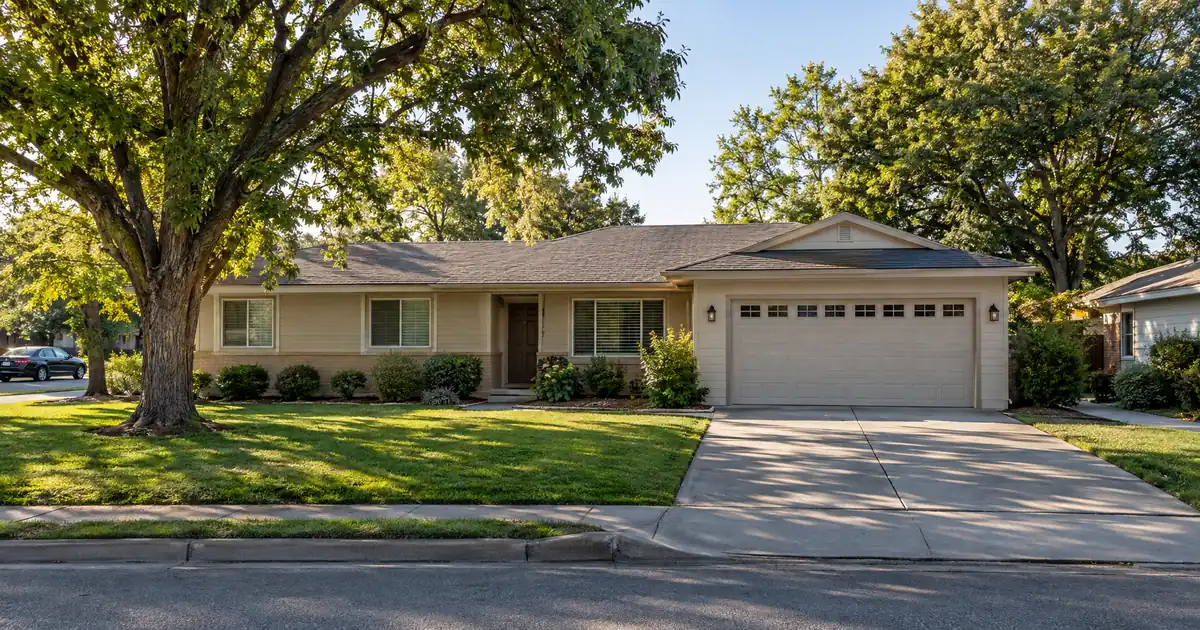
The Quick Read: It depends on which property the equity sits in. On the home you live in, a bank statement cash-out is often the right tool when write-offs make your traditional personal-income documentation understate what your business actually deposits, because the loan is reviewed on documented income under the applicable program, subject to lender guidelines. On a rental you own, a DSCR cash-out usually fits better, since the rent carries the loan rather than your personal income.
- Owner-occupied cash-out (primary residence or second home) tops out around 80% LTV on select lenders in the wholesale network, not the 90% that applies to a primary-residence purchase or rate-term refinance.
- Investment-property cash-out tops out around 75% LTV.
- Income comes from 12 months of business or personal bank statements, averaged, with a lender expense factor applied.
- Two tests cap the cash: the income test and the equity test. Whichever binds first sets your number.
- Skip it if your deposits are falling, your existing first mortgage is cheap, or the equity sits in a rental. These specifics are subject to lender guidelines and a full review of property, leverage, and credit.
What a Bank Statement Cash-Out Actually Is
A bank statement cash-out is an ordinary cash-out refinance with a different way of proving income. You replace your current first mortgage with a larger one and take the difference in cash. The only thing that changes is the paperwork: instead of two years of traditional personal-income documentation, the lender reads your deposits.
That matters because traditional personal-income documentation reports net income after write-offs. A self-employed owner who deducts vehicles, equipment, home-office costs and depreciation can look thin on paper while moving healthy cash through the business account. Bank statement programs exist for exactly that gap. Across the wholesale network, loan sizes run roughly $125,000 to $3,500,000, and reserves commonly sit around six months of the housing payment.
It is not a no-paperwork loan. Lenders still have to confirm you can repay. Bank statements are an acceptable way to verify income, provided the records are reliable and third-party, according to the CFPB’s ability-to-repay compliance guide. Credit, equity, an appraisal and your other debts all still get underwritten.
How Lenders Read Your Deposits
Lenders turn twelve months of statements into one monthly qualifying income figure. Most programs we place files with follow the same sequence:
1. Pick the account type. Business statements, personal statements, or both, depending on how money actually flows.
2. Screen the deposits. Transfers between your own accounts, loan proceeds, refunds and unexplained credits come out.
3. Average what remains across the twelve-month window.
4. Apply the expense treatment. On business statements, the lender counts only a portion of deposits as income. On owner-occupied cash-out, the network works with a fixed expense ratio, and a lower ratio of 75% applies when an accountant prepares it. Personal-account programs often count eligible deposits more fully.
5. Compare to your debts, including the new mortgage payment.
| Deposit type | Usually counts | Usually does not |
|---|---|---|
| Customer payments | Yes | |
| Transfers between your accounts | Excluded | |
| Loan proceeds, refunds | Excluded | |
| Large one-off deposits | Only if sourced | If unexplained |
| Pass-through payments (subcontractors) | Sometimes, at a higher expense treatment | Often removed |
Expense factors vary by lender, so treat any single percentage you read online as an example, not a rule. A trade-press overview in Scotsman Guide uses 50% for illustration and describes the same split: statement-based qualification for borrowers without W-2s, versus rental-cash-flow qualification for investment properties.
Choose It If, Skip It If
The cleanest test is purpose and property. Here is how the decision tends to break:
| Your situation | Leans bank statement cash-out | Leans an alternative |
|---|---|---|
| Equity location | Primary residence or second home | A rental property |
| Traditional income documentation | Show far less than your deposits | Already show strong income |
| Deposits | Steady or rising | Falling or erratic |
| Existing first mortgage | Pricing is not attractive to keep | Very favorable; keep it |
| Cash need | One lump sum | Staged draws over time |
| Business history | Established, documented | Very young, thin history |
Choose it when your returns understate your cash flow, your income trend is stable, and you want one lump sum from the equity in a home you occupy. Typical uses are paying down higher-cost business debt, funding a rental down payment, or consolidating obligations.
Skip it when the first mortgage you hold is cheap enough that resetting the whole balance costs more than the cash is worth. A cash-out puts new pricing on the entire balance, not just the new money. That is the single most overlooked cost in these decisions.
The Two Tests That Cap Your Cash
Every cash-out faces two ceilings at once. The income test asks whether your documented income supports the larger loan alongside your other debts. The equity test asks how much the appraised value supports at the program’s leverage limit.
Picture a self-employed contractor with a primary residence worth $700,000. At the owner-occupied cash-out ceiling of roughly 80% LTV, the equity test would allow a total loan up to that percentage of the value, less the existing payoff. But if the contractor’s averaged deposits, after expense treatment, support only a smaller loan, income binds first and the cash is smaller than equity alone suggests. The reverse happens for a high earner with a recent purchase and little equity. Terms depend on the lender’s guidelines, the property type, the leverage, and a full review of the credit profile.
Size the draw to the need plus a buffer, not to the maximum. Borrowing the full ceiling raises the payment, tightens your debt load, and leaves less room if a slow quarter shows up in next year’s deposits. Stress-test the new payment against your weakest recent month of deposits, not your best.
When the Property Is a Rental, the Answer Changes
For a rental, the question is no longer how much you earn but whether the property covers its own debt. A DSCR cash-out qualifies primarily on property-level rental income covering the payment, subject to lender guidelines, and investment-property cash-out tops out around 75% LTV on select lenders in the network. Lendmire’s DSCR loan vs bank statement loan comparison walks through the documentation difference in detail.
The disclosure regime changes too. An owner-occupied cash-out is a consumer mortgage. A non-owner-occupied rental, including a short-term rental, is business-purpose, and federal rules deem credit to acquire, improve or maintain non-owner-occupied rental property to be business-purpose, with a 14-day owner-occupancy limit, per Regulation Z’s exempt-transactions provision. The label alone does not decide it. Purpose and facts do, which is why the property’s occupancy has to be stated honestly on the file.
Short-term rental rules can vary by city, county, HOA, and property type, so investors should confirm local rules before relying on projected rental income.
Many self-employed investors hold both kinds of property and use each product on a different asset. The Lendmire complete DSCR loans guide covers how the investor side works.
Choosing Between Cash-Out, a HELOC and a Second Mortgage
A cash-out is one of three ways to reach the same equity. The right one depends on whether you want to keep your first mortgage and whether you need cash once or in stages.
| Option | Structure | What to scrutinize |
|---|---|---|
| Bank statement cash-out | New first mortgage replaces the old | Pricing on the whole balance |
| Bank statement HELOC | Credit line behind the first mortgage | Payment variability, draw terms |
| Closed-end second mortgage | Lump sum behind the first mortgage | Combined leverage, second-lien terms |
| DSCR cash-out (rentals) | Property rent drives lender review | Coverage ratio, 75% investment ceiling |
If your current first mortgage is one you want to keep, a second lien or line may beat a cash-out. If you need a single large sum and the first mortgage is not worth protecting, the cash-out is cleaner: one loan, one payment.
Who This Is Not For
A bank statement cash-out is the wrong tool in a few common cases.
- Falling income. Lenders average twelve months. If recent months run well below the average, expect the lender to weigh the decline, and size the loan to the weaker number.
- Transfer-heavy accounts. If most deposits move between your own accounts or pass straight through to subcontractors, the countable income shrinks fast.
- Needs bigger than the equity allows. The 80% owner-occupied ceiling is a hard limit regardless of income.
- A cheap existing first mortgage. Resetting it can cost more than the cash is worth.
- Equity sitting in a rental. Use the property’s own income through a DSCR structure instead.
Qualifying from liquid assets is another route for some borrowers. Asset-depletion programs run up to about 80% LTV on a primary residence, but that figure applies to purchase and rate-term, not cash-out. The exact numbers vary by lender and program and follow a full review of property, leverage, and credit.
Prepare Before You Apply
The strongest files arrive organized. Gather twelve months of statements for every account you plan to count, a business license and an accountant or tax-preparer letter, and written explanations with source documents for any large deposit. If a lower expense ratio is available with an accountant-prepared figure, ask the accountant early. Keep business and personal funds separate going forward; commingled accounts invite exclusions.
Tax treatment can depend on how the funds are used and how the property is held; investors should keep clear records and speak with a qualified tax professional before relying on any deduction.
Key Terms Defined
Non-QM loan: A mortgage that falls outside the standard qualified-mortgage box, with the lender still required to confirm you can repay.
Expense factor: The share of business deposits a lender subtracts as operating costs before counting the rest as income.
LTV (loan-to-value): The loan amount divided by the property’s appraised value.
Cash-out refinance: A new, larger first mortgage that pays off the old one and delivers the difference in cash.
DSCR: Debt service coverage ratio, the property’s rent measured against its monthly debt obligation.
Frequently Asked Questions
Can a bank statement cash-out be used on a second home?
Yes, on the same owner-occupied cash-out terms as a primary residence, up to roughly 80% LTV through select lenders. Eligibility still depends on credit, reserves, the appraisal and the lender’s guidelines. Final terms depend on the lender’s guidelines, the property type, and the borrower’s complete credit picture.
Do I need two years of statements?
Select programs in the network work from twelve months of business or personal statements. Some lenders ask for longer windows, so the window you pick should show your income at its most stable.
Does a bank statement loan mean no verification?
No. It is reviewed on documented income under the applicable program, subject to lender guidelines. Deposits are reviewed, non-income credits are removed, and credit, equity and debts are all underwritten.
Why is cash-out leverage lower than purchase leverage?
Lenders price cash-out as higher risk, so owner-occupied cash-out stops near 80% LTV while a primary-residence purchase or rate-term refinance can reach 90% on stronger files. Investment-property cash-out tops out around 75%.
Is a rental cash-out better as a DSCR loan?
Usually, yes. The property’s rent drives lender review instead of your deposits, and because the loan is business-purpose it avoids the consumer-mortgage disclosure regime. The exemption depends on the loan’s actual purpose, so how you use the proceeds matters.
Lendmire is a mortgage broker that arranges financing through select lenders in its wholesale network. This is not a commitment to lend. Reach the team at 828-256-2183 or request a quote.
For the mechanics of pulling equity out of a rental property, see Lendmire’s guide to cash-out refinance on an investment property.
For current guidelines and terms, see Lendmire’s bank statement loan programs page.
About Lendmire
Lendmire is a non-QM mortgage brokerage (NMLS# 2371349) arranging DSCR investor loans in 41 markets, including Washington, D.C. DSCR eligibility is generally reviewed around property-level rental income rather than personal income, subject to lender and program guidelines, a fit for self-employed investors and LLC-owned portfolios. Lendmire was recognized as a Scotsman Guide Top Mortgage Workplace in 2025 and 2026.
Get Started
Ready to find the right loan for you?
In about 30 seconds you can review financing options available for your home or investment property. No commitment required.
Informational only. Not a Loan Estimate, approval, or commitment to lend. Program availability and eligibility are subject to lender guidelines, credit approval, property review, and underwriting.
References
1. Scotsman Guide, “Rev Up the Engine for Non-QM Lending”
2. CFPB Regulation Z, Section 1026.3 Exempt Transactions
This article is part of Lendmire’s bank statement loan program — full qualification details, guidelines, and scenarios live on the program page.
Related reading: Can a Self-Employed Homeowner Get a HELOC on Bank Statements? · Can a Self-Employed Owner Use a Bank Statement HELOC for a Franchise? · Conventional vs Bank Statement Cash-Out Refinance for the Self-Employed
Brandon Miller
Founder & CEO, Mortgage Loan Originator, Lendmire LLC
- Mortgage Loan Originator · NMLS# 1129696 · Verify on NMLS Consumer Access
- North Carolina Real Estate Broker · License# 343312 · Verify on NCREC
- North Carolina Insurance Producer · License# 19053198 · Property, Casualty, Life, Health · Verify on NAIC SBS
- Lendmire LLC · Firm NMLS# 2371349 · Verify firm licensure
Compliance and disclosures. Lendmire (NMLS# 2371349) is a licensed mortgage broker and is not a direct lender, depository institution, financial advisor, or tax professional. Content in this article is general market analysis and educational information — not financial, legal, or tax advice for any specific situation. Lendmire does not guarantee loan approval; every transaction is subject to underwriting by the funding lender. Mortgage pricing and loan program guidelines are subject to change at any time without notice and vary by borrower characteristics, property type, and state regulations. Lendmire complies with Equal Housing Opportunity. Licensure verification: NMLS Consumer Access.