
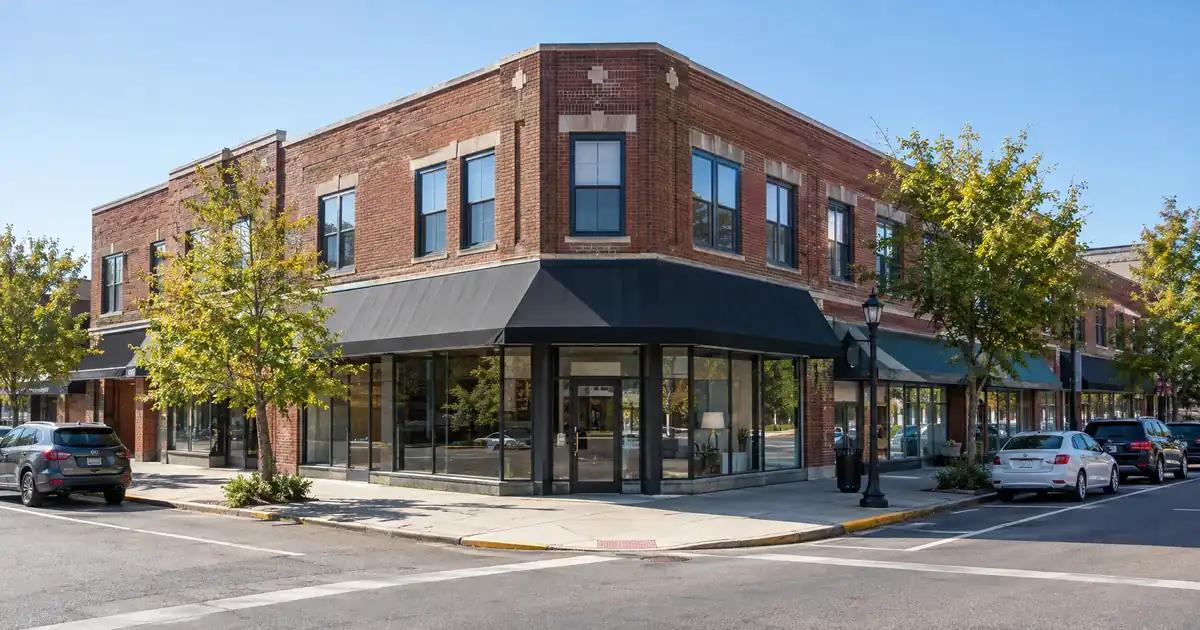
The Quick Read: A bank statement HELOC on a condo in a building with ground-floor retail or office space passes two separate reviews, one on your deposits and one on the building, and strong income never rescues a project the lender will not accept. The building review is lender-specific. No published rule gives a single commercial-space cap for these lines. Four things matter most:
- Your unit must be a residential condo. A commercial, mixed-use, or agricultural-zoned property is not eligible collateral, but a residential unit in a building with a commercial floor is a project question.
- On an investment property, the line tops out at 70% CLTV and $500,000, with a 700 minimum credit score, subject to lender guidelines.
- Title must sit with you personally or in a revocable living trust. An LLC cannot hold title on these lines.
- Get the building’s commercial share from the HOA before you order anything, because a project-level decline wastes time even when your file is strong.
What a “Commercial Floor” Means to a Lender
A commercial floor is space in your condo building used for retail, a restaurant, offices, or other non-residential business. The retail units are usually separate commercial units owned by someone other than the HOA. Lenders care because that space changes how the building behaves. Commercial tenants come and go, share walls, plumbing, and exhaust with residents, and can affect insurance and the association’s budget.
How large a line the equity supports.
An equity line is sized by combined loan-to-value, occupancy, and credit — not by rental coverage. Switch the occupancy or the credit band and the ceiling moves with it.
Investment-property lines require a 700 minimum credit score; second-home lines start at a 640 minimum and primary-residence lines at 600, and the combined-LTV ceiling steps down as the credit band drops on primary-residence and second-home lines and holds on investment-property lines; the line cap steps down on primary-residence lines and holds at every tier on investment-property and second-home lines.
A debt-to-income ratio above 45% requires 680+ credit. Profiles under 640 are limited to single-family homes. At least 75% of the approved line is drawn at closing. Ceilings, floors, and caps update from Lendmire’s centralized guideline source.
Line estimate
Illustrative estimate only — not a quote, Loan Estimate, approval, or commitment to lend. The rate is an editable assumption; equity-line pricing is variable through both the draw and repayment periods and never converts to fixed. Occupancy and credit drive the ceiling together: an investment property tops out at 70% combined LTV (minimum credit 700, line cap $500,000); a second home tops out at 90% combined LTV (minimum credit 640, line cap $500,000), with the ceiling stepping down as the credit band drops (the cap holds at every tier); a primary residence tops out at 90% combined LTV (minimum credit 600), and its $750,000 maximum line is available only at 75% combined LTV or below with a 700-or-better credit profile (720 on the longer-runway program) and a full appraisal. Lines above $500,000 require a full appraisal. Credit, debt-to-income, property type, and full underwriting review all affect the final line.
Here is the distinction that trips people up. You are not asking to finance commercial property. You own a residential unit that happens to sit above or beside commercial space. The loan is secured by your unit, but the lender reviews the whole project because the building’s health affects the value of that unit.
For context only, agency first-mortgage rules draw a hard line. The Fannie Mae Selling Guide on ineligible projects caps total nonresidential space at 35% of the project. It also bars a project where the HOA itself runs a non-incidental business, such as a restaurant, spa, or health club. Those are agency rules for agency loans. Bank statement HELOC lenders write their own project standards, and that 35% number is not a universal rule for them.
How the Review Splits in Two
Underwriting a bank statement line is two tests running side by side. Neither one can carry the other.
Test one is you. The lender reads 12 to 24 months of bank deposits, applies an expense factor to business deposits, and qualifies the borrower on that documented income under the applicable program, subject to lender guidelines. “Bank statement” describes the paperwork, not the level of scrutiny. Lenders still verify credit and assets, order a valuation, and set leverage and reserve rules.
Test two is the building. The lender asks the HOA for its budget, reserve balance, delinquency rate, insurance declarations, litigation status, and the percentage of the project that is commercial. Your income plays no part here. A self-employed owner with excellent deposits can still be turned down because the building fails project review.
This is the part many borrowers miss. Strong income does not override a weak project, and a clean project does not fix thin income. You need both to pass.
What Counts as Commercial Space
Lenders do not all count the same way. The table shows the usual treatment and where the grey areas sit.
| Space type | Often counted as commercial? | Note |
|---|---|---|
| Ground-floor retail | Yes | The classic trigger |
| Restaurant or café | Yes | May draw extra scrutiny |
| Office suites | Yes | Counts like retail |
| Residential rental units | No | Investor share is a separate test |
| Commercially owned parking | Varies | Agency rules have excluded it |
| Lobbies and hallways | Varies | Lender-specific |
The last two rows are where the same building can look very different. Some lenders fold common areas into the commercial share, and others leave them out. The agency’s own history shows how much the counting method matters. Fannie Mae’s update raising its commercial limit, hosted by mortgage insurer Enact, also exempted commercially owned parking from the calculation.
A Worked Example With Round Numbers
Picture a six-story building with 100,000 square feet in total. That total includes a 6,000-square-foot lobby and corridors that serve both the shops and the residents. The ground floor holds a pharmacy and two restaurants totaling 14,000 square feet, plus a commercially owned garage of 4,000 square feet. The floors above are all residential condos. These are illustrative figures, not program terms.
- Counted by the simplest method, commercial space is the 14,000 of shops plus the 4,000 garage, so 18,000 divided by 100,000, or 18%.
- A lender that also counts the shared lobby and corridors as commercial reaches 24,000 divided by 100,000, or 24%.
- A third lender excludes the shared lobby and the commercially owned garage from both sides of the fraction. Its figure is 14,000 divided by 90,000 of counted space, or about 16%.
Same building, three answers. That is why you cannot rely on a number you read online. The question that matters is how the lender who holds your file counts, and what limit it applies to that count.
Where the Commercial Floor Sits Among Other Project Tests
Commercial space is rarely the only question. Reviewers look at a stack of project risks, and several weak spots together can sink a building that would survive any one of them alone. The agency guide’s general project standards frame the review around financial stability, marketability, litigation, and related risks. Lenders outside the agency world borrow that language even when their cutoffs differ.
| Project issue | Why it matters | Hard stop or pricing factor? |
|---|---|---|
| Commercial share | Changes risk and character of the building | Depends on lender |
| HOA-run business | HOA income tied to one operation | Often a hard stop |
| Investor concentration | Too many renters can strain the HOA | Varies |
| Delinquent dues | Signals budget stress | Varies |
| Low reserves | Raises special-assessment risk | Varies |
| Pending litigation | Can freeze values and insurance | Often a hard stop |
| Hotel-style use | Condotel operation | Not eligible on these lines |
The last row deserves emphasis. Condotels are not eligible for these lines, and a building that operates like a hotel will fail regardless of the commercial percentage.
Which Condos Are Eligible for This Kind of Line
Across the network, condominiums are eligible property types, including non-warrantable condos. Non-warrantable means the project fails agency standards, so the lender writes the loan on its own terms. That matters here, because a building with a commercial floor is often non-warrantable by agency rules and may still be reviewed by a bank statement HELOC lender. Reviewed is not the same as approved, and the outcome turns on the lender’s project guidelines.
What is not eligible: manufactured homes, co-ops, condotels, log homes, and commercial, mixed-use, or agricultural-zoned collateral. If your unit itself is zoned commercial, or you own a retail space rather than a residence, the line is not available.
What the Line Looks Like on an Investment Condo
Many readers asking about commercial floors own a condo they rent out. Here is how the line works for an investment property across the network, subject to lender guidelines and full file review.
- Leverage: a ceiling of 70% CLTV. CLTV is combined loan-to-value, meaning your first mortgage balance plus the new line, divided by the property value. The full first mortgage balance counts even though the first loan stays untouched.
- Credit: a 700 minimum score.
- Line size: up to $500,000.
- Structure: a 5-year interest-only draw period followed by a 25-year fully amortizing repayment. A HELOC is an open-end line secured by home equity, with a draw period and then a repayment period. Payments often rise significantly once repayment begins.
- Position: the line can sit in first or second lien position.
- Valuation: lines of $500,000 or less ordinarily run on an automated valuation instead of a full appraisal. Whether an automated valuation is acceptable on a mixed-use building is a lender-specific call, and a borrower can always request a full appraisal.
- Debt-to-income: a 50% maximum, qualified on the interest-only payment calculated on the maximum draw.
On primary residences and second homes, the ceilings run higher. A top-tier 90% CLTV exists only at a 720-or-better credit profile. An investment line never reaches that tier.
Two other structural rules matter. First, a borrower is limited to three lines in total. Second, a borrower who owns more than 15 financed properties is not eligible. These HELOC programs are offered in Lendmire’s 16 full-service states, which is narrower than its 41-market DSCR footprint.
Title Is the First Filter
Title decides whether you can apply at all. The line must be held by you as an individual or by an inter vivos revocable living trust. An LLC, corporation, partnership, or irrevocable, blind, or land trust cannot hold title.
This is the sharpest difference from a DSCR loan. If your condo is already deeded to an LLC, you need a vesting change before a HELOC is possible. The other route is to skip the HELOC and pull equity through a DSCR cash-out refinance, which handles entity ownership more readily, subject to program terms.
How to Find Your Building’s Commercial Share
You can get the number before you apply. Work through this in order.
1. Request the condo questionnaire from the HOA or management company. It is the document lenders use, and it usually shows the commercial square footage and the project’s financial health.
2. Check the master deed or declaration. It describes which units are residential and which are commercial, and it often lists square footage by unit.
3. Ask for the budget, the reserve balance, and the delinquency rate. These are the other numbers a reviewer wants.
4. Ask which counting method your lender uses. Common areas and parking are the swing items.
5. If the HOA is slow, escalate in writing. Ask the management company directly, and ask the lender which alternative documents it will accept. Start this before you order a valuation, not after.
This is a good moment to check how location plays in. For a related look at how condo owners in two large states fare, see Lendmire’s piece Can a Condo Owner in Texas or Florida Get a Bank Statement HELOC?.
When the Building Fails the Review
A decline on the building does not end your options, but it does change them.
First, a different lender may count the space differently or set a different limit. A broker who sees many lenders’ guidelines can match the building to a lender whose project rules fit. That is the advantage of a wholesale network over a single bank.
Second, consider whether the equity is better reached another way. A DSCR cash-out refinance qualifies primarily on property-level rental income covering the payment, subject to lender guidelines. Across most of the network it tops out around 75% LTV, with about 6 months of seasoning as the common expectation. Credit floors vary: 620 exists in parts of the network, most programs want around 660, and 700 and up opens the strongest tiers. DSCR loans are designed for non-owner-occupied investment properties, so the building review still applies, but the borrower side shifts from deposits to rent. Coverage of 1.00 is where many select programs start, and a separate select-lender path takes coverage below 1.00 with leverage and terms adjusted.
Third, think about resale. A non-warrantable status can narrow the pool of future buyers. That is a cost of the building, not of any one loan.
Why You See Different Numbers Online
If you searched this topic, you probably saw 25%, 35%, 50%, and even 60% quoted as the commercial limit. They are not contradicting each other as much as they look.
- The 35% figure is the agency first-mortgage project limit.
- An older, lower figure still circulates on pages that were never updated after the agency raised its limit.
- Higher figures come from non-agency lenders writing their own non-warrantable rules, and they describe those lenders, not every lender.
- Counting methods differ, as the worked example showed.
- Established and newly built projects may be treated differently.
None of those figures is a published limit for bank statement HELOCs. Treat any single number as a starting point for a question to your lender, not an answer.
Related Eligibility Gotchas
A few other items can derail a condo file after the commercial question is settled.
- Status changes after approval. A building can drift out of eligibility if litigation starts, reserves fall, or delinquencies climb. Your approval is based on the project as it looks during review.
- Hotel-like features. Short-term rental programs, front-desk services, and shared-ownership use can look like a condotel to a reviewer.
- The boundary with commercial collateral. If you own the retail space, or your unit has a commercial use designation, you have left residential-condo territory.
- Location overlays. Some states carry extra rules, and a property listed for sale, or listed within the past 60 days, is ineligible in several of them. Short-term rental rules can vary by city, county, HOA, and property type, so confirm local rules before relying on projected rental income.
Tax treatment can depend on how the funds are used and how the property is held; investors should keep clear records and speak with a qualified tax professional before relying on any deduction.
Should You Even Apply? A Short Checklist
Run through this before you order anything.
- Is the unit a residential condo, with no commercial or mixed-use designation on the unit itself?
- Does title sit with you personally or in a revocable living trust?
- Is your credit at 700 or better for an investment line?
- Can you document 12 to 24 months of deposits?
- Do you have the HOA questionnaire and the commercial share?
- Is the building free of a condotel operation, active litigation, and an HOA-run business?
If you can answer yes to all six, the file is worth presenting. If any answer is no, fix that first, or look at a DSCR cash-out if the issue is title or occupancy. For the broader picture of how investor financing fits together, the complete DSCR loans guide walks through the programs.
An honest note on DSCR math: coverage compares rent to the full monthly obligation of principal, interest, taxes, insurance, and dues. Clearing 1.00 does not mean positive cash flow, because repairs, vacancy, management, and utilities sit outside the calculation.
Key Terms Defined
CLTV: Combined loan-to-value, meaning all loans against the property divided by its value.
Non-warrantable condo: A condo project that fails agency standards, so a lender must write the loan on its own terms.
Commercial floor: Non-residential space such as retail or offices in a building that also holds residential condos.
Condo questionnaire: The form the HOA completes for the lender, covering finances, litigation, and the commercial share.
Interest-only draw period: The early years of a HELOC when you pay only interest on what you have borrowed.
Revocable living trust: A trust you can change or cancel, which can hold title on these lines in place of you personally.
Expense factor: A percentage taken off business deposits to estimate the income you can actually use.
Frequently Asked Questions
Is there a set commercial-space limit for a bank statement HELOC?
No single published limit applies to these lines. Agency rules cap commercial space at 35% of the project, but bank statement HELOC lenders set their own project standards. The lender that holds your file decides, so ask for its limit and its counting method.
Can a condo with ground-floor retail still qualify?
It can be reviewed, and the result depends on the lender’s project guidelines. The unit you pledge must be residential. The building then has to pass the lender’s review of commercial share, reserves, delinquencies, litigation, and insurance.
Does my income matter if the building is the problem?
It does not fix a failed project review. Income and the building are tested separately, and both must pass. Strong deposits support your side of the file, but they do not change how the lender views the building.
Can my LLC take out this line?
No. Title must be held by you as an individual or by a revocable living trust. If your condo is deeded to an LLC, you would need a vesting change, or a DSCR cash-out refinance may fit better, subject to program terms.
What do I do if the HOA is slow to send the numbers?
Request the questionnaire in writing from the management company, and pull the master deed or declaration for square footage in the meantime. Ask your broker which alternative documents a lender will accept. Do this before ordering a valuation.
Next Step
If you are considering a home equity line and want to see how the numbers work, Lendmire can help you compare HELOC options based on the property, the equity available, credit profile, combined leverage, and your goals. Lendmire is a broker that arranges financing through select lenders in its wholesale network, and every figure here is subject to lender guidelines and full file review, not a commitment to lend.
About Lendmire
As a mortgage broker (NMLS# 2371349), Lendmire helps homeowners and real estate investors in its 16 full-service states open home equity lines of credit arranged through wholesale lenders. Lendmire is never the lender; line amounts, ceilings and terms are set by the lender under its guidelines. Scotsman Guide named Lendmire a Top Mortgage Workplace in both 2025 and 2026.
Get Started
Ready to find the right loan for you?
In about 30 seconds you can review financing options available for your home or investment property. No commitment required.
Informational only. Not a Loan Estimate, approval, or commitment to lend. Program availability and eligibility are subject to lender guidelines, credit approval, property review, and underwriting.
References
1. Fannie Mae Selling Guide: Ineligible Projects
2. Fannie Mae Selling Guide update, hosted by Enact
3. Fannie Mae Selling Guide: General Information on Project Standards
This article is part of Lendmire’s bank statement HELOC program — full qualification details, guidelines, and scenarios live on the program page.
Related reading: Can You Get a HELOC on a High-Rise Condo With a Commercial Floor? · HELOC Requirements for a High-Rise Condo With a Commercial Floor · Non-QM and Fintech Investment Property HELOCs on Rental Condos
Brandon Miller
Founder & CEO, Mortgage Loan Originator, Lendmire LLC
- Mortgage Loan Originator · NMLS# 1129696 · Verify on NMLS Consumer Access
- North Carolina Real Estate Broker · License# 343312 · Verify on NCREC
- North Carolina Insurance Producer · License# 19053198 · Property, Casualty, Life, Health · Verify on NAIC SBS
- Lendmire LLC · Firm NMLS# 2371349 · Verify firm licensure
Disclosures. The information presented in this article is general market commentary, not financial, legal, or tax advice. Lendmire is a mortgage brokerage (NMLS# 2371349) — not a direct lender or depository institution — and loan placement is subject to lender underwriting. Nothing in this content represents a commitment to lend. Loan terms, pricing, and program availability vary based on borrower qualifications, property characteristics, and state of subject property, and are subject to change at any time. Lendmire complies with Equal Housing Opportunity requirements. Consumer access: nmlsconsumeraccess.org.