
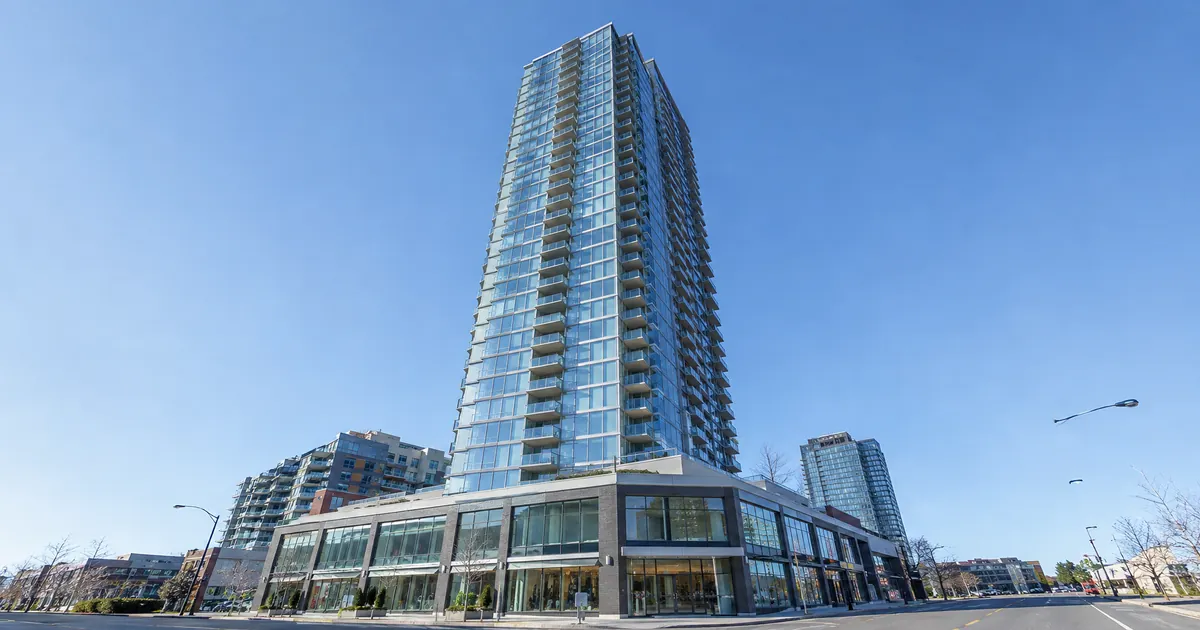
The Quick Read: A residential unit in a tall building with shops or offices on the lower floors can be eligible for a home equity line, and the lender reviews two things: you and the building. The commercial floor is a project question, not a unit question. Your equity, credit, and how you use the property set the line size.
- Occupancy sets the ceiling. On an investment property, the network ceiling is 70% combined loan-to-value (CLTV), with a 700 minimum score and a line capped at $500,000.
- Your unit must be residential. Condos, including non-warrantable ones, are eligible. Condotels and commercial or mixed-use zoning are not.
- Title matters. An individual or a revocable living trust can hold title. An LLC cannot.
- The commercial-space limit is the lender’s own. No national limit applies to home equity lines, so ask before you apply.
- Rent does not size the line. The line is underwritten on you, not on the property’s rental income.
What Does a Lender Actually Review on a High-Rise Condo?
A lender reviews your unit, your finances, and the building’s health. A commercial floor falls in the third group. It can change how the lender views insurance, building use, and the project’s residential character.
How large a line the equity supports.
An equity line is sized by combined loan-to-value, occupancy, and credit — not by rental coverage. Switch the occupancy or the credit band and the ceiling moves with it.
Investment-property lines require a 700 minimum credit score; second-home lines start at a 640 minimum and primary-residence lines at 600, and the combined-LTV ceiling steps down as the credit band drops on primary-residence and second-home lines and holds on investment-property lines; the line cap steps down on primary-residence lines and holds at every tier on investment-property and second-home lines.
A debt-to-income ratio above 45% requires 680+ credit. Profiles under 640 are limited to single-family homes. At least 75% of the approved line is drawn at closing. Ceilings, floors, and caps update from Lendmire’s centralized guideline source.
Line estimate
Illustrative estimate only — not a quote, Loan Estimate, approval, or commitment to lend. The rate is an editable assumption; equity-line pricing is variable through both the draw and repayment periods and never converts to fixed. Occupancy and credit drive the ceiling together: an investment property tops out at 70% combined LTV (minimum credit 700, line cap $500,000); a second home tops out at 90% combined LTV (minimum credit 640, line cap $500,000), with the ceiling stepping down as the credit band drops (the cap holds at every tier); a primary residence tops out at 90% combined LTV (minimum credit 600), and its $750,000 maximum line is available only at 75% combined LTV or below with a 700-or-better credit profile (720 on the longer-runway program) and a full appraisal. Lines above $500,000 require a full appraisal. Credit, debt-to-income, property type, and full underwriting review all affect the final line.
Think of it as two reviews. The first is yours: equity, credit, debt load, and occupancy. The second is the building’s: how many units are rented, how the association handles money, whether litigation is pending, and how much of the property isn’t residential.
A strong borrower cannot fix a building the lender won’t accept. A strong building cannot fix a borrower who lacks the equity or credit. The best files clear both reviews.
Height adds its own wrinkles. Tall buildings tend to have large association budgets, complex master insurance, and a commercial podium of retail or restaurants at street level. Each one adds a line to the lender’s checklist.
Unit Versus Building: The Distinction Most Owners Miss
Owning a residential unit above a commercial floor is not the same as owning a mixed-use property. The first is a condo with a project-level issue. The second is a property whose own zoning is commercial or mixed.
Across our wholesale network, a residential condo unit is eligible collateral, including non-warrantable projects. Non-warrantable means the building doesn’t meet standard agency project rules. Commercial, mixed-use, and agricultural zoning are not eligible. Condotels, co-ops, and manufactured homes are also not offered.
So the first thing to confirm is how your unit is zoned and titled. If the unit itself is commercial, or the building operates like a hotel, this line is the wrong tool. If the unit is residential and the commercial space sits on other floors, you are in project-review territory.
Investors who own whole mixed-use buildings face a different market. A BiggerPockets discussion on mixed-use properties notes that buyers of those properties can get pushed toward commercial loans. That is a whole-building situation, not a single condo unit.
What Are the Borrower Requirements by Occupancy?
The requirements depend on how the unit is used. Here is how the network’s figures break out, subject to lender guidelines and full file review.
| Factor | Primary residence | Second home | Investment property |
|---|---|---|---|
| Minimum credit | 600 | 640 | 700 |
| Top CLTV | 90% (720+, to $500,000) | 90% (720+, to $500,000) | 70% |
| Line size | Up to $750,000 | Up to $500,000 | Up to $500,000 |
The 90% ceiling exists only with a 720-or-better credit profile. Most tiers sit lower, and an investment line never goes above 70% CLTV. The investment tiers run at 720+ and 700+, each to $500,000 at 70% CLTV.
Market surveys paint a similar picture of tight investment-property lending. NerdWallet’s guide to HELOCs on investment property reports that lenders in the broader market often want a 720 score and cap loan-to-value near 80%. The network figure for an investment line is 70% CLTV, and that is the number that applies here.
Other requirements apply across occupancy types:
- Debt-to-income (DTI): The maximum is 50%, and 45% for credit profiles from 600 to 679. A ratio above 45% needs a 680 minimum. The lender reviews your file on the interest-only payment at the maximum draw.
- Credit report: It uses a single-bureau score keyed to the primary wage earner. The report can be no more than 90 days old at closing.
- Draw at closing: At least 75% of the line is drawn at closing.
- Investment structure: An investment line runs a 5-year interest-only draw followed by a 25-year repayment.
- Exposure: A borrower is limited to three lines and cannot own more than 15 financed properties.
- Availability: These lines are available in Lendmire’s 16 full-service states, which is narrower than the 41-market DSCR footprint.
A line above $500,000 is primary-residence only, caps at 75% CLTV, needs a full appraisal, and requires a credit profile of 700 or better (720 on the longer-runway program). Lendmire places these lines through two wholesale programs: a higher-leverage program and a longer-runway program. Where their terms differ, each figure applies only within its own program.
How Is the Building Reviewed?
The lender asks the association for documents and checks each factor below. The table shows what each one means and what you can request.
| Factor | What the lender checks | What to request |
|---|---|---|
| Owner mix | Share of rented units | Association questionnaire |
| Insurance | Master policy adequacy | Insurance certificates |
| Finances | Budget and reserves | Budget, reserve study |
| Litigation | Pending suits | Litigation disclosure |
| Assessments | Special assessments | Assessment notices |
| Commercial space | Share and type of use | Floor plans, use list |
| Concentration | One owner holding many units | Ownership data |
Lines at or below $500,000 ordinarily run an automated valuation with no traditional appraisal. A higher CLTV may need a secondary valuation, and you can request a full appraisal in any case. Every line above $500,000 requires one. The Fannie Mae learning center lists the standard condo appraisal form as Form 1073, which shows the project detail an appraiser collects.
Treat the association’s cooperation as part of the file. A board that is slow to complete the questionnaire slows the whole review.
How Does a Commercial Floor Change the File?
A commercial floor raises three questions. How much of the building is commercial? What kind of businesses are they? Does anything else stack on top? The answers decide whether the lender is comfortable with the project.
No published national limit covers commercial space in a home equity line. Each lender sets its own. Ask for that limit, and ask how the lender counts, before you spend time on an application.
For contrast only, here is how the first-mortgage world handles it. The Fannie Mae Selling Guide section on ineligible projects caps commercial or mixed-use space at 35% of a project or building, measured as non-residential square footage divided by total square footage. It counts rental apartments and hotels as commercial, lets commercial parking be excluded, and requires commercial uses to fit the project’s residential character.
That is a limit for loans sold to the agencies. It does not carry over automatically to a home equity line, and our network does not use it as a rule.
Here is an illustrative calculation, with made-up numbers. Suppose a tower has 400,000 total square feet, with 120,000 of it retail and restaurant space. The commercial share is 120,000 divided by 400,000, or 30%. Whether a lender treats that as acceptable depends on its own standard, how it counts common areas, and what the businesses are.
Floor count tells you little. A building with retail on two of ten floors can have a very different share than one with two retail floors in forty, depending on how big each floor is.
| Space type | Commonly counted as commercial? | Lender variability |
|---|---|---|
| Retail shops | Yes | Low |
| Restaurants and bars | Yes | Higher scrutiny |
| Offices | Yes | Low to moderate |
| Resident-only gym or lounge | Generally no | Moderate |
| Commercial parking | Often excluded | Varies |
Restaurants and bars usually draw more scrutiny than a quiet retail shop. Lower-floor businesses can raise extra insurance questions.
Other flags stack with a commercial floor, including hotel-style rental activity, litigation, special assessments, and one owner holding many units. A lender may accept one issue and decline another. Elevated commercial space alone may pass where a structural dispute would not.
Key Terms Defined
Warrantable condo: A building that meets standard agency project rules on owner mix, finances, litigation, insurance, and commercial space.
Non-warrantable condo: A building that falls outside those rules. It is eligible on our network, but the project review is more involved.
CLTV: Combined loan-to-value, which adds your existing mortgage and the new line together and divides by the property’s value.
Project review: The lender’s check of the building as a whole, separate from your personal finances.
Mixed-use: A property whose own zoning combines residential and commercial use. A residential unit inside a mixed-use building is a different thing.
Questions to Ask Before You Apply
Ask in this order, because each answer can end the search or narrow it.
1. Is my unit zoned residential, and is it held in my name or a revocable living trust?
2. What is your limit on commercial space, and do you count common areas and parking?
3. Do you accept non-warrantable condos?
4. How do you treat pending litigation or special assessments?
5. Do you require a full appraisal on this line size?
Then ask the association for the questionnaire, budget, reserve study, and master insurance certificate. Having them in hand before you apply avoids waiting on the board mid-file.
If you earn your income through self-employment, a different path may exist. A borrower may qualify on documented income under the applicable program, subject to lender guidelines. Lendmire’s guide to financing a high-rise condo with bank statements covers that route. Strong income does not change the building review, though.
Title Is the Sharpest Catch for Investors
Many investors hold rentals in an LLC. A HELOC on our network cannot be written to an LLC, corporation, partnership, or irrevocable, blind, or land trust. Title must sit with the individual borrower or a revocable living trust.
If your condo is already deeded to an LLC, you would need a vesting change before applying. Otherwise, a different product may fit better.
If the Line Doesn’t Fit: The DSCR Alternative
When a building fails review, title sits in an LLC, or you need more than a $500,000 investment line allows, a DSCR cash-out refinance may be the practical route. DSCR stands for debt service coverage ratio. These loans qualify primarily on property-level rental income covering the payment, subject to lender guidelines.
DSCR loans are designed for non-owner-occupied investment properties. Because they are business-purpose investor loans, they are reviewed differently from a standard owner-occupied mortgage.
Here is what the typical range looks like across our network:
- Cash-out leverage: Tops out around 75% LTV on most programs, with about 6 months of seasoning as the common expectation.
- Coverage: 1.00 is where many select programs start. A separate select-lender path takes coverage below 1.00, with leverage and terms adjusted.
- Credit: Most programs want around 660, and 700+ opens the strongest tiers. A 620 floor exists in parts of the network.
- Loan size: up to $3,000,000 on standard programs (smaller balances available through select lenders).
- Title: LLC vesting is possible, subject to lender program eligibility.
Clearing 1.00 does not mean positive cash flow. DSCR compares rent to the full payment only, so repairs, vacancy, management, and utilities sit outside the calculation. Keep in mind too that a cash-out refinance replaces your first mortgage, while a HELOC sits beside it.
Our complete DSCR loans guide walks through how the ratio works, what documents are needed, and how to choose between the two paths. Lendmire’s piece Bank Statement HELOC on a Condo in a High-Cost Closing State covers the closing-cost side of the same trade-off.
Tax treatment can depend on how the funds are used and how the property is held; investors should keep clear records and speak with a qualified tax professional before relying on any deduction.
Frequently Asked Questions
Can I get a HELOC on an investment condo in a high-rise?
Yes, if the unit is residential and the building clears the lender’s project review. On our network, an investment line caps at 70% CLTV with a 700 minimum score and a $500,000 maximum line. Lines on investment properties follow the 5-year draw and 25-year repayment structure only.
Does ground-floor retail disqualify my condo?
Not automatically. Commercial space is a threshold question, and the lender sets its own limit and counting method. Restaurants and bars draw more scrutiny than quiet retail, and other building issues can stack on top. Ask the lender for its limit before applying.
Can a non-warrantable condo get a home equity line?
Yes. Non-warrantable condominiums are eligible on our network, subject to lender guidelines and full file review. Condotels, co-ops, and commercial or mixed-use zoning are not eligible.
Does an LLC work for title?
No. The line must be held by the individual borrower or a revocable living trust. A property already deeded to an LLC would need a vesting change, or a DSCR cash-out refinance might fit better, subject to lender program eligibility.
Does strong rent help me get a bigger line?
Not directly. The line is sized on equity, CLTV, credit, and personal debt, not rental coverage. Rent matters when you move to a DSCR loan, where it is the core test.
If You Want to Run the Numbers
If you are considering a home equity line and want to see how the numbers work, Lendmire can help you compare HELOC options based on the property, the equity available, credit profile, combined leverage, and your goals. Lendmire is a mortgage broker arranging financing through select lenders in its wholesale network. Program terms change, and every file is underwritten individually.
About Lendmire
Lendmire (NMLS# 2371349) is a mortgage brokerage serving homeowners and real estate investors in its 16 full-service states. Home equity lines of credit are arranged through wholesale lending channels; Lendmire brokers the line and the lender underwrites each application under its occupancy-based guidelines. Scotsman Guide named Lendmire a Top Mortgage Workplace in both 2025 and 2026.
Get Started
Ready to find the right loan for you?
In about 30 seconds you can review financing options available for your home or investment property. No commitment required.
Informational only. Not a Loan Estimate, approval, or commitment to lend. Program availability and eligibility are subject to lender guidelines, credit approval, property review, and underwriting.
References
1. BiggerPockets, Mixed use properties
2. NerdWallet, HELOC on an investment property
3. Fannie Mae Learning Center, Appraisers & Property Underwriting
4. Fannie Mae Selling Guide B4-2.1-03 Ineligible Projects
This article is part of Lendmire’s home equity line of credit program — full qualification details, guidelines, and scenarios live on the program page.
Related reading: HELOC Tiers for a First-Time Equity Borrower on a Primary Home · How a HELOC Funds Four Years of Tuition for a Parent Borrower · How Much Home a First-Lien HELOC Down Payment Supports After DTI
Brandon Miller
Founder & CEO, Mortgage Loan Originator, Lendmire LLC
- Mortgage Loan Originator · NMLS# 1129696 · Verify on NMLS Consumer Access
- North Carolina Real Estate Broker · License# 343312 · Verify on NCREC
- North Carolina Insurance Producer · License# 19053198 · Property, Casualty, Life, Health · Verify on NAIC SBS
- Lendmire LLC · Firm NMLS# 2371349 · Verify firm licensure
Legal disclosures. Lendmire (NMLS# 2371349) is a state-licensed mortgage brokerage that arranges financing through wholesale lender relationships. Lendmire is not a direct lender, depository institution, or registered financial advisor. The discussion above is general informational content about real estate financing — it is not financial, legal, or tax advice, and readers should consult licensed professionals for guidance on their individual circumstances. Loan inquiries are subject to lender underwriting; this article does not represent a commitment to lend. Loan terms, rates, and qualification standards vary by borrower, property, and state, and are subject to change at any time. Equal Housing Opportunity. NMLS Consumer Access: nmlsconsumeraccess.org.