
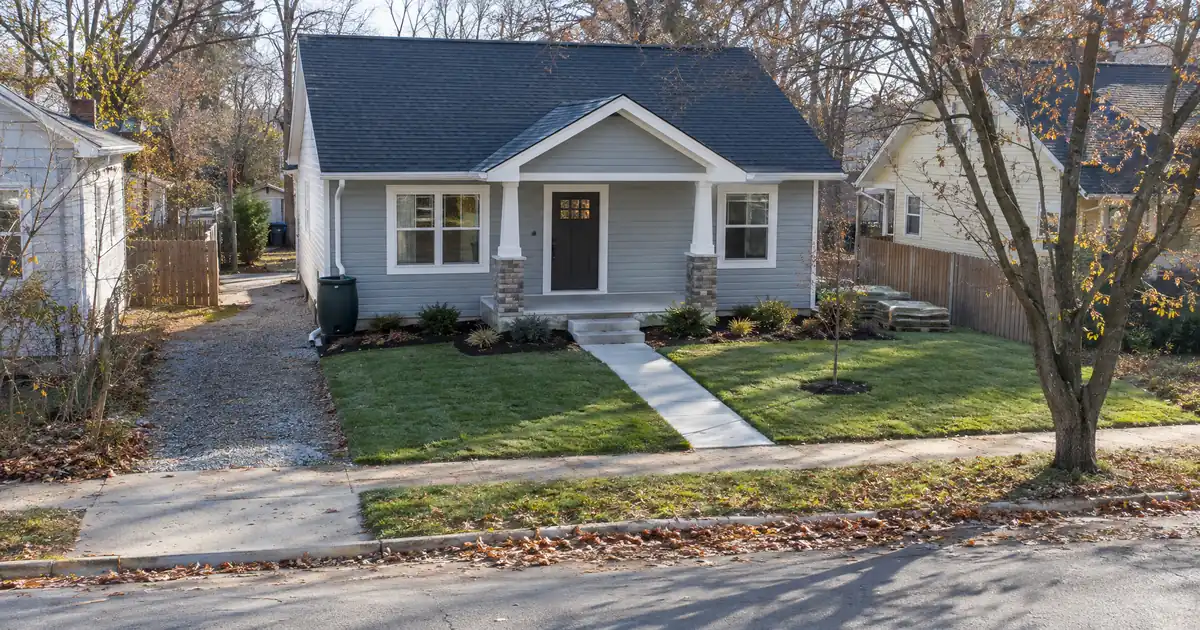
The Quick Read: A relative’s lease rarely decides a hard money closing, because that loan is sized on the property and your exit plan, but it can decide whether you refinance into long-term rental financing afterward. Treat the lease like a stranger’s lease. Confirm the program accepts the arrangement first, then paper it fully and prove the rent actually moves.
- Hard money is short-term and asset-based, so the lease matters mostly at the exit, not at the bridge closing.
- Some DSCR programs bar a related-party tenant outright, and others accept one with a harder review. Check the take-out program before you close the bridge.
- A lender generally counts the lower of the lease rent and the appraiser’s market rent. A family discount lowers your income, and a premium adds nothing.
- A signed lease is not enough. Bank records should match the lease amount, dates and names.
- A relative who lives with you is an occupancy problem, not a tenant problem.
Why Does a Relative’s Lease Matter for a Hard Money Loan?
A hard money loan is a short-term, interest-only loan secured by the property, with underwriting centered on the asset, the plan and the exit. Across the programs Lendmire places files with, terms run roughly 6 to 18 months, and the lender has no monthly income test of its own. Credit still matters (a 620 minimum score is typical, with extra conditions below 660), but nobody is testing your tenant.
What this loan actually costs to carry.
Hard money is sized against the project and priced by time. Enter the deal and see how much the program will lend, the cash required at closing, the carry while you hold it, and what is left at the exit.
Leverage tiers on the current program: 85% with fewer than 2, 90% with 2 or more, 93% with 5 or more completed projects — every tier capped at 75% of after-repair value. Loan amounts up to $5,000,000, larger by exception; terms of 6 to 18 months, interest-only, no prepayment penalty. The rehab portion funds in draws against completed work, not at closing.
Program parameters shown update from Lendmire’s centralized guideline source. Rate, points, and months are editable assumptions, not quoted terms.
Cost cap sets the loan · positive spread
Illustrative estimate only — not a quote, Loan Estimate, approval, or commitment to lend. Rate, points, and months are editable assumptions. Hard money is business-purpose financing for real estate investors, not a consumer mortgage. Leverage on the current program tops out at 93% of project cost for investors with a documented track record, capped at 75% of after-repair value, with rehab funding up to 100% of the documented budget released in draws; actual terms vary by lender, borrower experience, property, and exit. Lendmire is a mortgage broker, not a lender.
So why bother with the lease at all? Two situations bring it up.
The first is a bridge loan on a property that already has a family tenant. The lender will want to know who lives there and whether the property is non-owner-occupied. The second is a plan to refinance out of the bridge into long-term DSCR financing. A DSCR loan is a loan qualified primarily on the property’s rental income covering its payment, subject to lender guidelines. That is where the lease, the rent proof and the related-party screen all get reviewed.
Here is the catch. A bridge can close easily on a property whose lease later fails the DSCR gate. Many investors learn that after the bridge clock is already running.
Step One: Can the Relative Be the Tenant at All?
Start with eligibility, not paperwork. Across a wholesale network of DSCR lenders, programs split into two camps. Some bar a related-party tenant entirely, and others accept one but scrutinize the file harder. That split is why online answers contradict each other.
If your exit program bars family tenants, no lease can fix it. Market-rate rent does not change the answer, and a perfect ledger will not either. Choose the take-out program before you choose the property, or at least before you sign the lease.
Three questions settle most of the eligibility screen:
1. Does the program accept related-party tenants at all? Ask the broker for the answer in writing before you order anything.
2. Does the relative live in a separate household? A parent or sibling in their own household is a related-party tenant question. A relative living with you is an owner-occupancy question.
3. How does the lender define family? The IRS, for tax purposes, defines family in Publication 527 as a spouse, siblings, half-siblings, ancestors and lineal descendants. Lenders write their own definitions, and the wording is not uniform. A cousin or an in-law may or may not count.
DSCR loans are designed for non-owner-occupied investment properties. Because they are business-purpose investor loans, they are reviewed differently from a standard owner-occupied mortgage. The occupancy certification covers family members, not just you. A parent who lives rent-free in the property is treated as an occupancy problem even if the parent signs nothing.
Disclose the relationship at the start. A family tenant who surfaces late in underwriting looks like concealment, and it stalls a file that would have been fine if you had said so up front. Holding the property in an LLC does not remove the related-party question, since the lender looks through to who the tenant is.
What Should the Lease Contain?
Write the lease the way you would for a stranger. The lender wants to see a real tenancy, with terms that match how the property is actually used. A typical package includes the items below.
| Clause | What to write | Why the lender cares |
|---|---|---|
| Parties | Full legal names of landlord and tenant | Names must match the people living there |
| Property | Full address and unit | Ties the lease to the collateral |
| Rent and due date | Monthly amount and day due | Gets compared to market rent and bank deposits |
| Term | Start and end dates | An expired lease needs renewing in writing |
| Deposit | Amount and how it was paid | Shows a real arm’s-length setup |
| Utilities | Who pays what | Affects the true rent picture |
| Signatures | Both parties, dated | An unsigned lease is just a draft |
Informal arrangements need cleanup before you submit anything. Put a verbal deal in writing. Renew an expired lease in writing, and sign a month-to-month agreement that states the rent, the parties and the dates. If you gave free months, rent credits or a pay-later understanding, write those down too. A lender who finds an unstated concession in the bank records will question everything else in the file.
How Do You Prove the Rent Is Actually Paid?
Bank records are the usual proof. Lenders look for deposits that match the lease amount and arrive on the lease schedule, from the tenant’s own account. A ledger and the renewal terms add support. Related-party or brand-new leases generally draw closer review than a long-running lease with a stranger.
Cash payments are the most common weak spot. Cash leaves no trail, so the lender has nothing to reconcile against the lease. Use a bank transfer or a check from an account in the tenant’s name, and pay on the same day each month.
Reviewers check whether the amounts and dates in the bank statements align with the lease, and they watch for altered rent figures. The same mindset applies to a related-party lease. A trail that looks assembled after the fact, such as a burst of deposits right before you apply, reads as a red flag.
Here is the proof package in one place.
| Document | What it proves | Who produces it |
|---|---|---|
| Signed lease | Terms, parties, rent | You and the tenant |
| Bank statements | Rent actually moves | Tenant and landlord accounts |
| Rent ledger | Payment history by month | You |
| Deposit record | Real security deposit | You |
| Market-rent support | Rent is not discounted | Appraiser’s rent schedule |
| Relationship disclosure | Nothing hidden | You, in writing |
Lease Rent or Market Rent: Which One Counts?
Underwriting generally uses the lower of the lease rent and the appraiser’s market rent. The appraiser forms that opinion on Form 1007 for single-family properties or Form 1025 for two-to-four unit properties. Those forms document monthly rent, so multiplying a nightly short-term rate by 30 days does not work.
This rule matters most for family leases, because family rents tend to drift in one direction.
| Family lease vs. market | What counts | Effect on coverage |
|---|---|---|
| Below market | The lower lease rent | Coverage drops |
| At market | Lease and market agree | Neutral |
| Above market | Market rent only | No gain |
A fair rental price is generally what an unrelated person would pay, and rent substantially below comparable rents falls short of that. A lender has the same instinct for its own reasons. Market-rate rent helps the ratio, but it does not by itself make the lease arm’s-length. Arm’s-length means the deal looks like one between strangers.
Remember what the ratio measures. DSCR is monthly rent divided by PITIA, meaning principal, interest, taxes, insurance and association dues. Clearing 1.00 is not the same as positive cash flow, because repairs, vacancy, management, utilities and capex sit outside the calculation.
A Worked Example
Run the numbers on a bridge purchase of a duplex, financed at up to 80% of purchase price. Assume a relative rents one unit. These inputs are modeled assumptions, not market data.
- The appraiser’s market rent on the duplex supports coverage of roughly 1.15x.
- The family lease on one unit is discounted about 15% below market.
- The lender counts the lower figure, so coverage falls to roughly 0.98x.
That is the difference between clearing 1.00 and missing it. At 1.00, many select DSCR programs start. A separate select-lender path takes coverage below 1.00, with leverage and terms adjusted. A lender would review the file under whichever path applies, and nothing here is a promise of approval.
You have three practical fixes. Raise the lease to market rent, which also helps with the arm’s-length question. Put the unit in the hands of an unrelated tenant. Or plan the exit around the lower-coverage path and expect less leverage on the take-out. A larger down payment can help the ratio, but it never erases leverage caps, credit floors or reserve rules.
Where Does the General Rule Break?
Most of the exceptions below come down to program-specific treatment, so ask before you assume.
- Agency contrast. Fannie Mae’s Selling Guide bars a lease with an interested party or family member from setting qualifying rental income on an investment property. DSCR loans are not bound by that rule, but expect similar questions and more proof of real rent.
- A relative’s business as master tenant. A relative-owned business renting the whole building has to look arm’s-length, with market terms and no ownership link to you.
- Life estate or parent-consent structures. Treatment is program-specific, and some lenders will not take the file at all.
- Vacant property. With no lease, the appraiser’s market rent alone sets income. Some investors rent to an unrelated tenant instead, which is a program-by-program question.
- Room rentals in a home you live in. That is an occupancy issue, so a DSCR program is the wrong tool.
- Short-term rentals. A relative who stays occasionally is not a tenant, and a nightly-rate lease will not substitute for hosting history. Short-term rental rules can vary by city, county, HOA, and property type, so investors should confirm local rules before relying on projected rental income.
On the tax side, the IRS treats some below-fair-rent family use as personal use, and IRS Publication 527 is the place to start. Tax treatment varies, so consult a qualified professional before relying on any deduction.
What Are the Common Mistakes?
The same few errors sink most family-lease files.
- A lease signed after the fact. The dates and the bank history disagree, and the lender notices.
- Cash payments. There is no trail to match against the lease.
- Undisclosed concessions. Free months or credits that show up only in the records.
- Late disclosure. A relative surfaces in the middle of underwriting.
- Mismatched names. The lease, the bank account and the insurance all list different people.
- Assuming a signed lease is enough. It must be backed by proof the rent is paid.
- Assuming the exit lender will not ask who is renting. It will ask.
What If the Program Says No?
You still have options. Rent to an unrelated tenant, or leave the unit vacant and let the appraiser’s market rent govern, where the program allows. You can also steer the relative to a different property and keep the family arrangement out of your financed portfolio. If the exit is the problem, a longer-runway hard money structure is not available on the current program, so the real fix is picking a take-out program that accepts the tenancy.
Many investors refinance out of hard money into long-term DSCR financing once the property is stabilized, and Lendmire brokers that path. On the DSCR side, most files land at 75% to 80% LTV on a purchase and up to about 75% on a cash-out refinance, with about 6 months of seasoning common. Most programs want a credit score around 660, and reserves vary by lender, leverage and loan size. All of this is subject to lender guidelines. The complete DSCR loans guide covers those parameters in detail.
On the hard money side, bridge purchases without rehab run up to 80% of purchase price, and refinances run up to 65% of value. These figures vary by lender, property and experience, and none of this is a commitment to lend.
Key Terms Defined
Related-party tenant: A tenant connected to the borrower by family, ownership or business, so the rent may not reflect a stranger’s deal.
Arm’s-length lease: A lease whose terms look like those between unrelated parties.
Market rent: The rent an appraiser concludes the property would command from an unrelated tenant.
Rent ledger: A month-by-month record of rent due and rent received.
Occupancy certification: The borrower’s statement that neither they nor their family will live in the property.
Hard money loan: A short-term, interest-only loan sized on the property and the exit plan.
Next Steps
If you are buying, rehabbing or refinancing an investment property on a short timeline and want to see how the numbers work, Lendmire can help you compare hard money options based on the project, the exit plan, leverage, and your goals. Lendmire is a broker that arranges financing through select lenders in its wholesale network across 41 markets, including Washington, D.C.
Frequently Asked Questions
Will a hard money lender accept a lease with my relative?
Usually the bridge lender does not test the tenant, since the loan rests on the property and your exit. The problem comes later, when a DSCR lender reviews the lease at refinance. Ask the take-out program about related-party tenants before you close the bridge.
Is market-rate rent from a relative enough?
Market rent helps the ratio, but it does not make the lease arm’s-length. Where a program bars family tenants, market rent does not change the answer. Where it allows them, market rent plus a payment trail is the standard support.
What if my relative lives in the house with me?
That is an owner-occupancy issue, and DSCR loans are for non-owner-occupied rentals. The occupancy certification covers family members, not only the borrower. A relative in a separate household is a different question.
What if the lease is informal or expired?
Put it in writing before you submit. Renew an expired lease, document a verbal deal, and sign a month-to-month agreement with the rent, parties and dates. A related-party tenant needs payment history and market support on top of that.
Does a discounted family lease hurt my DSCR?
Yes, because underwriting generally uses the lower of the lease and market rent. A discount lowers the rent counted and can pull coverage below the program floor. A premium lease earns nothing extra.
About Lendmire
Lendmire (NMLS# 2371349), a non-QM mortgage broker serving investors in 41 markets including Washington, D.C., helps structure DSCR scenarios commonly evaluated around a property’s rental income rather than personal income paperwork, subject to lender guidelines. A Scotsman Guide Top Mortgage Workplace in 2025 and 2026, Lendmire places loans through wholesale investor lenders and is not a direct lender.
Get Started
Ready to find the right loan for you?
In about 30 seconds you can review financing options available for your investment property. No commitment required.
Informational only. Not a Loan Estimate, approval, or commitment to lend. Program availability and eligibility are subject to lender guidelines, credit approval, property review, and underwriting.
References
2. Fannie Mae Selling Guide B3-3.8-01
This article is part of Lendmire’s hard money loan program — full qualification details, guidelines, and scenarios live on the program page.
Related reading: Renting to a Parent vs. a Stranger on a DSCR Loan · How to Document Private Loan Money on Your First DSCR Rental Loan · How Long Each Step of a DSCR Refinance Takes to Pay Off Hard Money
Brandon Miller
Founder & CEO, Mortgage Loan Originator, Lendmire LLC
- Mortgage Loan Originator · NMLS# 1129696 · Verify on NMLS Consumer Access
- North Carolina Real Estate Broker · License# 343312 · Verify on NCREC
- North Carolina Insurance Producer · License# 19053198 · Property, Casualty, Life, Health · Verify on NAIC SBS
- Lendmire LLC · Firm NMLS# 2371349 · Verify firm licensure
Required disclosures. Lendmire (NMLS# 2371349) operates as a licensed mortgage broker, not a direct lender or depository. The discussion in this article is general in nature and should not be relied upon as financial, legal, or tax advice — every investment scenario is unique and should be reviewed by a qualified professional. Any loan inquiry is subject to lender underwriting, and this article is not a commitment to lend or a guarantee of approval. Mortgage rates, loan terms, and program guidelines vary by borrower, property, and state, and may change without notice. Equal Housing Opportunity. Verify licensure at NMLS Consumer Access.