
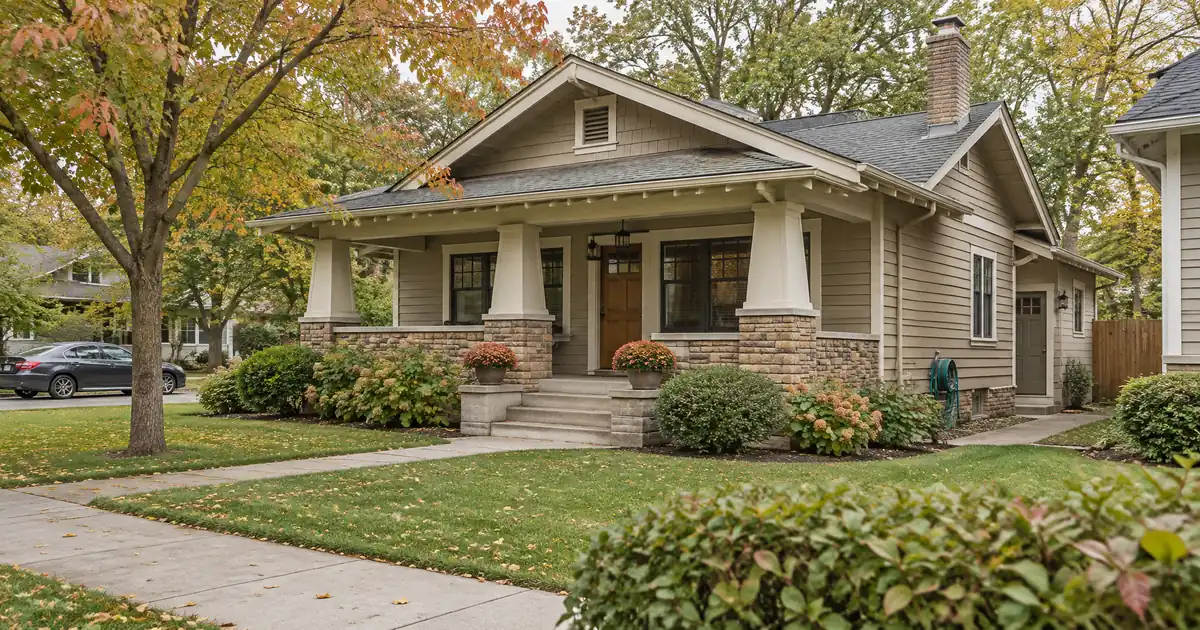
The Quick Read: Yes, a rental in a flood zone can usually still qualify for a DSCR HELOC, subject to underwriting, because the rent qualifies the line and a mapped high-risk zone adds a condition (a flood insurance policy in force) instead of ending the file.
- A DSCR HELOC (a home equity line on a rental, qualified on the property’s rent instead of your personal income) tests the rent against a stress payment on the whole line. The minimum is 1.10x.
- The flood premium is not part of that qualifying payment on this program. It still hits your real cash flow, so price it before you commit.
- Zones labeled A or V on the flood map are the ones that bring the insurance condition. Moderate-risk zones such as X carry no federal mandate, though a program can still ask for coverage.
- Lien position, seasoning, property type and the valuation path can decide the outcome just as often as the flood map.
Lendmire is a broker. It arranges these lines through a wholesale lender in its network, and each file is underwritten individually.
Which Flood Zones Actually Cause a Problem?
High-risk zones cause the problem. Zone A, AE or V means the property sits in a Special Flood Hazard Area, and you should expect a flood policy to be a loan condition. Zone X is different. Nothing in federal law forces coverage there, but a lender or program may still ask for it.
The lender orders a flood determination on the subject property. That is a standard form that places the building on the flood map.
| Zone type | Usual requirement | What to ask |
|---|---|---|
| A, AE, V (high risk) | Flood policy in force | Does the program accept private flood? |
| X or D (moderate/minimal) | No federal mandate | Does the program still ask for coverage? |
| Newly remapped into high risk | Policy may become a condition | When does the lender re-check the zone? |
Across the wholesale network, the flood determination is one of the first items ordered. Do not wait for the appraisal to learn your zone. Pull a flood map lookup on the address before you sign a purchase contract or ask for a line.
Does the Flood Premium Count Against the 1.10x Test?
On this program, no. The coverage test divides gross monthly rent by a qualifying payment. That payment is a fully amortizing payment on the entire credit limit at a stress level above the starting rate. It is principal and interest only. Taxes and insurance are not inside it.
Rent is the lesser of the appraisal’s market rent and the lease, unless three months of receipts support a lease above market. A lease in place is required. On a two-to-four-unit property, at most one unit can be vacant.
On a second lien, confirm on the file how the lender treats the first-mortgage payment. That treatment belongs to the lender’s own coverage calculation, and the qualifying arithmetic here is illustrative only.
The premium matters in three other ways:
- It lowers the cash the rental throws off after you pay the first mortgage and the line.
- It can change at renewal, so a thin margin today may be negative later.
- It varies with zone, elevation, construction, coverage limits and deductible, so only an actual quote tells you anything.
Get the quote before you underwrite the deal. Rules of thumb on flood premiums are unreliable, and the brokerage does not quote premium figures for that reason.
What Does the File Need on a Flood-Zone Rental?
The file needs everything a normal DSCR HELOC file needs, plus proof of flood coverage where the determination calls for it. Across the programs the brokerage places files with, that means this sequence:
1. Zone check. Confirm the flood determination result for the address.
2. Building-level quote. Get a real flood quote for that building, not a zip-code estimate.
3. Rent test. Run the rent against the stress payment on the full line you want.
4. Valuation. Valuation follows its own threshold, separate from the leverage tiers: lines up to $400,000 use an automated valuation with a property inspection report, or a full interior appraisal. Lines above $400,000 take a full interior appraisal. Waivers are not accepted.
5. Insurance evidence. Hazard insurance covers both liens. Flood coverage is added where required, and you should expect to show proof of it before the line opens.
6. Maintenance. The policy has to stay in force. If it lapses, lenders can force-place coverage at your cost.
Buy coverage early. Flood policies can carry a waiting period before they take effect, and a gap can stall a file.
A Worked Example: Same Rental, Two Outcomes
Run the numbers on two modeled rentals. These are illustrative assumptions, not market data, and the lender’s own calculation governs.
Picture Rental A, a single-family property in a high-risk zone. Its rent covers the stress payment on the full line at about 1.35x. The flood premium does not enter that ratio, so the test clears with room to spare. The premium still cuts into monthly cash flow, and that is a business decision, not a qualification one.
Now consider Rental B, a duplex with rent covering the stress payment at roughly 1.12x. It clears 1.10x, but barely. A small drop in lease-supported rent, or a lower market-rent figure on the appraisal’s rent schedule, pushes it under.
Here is the fix that often works. The test runs on the entire credit limit, so a smaller line lowers the stress payment. Trim the line by about a tenth and the same rent covers it at roughly 1.2x. You trade some borrowing power for a file that clears.
The Insurance Cap Can Leave You Underinsured
The federal flood program caps building coverage. The Congressional Research Service reports a $250,000 building limit and a $100,000 contents limit for single-family dwellings. Other residential buildings run up to $500,000 on the building.
A line can be larger than the policy limit. Bank-side guidance ties required coverage to the lesser of the loan amount (excluding land) or the maximum available under the federal program, as FEMA’s flood insurance guidance explains. Program terms control on a DSCR product, and lenders may ask for more than the minimum.
The cap is not a waiver either. A rental worth more than the cap can be underinsured even when it satisfies the condition on paper. That is a risk to your equity, not just a box to check. A private or excess policy can fill the gap, and whether a given program accepts a private policy is a program question to settle up front.
Why a Business-Purpose Loan Still Needs Flood Coverage
DSCR loans are designed for non-owner-occupied investment properties. Because they are business-purpose investor loans, they are reviewed differently from a standard owner-occupied mortgage.
That label does not waive a flood condition. The federal mandatory purchase rule binds federally regulated lenders, and the Congressional Research Service notes the lender enforces it, not FEMA. A non-bank investor channel may not be directly bound by the statute. In practice the program contract asks for coverage on a high-risk-zone property.
Federal law is a floor. A lender can require flood coverage outside a high-risk zone if its terms say. The same logic covers lien position. A second lien does not sidestep a flood condition just because the first mortgage is already insured.
Two common beliefs are wrong:
- A landlord or homeowners policy does not cover flood. Flood needs its own policy.
- Flood insurance does count in the real monthly cost of owning the rental, even though it sits outside this program’s qualifying payment.
What Else Can Sink the File Besides Flood?
Plenty can, and these gates catch more borrowers than the flood map does. Here are the program ceilings and floors, all subject to underwriting and never offers.
Leverage. On a second lien behind a first mortgage you keep, combined loan-to-value (the first mortgage balance plus the new line, divided by value) goes up to 70% CLTV at a 720 credit score or better, on lines up to $500,000. On a first lien for a rental with no mortgage, loan-to-value reaches 75% LTV at 740 or better and 70% LTV from 700 to 739, on lines up to $500,000. Lines above $500,000, to $1,000,000, are capped at 65% LTV at 720 or better. Every figure here varies by lender and program guidelines, property type, leverage, and credit profile.
Borrowing mechanics. Lines start at $50,000. At least 80% of the line is drawn at closing, and later draws are at least $5,000. You get a 5-year interest-only draw period, then a 25-year repayment period, with a 30-year maturity and a variable rate.
Seasoning. A rental bought or refinanced inside the last 6 months is not eligible (that clock runs from the last note date to the new note date), and the owner must have held title for 6 months (settlement date to note date).
Property. Single-family, PUD, townhome, two-to-four-unit and condominium properties fit. Rural-designated property, row homes, condotels and leaseholds do not. A property listed for sale in the prior 2 months, or one with a solar lien, is also out.
Entity and credit. The LLC can stay on title, subject to program eligibility, with members signing as guarantors. Credit tiers are 720 on a second lien and 700 on a first. No reserves are required.
A flood-zone rental that fails any of these gates is out for that reason, not the flood map. For the wider DSCR picture, the complete DSCR loans guide covers the mechanics behind these programs. Lendmire’s piece on rental HELOC requirements when the property sits in a flood zone goes deeper on the flood side.
What If the Numbers Fail?
You have more options than walking away. Start with the smallest change that fixes the problem.
- Shrink the line. The stress payment falls with the limit, so the rent covers it more easily.
- Rework the insurance. A higher deductible or different coverage structure changes the premium. Elevation documentation can also change what the insurer charges, so ask for it.
- Check the lease and the rent figure. Three months of receipts can support a lease above market rent.
- Compare the structure. A cash-out refinance replaces the first mortgage instead of sitting behind it, and the math differs.
- Change the property. Sometimes the better rental to borrow against is the one outside the high-risk zone.
Price the insurance first, then the leverage. That order saves you from building a plan around a premium you have not seen.
Key Terms Defined
DSCR HELOC: A revolving line of credit on a rental, written as a standalone second lien behind your first mortgage or as a first lien on a rental with no mortgage, qualified on the property’s rent.
Special Flood Hazard Area (SFHA): A high-risk flood zone on the flood map, labeled A or V, where a flood policy is expected on a financed building.
Flood determination: The standard form the lender orders to place the property on the flood map.
NFIP: The National Flood Insurance Program, the federal program that sells flood coverage with fixed limits.
Stress payment: A fully amortizing payment on the whole credit limit at a higher-than-starting rate, used only to test coverage.
CLTV: Combined loan-to-value, which counts the first mortgage balance plus the new line against the property’s value.
Frequently Asked Questions
Does a rental in Zone X need flood insurance for a DSCR HELOC?
Not by federal mandate. Zone X and D sit outside the high-risk area, so the statute does not force coverage there. A program can still ask for it by contract, and you can buy a policy voluntarily. Confirm with the lender whether your file carries a flood condition before you assume it does not.
Can a private flood policy satisfy the requirement?
Federal law requires regulated lenders to accept private policies that match the statutory definition, which means coverage at least as broad as the federal program, per the Congressional Research Service. Whether a non-bank DSCR HELOC program accepts private policies is a program question. Ask before you buy, and ask for the policy requirements in writing.
Does flood insurance change my DSCR on a HELOC?
It does not change the 1.10x coverage test on this program, because the qualifying payment is principal and interest on the full line and leaves out taxes and insurance. It does change your actual monthly cash flow. Treat the premium as a cost that decides whether the deal is worth doing, not just whether it qualifies.
What if my line is larger than the flood policy limit?
The policy still has to meet the lender’s condition, and the federal program’s building cap can sit below the line you want. A rental worth more than the cap can be underinsured. A private or excess policy can close the gap, subject to what the program accepts.
What happens if my rental is remapped into a high-risk zone later?
A map change can bring the flood question back, and a request to raise the line can too. Ask the lender how it handles remaps and increases before you close, so a new premium does not surprise you on a rental you already own.
Running the Numbers on Your Rental
If you are considering a home equity line on a rental property and want to see how the numbers work, Lendmire can help you compare DSCR HELOC options based on the property, the rent, the equity available, credit profile, combined leverage, and your goals. The program is offered in 15 of Lendmire’s 16 licensed states, every licensed state except Tennessee, through select programs and subject to underwriting. For a flood-zone rental, a sensible first step is to get the premium quote, then check the rest of the file against it.
About Lendmire
Lendmire, NMLS# 2371349, is a mortgage brokerage with consumer lending licenses in 16 states. It arranges DSCR home equity lines of credit on rental property through wholesale lending partners in 15 of its 16 licensed states (every licensed state except Tennessee); each line is written on a non-owner-occupied one-to-four-unit rental and reviewed individually by the lender under the program’s credit and leverage guidelines. Scotsman Guide named Lendmire a Top Mortgage Workplace in both 2025 and 2026.
Get Started
Ready to find the right loan for you?
See your offer in seconds. No credit pull, no obligation.
Informational only. Not a Loan Estimate, approval, or commitment to lend. Program availability and eligibility are subject to lender guidelines, credit approval, property review, and underwriting.
References
2. FEMA, National Flood Insurance Program Chapter 11 (FEMA 511)
This article is part of Lendmire’s DSCR HELOC program — full qualification details, guidelines, and scenarios live on the program page.
Related reading: DSCR HELOC Without Holding the Rental in an LLC · DSCR HELOC Checklist to Buy More Rental Properties · DSCR HELOC With the Minimum Equity Required on a Rental
Brandon Miller
Founder & CEO, Mortgage Loan Originator, Lendmire LLC
- Mortgage Loan Originator · NMLS# 1129696 · Verify on NMLS Consumer Access
- North Carolina Real Estate Broker · License# 343312 · Verify on NCREC
- North Carolina Insurance Producer · License# 19053198 · Property, Casualty, Life, Health · Verify on NAIC SBS
- Lendmire LLC · Firm NMLS# 2371349 · Verify firm licensure
Disclosures. The information presented in this article is general market commentary, not financial, legal, or tax advice. Lendmire is a mortgage brokerage (NMLS# 2371349) — not a direct lender or depository institution — and loan placement is subject to lender underwriting. Nothing in this content represents a commitment to lend. Loan terms, pricing, and program availability vary based on borrower qualifications, property characteristics, and state of subject property, and are subject to change at any time. Lendmire complies with Equal Housing Opportunity requirements. Consumer access: nmlsconsumeraccess.org.